Showing posts with label guantanamo. Show all posts

Tuesday, 6 July 2010

guantanamo: us psychologist denies involvment

.
http://www.voltairenet.org/article165964.html

related text:
The secret behind Guantánamo
in rights abuse: iraq, italy, palestine, afghanistan, us

Right of reply

A letter to the editor by Martin Seligman

Following the publication of Thierry Meyssan’s investigation titled « The secret behind Guantánamo », we received the following clarification from Professor Martin Seligman, denounced in the article for his role in Guantánamo.

20 juin 2010

Thierry Meyssan (20 May 2010) makes a series of utterly false allegations about me and about my role in the torture of prisoners.

Here is what he wrote:

- 1) That I “supervised the torture experiments on Guantanamo prisoners.”

- 2) The Navy formed a high-powered medical team. In particular, it invited Professor Seligman to Guantánamo. …. It was he who oversaw the experiments on human guinea pigs.

- 3) U.S. torturers, under Professor Seligman’s supervision, experimented and perfected every single coercive technique.

This is wholly false and completely baseless.

Here is what the sum total of what I know about the torture controversy and what my role was:

I gave a three hour lecture sponsored by the Joint Personnel Recovery Agency at the San Diego Naval Base in mid-May 2002. I was invited to speak about how American troops and American personnel could use what is known about learned helplessness to resist torture and evade successful interrogation by their captors. This is what I spoke about.

I was told then that since I was (and am) a civilian with no security clearance that they could not detail American methods of interrogation with me. I was also told then that their methods did not use "violence" or "brutality." James Mitchell, whom the press has accused of being behind the torture program at Guantanamo and elsewhere, was in the audience of between 50 and 100 others at my speech.

I presented my research on learned helplessness to this audience, the Joint Personnel Recovery Agency. I spoke about how American troops and American personnel could use what is known about learned helplessness to evade successful interrogation by their captors. There was no other occasion on which I discussed my research with Mitchell or with any other people associated with this controversy. I have read since in the press that that the torturers used my theory of learned helplessness as a partial basis for what they did. If that is true, it was done without my consent, without my knowledge, and certainly without my “supervision.”

I have never “supervised” them or anyone else associated with the alleged torture programs. I was never invited to Guantanamo by anyone.

I have not had contact with JPRA or SERE since that meeting in May 2002. I have never worked under government contract (or any other contract) on any aspect of torture, nor would I be willing to do work on torture.

I have never worked on interrogation; I have never seen an interrogation and I have only a passing knowledge of the literature on interrogation.

I am grieved and horrified that good science, which has helped so many people overcome learned helplessness and depression, has been used for such inhumane purposes.

Most importantly, I never did and never would provide any assistance in torture. I strongly disapprove of it.

Martin Seligman

Professor of Psychology (University of Pennsylvania). Former President of the American Psychological Association.


Explanatory remarks

The article in question recounts the torture experiments conducted by the Guantánamo medical teams not to extort confessions, but to inculcate them into the detainees. It is founded on the abundant literature existing on the subject as well as on witness accounts.

I reported on Professor Seligman’s role on the strength of a testimony provided by a witness speaking on condition of anonymity. I apologise to Martin Seligman for having divulged an accusation which I am not in a position to prove. Moreover, I take note of his strong condemnation of the application to human beings of the principles he brought to light by torturing dogs.

I further take note of his relativisation of the suffering inflicted on others when he asserts never having practiced or participated in torture, in spite of the fact that, in the 70s, he had recommended and practiced electric shock treatments on homosexual teenagers to force them to alter their behaviour.

This said, his response shows an intent of dissimulation.

- He omits to say that he was invited and remunerated by the CIA in relation to the above-mentioned conference.

- He contradicts himself when he states having given, but not administered, a course on torture resistance techniques, while asserting that he could not have spoken to his listeners about the interrogation methods applied since he was not authorised to do so.

- In fact, he feigns naiveté in affirming to have accepted the allegations of his hosts that they conducted interrogations without employing violence or brutality, when already in January 2002 the UN High Commissioner for Human Rights had denounced the United States for resorting to torture methods.

- He is inelegant when he makes excuses by pointing his finger at a third party, in this case James Mitchell.

- He is ridiculous when, as former President of the American Psychological Association, he makes reference to « good » science, claiming to be horrified to discover that human knowledge can be applied for inhuman purposes.

- Finally, he is despicable when he alludes to « alleged torture programs » as if the existence of the facts that he purports to condemn still remained to be proven, just at the time when Physicians for Human Rights has released a stinging report titled Experiments in Torture.

As for Professor Seligman himself, his role still remains to be clarified.

Thierry Meyssan

---------------------------------------------------------------------------------------------------------------

Droit de réponse

Une lettre de Martin Seligman
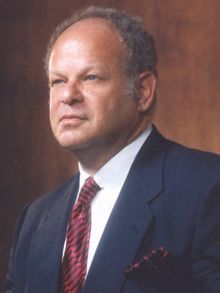
A la suite de la publication de l’enquête « Le secret de Guantánamo » de Thierry Meyssan, le professeur Martin Seligman, mis en cause, nous a adressé cette mise au point.

JPEG -  12.1 ko
Martin Seligman

Thierry Meyssan a présenté une série d’allégations totalement fausses à mon propos et sur mon rôle dans la torture de prisonniers.

Voici ce qu’il écrit :

1) J’ai « supervisé les tortures expérimentées sur les prisonniers à Guantanamo ».

2) « La Navy a constitué une équipe médicale de choc. Elle a notamment fait venir à Guantánamo le professeur Seligman (…) C’est lui qui a supervisé des expériences sur cobayes humains. »

3) « Les tortionnaires états-uniens, guidés par le professeur Seligman, ont expérimenté et amélioré chaque technique coercitive. »

Tout ceci est faux et complétement dépourvu de fondement.

Voici tout ce que je sais de la controverse sur la torture et ce qu’a été mon rôle :

J’ai donné une conférence de trois heures sponsorisée par la Joint Personnel Recovery Agency à la base navale de San Diego à la mi-mai 2002. J’ai été invité à parler de la manière dont les soldats américains et le personnel civil américain pourraient utiliser ce que l’on sait de l’impuissance apprise pour résister à la torture et éluder efficacement les interrogatoires de leurs geôliers. C’est de cela dont j’ai parlé.

On m’a dit alors que puisque j’étais (et je suis) un civil sans accréditation de sécurité, ils ne pouvaient détailler les méthodes américaines d’interrogatoire avec moi. On m’a également dit que leurs méthodes n’utilisaient ni « violence » ni « brutalité ». James Mitchell, que la presse a accusé d’être derrière le programme de torture à Guantanamo et ailleurs, était dans le public parmi 50 à 100 auditeurs.

J’ai présenté mes recherches sur l’impuissance apprise à ce public de la Joint Personnel Recovery Agency. J’ai parlé de la manière dont les soldats américains et le personnel civil américain pourraient utiliser ce que l’on sait de l’impuissance apprise pour résister à la torture et éluder efficacement les interrogatoires de leurs geôliers. Il n’y a aucune autre occasion au cours de laquelle j’ai discuté mes recherches avec Mitchell ou d’autres personnes associées à cette controverse. J’ai depuis lu dans la presse que les tortionnaires ont utilisé mes théories sur l’impuissance apprise comme base partielle pour ce qu’ils ont fait. Si cela est vrai, cela a été fait sans mon consentement, sans ma connaissance, et certainement sans ma « supervision ».

Je n’ai les ai jamais supervisé, ni quiconque associé aux programmes allégués de torture. Je n’ai jamais été invité à Guantanamo par personne.

Je n’ai pas eu de contact avec la JPRA ou le SERE depuis cette réunion de mai 2002. Je n’ai jamais travaillé sous contrat public (ou d’autres sortes de contrat) sur des aspects de la torture, ni ne serais enclin à faire un travail sur la torture.

Je n’ai jamais travaillé à des interrogatoires. Je n’ai jamais vu un interrogatoire et je n’en ai qu’un savoir passif à travers la littérature sur les interrogatoires.

Je suis peiné et horrifié que la bonne science, qui a tant aidé de personnes à surmonter l’impuissance apprise et la dépression nerveuse, ait été utilisée à des fins inhumaines.

Surtout, je n’ai jamais pratiqué, ni assisté la pratique de la torture. Je la désapprouve fermement.


Martin Seligman

Professor of Psychology (University of Pennsylvania). Former President of the American Psychological Association.


Explication de texte

L’article discuté relate les expériences de torture conduites par les équipes médicalisées du Guantánamo non pas pour extorquer des aveux, mais pour en inculquer aux détenus. Il se fonde sur une abondante littérature et sur des témoignages.

J’ai rapporté le rôle du professeur Seligman sur la base d’un témoignage dont l’auteur n’a pas souhaité s’exprimer à découvert. Je présente donc mes excuses à Martin Seligman pour avoir divulgué des imputations que je ne suis pas en mesure de prouver. En outre, je prends acte de sa ferme condamnation de l’application aux humains des principes qu’il a mis en lumière en torturant des chiens.

J’observe sa relativisation de la souffrance imposée à autrui lorsqu’il déclare n’avoir jamais pratiqué ni participé à des tortures, alors même que, dans les années 70, il préconisait et pratiquait d’infliger des électrochocs aux adolescents homosexuels pour les obliger à changer de comportement.

Ceci étant posé, la réponse qu’il nous a adressée manifeste une volonté de dissimulation.
- Il omet d’indiquer qu’il a été invité et rémunéré par la CIA pour la conférence citée.
- Il se contredit lui-même lorsqu’il déclare avoir donné un cours sur la manière de résister à la torture et non de l’administrer, alors qu’il poursuit en affirmant ne pas avoir pu discuter avec ses auditeurs des méthodes d’interrogatoire qu’ils pratiquaient parce qu’il n’y était pas habilité.
- Au demeurant, il joue au naïf en affirmant s’être contenté des déclarations de ses hôtes selon lesquelles ils pratiqueraient des interrogatoires sans violence ni brutalité, alors que dès janvier 2002, le Haut Commissaire des Nations Unies pour les Droits de l’homme avait dénoncé le recours des Etats-Unis à la torture.
- Il est inélégant lorsqu’il se disculpe en pointant la responsabilité d’un tiers, James Mitchell en l’occurrence.
- Il est ridicule lorsque lui, ancien président de l’American Psychological Association, évoque une « bonne » science et se dit horrifié de découvrir que le savoir humain puisse être utilisé à des fins inhumaines.
- Enfin, il est odieux lorsqu’il parle de « programmes de torture allégués » comme si l’existence des faits qu’il prétend condamner restait encore à prouver, au moment même où Physicians for Human Rights publie un rapport accablant Expriments in Torture.

Le rôle du professeur Seligman reste, lui, à établir.

Thierry Meyssan

guantanmo: habeas right victory and press ban rift

.
http://www.mcclatchydc.com/2010/07/02/96987/government-loses-appeal-in-guantanamo.html

Government loses appeal in Guantanamo habeas case

July 2, 2010
Michael Doyle
McClatchy Newspapers

WASHINGTON — An appeals court put government prosecutors on notice that they must show evidence that an Algerian detainee held at Guantanamo Bay, Cuba, for more than eight years is actually "part of" al Qaida, or set him free.

The decision reverses what had been a rare victory for the government since the Supreme Court ruled that Guantanamo detainees had the right to contest their incarceration in U.S. courts. Of the 50 cases that have been decided by district courts, the government has prevailed in only 14.

The appeals court overturned a lower court's decision upholding the detention of Belkacem Bensayah, who was seized in Bosnia along with five other Algerians and shipped to Guantanamo in January 2002, and said the lower court must rehear the case.

"The evidence upon which the district court relied in concluding Bensayah 'supported' al Qaeda is insufficient . . . to show he was part of that organization," Judge Douglas Ginsburg wrote for the U.S. Court of Appeals for the District of Columbia Circuit.

U.S. District Judge Richard Leon ruled in November 2008 that the Pentagon could hold Bensayah in one of the first cases decided after the Supreme Court ruling.

In the same opinion, Leon ordered that the five other Algerians seized along with Bensayah be freed, including Lakhdar Boumediene, the named plaintiff in the Supreme Court habeas decision.

In the 17-page ruling issued Thursday, Ginsburg agreed that the Pentagon can hold people for being "part of al Qaida," a looser standard than requiring that the government prove that an individual provided active support to al Qaida. However, the court found that the government hadn't met even that burden.

The court said that Leon's ruling had been undermined by developments since it was issued, including the Obama administration's decision to drop a claim that one of the witnesses against Bensayah was a "senior al Qaida operative and facilitator."

The name of the witness was redacted from the appeals court's decision.

Without that testimony, "the government had presented no direct evidence of actual communication between Bensayah and any al Qaida member," Ginsburg wrote, adding that mere "questions" about Bensayah's credibility "in no way demonstrate that Bensayah had ties to and facilitated travel for al Qaida in 2001."

Leon's conclusion that Bensayah might have been an al Qaida travel facilitator because he had false travel documents also was incorrect, Ginsburg found.

"We agree" with Bensayah's argument that "mere possession and use of false travel documents is neither proof of involvement with terrorism nor evidence of facilitation of travel by others," Ginsburg wrote.

Leon's judgment in Bensayah's case was also flawed because he'd already found that there was no evidence that the people seized with Bensayah had planned to travel to Afghanistan to fight U.S. forces there.

"Therefore," Ginsburg wrote, "Bensayah could not have been facilitating their travel for that purpose."

Bensayah's appellate attorney could not be reached Friday.

Ginsburg, who was appointed by President Ronald Reagan and once was a nominee for the Supreme Court, is generally a reliably conservative member of the D.C. circuit court, which is often called the nation's second-highest court, overseeing many cases involving government actions.

The appellate court's jurisdiction includes D.C.-based trial judges, including Leon, who's upheld the detention of Guantanamo detainees more often than any other D.C. district judge. These judges will now have to take into account the appellate court's reasoning in Bensayah's case.

Bensayah, 47, was first jailed in October 2001 by Bosnian authorities on charges of planning to bomb the U.S. Embassy. An investigation, however, failed to turn up enough evidence and a Bosnian court ordered his release. Instead, however, he was turned over to U.S. authorities, who sent him to Guantanamo.

American officials initially claimed he was the "primary al Qaeda facilitator and financier in Bosnia and Herzegovina" and that he "attempted to travel to Afghanistan to engage U.S. forces," but later dropped those allegations. No formal charges have been brought against him.

Bensayah, who's married with two children, said he "sought better economic opportunities in Bosnia" and that he worked at a charitable organization and as a small-time trader of goods purchased on trips to Turkey.

---------------------------------------------------------------------------------------------------------------

http://www.vancouversun.com/news/Guantanamo+reporters+illegal+News+companies/3229826/story.html

Ban on Guantanamo reporters is illegal: News companies

Lesley Clark, McClatchy-Tribune
July 2, 2010

WASHINGTON — A coalition of major news organizations is challenging as unconstitutional Pentagon rules that were used in May to ban four reporters from covering military commissions at Guantanamo Bay, Cuba.

In a letter to Pentagon General Counsel Jeh Johnson, the organizations argue that the Pentagon's interpretation of the rules is "plainly illegal" because it bars publication of information considered "protected" even if the information is already widely known and publicly available.

Such a restriction is "a 'classic example' of a prior restraint" that "the Supreme Court repeatedly has refused to allow . . . even in the name of national security," the organizations said.

The organizations include McClatchy Newspapers, which owns The Miami Herald and 30 other newspapers, The Associated Press, Dow Jones & Co., The New York Times, Reuters and The Washington Post.

The Pentagon has agreed to lift the ban on the four reporters on Aug. 5. That, however, isn't enough, the organizations said, noting that the hearing the reporters were covering resumes on July 12.

The Pentagon, the organizations said, must lift the ban immediately so that the reporters can return and revise the 13 pages of rules that reporters are required to sign before covering military hearings for detainees held at Guantanamo.

"There must be a sufficiently strong, legitimate government interest before a contractual condition may legally restrict a citizen's First Amendment rights," attorney David Schulz wrote on the news organizations' behalf. "As demonstrated above, no such legitimate interest justifies the overly broad censorship imposed by the ground rules."

A spokesman for the Pentagon said Johnson's office had received the letter, but declined further comment.

The case stems from a hearing for Omar Khadr, 23, a Canadian who has been held at the offshore detention camp since he was seized in Afghanistan at the age of 15 and charged with throwing a grenade that killed Army Sgt. First Class Christopher Speer. Khadr claims that he was abused during his interrogation and is seeking to exclude the evidence gleaned from the questioning.

Before a court session, Miami Herald reporter Carol Rosenberg and three Canadian journalists published the name of a witness that the government had said should be identified as "Interrogator No. 1." The name of the witness, former Army Sgt. Joshua Claus, had been known for years after he voluntarily gave newspaper interviews in Canada denying that he'd abused Khadr. Claus also had been convicted by a U.S. court martial of abusing detainees in Afghanistan and sentenced to five months in prison.

The letter to the Pentagon notes that Khadr's Wikipedia biography identifies Claus as Khadr's main interrogator.

"We don't dispute their authority to restrict information to protect national security and witnesses, but they can't exercise that authority to prohibit reporters who happen to be in Guantanamo from reporting information that is known to the rest of the world," Schulz said in an interview.

The complaint also faulted the Pentagon for leaving the decision on whether a reporter has violated the rules to Pentagon public affairs officers, saying that by law only a military judge has the authority to make such a ruling. The organizations said that Congress required that military commissions be open to news reporters and international representatives.

"Where Congress has mandated proceedings open to the press, and permitted a limitation of access by a military judge only in those circumstances where necessary to protect national security or ensure physical safety," the Pentagon "cannot unilaterally impose restrictions upon access by reporters."

David Tomlin, the associate general counsel of The Associated Press, said the news agency also has concerns about rules that permit public affairs officers on the island to delete photographs and video they consider "security violations."

"This new issue . . . resonates very much with us," Tomlin said. "We understand that in a high security situation, run by a large organization with a lot of demands on it, the review isn't going to be completely uniform. But we need somebody at some higher level of authority and familiarity with the real priorities of protection to review and make sure that some overprotective lower level officer isn't just taking the easy way out and deleting images when in doubt."

David McCraw, an attorney for the New York Times, said most news organizations respect legitimate national security needs, but he noted that Congress has declared that the military commissions at Guantanamo "should be as public and transparent as possible."

"We're optimistic that some Department of Defense attorneys will understand the issues, and maybe we can find a way to get to a set of rules that work for both sides," McCraw said. "If the government is going to take the position of preventing us from publishing information we found independently, those are rules we can't live with, and I don't think it benefits anyone."

Sunday, 23 October 2005

torture in guantanamo

rense.com

Recently Declassified
Notes Reveal Brutal
Treatment Of Hunger-Striking
Detainees At Guantanamo


Center for Constitutional Rights Contact Mahdis Keshavarz Riptide Communications


10-23-5

"After years in U.S. custody without formal charges or a hearing on the legality of their detention despite a Supreme Court ruling in their favor the hunger-striking detainees at Guantánamo have come to the conclusion that ... "now after four years in captivity, life and death are the same."


NEW YORK - After an emergency court hearing on counsel's right to information regarding the health status and medical treatment of Guantánamo hunger strikers late last week, Julia Tarver, an attorney with the New York City-based law firm of Paul, Weiss, Rifkind, Wharton & Garrison LLP and cooperating counsel with the Center for Constitutional Rights, sought and obtained public release of her declaration regarding the situation at the Guantánamo facility. Tarver's notes detail interviews she conducted at Guantánamo with her clients, Yousef Al Shehri, Abduhl-Rahman Shalabi, and Majid Al Joudi, who are currently engaged in a hunger strike there. The declassified notes reveal the dire conditions of these men. According to Tarver's declaration:
* Force-feedings resulted in prisoners "vomiting up substantial amounts of blood. When they vomited up blood, the soldiers mocked and cursed at them, and taunted them with statements like 'look what your religion has brought you.'"
* "Large tubes - the thickness of a finger - were viewed by detainees as objects of torture. They were forcibly shoved up the detainees' noses and down into their stomachs. Again, no anesthesia or sedative was provided."
* "[D]etainees were verbally abused and insulted and were restrained from head to toe. They had shackles or other restraints on their arms, legs, waist, chest, knees, and head with these restraints in place, they were given intravenous medication (often quite painfully, as inexperienced medical professionals seemed incapable of locating appropriate veins). Their arms were swollen from multiple attempts to stick them with IV needles If detainees moved, they were hit in the chest/heart."
* "In front of Guantánamo physicians - including the head of the detainee hospital - the guards took NG tubes from one detainee, and with no sanitization whatsoever, reinserted it into the nose of a different detainee. When these tubes were reinserted, the detainees could see the blood and stomach bile from other detainees remaining on the tubes. A person detainees only know as Dr. [redacted] stood by and watched these procedures, doing nothing to intervene."
* Detainee Abdul-Rahman communicated that, "one Navy doctor came and put the tube in his nose and down his throat and then just kept moving the tube up and down, until finally Abdul-Rahman started violently throwing up blood. Abdul-Rahman tried to resist the 'torture' from this physician, but he could not breathe."
* Detainees complying with the nasal tube feeding were doing so only because they believed it had been ordered by a U.S. court, a belief that is simply untrue.
After years in U.S. custody without formal charges or a hearing on the legality of their detention - despite a Supreme Court ruling in their favor - the hunger-striking detainees at Guantánamo have come to the conclusion that, according to Abdul-Rahman,"now after four years in captivity, life and death are the same."
While the Center for Constitutional Rights and cooperating habeas counsel have continuously voiced concern for their clients' health given the length of their detention without trial and the conditions of their confinement, the situation has become acutely dangerous since detainees began their latest hunger strike on August 8, 2005. It is unclear how many detainees are on hunger strike at this time, but as many as 200 men have participated at various times.
"What we learned on our last trip to Guantánamo was troubling to us as lawyers, as human beings, and as Americans. We never thought we would see the day when this sort of treatment took place at a facility run by the United States government. It is inconsistent with the rule of law this country was founded upon, and it is inconsistent with the spirit and values of the American people," said Julia Tarver, partner with the law firm of Paul, Weiss, Rifkind, Wharton & Garrison LLP and one of CCR's leading habeas attorneys. Ms. Tarver represents 10 detainees from Saudi Arabia.
CCR cooperating attorneys from Paul, Weiss, Rifkind, Wharton & Garrison LLP and many other firms have emphasized the life-threatening nature of the situation at Guantánamo. They have informed the court that the DOD has invited representatives of the American Medical Association to visit Guantánamo and investigate the medical treatment provided to prisoners on the hunger strike. The attorneys urged the court to appoint physicians to investigate the medical treatment or to consider allowing counsel to bring their own medical experts to Guantánamo. Attorneys also asked that they be able to accompany the AMA representatives if they go.
"It is both depressing and yet profoundly moving that this hunger strike continues in the face of such horrible adversity. Despite the very real possibility that some of these men may die, it is deeply life-affirming that so many of these detainees living in such dire circumstances are willing to risk their lives and bodies for the sake of basic democratic values that should be, and sadly are not, part of American policy today," said Barbara Olshansky, Deputy Legal Director of the Center of Constitutional Rights.

Center for Constitutional Rights http://www.ccr-ny.org/v2/home.asp