Obama administration fingerprints on Ecuador coup attempt
by courtesy of Wayne Madsen
Using the standard CIA playbook on toppling democratically-elected governments in Latin America, the Obama administration, which was not happy with Ecuadorian President Rafael Correa's moves to increase state control over oil companies in the nation and his decision to oust the United States military from its airbase at Manta, appears to have suffered a major defeat in the failed coup attempt in Ecuador by police officers and Air Force personnel who were backed by rightist elements in the National Assembly and business community. Correa was re-elected with an overwhelming majority last year after he gave the U.S. military its walking papers from the Manta airbase. The Pentagon and CIA have been working to topple Correa ever since by pumping money into opposition political parties and other groups through NGOs funded by the U.S. National Endowment for Democracy.
In a statement from Correa after his rescue from the Police Hospital in Quito by a military special operations team, the president warned of a larger conspiracy launched against him by his political opposition, saying the "attempt at destabilization is the result of a strategy that has been brewing for quite some time. A barrage of messages and misinformation have been given to the National Police, which today has been realized through violent actions from a conspiracy attempt."
Correa's predecessor, the pro-U.S. Lucio Gutierrez, who is wedded to foreign oil company interests in the country, was accused by the government of covertly supporting the police and Air Force mutineers.
Although Secretary of State Hillary Clinton issued a weak statement saying the United States backed Correa, it came one day after Clinton heaped praise on former Secretary of State Henry Kissinger, the person who helped to craft the September 11, 1973 coup in Chile and the assassination of its progressive president Salvador Allende. In fact, Clinton and Obama had given military and political support to the right-wing junta that ousted democratically-elected progressive President Manuel Zelaya in Honduras in June 2009 and has fought against allowing the ousted democratically-elected president of Haiti, Jean-Bertrand Aristide, to return to his country from exile in South Africa after the CIA-engineered coup against him in 2004.
Clinton's tepid response to the attempted coup against Correa was in marked contrast to the strong denunciations of the attempted coup and messages of support for Correa that came from Venezuela, Brazil, Argentina, Peru, Mexico, Bolivia, Cuba, and Spain.
And the fact that Correa, like Venezuelan President Hugo Chavez, who was briefly ousted in an April 2002 coup organized by the CIA, was held as a virtual hostage at the Police Hospital in Quito for the greater part of a day provided a grim reminder of an old CIA tactic in staging coups in Latin America. Chavez was briefly held hostage on a Venezuelan island in the Caribbean while a U.S.-registered plane stood by to fly him into exile. In an emergency Latin American summit meeting in Argentina, Chavez saw the U.S. behind the events in Ecuador. He said, "The Yankee extreme right is trying right now, through arms and violence, to retake control of the continent." Chavez's own experience with a CIA backed coup and the June 2009 coup, supported by the Pentagon, CIA, and Mossad against his ally Zelaya in Honduras, makes him an expert on CIA and Mossad tactics in the region. Informed sources have told WMR that Correa and Chavez are currently comparing notes on the coups launched against them.
Ecuadorian intelligence will be looking closely at the wereabouts of key CIA personnel stationed at the CIA station at the US embassy in Quito and a smaller CIA station within the US Agency for International Development (USAID) mission in Guayaquil. In the 2002 coup attempt against Chavez, the US embassy's top CIA and DIA officers were discovered to be helping to direct the coup from Venezuelan military installations.
Clinton's State Department has been casting Ecuador in a bad light throughout the past two years, calling the country "difficult to do business in," the only real priority that the Obama administration cares about due to its total subservience to Wall Street and the fat cat bankers. The State Department's "Investment Climate Statement" for Ecuador states: "Ecuador can be a difficult place in which to do business. . . There are restrictions or limitations on private investment in many sectors that apply equally to domestic and foreign investors . . . A 2006 hydrocarbons law imposed new conditions in the petroleum sector that have been problematic for many companies, complicated by a 2007 decree that imposed additional restrictions. A 2008 mining mandate stalled mining activity, and a new Mining Law is expected in early 2009. Negotiations for a free trade agreement between the United State and Ecuador, which would have included investment provisions, stopped in April 2006. The current Government of Ecuador has not expressed interest in restarting negotiations." Correa's financial policies, as well as his foreign policy that saw him order out the American base at Manta and establish close ties with Venezuela, Iran, and other countries inimical to American and Israeli hegemony, placed a huge CIA and Mossad target on Correa's back. In June, Ecuador sponsored a resolution at the Organization of American State (OAS) summit in Lima condemning Israel's attack on the Turkish aid flotilla transporting humanitarian aid to Gaza. Ten nations voted with Ecuador in support of the resolution.
The uprising among Ecuadorian Air Force ranks, with Air Force personnel taking over and shutting down Quito's international airport, will have Ecuadorian counter-intellligence personnel looking closely at the possible role of Israeli technicians and trainers who support the Air Force's 26 Israeli-made Kfir combat planes. Israel also reportedly sold Python-3 air-to-air missiles to the Ecuadorian Air Force in 1997.
Mossad also has its hooks into the Ecuadorian National Police, where the main coup plotters received support. Mossad is chiefly tasked with spying on Ecuador's large Ecuadorian-Arab community. The activities of the Mossad station at the Israeli embassy in Quito before and during the coup attempt will also draw the attention of counter-intelligence officers. Last year, Tel Aviv-based On Track Innovations received a contract to provide an electronic biometric-based electronic identification card system to Ecuador's Central Registry Office.
The uprising by putschist elements of the Ecuadoran police against President Rafael Correa confirms an alarming report about the infiltration of the Ecuadoran police by U.S. intelligence services released in 2008, which indicated that many members of the police corps developed a “dependency” on the U.S. Embassy.
2 October 2010 Havana (Cuba)
Translated by Machetera Source: Jean Guy Allard / Granma Internacional (Cuba) through Voltaire network
Rebellious elements within Ecuadorian police seize Quito International Airport, 30 September 2010.
“I applied and was accepted at the Escuela superior de policía de Quito, and studied there from September 1992 to August 1995.” Guy Philippe, speaking to Peter Hallward about his background prior to leading an armed insurgency that contributed to the removal of Haiti’s elected president, Jean Bertrand Aristide.
The report made clear that the Ecuadoran Police “maintain informal economic dependence on the United States, to pay for informants, training, equipment and operations.”
The systematic use of corruption techniques by the CIA in order to acquire the “goodwill” of police officers was described and denounced on many occasions by the ex-CIA agent Philip Agee who, before leaving the agency’s ranks, was assigned to the U.S. Embassy in Quito.
In his official report, distributed at the end of October 2008, the Ecuadoran Defense Minister Javier Ponce revealed how U.S. diplomats dedicated themselves to the corruption of the police as well as officers from the armed forces.
In confirmation, the leadership of the Ecuadoran police then announced that it would sanction any of its agents who collaborated with the United States, while the U.S. Embassy claimed “transparency” in its support of Ecuador.
“We work with the Ecuadoran government, with the military, with the Police, on objectives that are very important for security,” said the U.S. Ambassador in Quito, Heather Hodges.
However, the diplomat told journalists that she would not comment “on intelligence matters.”
For her part, the public affairs officer, Marta Youth, categorically refused to comment on the Ecuadoran government’s denunciations, which included complaints about CIA participation in an operation with Colombia that led to a military attack by the Colombian military against FARC guerrillas on Ecuadoran territory on March 1st of that year.
The head of Army intelligence, Mario Pazmiño, had been removed for concealing information related to the attack on the FARC.
In recent months, U.S. officials have appeared in Ecuador under the pretext of extending relations between Ecuador and the United States. Arturo Valenzuela, the U.S. Assistant Secretary of State for Western Hemisphere Affairs, repeatedly visited President Correa, leading up to a visit from Secretary of State Hillary Clinton.
Valenzuela was accompanied by Todd Stern, “Climate Change Envoy,” also known for his CIA ties.
I apologise to readers around the world for having defended the emergency stimulus policies of the US Federal Reserve, and for arguing like an imbecile naif that the Fed would not succumb to drug addiction, political abuse, and mad intoxicated debauchery, once it began taking its first shots of quantitative easing.
My pathetic assumption was that Ben Bernanke would deploy further QE only to stave off DEFLATION, not to create INFLATION. If the Federal Open Market Committee cannot see the difference, God help America.
We now learn from last week’s minutes that the Fed is willing “to provide additional accommodation if needed to … return inflation, over time, to levels consistent with its mandate.”
NO, NO, NO, this cannot possibly be true.
Ben Bernanke has not only refused to abandon his idee fixe of an “inflation target”, a key cause of the global central banking catastrophe of the last twenty years (because it can and did allow asset booms to run amok, and let credit levels reach dangerous extremes).
Worse still, he seems determined to print trillions of emergency stimulus without commensurate emergency justification to test his Princeton theories, which by the way are as old as the hills. Keynes ridiculed the “tyranny of the general price level” in the early 1930s, and quite rightly so. Bernanke is reviving a doctrine that was already shown to be bunk eighty years ago.
Inflation targeting: is Bernanke the new Von Havenstein, head of the Weimar Reichsbank?
So all those hillsmen in Idaho, with their Colt 45s and boxes of krugerrands, who sent furious emails to the Telegraph accusing me of defending a hyperinflating establishment cabal were right all along. The Fed is indeed out of control.
The sophisticates at banking conferences in London, Frankfurt, and New York who aplogized for this primitive monetary creationsim – as I did – are the ones who lost the plot.
My apologies. Mercy, for I have sinned against sound money, and therefore against sound politics.
I stick to my view that Friedmanite QE ‘a l’outrance‘ is legitimate to prevent a collapse of the M3 broad money supply, and to prevent outright deflation in economies with total debt levels near or above 300pc of GDP. Not in any circumstances, but where necessary, and where conducted properly by purchasing bonds outside the banking system (not the same as Bernanke “creditism”).
The dangers of tipping into a debt compound trap – as described by Irving Fisher in Debt-Deflation Theory of Great Depresssions in 1933 – outweigh the risk of an expanded money stock catching fire and setting off an inflation surge later. Debt deflation is a toxic process that can and does destroy societies as well as economies. You do not trifle with it.
But deliberately creating inflation “consistent” with the Fed’s mandate – implicitly to erode debt – is another matter. Nor can this be justified at this particular juncture. M3 has been leveling out. M2 has begun to rise briskly. The velocity of money has picked up. The M1 monetary mulitplier has jumped.
We have a very odd world. The IMF has doubled its global growth forecast to 4.5pc this year, and authorities everywhere have ruled out a serious risk of a double dip recession.
Yet at the same time the Bank of Japan has embarked on unsterilised currency intervention, which amounts to stimulus, and both the Fed and the Bank of England are signalling fresh QE.
You can’t have it both ways. If the US is not in deep trouble, the Fed should not be thinking of extra QE. It should step back and let the economy heal itself, if necessary enduring several years of poor growth to purge excess leverage.
Yes, U6 unemployment is 16.7pc. But as dissenters at the Minneapolis Fed remind us, you cannot solve a structural unemployment crisis with loose money.
Fed is trying to conjure away the hangover from the last binge (which Greenspan/Bernanke caused, let us not forget), as if to vindicate its prior claim that you can always clean up painlessly after asset bubbles.
Are the Chinese right? Are the Americans and the British now so decadent that they will refuse to take their punishment, opting to default on their debts by stealth?
Sooner or later we may learn what the Fed’s hawkish bloc of Fisher, Lacker, Plosser, Hoenig, Warsh, and Kocherlakota really think about this latest lurch into monetary la la land, with all that it implies for moral hazard and debt contracts.
If I have written harsh words about these heroic resisters, I apologise for that too.
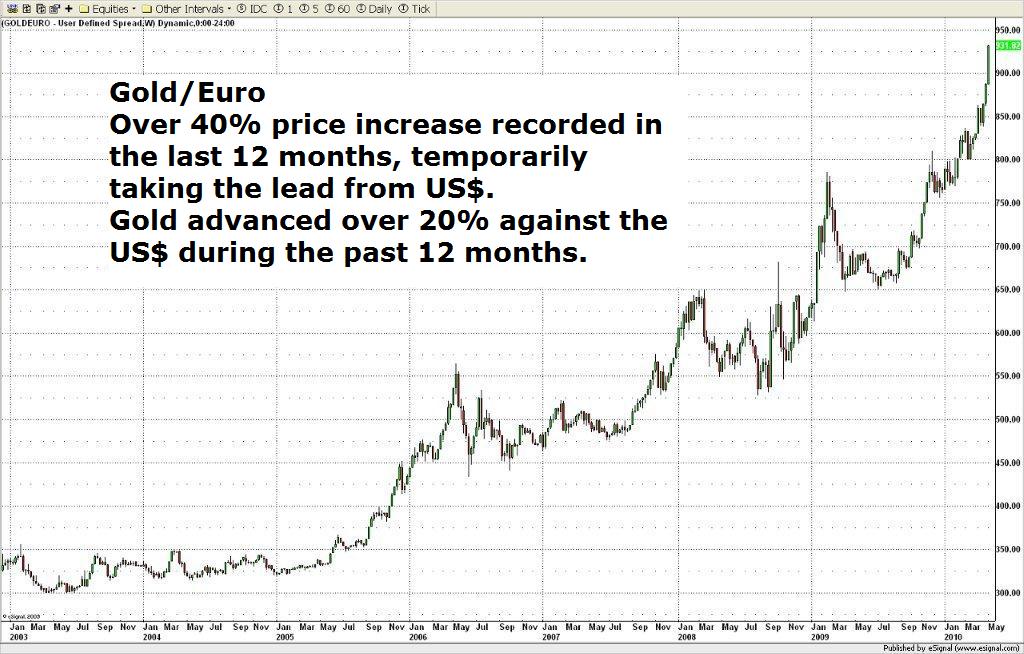
Gold is the final refuge against universal currency debasement
States accounting for two-thirds of the global economy are either holding down their exchange rates by direct intervention or steering currencies lower in an attempt to shift problems on to somebody else, each with their own plausible justification. Nothing like this has been seen since the 1930s.
Ambrose Evans-Pritchard 26 Sep 2010
“We live in an amazing world. Everybody has big budget deficits and big easy money but somehow the world as a whole cannot fully employ itself,” said former Fed chair Paul Volcker in Chris Whalen’s new book Inflated: How Money and Debt Built the American Dream.
“It is a serious question. We are no longer talking about a single country having a big depression but the entire world.”
The US and Britain are debasing coinage to alleviate the pain of debt-busts, and to revive their export industries: China is debasing to off-load its manufacturing overcapacity on to the rest of the world, though it has a trade surplus with the US of $20bn (£12.6bn) a month.
Premier Wen Jiabao confesses that China’s ability to maintain social order depends on a suppressed currency. A 20pc revaluation would be unbearable. “I can’t imagine how many Chinese factories will go bankrupt, how many Chinese workers will lose their jobs,” he said.
Plead he might, but tempers in Washington are rising. Congress will vote next week on the Currency Reform for Fair Trade Act, intended to make it much harder for the Commerce Department to avoid imposing “remedial tariffs” on Chinese goods deemed to be receiving “benefit” from an unduly weak currency.
Japan has intervened to stop the strong yen tipping the country into a deflation death spiral, though it too has a trade surplus. There is suspicion in Tokyo that Beijing’s record purchase of Japanese debt in June, July, and August was not entirely friendly, intended to secure yuan-yen advantage and perhaps to damage Japan’s industry at a time of escalating strategic tensions in the Pacific region.
Brazil dived into the markets on Friday to weaken the real. The Swiss have been doing it for months, accumulating reserves equal to 40pc of GDP in a forlorn attempt to stem capital flight from Euroland. Like the Chinese and Japanese, they too are battling to stop the rest of the world taking away their structural surplus.
The exception is Germany, which protects its surplus ($179bn, or 5.2pc of GDP) by means of an undervalued exchange rate within EMU. The global game of pass the unemployment parcel has to end somewhere. It ends in Greece, Portugal, Spain, Ireland, parts of Eastern Europe, and will end in France and Italy too, at least until their democracies object.
It is no mystery why so many states around the world are trying to steal a march on others by debasement, or to stop debasers stealing a march on them. The three pillars of global demand at the height of the credit bubble in 2007 were – by deficits – the US ($793bn), Spain ($126bn), UK ($87bn). These have shrunk to $431bn, $75bn, and $33bn respectively as we sinners tighten our belts in the aftermath of debt bubbles.. The Brazils and Indias of the world are replacing some of this half trillion lost juice, but not all.
East Asia’s surplus states seem structurally incapable of compensating for austerity in the West, whether because of the Confucian saving ethic, or the habits of mercantilist practice, or in China’s case by the lack of a welfare net. Their export models rely on the willingness of Anglo-PIGS to bankrupt themselves.
So we have an early 1930s world where surplus states are hoarding money, instead of recycling it. A solution of sorts in the Great Depression was for each deficit country to devalue, breaking out of the trap (then enforced by the Gold Standard). This turned the deflation tables on the surplus powers – France and the US from 1929-1931 – forcing them to reflate as well (the US in 1933) or collapse (France in 1936). Contrary to myth, beggar-thy-neighbour policy was the global cure.
A variant of this may now occur. If China continues to hold down its currency, the country will import excess US liquidity, overheat, and lose wage competitiveness. This is the default cure if all else fails, and I believe it is well under way.
The latest Fed minutes are remarkable. They add a new doctrine, that a fresh monetary blitz – or QE2 – will be used to stop inflation falling much below 1.5pc. Surely the Fed has not become so reckless that it really aims to use emergency measures to create inflation, rather preventing deflation? This must be a cover-story. Ben Bernanke’s real purpose – as he aired in his November 2002 speech on deflation – is to weaken the dollar.
If so, he has succeeded. The Swiss franc smashed through parity last week as investors digested the message. But the swissie is an over-rated refuge. The franc cannot go much further without destabilizing Switzerland itself.
Gold has no such limits. It hit $1300 an ounce last week, still well shy of the $2,200-2,400 range reached in the late Medieval era of the 14th and 15th Centuries.
This is not to say that gold has any particular "intrinsic value"’. It is subject to supply and demand like everything else. It crashed after the gold discoveries of Spain’s Conquistadores in the New World, and slid further after finds in Australia and South Africa. It ultimately lost 90pc of its value – hitting rock-bottom a decade ago when central banks succumbed to fiat hubris and began to sell their bullion. Gold hit a millennium-low on the day that Gordon Brown auctioned the first tranche of Britain’s gold. It has risen five-fold since then.
We have a new world order where China and India are buying gold on every dip, where the West faces an ageing crisis, and where the sovereign states of the US, Japan, and most of Western Europe have public debt trajectories near or beyond the point of no return.
The managers of all four reserve currencies are playing fast and loose: the Fed is clipping the dollar; the Bank of England is clipping sterling; the European Central Bank is buying the bonds of EMU debtors to stave off insolvency, something it vowed never to do just months ago; and the Bank of Japan has just carried out two trillion yen of “unsterilized” intervention.
EU austerity policies risk civil war in Greece, warns top German economist Dr Sinn
Greece’s austerity measures cannot prevent default and will lead to a breakdown of the political order if continued for long, a leading German economist has warned.
Ambrose Evans-Pritchard in Cernobbio, Italy 03 Sep 2010
“This tragedy does not have a solution,” said Hans-Werner Sinn, head of the prestigious IFO Institute in Munich.
“The policy of forced 'internal devaluation', deflation, and depression could risk driving Greece to the edge of a civil war. It is impossible to cut wages and prices by 30pc without major riots,” he said, speaking at the elite European House Ambrosetti forum at Lake Como.
“Greece would have been bankrupt without the rescue measures. All the alternatives are terrible but the least terrible is for the country to get out of the eurozone, even if this kills the Greek banks,” he said.
Dr Sinn said Greece is an entirely different case from Spain and Portugal, which still have manageable public debts and can bring their public finances back into line with higher taxes.
“Greece would have defaulted in the period between April 28 and May 7, had the money not been promised by the European Union,” he said, describing the failure of the EU’s bail-out strategy to include a haircut for the banks as an invitation to moral hazard.
“There should be a quasi-insolvency procedure for countries. Creditors have to accept a haircut before any money flows for rescue plans, otherwise we’ll never have debt discipline in the eurozone,” he said.
Greek society has so far held together well, despite a wave of strikes and street violence in the early months of the crisis. However, unemployment is rising fast and political fatigue with such austerity policies typically sets in the second year.
Under the rescue deal, the eurozone pledged €80bn of new loans at 5pc interest and the International Monetary Fund offered a further €30bn.
The joint bail-out was hoped to safeguard Greece against the pressure from global capital markets for two and half years, but the relief rally proved short. Spreads on longer-term Greek government debt have surged back to crisis levels of about 800 basis points, implying a high risk of default.
“We are in the second Greek crisis right now, today,” said Dr Sinn.
Greece is undergoing what amounts to an IMF austerity package but without the IMF cure of debt restructuring or devaluation that usual for a country with a spiralling public debt and a chronic loss of competitiveness.
The IMF says Greece’s debt will rise to 150pc by 2013-2014 even if Athens complies fully, a strategy viewed as self-defeating by several ex-IMF officials. There is a strong suspicion that the real objective is to bail-out North European banks with heavy exposure to Southern Europe, rather help Greece.
Dr Sinn said the Germany is now was super-competitive after clawing back 18pc in competitiveness during its long slump. “We’re in a new phase of history. The toggle switch has turned and we are going to see a mirror image of the last 15 years. This time it is Germany that will have an internal boom,” he said.
Germans will not recyle their savings in the Club Med region. They will invest at home.
As they prepare for holiday reading in Tuscany, City bankers are buying up rare copies of an obscure book on the mechanics of Weimar inflation published in 1974.
Ambrose Evans-Pritchard Published 25 Jul 2010
Ebay is offering a well-thumbed volume of "Dying of Money: Lessons of the Great German and American Inflations" at a starting bid of $699 (shipping free.. thanks a lot).
The crucial passage comes in Chapter 17 entitled "Velocity". Each big inflation -- whether the early 1920s in Germany, or the Korean and Vietnam wars in the US -- starts with a passive expansion of the quantity money. This sits inert for a surprisingly long time. Asset prices may go up, but latent price inflation is disguised. The effect is much like lighter fuel on a camp fire before the match is struck.
People’s willingness to hold money can change suddenly for a "psychological and spontaneous reason" , causing a spike in the velocity of money. It can occur at lightning speed, over a few weeks. The shift invariably catches economists by surprise. They wait too long to drain the excess money.
"Velocity took an almost right-angle turn upward in the summer of 1922," said Mr O Parsson. Reichsbank officials were baffled. They could not fathom why the German people had started to behave differently almost two years after the bank had already boosted the money supply. He contends that public patience snapped abruptly once people lost trust and began to "smell a government rat".
Some might smile at the Bank of England "surprise" at the recent the jump in Brtiish inflation. Across the Atlantic, Fed critics say the rise in the US monetary base from $871bn to $2,024bn in just two years is an incendiary pyre that will ignite as soon as US money velocity returns to normal.
Morgan Stanley expects bond carnage as this catches up with the Fed, predicting that yields on US Treasuries will rocket to 5.5pc. This has not happened so far. 10-year yields have fallen below 3pc, and M2 velocity has remained at historic lows of 1.72.
As a signed-up member of the deflation camp, I think the Bank and the Fed are right to keep their nerve and delay the withdrawal of stimulus -- though that case is easier to make in the US where core inflation has dropped to the lowest since the mid 1960s. But fact that O Parsson’s book is suddenly in demand in elite banking circles is itself a sign of the sort of behavioral change that can become self-fulfilling.
As it happens, another book from the 1970s entitled "When Money Dies: the Nightmare of The Weimar Hyper-Inflation" has just been reprinted. Written by former Tory MEP Adam Fergusson -- endorsed by Warren Buffett as a must-read -- it is a vivid account drawn from the diaries of those who lived through the turmoil in Germany, Austria, and Hungary as the empires were broken up.
Near civil war between town and country was a pervasive feature of this break-down in social order. Large mobs of half-starved and vindictive townsmen descended on villages to seize food from farmers accused of hoarding. The diary of one young woman described the scene at her cousin’s farm.
"In the cart I saw three slaughtered pigs. The cowshed was drenched in blood. One cow had been slaughtered where it stood and the meat torn from its bones. The monsters had slit the udder of the finest milch cow, so that she had to be put out of her misery immediately. In the granary, a rag soaked with petrol was still smouldering to show what these beasts had intended," she wrote.
Grand pianos became a currency or sorts as pauperized members of the civil service elites traded the symbols of their old status for a sack of potatoes and a side of bacon. There is a harrowing moment when each middle-class families first starts to undertand that its gilt-edged securities and War Loan will never recover. Irreversible ruin lies ahead. Elderly couples gassed themselves in their apartments.
Foreigners with dollars, pounds, Swiss francs, or Czech crowns lived in opulence. They were hated. "Times made us cynical. Everybody saw an enemy in everybody else," said Erna von Pustau, daughter of a Hamburg fish merchant.
Great numbers of people failed to see it coming. "My relations and friends were stupid. They didn’t understand what inflation meant. Our solicitors were no better. My mother’s bank manager gave her appalling advice," said one well-connected woman.
"You used to see the appearance of their flats gradually changing. One remembered where there used to be a picture or a carpet, or a secretaire. Eventually their rooms would be almost empty. Some of them begged -- not in the streets -- but by making casual visits. One knew too well what they had come for."
Corruption became rampant. People were stripped of their coat and shoes at knife-point on the street. The winners were those who -- by luck or design -- had borrowed heavily from banks to buy hard assets, or industrial conglomerates that had issued debentures. There was a great transfer of wealth from saver to debtor, though the Reichstag later passed a law linking old contracts to the gold price. Creditors clawed back something.
A conspiracy theory took root that the inflation was a Jewish plot to ruin Germany. The currency became known as "Judefetzen" (Jew- confetti), hinting at the chain of events that would lead to Kristallnacht a decade later.
While the Weimar tale is a timeless study of social disintegration, it cannot shed much light on events today. The final trigger for the 1923 collapse was the French occupation of the Ruhr, which ripped a great chunk out of German industry and set off mass resistance.
Lloyd George suspected that the French were trying to precipitate the disintegration of Germany by sponsoring a break-away Rhineland state (as indeed they were). For a brief moment rebels set up a separatist government in Dusseldorf. With poetic justice, the crisis recoiled against Paris and destroyed the franc.
The Carthaginian peace of Versailles had by then poisoned everything. It was a patriotic duty not to pay taxes that would be sequestered for reparation payments to the enemy. Influenced by the Bolsheviks, Germany had become a Communist cauldron. Spartakists tried to take Berlin. Worker `soviets' proliferated. Dockers and shipworkers occupied police stations and set up barricades in Hamburg. Communist Red Centuries fought deadly street battles with right-wing militia.
Nostalgics plotted the restoration of Bavaria’s Wittelsbach monarchy and the old currency, the gold-backed thaler. The Bremen Senate issued its own notes tied to gold. Others issued currencies linked to the price of rye.
This is not a picture of America, or Britain, or Europe in 2010. But we should be careful of embracing the opposite and overly-reassuring assumption that this is a mild replay of Japan’s Lost Decade, that is to say a slow and largely benign slide into deflation as debt deleveraging exerts its discipline.
Japan was the world’s biggest external creditor when the Nikkei bubble burst twenty years ago. It had a private savings rate of 15pc of GDP. The Japanese people have gradually cut this rate to 2pc, cushioning the effects of the long slump. The Anglo-Saxons have no such cushion.
There is a clear temptation for the West to extricate itself from the errors of the Greenspan asset bubble, the Brown credit bubble, and the EMU sovereign bubble by stealth default through inflation. But that is a danger for later years. First we have the deflation shock of lives. Then -- and only then -- will central banks go to far and risk losing control over their printing experiment as velocity takes off. One problem at a time please.
Dublin has played by the book. It has taken pre-emptive steps to please the markets and the EU. It has done an IMF job without the IMF. Indeed, is has gone further than the IMF would have dared to go.
It has imposed draconian austerity measures. The solidarity of the country has been remarkable. There have no riots, and no terrorist threats.
Protesters attack riot police in Athens over harsh austerity measures
Yet as of today it is paying 5.48pc to borrow for ten years, or near 8pc in real terms once deflation is factored in. This is crippling and puts the country on an unsustainable debt trajectory if it lasts for long.
Yet Greece is able to borrow from the EU at 5pc and from the IMF at a staggered rate far below that (still too high for the policy to work, but that is another matter). These were the terms of the €110bn joint bail-out.
To add insult to injury Ireland is having SUBSIDIZE Greece to meet its share of the rescue fund.
I am sure you can all see the absurdity of this. It has moral hazard written all over it, and shows what happens once a dysfunctional system twists itself into ever greater knots rather confronting the core issue.
Yes, I know that the Irish and Greek maturities are different but the fact is that Greece has extracted better terms by letting matters get further out of hand.
George Papandreou’s PASOK has benefitted from dilly-dallying on the first set of austerity measures, and – not to be too diplomatic about it – by insulting the Germans with demands for war reparations. Hotheads also set fire to downtown Athens and Thessaloniki, improving the effect.
If I were Irish – (and I suppose in a sense I am: Sir John Parnell was my great, great, great grandfather) – I would be a little annoyed.
I try to remain optimistic that the US and China will work out a more or less amicable way to run the world for the next half century, a “Chimerica” of interwoven superpowers.
But it was slightly disturbing to hear the warnings of a distinguished China-watcher at a closed-door session of the annual Ambrosetti conference on Lake Como.
(This gathering of the global policy elites at Villa D’Este is a hardship assignment for Telegraph hacks. It fell to me again this year, but somebody has to do it.)
“China’s military spending is growing so fast that it has overtaken strategy,” said Professor Huang Jing from the Lee Kwan Yew School of Public Policy in Singapore. (He kindly let me quote his remarks.)
“The young officers are taking control of strategy and it is like young officers in Japan in the 1930s. They are thinking what they can do, not what they should do. This is very dangerous.
“They are on a collision course with a US-dominated system”.
Harvard Professor Niall Ferguson rattled me even further with a talk warning that the Chimerica marriage of the last generation is “on the rocks”.
“China gets 10pc growth: the US gets 10pc unemployment. That doesn’t seem the basis for a happy marriage,” said Prof Fergusson, – who used to sit next to me at the Telegraph as a young leader writer almost 20 years ago, before he went on to become one of the 100 most influential people on the planet (Time magazine).
China’s trade surplus is surging back to near record levels, yet the yuan has barely moved against the dollar since the fixed peg ended in June. It has actually fallen against a trade-weighted basket of currencies.
This is not an accident. The exchange rate is controlled. The yuan must rise – ceteribus paribus – unless the central bank prevents it doing so by purchasing foreign assets.
Prof Ferguson said naval rivalry is passé – cyberwarfare is the issue of the future, and he advises the West to be a little more careful about its reliance on Chinese-manufactured microchips.
Be that as it may, the current flash-point is a very old fashioned showdown between gunboats in the Yellow Sea and the South China Sea (the latter now a “core interest” of China along with Tibet and Taiwan), also claimed in part by a ring of other nations who are not pleased.
In late July, the chairman of US chiefs of staff, Admiral Mike Mullen, said he had moved from being “curious” about what the Chinese were doing, “to being concerned about what they’re doing. They seem to be taking a much more aggressive approach.”
“I see a fairly significant investment in high-end equipment – satellites, ships … anti-ship missiles, obviously high-end aircraft and all those kinds of things. They are shifting from a focus on their ground forces to focus on their navy, and their air force.”
Last week this little spat escalated to the point where a Chinese submarine erected a Chinese flag on the seabed of the South China Sea, 4,000 meters below the surface.
China has a perfect right to develop a blue-water navy and to make its presence felt in the region. The question in such matters is judging the purpose and precise circumstances, and I must confess that Prof Huang’s comments were slightly disturbing, always bearing in mind that he has a Singapore (Chinese diaspora) perspective.
Let it be said in China’s defence that it occupies no overseas military bases, and has no modern history of projecting imperial power.
On balance, I remain hopeful that country with a one-child policy, an aging crunch from Hell, and a chronic dearth of young people, will show an enormous reluctance to support military adventurism. Losing an only child is especially cruel.
Let us hope that the Communist hierachy in Beijing can rein in those young officers. But as Dr Huang said, they can no longer control much of anything, least of all the 17m-strong base of the Communist Party.
“The empire has lost control of its officials, which is how Chinese empires have always fallen in history.”
Is China's Politburo spoiling for a showdown with America?
The long-simmering clash between the world's two great powers is coming to a head, with dangerous implications for the international system.
Ambrose Evans-Pritchard 14 Mar 2010
US President Barack Obama shakes hands with Chinese ambassador to America Zhou Wenzhong on the Great Wall of ChinaPhoto: Reuters
China has succumbed to hubris. It has mistaken the soft diplomacy of Barack Obama for weakness, mistaken the US credit crisis for decline, and mistaken its own mercantilist bubble for ascendancy. There are echoes of Anglo-German spats before the First World War, when Wilhelmine Berlin so badly misjudged the strategic balance of power and over-played its hand.
Within a month the US Treasury must rule whether China is a "currency manipulator", triggering sanctions under US law. This has been finessed before, but we are in a new world now with America's U6 unemployment at 16.8pc.
"It's going to be really hard for them yet again to fudge on the obvious fact that China is manipulating. Without a credible threat, we're not going to get anywhere," said Paul Krugman, this year's Nobel economist.
China's premier Wen Jiabao is defiant.
"I don’t think the yuan is undervalued. We oppose countries pointing fingers at each other and even forcing a country to appreciate its currency," he said yesterday. Once again he demanded that the US takes "concrete steps to reassure investors" over the safety of US assets.
"Some say China has got more arrogant and tough. Some put forward the theory of China's so-called 'triumphalism'. My conscience is untainted despite slanders from outside," he said
Days earlier the State Council accused America of serial villainy. "In the US, civil and political rights of citizens are severely restricted and violated by the government. Workers' rights are seriously violated," it said.
"The US, with its strong military power, has pursued hegemony in the world, trampling upon the sovereignty of other countries and trespassing their human rights," it said.
"At a time when the world is suffering a serious human rights disaster caused by the US subprime crisis-induced global financial crisis, the US government revels in accusing other countries." And so forth.
Is the Politiburo smoking weed?
I let others discuss the rights and wrongs of this, itself a response to the US report card on China. Clearly, Beijing is in denial about is own part in the global imbalances behind the credit crisis, specifically by running structural trade surpluses, and driving down long rates through dollar and euro bond purchases. No doubt the West has made a hash of things, but the Chinese view of events is twisted to the point of delusional.
What interests me is Beijing's willingness to up the ante. It has vowed sanctions against any US firm that takes part in a $6.4bn weapons contract for Taiwan, a threat to ban Boeing from China and a new level of escalation in the Taiwan dispute.
In Copenhagen, Wen Jiabao sent an underling to negotiate with Mr Obama in what was intended to be - and taken to be - a humiliation. The US President put his foot down, saying: "I don't want to mess around with this anymore." That sums up White House feelings towards China today.
We have talked ourselves into believing that China is already a hyper-power. It may become one: it is not one yet. China is ringed by states - Japan, Korea, Vietnam, India - that are American allies when push comes to shove. It faces a prickly Russia on its 4,000km border, where Chinese migrants are itching for Lebensraum across the Amur. Emerging Asia, Brazil, Egypt and Europe are all irked by China's yuan-rigged export dumping.
Michael Pettis from Beijing University argues that China's reserves of $2.4 trillion - arguably $3 trillion - are a sign of weakness, not strength. Only twice before in modern history has a country amassed such a stash equal to 5pc-6pc of global GDP: the US in the 1920s, and Japan in the 1980s. Each time preceeded depression.
The reserves cannot be used internally to support China's economy. They are dead weight, beyond any level needed for macro-credibility. Indeed, they are the ultimate indictment of China's dysfunctional strategy, which is to buy $30bn to $40bn of foreign bonds every month to hold down the yuan, refusing to let the economy adjust to trade realities. The result is over-investment in plant, flooding the world with goods at wafer-thin export margins. China's over-capacity in steel is now greater than Europe's output.
This is catching up with China, in any case. Professor Victor Shuh from Northerwestern University warns that the 8,000 financing vehicles used by China's local governments to stretch credit limits have built up debts and commitments of $3.5 trillion, mostly linked to infrastructure. He says the banks may require a bail-out nearing half a trillion dollars.
As America's creditor - owner of some $1.4 trillion of US Treasuries, agency bonds, and US instruments - China can exert leverage. But this is not what it seems.If the Politburo deploys its illusiory power, Washington can pull the plug on China's export economy instantly by shutting markets. Who holds whom to ransom?
Any attempt to retaliate by triggering a US bond crisis would rebound against China, and could be stopped - in extremis - by capital controls. Roosevelt changed the rules in 1933. Such things happen. The China-US relationship is no doubt symbiotic, but a clash would not be "mutual assured destruction", as often claimed. Washington would win.
Contrary to myth, the slide to protectionism after the 1930 Smoot-Hawley Tariff Act did not cause the Depression. Trade contracted more slowly in the 1930s than this time. The Smoot-Hawley lesson is that tariffs have asymmetrical effects. They devastate surplus countries: then America. Deficit Britain did well by retreating into Imperial Preference.
Barack Obama has never exalted free trade. This orthodoxy is, in any case, under threat in the West. His top economic adviser Larry Summers let drop in Davos that free-trade arguments no longer hold when dealing with "mercantilist" powers. Adam Smith recognized this too, despite efforts by free-trade ultras to appropriate him for their cause.
China's trasformation has been remarkable since Deng Xiaoping unleashed capitalism, but as ex-diplomat George Walden writes in China: a Wolf in the World? you cannot feel at ease with a regime that still covers up Mao's murderous nihilism. He reminds us too that China has never forgiven the humilations inflicted by the West when the two civilizations collided in the 19th Century, and intends to exact revenge. Handle with care.
Wall Street Drug Use: Employees Giving Up Cocaine for Pot and Pills
The credit crisis appears to have sobered up Wall Street in more ways than one.
A review of drug-test data compiled by drug testing firm Sterling Infosystems Inc., shows that cocaine is losing its favor among investment professionals. What drug is their choice? Marijuana.
Last year, cocaine showed up in 7% of the positive tests at Wall Street firms, down from 16% in 2007, according to Sterling, a New York-based firm that screens about 5,900 employees a year for some 270 finance shops.
Meanwhile, the prevalence of marijuana in failed tests jumped from 64% to 80% between 2007 and 2009.
“I think the incidence of hard drug use is lower today than it was 10 or 15 years ago,” says Adam Zoia, CEO of executive recruiting firm Glocap Search LLC. “The banks, in particular, are pretty persnickity on background checks.”
In all, finance seems to be a relatively clean profession. Only 2% of the industry failed drug tests last year, compared with 3.6% of the working world at-large, according to Sterling. Retail workers, in comparison, were red-flagged 4.1% of the time.
The highest levels of abuse seem to be at real estate investment trust companies, a sector that, incidentally, does more random testing than others.
But the test results generally capture drug use among new hires, candidates who knew that they would likely be tested. Random drug testing is rare, according to a spokesman for a bulge-bracket bank who asked to remain unnamed.
Among existing employees, psychologists and counselors said that drug abuse has not slackened. Some even said it is peaking, exacerbated by the credit crisis and the volatile and tenuous recovery that has ensued.
Seabrook House, a 24-bed luxury rehab facility in Pennsylvania, has been crammed with Wall Street refugees in recent months, according to Clinical Director William Heran. They are paying $24,000 for a three-month program to get clean.
Mr. Heran has been around long enough to discern a forex trader from an M&A banker. He says the rage these days is a Pez dispenser with the head of a red devil. Inside? Pills of Oxycodone or Percocet.
“We’re in crisis mode,” he says. “Many of these drugs are so accessible to the average person, let alone the person who is well-spoken and professional.”
Indeed, amphetamines seem to be gaining cache, showing up in 10% of Sterling’s positive tests this year, compared with 3% in 2007.
Across the U.S., cocaine and marijuana use has been static since 2002 at least, according to federal Health Department data. But New York is a hot-bed for illicit drugs and Manhattanites are particularly heavy users.
In a 2001 survey, 9.6% of Manhattan residents said they had used marijuana in the previous year, compared with 6% of people across the country; 5% of the island’s residents had done cocaine in the previous month, compared with 2.3% U.S.-wide.
Turning Point For Leaders, a Connecticut-based intervention and rehab company, is also seeing a steady stream of clients from Wall Street. Robert Curry, who founded the business, says that the industry is still a hot bed of abuse.
“Investment bankers — gunslingers, as we call them — are highly prone to addiction,” he explained. “And there’s a lot of denial among employers. The attitude is: ‘If they can’t fix themselves, then they’re going to have to live with it. We’re not going to put any time and effort into it.’”
Many counselors says that finance workers feel entitled to illicit drugs, given their paychecks and stress of their jobs. They are also allegedly very good at masking their addictions, the counselors say.
Heavy users, however, are seldom fooling their employers, says Brad Lamm, president of New York-based Intervention Specialists. Lamm has also seen a surge in substance abuse on Wall Street – in his words “a lot of crack and coke.”
“The titans of Wall Street normalize crazy behavior all the time,” he says. “If somebody’s delivering and showing up and doing the work, they almost have to catch on fire for someone to sound the alarm.”
The upside is that none of Mr. Lamm’s clients has been fired for abuse. In fact, he typically contacts the employer before an intervention with a sort of mantra that he uses to get through to both the user and the boss: “Dead guys don’t bonus.”
Freedom Flotilla: The detail that escaped Netanyahu
Thierry Meyssan
8 June 2010
As is often the case when the stakes are high, the media distracts the public from the real issues. The handling of the Israeli attack against the Freedom Flotilla is another illustration of this. The mainstream media have been trying to distinguish between the good and the bad guys, instead of analysing what is being played out.
In this article, Thierry Meyssan dissects both Tel Aviv’s and Ankara’s real motivations, and discloses the «detail» that transformed Israel’s armed operation into a diplomatic debacle.
One week after the attack by Israeli forces on the high seas against a humanitarian convoy, what are the new elements that have emerged and what initial conclusions can be drawn? Before answering these questions, we should start by sweeping aside the media babble clouding the issue.
In the first place, the aim of the Freedom Flotilla was not simply to transport material assistance to the people of Gaza, but also to break the blockade [1]. This fact, which was kept secret for two days, suddenly crept into the arguments of Israeli spokespersons. Hence they accused the humanitarian workers of being crypto-political activists, notwithstanding their consistent claim that their action was meant to compensate for the failure of States to enforce international and humanitarian law. The activists aboard the Flotilla were ordinary citizens from various parts of the world determined to enact the provisions of UN resolution 1860.
The Israeli spokespersons blamed the Flotilla passengers for opposing resistance, accusing them of having used weapons against the soldiers. This was purported to show that the people were actually « terrorists ». To corroborate this argument, the Foreign Ministry disseminated various photos of knives and attack weapons confiscated on the Mavi Marmara [2]. Now, it just so happens that the photos’ EXIF data indicates that most are old and were taken in a different context [3]. This is a classic propaganda technique : while we are busy discussing the authenticity of the photos, they are conveniently mask the fact that, in the eyes of international law, not only is the continuation of the blockade illegal, but, as the occupying power, Israel has the duty to ensure the safe delivery of the humanitarian aid. In addition, the attack on the flotilla in international waters being illegal, the passengers had the legitimate right to rebel, provided they – the passengers – made use of « proportionate force », which was the case.
Secondly, in terms of security, Israel had no need to stop this fleet. It was not transporting weapons for the Palestinian resistance, only aid for the population. Indeed, Tel Aviv has imposed an embargo which, in the words of the United Nations Special Rapporteur, amounts to "collective punishment", but even under the punishment inflicted on 1.5 million Gazans, 10,000 tons of goods do not represent a significant stake. It is not with less than 7 kg per capita that the people of Gaza will rebuild their houses and feed their families. Israel has already allowed ground and sea convoys to go through and, this week, it has pledged to deliver the aid arriving on the cargo vessel Rachel Corrie. Israel’s goal, as I have stated from the beginning, was to "undercut the credibility of Turkey », at a time when it has been moving closer to Syria and Iran - or, clearly put, to bring down the Erdogan government and "claim the leadership of the Zionist movement by showing that Tel Aviv decides and Washington complies [4].
The respective strategies
This ninth convoy composed of a group of associations was supported by Ankara to demonstrate the illegality of the blockade.
At his press conference in New York, Turkish Foreign Minister Ahmet Davutoğlu, said his government had intensified its contacts with his Israeli counterpart to inform him about the convoy and to request free passage.
As far as we can tell, Ankara had considered three scenarios: 1. Israel gives the convoy the green light, which is greeted triumphantly by the Gazans. In this case, Turkey can demonstrate that, unlike most Arab governments, it is independent and does not abide by the orders of Tel Aviv. 2. Israel diverts the convoy and directs it the port of Ashdod/Isdud. The goods and the humanitarian workers proceed to Gaza by road, where they are given a jubilant welcome. Tel Aviv can hold its head up high, and Ankara’s political gain is minimum. 3. Israel sabotages the convoy or boards it for inspection. In this case, Ankara internationalises the incident and seizes the opportunity to challenge the continuation of the blockade. Politically speaking, this is the best scenario.
The Israeli government believed it had another option: to show to the Turkish Army Chiefs of Staff that if the civilian government came to the aid of the Palestinians, Tel Aviv could in turn instigate the Kurdish separatists; and prove once again that, with the backing of the United States, Israel is above international law. In short, the Netanyahu government considered it possible to pressure the Turkish military to organise a fifth coup d’état.
With this in mind, the Netanyahu-Barak duo sponsored Kurdish mercenaries to launch a terrorist attack against the naval military base of Iskenderun in southern Turkey. It was carried out on 31 May shortly after midnight. Rockets were fired during the changing of the guard, killing 7 soldiers [5].
Moreover, the Israeli government made sure it had Washington’s backing [6]. As was pointed out by Libyan leader Muammar al-Gaddafi [7], it is unthinkable that the Israeli forces could have launched a piracy operation in the Mediterranean Sea without first informing the VIth United States fleet, responsible for combating piracy and terrorism in this area and with whom they routinely collaborate. Israel’s idea was to seize the goods and forward them in Gaza to show its good faith, while arresting the activists and accuse them of having ties with the "jihadists" in order to compromise the democratic-Muslim government of the AKP (Justice and Development Party).
The storming of the flotilla could have taken place either at night in the high seas or by day in Palestinian waters. The Israeli government chose the first option so that the assault would not be commented live on satellite television networks by the sixty-odd journalists invited by the associations. The order was given once the attack against the Iskenderun naval base was over.
Israel was, in fact, well covered by the United States, which (together with France) strived to avert any binding decision by the Security Council. After an interminable session, what finally came out was a miserly presidential statement [8]. It contains a litany of pious wishes on the liberation of prisoners, on humanitarian aid for the Gazans, and the creation of a Palestinian State. In the wings, the Council was divided on a specific legal point, which we explain in greater detail below. It revealed its impotence to take direct responsibility for the elucidation of the facts: instead of creating an inquiry commission, it limited itself to calling for "a prompt, impartial, credible and transparent investigation [possibly by Israel] conforming to international standards ».
While, on its part, the UN Commission on Human Rights has created a fact-finding mission, the fact remains that its area of authority is limited [9] As it happens, Israel couldn’t care less, as was the case for Desmond Tutu’s mission on the crimes perpetrated at Jenin, or that of Richard Goldstone on the Gaza bombardments.
Territorial confusion
Although news agencies were reporting that 16 had been killed, the actual death toll would appear to be 9, provided of course the seriously wounded do not succumb to their injuries. According to Turkish television, the Israeli squad had a list of people to be eliminated, but their plan was thwarted by the resistance of the passengers; only Raed Salah, one of the leaders of the Islamic Movement in Israel, was hit. It is probable that at the time it ordered the assault, the Netanyahu government already knew that the Mavi Marmara had been registered in the Comoros Islands. The commandos therefore believed they were acting on Comoran territory.
However, the organizers, who were politically supported by the Turkish authorities, had hoisted the Turkish flag, not the one from Comoros. In addition, they had displayed a huge Turkish flag on the side of the cargo. According to the jurisprudence at the International Court of Justice in The Hague [10], the boat was not Comorian territory, but Turkish. Besides, it had already changed its nationality when it joined the rest of the fleet and was denied mooring by the Republic of Cyprus precisely for that reason.
International debate on the failure of Israeli intelligence has been focusing exclusively on this one issue: how could the Mossad not have known about the boat’s change of nationality? All the awkward statements coming from the Foreign Ministries, in Washington, Paris and elsewhere, requesting that the facts be established before they can decide on the legal consequences, reflect the same concern : at the time of the assault, was the Mavi Marmara Comoran or Turkish territory ?
The answer to that question is of the utmost importance. Indeed, Turkey is member of the NATO and article 5 of the North Atlantic Treaty stipulates that : « The Parties agree that an armed attack against one or more of them in Europe or North America shall be considered an attack against them all and consequently they agree that, if such an armed attack occurs, each of them, in exercise of the right of individual or collective self-defence recognised by Article 51 of the Charter of the United Nations, will assist the Party or Parties so attacked by taking forthwith, individually and in concert with the other Parties, such action as it deems necessary, including the use of armed force, to restore and maintain the security of the North Atlantic area.”
Just before the Atlantic Council meeting, Turkish Justice proceeded to a new crackdown to arrest people suspected of plotting against the constitutional government. Among the suspects is former Minister of Justice Seyfi Oktay. They allegedly belonged to the Ergenekon network, the current local version of Gladio, that is to say the secret services of NATO.
The symbolism of these arrests has been heightened by the campaign conducted for the last two years by the supporters of the AKP in the media. Through televised fiction and films, they have been popularizing the way in which NATO intelligence services organised four consecutive coups d’Etat in their country. They haven’t stopped explaining that the Anglo-Saxons play a double game; officially allied to Ankara, they have been stoking the Kurdish, Armenian and Cyprus problems with a view to destabilizing Turkey.
At the end of a long and trying meeting behind closed doors, NATO Secretary-General Anders Fogh Rasmussen pronounced a one-sentence declaration : "I request the immediate release of the detained civilians and ships held by Israel" [11].
Of course, no one ever considered seriously that NATO would coerce Israel, but therein lies the pressure lever : in order to preserve the Alliance, it was paramount for the United States to arrive at an amicable resolution of the conflict.
Exactly 24 hours after Rasmussen’s statement, the spokesman of the Israeli jailhouse administration announced the release of all foreign prisoners (Israeli nationals remained in detention) and their return to their countries of origin or to other host countries.
This new developmet brought an unexpected problem. The Atlantic Alliance was created by the United States and the United Kingdom together with the states belonging to their post-Yalta sphere of influence. They were the masters and the other members were under their command. Apart from the DeGaulle interlude, no member has ever dared to question this set up. Until now:as a sign of its ascending power, Turkey has just used the North Atlantic Treaty to force the hand of the United States.
The Erdoğan-Peres tête-à-tête continues
While handcuffing and beating up their prisoners, the Israeli commando squads were shouting " One minute! ", "One times! ", in mocking reference to the altercation between Prime Minister Recep Tayyip Erdogan and Israeli president Shimon Peres, during the 2009 Davos Economic Forum.
[Voltaire Network is not responsible for the random publicity inserted by Google in this video.]
This verbal affront has incensed Turkish public opinion who considers itself insulted through its Prime Minister. Not only does it approve of Mr. Erdogan’s reaction, it wants him to play a more assertive role on the international scene, as indicated by the lastest polls.
This explains why the Turkish Parliament adopted a very aggressive resolution, urging the Government to « reconsider ... political, military and economic relations with Israel and take the most effective measures necessary. » [12]
The Ministry of Justice has constituted a working group to examine all legal recourses contemplated in domestic as well as international law. It is essentially drawing on a memorandum by a London lawyers’ association, that we have published in full. [13]
An investigation has been opened by the Prosecutor’s office in Istanbul-Bakirköy [14] which has already arranged for a forensic autopsy of the victims plus a hearing of the Turkish witnesses. It could swiftly indict Benjanmin Netanyahu and Generals Ehud Barack and Gabi Ashkenasi for piracy, aggravated assault, murder, kidnapping and arbitrary detention. However, according to the available evidence, the prosecutor could reclassify the charges as crimes against humanity. In that event, the accused could no longer travel abroad without risking being taken in for questioning.
Asserting the leadership of the Zionist movement
If one goes by the White House press releases and briefings relating to the successive phone conversations between president Obama and Prime Minister Natanyahu, the Israelis were initially proud of their operation. The first call was placed by Mr Netanyahu, apologizing to President Obama for being unable to honour his invitation given the events that forced him to return immediately in Tel Aviv. In the course of the second conversation, Mr. Netanyahu gave his version of the events, putting President Obama before a fait accompli. While the United States authorized the inspection of the boats, it did not anticipate the slaughter. The third conversation centered on how the Security Council meeting should be torpedoed, in other words the Israeli imposed their road map to the United States.
The tone changes when it comes to referring the matter to the Atlantic Council. Mr Netanyahu becomes difficult to reach, while Secretary of State Hillary Clinton has to confront her Turkish counterpart who came to harass her. She looks for a scapegoat and asks General Ehud Barack to find a solution by pinning the responsibility on a subordinate, but Barack refuses to go along. Not only did he not dissociate himself from the commando squad involved in the raid, but he stood up for the soldiers and even paid them a personal visit.
Ultimately, the Israelis were obliged to release the prisoners. They imposed the situation but finally the solution was imposed on them. An additional problem arises from the killing of Furkan Dogan, a young man of dual Turkish-U.S. nationality, whose family may sue the State of Israel for murder in a U.S. court.
Initial conclusions
In the end, the Israeli government failed to reach its two objectives.
Turkey has come out strengthened from the confrontation, reinforcing as well the triangle it has formed with her Syrian and Iranian allies. At the same time,Turkey has acquired several new cards. Turkish Justice will judge in absentia the Israeli Ministers and generals for the crimes committed. The fact-finding mission set up by the UN Commission on Human Rights will tarnish Israel’s image even further.
Above all, Turkey is in a position to play a second game. According to our information, Ankara. According to our information, Ankara has told the State Department that Mr Erdogan was planning to personally break the blockade of Gaza, as François Mitterrand did with the siege of Sarajevo [15]. He could embark on a fleet chartered by humanitarian associations and politically supported by governments, including Iran, Syria and Venezuela. Hassan Nasrallah, Hezbollah Secretary General, has already called on all the Lebanese to take part in future initiatives. A appeal could also be made to sailors in the Mediterranean Sea, so that hundreds of pleasure boats could join in. The whole operation would be escorted by the Turkish navy, a member of NATO. This prospect has alarmed Washington which more enthusiastically than ever is trying to convince Tel Aviv to lift the blockade.
Furthermore, the prestige acquired by Turkey during this operation spotlights the collaboration of certain Arab governments with Israel, particularly that of Hosni Moubarak. The Egyptian President has indeed actively contributed to the siege of Gaza to prevent any contact between the Palestinian Hamas and the Egyptian Moslem Brothers. Cairo had no qualms about building a steel wall with money from the U.S. and French know-how to immure 1,5 million Gazans [16]. And one stills remember Foreign Secretary Ali Aboul Gheit’s reply when asked what he would do about the starving women and children who tried to cross the border : "Let them try and we will break their legs!". As a result, the blood of the Marmara victims has spilled on the Mubarak Government and Alexandria is on the brink of an uprising. To release the tension, the Egyptial government has decided to partially open the border temporarily.
Before playing in the big leagues, Turkey had most probably secured its rear. Based on diplomatic sources, our hypothesis is that Turkey received guarantees from Russia during President Dmitry Medvedev’s visit to the Middle East. This scenario is corroborated by the sudden announcement of the arrival in Ankara, on 8 June, of Prime Minister Vladimir Putin to attend a summit which was not on his agenda. There, he will meet Iranian President Mahmoud Ahmadinejad and Syrian President Bashar al-Assad (who is not yet a member of this forum, but has all of a sudden been invited as an observer). The Israeli delegation that is on the list will most probably not turn up: any high-level official would be at the mercy of the Istanbul-Bakırköy Prosecutor. The Turkish justice official may unexpectedly decide to qualify the atrocities committed as crimes against humanity and proceed to arrest suspects.
Flottille de la liberté : le détail que Netanyahu ignorait
Thierry Meyssan 6 juin 2010
Comme souvent face à des enjeux importants, la presse distrait le public des vraies questions. Le traitement de l’attaque israélienne contre la Flottille de la liberté en est un nouvel exemple. Les grands médias cherchent à dire qui sont les bons et les méchants, pas à expliquer le rapport de force.
Thierry Meyssan analyse ici les vraies motivations de Tel-Aviv et d’Ankara, et dévoile le détail qui a transformé le coup de force israélien en désastre diplomatique.
Une semaine après l’attaque en haute mer d’un convoi humanitaire maritime par les troupes israéliennes de quels éléments nouveaux dispose t-on et quelles premières conclusions peut-on établir ?
Avant de répondre à cette double question, il convient de balayer le blabla médiatique qui obscurcit le sujet.
En premier lieu, la Flottille de la liberté n’entendait pas simplement apporter du secours matériel aux Gazaouites, mais aussi briser le blocus [1]. Cette donnée, après avoir été occultée durant deux jours, a soudain été ajoutée à l’argumentaire des porte-parole israéliens. Ceux-ci ont alors accusé les humanitaires d’être des crypto-politiques, bien que les associations aient toujours revendiqué palier à l’impuissance des Etats à faire respecter le droit international et humanitaire. Les militants embarqués sur la Flottille étaient des citoyens du monde venus appliquer la résolution 1860 des Nations Unies.
Les porte-parole israéliens ont reproché aux humanitaires d’avoir opposé une résistance aux soldats et d’avoir même utilisé des armes contre eux. Cela montrerait qu’il s’agissait en réalité de « terroristes ». Pour appuyer ce raisonnement, le ministère des Affaires étrangères a diffusé diverses photos de couteaux et d’armes par destination saisis sur le Mavi Marmara [2]. Or, les données EXIF de ces photos montrent que la plupart sont anciennes et ont été prises en d’autres circonstances [3]. Il s’agit là d’une technique classique de propagande, pendant que l’on discute de la véracité des photos, on masque que, au regard du droit international, non seulement la poursuite du blocus est illégale, mais Israël, puissance occupante a le devoir de veiller à l’acheminement de l’aide humanitaire. En outre, l’attaque de la flottille en eaux internationales étant illégale, les passagers avaient le droit de se rebeller, pourvu qu’ils aient —eux— un usage « proportionné de la force », ce qui fut le cas.
En second lieu, en termes de sécurité, Israël n’avait que faire de laisser passer cette flottille. Elle n’apportait pas d’armes à la Résistance palestinienne, uniquement de l’aide à la population. Certes, Tel-Aviv a imposé un embargo qui constitue, selon les termes du rapporteur des Nations Unies, « une punition collective », mais même au regard de cette punition imposée à 1,5 million de Gazaouites, 10 000 tonnes de marchandises ne représentent pas un enjeu significatif (cela fait moins de 7 kilos par habitant, ce n’est pas avec cela que l’on reconstruit sa maison et que l’on nourrit sa famille). Israël a d’ailleurs déjà laissé passer des convois terrestres et un convoi maritime, et il s’est engagé cette semaine à acheminer l’aide transportée par le cargo Rachel Corrie. L’objectif israélien, ainsi que je l’ai indiqué dans ces colonnes dès le premier jour, était de « casser la crédibilité de la Turquie », au moment où elle se rapproche de la Syrie et de l’Iran –ou, de manière plus précise, de faire tomber le gouvernement Erdoğan— et de « revendiquer le leadership du mouvement sioniste en montrant que Tel-Aviv décide et Washington entérine » [4].
Les stratégies respectives
Ce neuvième convoi du collectif associatif a été encouragé par Ankara pour démontrer l’illégalité du blocus.
Lors de sa conférence de presse à New York, le ministre turc des Affaires étrangères, Ahmet Davutoğlu, a indiqué que son gouvernement avait multiplié les contacts préalables avec son homologue israélien pour l’informer du convoi et lui demander de laisser le passage ouvert.
Autant que l’on puisse savoir, Ankara avait envisagé trois scénarios : 1. Israël laisse passer le convoi qui est accueilli en fanfare par les Gazaouites. Dans ce cas, la Turquie démontre que, contrairement à la plupart des gouvernements arabes, elle est indépendante et ne se plie pas aux injonctions de Tel-Aviv. 2. Israël déroute le convoi et le fait accoster à Ashdod/Isdud. Les marchandises et les humanitaires rejoignent Gaza par la route où ils sont accueillis en fanfare. Tel-Aviv garde la tête haute, et le bénéfice politique est moindre pour Ankara. 3. Israël sabote la flottille ou l’arraisonne. Dans ce cas, Ankara internationalise l’incident et en profite pour remettre en cause la continuation du blocus. C’est le meilleur scénario, politiquement parlant.
Le gouvernement israélien a cru disposer d’une autre option : montrer à l’état-major turc que si le gouvernement civil vient aider les Palestiniens, Tel-Aviv peut en retour agiter les séparatistes kurdes ; et montrer une fois de plus, qu’adossé aux Etats-Unis, Israël est au dessus du droit international. Bref, le gouvernement Netanyahu pensait possible de pousser les militaires turcs à perpétrer un cinquième coup d’Etat.
Dans cette optique, le tandem Netanyahu-Barak a commandité à des mercenaires kurdes une attaque terroriste contre la base militaire navale d’İskenderun (au sud de la Turquie). Elle a été réalisée le 31 mai peu après 0 heures. Des roquettes ont été tirées lors de la relève la garde, tuant 7 soldats [5].
Par ailleurs, le gouvernement israélien s’est assuré d’être couvert par Washington [6]. Ainsi que l’a fait remarquer le leader libyen Mouamar Khadafi [7], il est impensable que les forces israéliennes aient lancé une opération de piraterie en Méditerranée sans en informer à l’avance la VIe flotte états-unienne, chargée de combattre la piraterie et le terrorisme dans cette zone, avec laquelle elles travaillent habituellement. L’idée était de saisir les marchandises et de les acheminer à Gaza pour montrer sa bonne foi, tout en arrêtant les militants et en les accusant de liens avec le « djihadisme » pour discréditer le gouvernement démocrate-musulman de l’AKP.
L’abordage de la flottille pouvait avoir lieu soit de nuit en haute mer, soit de jour dans les eaux palestiniennes. Le gouvernement israélien a choisi la première option de sorte que l’assaut ne soit pas commenté en direct sur les chaînes de télévision satellitaires par la soixantaine de journalistes embarqués par les associations. L’ordre a été donné au moment où se terminait l’attaque de la base navale d’İskenderun.
De fait, Israël a bien été couvert par les Etats-Unis, qui (avec la France) se sont efforcés d’empêcher toute décision contraignante du Conseil de sécurité. A l’issue d’une interminable session, celui-ci a accouché d’une indigente déclaration présidentielle [8]. On peut y lire une litanie de vœux pieux sur la libération des prisonniers, l’aide humanitaire aux Gazaouites, et la création d’un Etat palestinien. En coulisses, le Conseil était divisé sur un point juridique particulier, que nous détaillerons dans un instant. Il s’est montré impuissant à clarifier lui-même les faits : au lieu de créer une Commission d’enquête, il s’est limité à demander « qu’il soit procédé [éventuellement par Israël] à une enquête prompte, impartiale, crédible et transparente, dans le respect des normes internationales ».
Certes, la Commission des droits de l’homme de l’ONU a, quant à elle, institué une mission pour établir les faits, mais sa compétence est limitée [9]. Au demeurant, Israël s’en moque comme il s’est moqué de la mission Desmond Tutu sur les crimes commis à Jenine, ou de la mission Richard Goldstone sur les bombardements de Gaza.
La confusion des territoires
Alors que les agences de presse avaient évoqué 16 morts, le bilan réel serait de 9 tués, sous réserve que les blessés graves ne succombent pas ultérieurement de leurs blessures. Selon la télévision publique turque, les commandos israéliens avaient une liste de personnes à éliminer, mais la résistance des passagers ayant perturbé le plan, seul le poète Raed Salah a été atteint. Il est probable qu’au moment de donner l’ordre de l’assaut, le gouvernement Netanyahu savait que le Mavi Marmara avait été enregistré aux Comores. Les commandos croyaient donc commettre des violences en territoire comorien. Or, les organisateurs, politiquement soutenus par les autorités turques, avaient hissé le pavillon turc et non celui des Comores. En outre, ils avaient déployé un gigantesque drapeau turc sur le flanc du cargo. Selon la jurisprudence de la Cour permanente de Justice de La Haye [10], le bateau n’était donc pas territoire comorien, mais turc. Il avait d’ailleurs déjà changé de nationalité lorsqu’il avait rejoint le reste de la flottille et la République de Chypre lui avait refusé le mouillage à cause de cela.
Tous les débats sur l’échec du renseignement israélien ne portent que sur cela : comment le Mossad a-il pu ignorer le changement de nationalité du cargo ? Toutes les déclarations gênées de chancelleries, à Washington, à Paris et ailleurs, demandant que les faits soient établis avant qu’elles ne se prononcent sur les conséquences juridiques, portent sur ce point jamais énoncé : au moment de l’assaut, le Mavi Marmara était-il territoire comorien ou turc ?
La réponse à la question est de la plus haute importance. En effet, la Turquie est membre de l’OTAN et l’article 5 du Traité de l’Atlantique Nord stipule : « Les parties conviennent qu’une attaque armée contre l’une ou plusieurs d’entre elles survenant en Europe ou en Amérique du Nord sera considérée comme une attaque dirigée contre toutes les parties, et en conséquence elles conviennent que, si une telle attaque se produit, chacune d’elles, dans l’exercice du droit de légitime défense, individuelle ou collective, reconnu par l’article 51 de la Charte des Nations Unies, assistera la partie ou les parties ainsi attaquées en prenant aussitôt, individuellement et d’accord avec les autres parties, telle action qu’elle jugera nécessaire, y compris l’emploi de la force armée, pour rétablir et assurer la sécurité dans la région de l’Atlantique Nord. »
Juste avant que ne se réunisse le Conseil atlantique, la Justice turque a procédé à un nouveau coup de filet pour arrêter des personnalités accusées d’avoir fomenté un complot contre le gouvernement constitutionnel. Parmi les suspects figure l’ancien ministre de la Justice, Seyfi Oktay. Ils auraient appartenu au réseau Ergenekon, version locale actuelle du Gladio… c’est-à-dire des services secrets de l’OTAN.
La symbolique de ces arrestations est renforcée par la campagne conduite depuis deux ans par les partisans de l’AKP dans les médias. A coup de fictions télévisées et de films de cinéma, ils ne cessent de vulgariser la manière dont les services secrets de l’OTAN organisèrent quatre coups d’Etat militaires successifs dans le pays. Ils ne cessent d’expliquer que les Anglo-Saxons jouent un double jeu, alliés de façade, ils ont alimenté les problèmes kurde, arménien et chypriote pour affaiblir le pays.
A l’issue d’une longue et pénible réunion à huis clos, le secrétaire général de l’Alliance, Anders Fogh Rasmussen, a lu une déclaration d’une phrase : « J’exige la libération immédiate des civils ainsi que des navires retenus par Israël » [11].
Bien sûr, personne n’a jamais envisagé que l’OTAN contraindrait Israël par la force, mais c’est bien là que se trouve le moyen de pression : pour préserver l’Alliance, les Etats-Unis devaient résoudre le conflit à l’amiable.
24 heures exactement après la déclaration de M. Rasmussen, le porte parole de l’administration pénitenciaire israélienne annonçait avoir libéré tous les prisonniers étrangers (il conserve en détention ses propres ressortissants impliqués) et être en cours de les acheminer vers leur Etat d’origine ou un Etat d’accueil.
Ce rebondissement révèle un problème inattendu. L’Alliance atlantique, a été constituée par les Etats-Unis et le Royaume-Uni avec les Etats ressortissant de leur zone d’influence post-Yalta. Ils en étaient les maîtres et les autres membres étaient soumis à leur commandement. Hormis la parenthèse gaullienne, aucun membre n’a osé remettre en cause ce fonctionnement. Or, la Turquie, signe de sa montée en puissance, vient d’utiliser le Traité de l’Atlantique Nord pour forcer la main aux Etats-Unis.
Le tête-à-tête Erdoğan-Peres continue
En menottant et en tabassant leurs prisonniers, les commandos israéliens hurlaient en riant « One minute ! », « One minute ! ». Ce gimmick fait référence à l’algarade ayant opposé le Premier ministre Recep Tayyip Erdoğan au président Shimon Peres, lors du forum économique de Davos.
Cette provocation verbale a enflammé l’opinion publique turque qui s’estime insultée à travers son Premier ministre. Du coup, elle ne se contente pas d’approuver la réaction de M. Erdoğan, mais elle le pousse à en faire plus sur la scène internationale, ainsi que le montrent les derniers sondages.
C’est pourquoi le Parlement turc a adopté une résolution très offensive qui enjoint le gouvernement de « reconsidérer [les] relations politiques, militaires et économiques avec Israël et [de] prendre les mesures efficaces appropriées » [12].
Le ministère de la Justice a formé un groupe de travail pour examiner tous les recours juridiques en droit interne et international. Il s’appuie notamment sur le mémoire d’une association de juristes londoniens, que nous avons intégralement publié en anglais. [13].
Le parquet d’Istanbul-Bakırköy a ouvert une enquête [14]. Il a déjà fait procéder aux autopsies médico-légales et aux auditions des protagonistes turcs. Il pourrait inculper rapidement Benjamin Netanyahu et les généraux Ehud Barak et Gabi Ashkenasi pour piraterie, coups et blessures, meurtres, enlèvement et séquestration arbitraire. Cependant, selon les éléments rassemblés, le procureur pourrait requalifier les faits en crime contre l’humanité. Dans ce cas, les prévenus ne pourraient plus voyager librement sans risquer l’interpellation.
Affirmer le leadership du mouvement sioniste
Si l’on se réfère aux communiqués et points de presse de la Maison-Blanche relatifs aux conversations téléphoniques successives entre le président Obama et le Premier ministre Natanyahu, les Israéliens étaient initialement fiers de leur coup. M. Netanyahu appelle d’abord le président Obama pour s’excuser de ne pouvoir honorer son invitation compte tenu des évènements qui l’obligent à retourner d’urgence à Tel-Aviv. Lors de la seconde conversation, M. Netanyahu raconte sa version des faits, c’est-à-dire qu’il place le président Obama devant le fait accompli. Si les Etats-Unis avaient autorisé l’arraisonnement, ils ne s’attendaient pas à ce carnage. La troisième conversation porte sur la manière de torpiller la réunion du Conseil de sécurité, c’est-à-dire que les Israéliens dictent leur feuille de route aux Etats-uniens.
La tonalité change lorsqu’on en arrive à la saisine du Conseil atlantique. M. Netanyahu devient difficile à joindre, tandis que la secrétaire d’Etat Hillary Clinton doit affronter son homologue turc, venu la harceler. Elle cherche un bouc émissaire et demande au général Ehud Barack de trouver une solution en faisant porter la responsabilité sur un subalterne, mais celui-ci refuse de faire sauter des fusibles. Non seulement il ne se désolidarise pas du commando qui a effectué le raid, mais il prend la défense de ses soldats et ira même leur rendre visite.
En définitive, les Israéliens doivent libérer leurs prisonniers. Ils ont imposé la situation, mais se sont fait imposer le dénouement.
Un problème supplémentaire surgit avec le décès de Furkan Doğan. Le jeune homme était double national turco-états-unien. Il s’ensuit que sa famille peut poursuivre l’Etat d’Israël pour meurtre devant les juridictions américaines.
Premières conclusions
Au final, le gouvernement israélien a échoué sur ses deux objectifs.
La Turquie sort renforcée de cet affrontement, et avec elle le triangle qu’elle forme avec ses alliés syrien et iranien. Au passage, elle a acquis plusieurs cartes. La Justice turque va juger par contumace les ministres et généraux israéliens pour les crimes commis. La mission d’investigation de la Commission des droits de l’homme va ternir un peu plus l’image d’Israël.
Surtout, la Turquie peut jouer une seconde partie. Selon nos informations, Ankara a informé le département d’Etat que M. Erdoğan envisage de briser personnellement le blocus de Gaza, comme François Mitterrand brisa en son temps le siège de Sarajevo [15]. Il pourrait embarquer sur une flotte humanitaire affrétée par des associations et politiquement soutenue par des gouvernements, dont l’Iran, la Syrie et le Venezuela. Hassan Nasrallah, le secrétaire général du Hezbollah, a déjà appelé tous les Libanais à participer à de nouvelles initiatives. Un appel pourrait être lancé aux marins de la Méditerranée, de sorte que des centaines de bâtiments de plaisance s’y joindraient. Le tout serait escorté par la marine de guerre turque… membre de l’OTAN. Cette perspective a effrayé Washington qui se trouve soudain une ardeur nouvelle pour convaincre Tel-Aviv de lever le blocus.
Par ailleurs, le prestige acquis par la Turquie au cours de cette opération met en relief la collaboration de certains gouvernements arabes avec Israël, particulièrement celui d’Hosni Moubarak. Ce dernier a en effet activement collaboré au siège de Gaza afin d’empêcher le contact entre le Hamas palestinien et les Frères musulmans égyptiens. Le Caire n’a pas hésité à construire un mur d’acier avec l’argent des Etats-Unis et le savoir-faire de la France pour emmurer 1,5 million de Gazaouites [16]. Et l’on se souvient de la réponse du ministre des Affaires étrangères Ali Aboul Gheit à qui l’on demandait ce qu’il ferait des femmes et des enfants affamés qui tentaient de passer la frontière. Il répliqua : « Qu’ils essayent, nous leur briserons les jambes ! ». Du coup, le sang des victimes du Marmara rejaillit sur le gouvernement Moubarak et Alexandrie est au bord du soulèvement. Pour lâcher un peu de lest, le gouvernement égyptien a donc décidé d’entrouvrir temporairement la frontière.
Avant de jouer dans la cour des grands, la Turquie a probablement assuré ses arrières. Notre hypothèse, qui s’appuie sur l’interview de diplomates, est qu’elle a reçu des garanties de la Russie lors du voyage de Dmitry Medvedev au Proche-Orient. Ce scénario semble corroboré par la soudaine annonce de la venue à Ankara, le 8 juin, du Premier ministre Vladimir Poutine pour participer à un sommet auquel il n’était jusque là pas attendu. Il y rencontrera notamment le président iranien Mahmoud Ahmadinejad et le président syrien Bachar el-Assad (qui n’est pourtant pas membre de ce forum, mais vient soudain d’être invité en observateur). La délégation israélienne qui était inscrite renoncera probablement à venir : tout officiel de haut niveau serait à la merci du procureur d’Istanbul-Bakırköy. Celui-ci pourrait inopinément qualifier les faits de crimes contre l’humanité et faire arrêter les officiels.
Flotilla Massacre is a Reply to the Turkish-Iranian Relations
31 may 2010
The leaders of the Israeli gang of War criminals, the so-called “Israeli government” is currently engaged in inciting and planning to launch a nuclear war against Iran, was not able to do anything in response to the Turkish- Iranian-Brazilian agreement of last May 17 2010 to transfer 1.200 Kg of low-enriched uranium to Turkey in return for nuclear fuel. In retaliation, they perpetrated the massacre on the Freedom Flotilla of humanitarian aid-carrying ships aiming to break the Israel genocide of siege on Gaza imposed since 2006. The Turkish-Iranian-Brazilian agreement stood as an obstacle against the Israeli ambitions to force the world to enter into a spiral of bloody nuclear war. It is wrong to believe that the Turkish government was not expecting the massacre against the Freedom Flotilla which carried 10.000 tonnes of humanitarian aid to Gaza.
Deck of an israeli gun boat.
The military maritime piracy and massacre operation carried out by Shayetet 13, a naval commando unit, in which at least 20 peace activists were murdered and over 50 were wounded, Twas a decision of the inner circles of power in israel and approved by the Israeli Cabinet headed by Benjamin Netanyahu, Ehud Barak and other war criminals. his Israeli massacre was a message addressed to Turkey and its new Iranian and Syrian allies. Anyone who knows to read between the lines and the history of Israel’s military leaders can understand that Israel has never distinguished between civilians and militants of the groups which are considered as enemies according to the non-logical standards of the zionists.
The Turkish Aid Ship, Marmara.
Israel committed a massacre against the Turkish ship “Marmara”, which carried humanitarian aid to the Palestinians besieged in the Gaza concentration camp. This massacre was well prepared by the Israeli cabinet, and some pro-Israel governments were informed with full details about the planned crime. Israel commissioned a special unit in the Marine Corps, deployed boats and helicopters patrolling the coast of Ashdod and Gaza and announced the waters off the coast of Gaza a closed military zone. They also announced via their propaganda organs of their intent to transfer the ships and the solidarity activists to the port of Ashdod before deporting them to their countries as illegal immigrants, and to arrest those who refused to identify themselves and sign a pledge not to return. They also prepared tents as detention units to jailing the activists and investigating them; the team of the interrogators which Israel choose to interrogate the peace activist was manned by people with experience as torturers and who had previously “worked” the Palestinian prisoners of the israeli gulag.
The Israeli ships monitored the Freedom Flotilla from a distance of about 124 km away of the coast of Israel. According to the international movement, the passengers rushed to wear the safe jackets and raised the alert status as soon as the war ships were visible. The peace activists on board of the convoy stated that three Israeli ships spoke to the Turkish ship Captain over radio and warned him of the consequences of approaching the coast of Gaza which was declared as the a closed military area. They demanded from them to bring the humanitarian aid to the port of Ashdod, stressing that the Israeli navy would prevent the penetration a military closed area at any price, meaning that they would not shrink from murdering anybody.
Israeli gun boat, paid in full by German tax payers.
The ships were carrying 10.000 tons of medical supplies and building materials, timber, and 100 pre-built houses, for ten thousands of people who lost their homes due to the Israeli war crimes on Gaza early in the year of 2009. They also carried 500 electric vehicles for the use of disabled people, especially since the recent Israeli war crimes over 600 were left permanently disabled, with amputated legs.
The Israeli Arab Knesset MP Haneen Al-Zaubi had spoken through a loudspeaker in Hebrew with the Israeli military telling them to not attack ships carrying civilian peace activists and humanitarian aid. She added that during her appeal the Israeli soldiers fired live bullets at ships, which led to the wounding of civilians. She added: “the Israeli gunboats approached the “Caravan of freedom” and asked the captain of the ship to identify himself and the identity of the boat. The ships were in the International waters about 100 miles from Gaza. At this moment the Israeli helicopters attacked the ships from the sky.
Turkish sources and media revealed a document which shows that a death list had been prepared in advance by the Israelis, showing names and pictures of people on board of the ships to be murdered, who, according to Israel, were “involved in the International humanitarian aid for Gaza”. According to the Turkish sources, hundreds of Israeli soldiers stormed the blue Turkish ship “Marmara” flotilla and they had copies of the death list. The list included the names of civilians on the fleet who should be killed”. The document was apparently recovered after one of the Israeli soldiers lost it during the piracy act.
Regarding the complicity of other foreign states in this crime, it has transcended that the Germans Parliamentarians who were on-board, Annette Groth, Inge Höger and Norman Paech, had repeatedly asked the German Foreign Ministry for support and protection, but were rebuffed and instead they were warned to get off the flotilla because of unspecified “dangers”. The strange attitude of Cyprus, which neither allowed the ships to enter port, nor allowed a delegation of Parliamentarians to board the ships, can in retrospect only be explained with the prior knowledge and complicity in the crime if the Cypriot regime.
In the end, Israel has carried out a horrific bloody massacre, and the victims were all civilians.The questions remain: Did Israel achieve its goals with the massacre on the Freedom Flotilla ship? Did Turkey and the other countries on Israel secret hate list (who are listed in secret as “hostile enemies”) receive the Israeli message? Which was the Israeli message? The answer to the first question is a clear now, and the coming days will reveal the answer to the second question and whether Israel really considers Turkey an enemy in secret. Whatever the answers to these questions, Israel should admit that the political equation has changed in the region and Israel and its allies can no longer change the politics.
In the best interest of everybody, Israel should understand that everything they do is against them and that it would be better to desist from further criminal actions. Also in the best interest of everybody, all other nations must understand that Israel no longer has any legitimacy whatsoever as a state, and that its continued existence as a state is undesirable in the extreme to everybody outside of the tiny corrupt elites which are its support base overseas.
Los líderes de la pandilla de criminales de guerra israelíes, llamado “gobierno israelí” está llevando a cabo la incitación y la planificación para lanzar una guerra nuclear contra Irán, no pudo hacer nada en respuesta al acuerdo turco-iraní-brasileño del pasado 17 de mayo de 2010 para la transferencia de 1.200 Kg de uranio de bajo enriquecimiento a Turquía a cambio de combustible nuclear. En represalia, perpetraron la masacre de la Flotilla de la Libertad con ayuda humanitaria con el objetivo de parar el genocidio de Israel contra Gaza impuesto desde 2006.
El acuerdo turco-iraní-brasileño se presentó como un obstáculo frente a las ambiciones de Israel de forzar al mundo para entrar en una espiral sangrienta de una guerra nuclear. Es un error creer que el Gobierno turco no esperaba la masacre en contra de la Flotilla de la Libertad que llevaba 10,000 toneladas de ayuda humanitaria a Gaza.
La piratería marítima militar y la masacre realizada por el Shayetet 13, una unidad de comandos naval, en la cual al menos 20 activistas de paz fueron asesinados y más de 50 fueron heridos, era una decisión de los círculos interiores del poder en Israel y se aprobó por el Gabinete israelí encabezado por Benjamin Netanyahu, Ehud Barak y otros criminales de guerra. Esta masacre israelí era un mensaje dirigido a Turquía y sus nuevos aliados iraníes y sirios. Alguien que sabe para leer entre líneas y la historia de los líderes militares de Israel puede entender que Israel nunca se ha distinguido entre civiles y militantes de grupos que se consideran como enemigos según los estándares no lógicos de los sionistas.
Los barcos israelíes supervisaron la Flotilla Libertad desde una distancia de unos 124 km de la costa de Israel. De acuerdo con el movimiento internacional, los pasajeros se apresuraron a llevar chalecos de seguridad y levantó el estado de alerta tan pronto como los buques de guerra fueron visibles. Los activistas por la paz a bordo del convoy declararon que tres barcos israelíes hablaron con el capitán del buque turco por radio y le advirtió de las consecuencias de acercarse a la costa de Gaza, que fue declarada como área militar cerrada. Exigieron llevar la ayuda humanitaria al puerto de Ashdod, haciendo hincapié en que la armada israelí impediría la penetración de una zona militar cerrada a cualquier precio, lo que significa que no tendría ningún inconveniente en asesinar a alguien.
Las barcos estaban llevando 10,000 toneladas de suministros médicos y materiales de construcción, madera, y 100 casas pre-construidas, para decenas de miles de personas que perdieron sus hogares debido a los crímenes de guerra de Israel contra Gaza a principios del año 2009. También llevaban 500 vehículos eléctricos para el uso de personas con discapacidad, sobre todo porque los crímenes de guerra israelíes recientes más de 600 quedaron permanentemente discapacitados, con las piernas amputadas.
La árabe israelí del Knesset, Hanan Al-Zoubi había hablado a través de un altavoz en hebreo con los militares israelíes diciéndoles que no atacaran los buques que transportaban activistas civiles de paz y ayuda humanitaria. Agregó que durante su apelación a los soldados israelíes dispararon balas en vivo en los buques, lo que condujo que civiles fueran heridos, entre ellos el ciudadano árabe-israelí el jeque Raed Salah, quien fue baleado y ahora está en estado crítico. Y agregó: “las cañoneras israelíes se acercaron a la” Caravana de la libertad “y pidió al capitán del buque que se identificara y la identidad del barco. Los barcos se encontraban en aguas internacionales a unos 100 kilómetros de Gaza. En ese momento los helicópteros israelíes atacaron las naves desde el cielo.
Fuentes turcas y medios de comunicación revelaron un documento que acreditaba que una lista de muertos había sido preparada de antemano por los israelíes, mostrando los nombres y fotos de personas a bordo de los buques para ser asesinados, que, según Israel, ” participan en la ayuda humanitaria internacional para Gaza”. Según fuentes turcas, cientos de soldados israelíes irrumpieron en el barco turco azul “Marmara” y tenían copias de la lista de la muerte. La lista incluía los nombres de los civiles que debían matar “. El documento fue recuperado al parecer después de que uno de los soldados israelíes lo perdiera durante el acto de piratería.
En cuanto a la complicidad de otros Estados extranjeros en este crimen, ha trascendido que los parlamentarios alemanes que estaban a bordo, Annette Groth, Höger Inge y N Orman Paech, había pedido reiteradamente al Ministerio alemán de Relaciones Exteriores apoyo y protección, pero fueron rechazados y en cambio, se les advirtió no bajar de la flotilla sin especificar el “peligro”. La extraña actitud de Chipre, que no permitió a los barcos entrar en el puerto, y no se permitió que una delegación de parlamentarios subiera a bordo de los barcos, en retrospectiva puede explicarse sólo con el conocimiento previo y la complicidad en el delito, del régimen chipriota.
Al final, Israel ha llevado a cabo una sangrienta y horrible masacre , siendo todas las víctimas civiles. Las preguntas permanecen: ¿Conseguirá Israel sus objetivos con la masacre de la “Flotilla de la libertad”? ¿Turquía y los demás países habrán recibido algún mensaje de Israel? ¿Cuál fue el mensaje de Israel? La respuesta a la primera cuestión es un claro ahora, y los próximos días revelará la respuesta a la segunda cuestión y si realmente Israel considera a Turquía un enemigo en secreto. Sea cual sea la respuesta a estas preguntas, Israel debe reconocer que la ecuación política ha cambiado en la región e Israel y sus aliados ya no puede cambiar la política.
En el mejor interés de todos, Israel debe comprender que todo lo que hacen está en contra de ellos y que sería mejor que se abstenga de realizar nuevos actos criminales. Asimismo, en el mejor interés de todos, todas las demás naciones deben entender que Israel ya no tiene legitimidad alguna como estado, y que su existencia como un estado no es deseable en el extremo a cada uno fuera de las élites corruptas diminutas que son su base de apoyo en el extranjero.
Queen Rania of Jordan: Hardliners are now the face of Israel
Gaza blockade: By attacking criticism as part of an anti-Israel, anti-Semitic propaganda war, they yet again fail tounderstand that the problem is policy, not PR Monday, 7 June 2010m
What do chocolate, cookies, A4 paper, potato chips, cumin, toys, jelly, nuts, dried fruit, nutmeg, and goats have in common? It's a tricky one. If you're a moderate, they have nothing in common. But if you are a hard-line Israeli politician, they are all potentially dangerous goods that could threaten Israel's security. It seems that side of the political spectrum has won the argument, as all the above are items that the Israeli government has prohibited from entering Gaza.
It's understandable. I mean, you can inflict a lot of damage on your oppressors with a chocolate biscuit. And those paper cuts, boy, they can really hurt. But I don't want to over-dramatize the situation, because it's not all doom and gloom down in Gaza. Many items are allowed in: mops, sponges for washing, egg cartons, glass cleaner, hair combs, plastic chicken cages, and lentils, for example. So what exactly are the 1.5 million Gazan people complaining about? What could possibly have been on the Freedom Flotilla that Israeli commandos attacked early last Sunday morning in international waters, in yet another assault that has appalled our global community?
By most accounts, on the flotilla were 10,000 tonnes of, not guns, but vital humanitarian aid. The people of Gaza desperately need it to survive the 1,000 days of illegal blockade which has crippled Gaza and reduced it to a barely functioning, open-air prison. This is aid like cement to rebuild homes, which have lain in rubble and ruin since the monstrous attacks on Gaza last year; school supplies; and medical equipment, like water purification tablets and wheelchairs.
Video: Basic foodstuffs 'a luxury' in Gaza
The attack stunned the world because of its blatant and absurd disregard for anything resembling international law, human rights, and diplomatic norms. Its glaring outrageousness stunned, but didn't surprise, me. It cannot be viewed in isolation. It is another upshot of a dogma long fermenting on Israel's political landscape.
It is a doctrine that lives for itself and off others. It survives by tapping into the subliminal and cognisant levels. It implants into public consciousness a set of tenets that see Israeli's very existence as eternally under threat, to be defended through any means (preferably through use of force to show the enemy who's boss). It is best served through the adoption of an "us against the world" mentality. By its very nature, hardline ideology is self-serving and self-perpetuating. Its primary goal is to survive – and that precludes everything. If to exist it must redefine what is acceptable, redraw the lines of international law, and re-imagine what weapons are appropriate – so be it. Assigning themselves authority and immunity, Israel's leaders feel licensed to do whatever they like and not expect an international outcry.
But this hardened path is fraught with dangers for all of us. These radical policies debar Palestinian value and, by extension, human value. Harsh measures then become more palatable. Inflicting violence upon an innocent majority to punish the guilty few now seems necessary. Every day the blockade continues is another day our humanity remains under siege.
The effect is a people trapped between a rock and a hardline policy. The product is desperation; the reaction, more hardline policies, attempting to defend previous hardline policies. After all, did this outrageous attack take place to preserve Israel's security, or to sustain the blockade itself?
What is most frustrating is Israel's defence of its actions. By attacking criticism as part of an anti-Israel, anti-Semitic propaganda war, Israel, yet again, fails to understand that the problem is policy, not PR. Now and always, hardline policy and those who embrace it are vessels for darker forces that are at once self-cannibalising and combustible. No good can come of them. They are unsustainable because their sense of righteousness denies human worth. Apart from other hardliners on all sides who now have been gifted the fuel to invigorate their fanaticism and circulate it far and wide, everyone else loses out. The people of Gaza lose out: 80 per cent of them live below the poverty line. The children of Gaza lose out: one third of their schools, destroyed during the attack on Gaza last year, still haven't been rebuilt. The newborns of Gaza lose out: 95% of Gaza's nitrate-full water fails the World Health Organization's standards, leaving thousands of babies at risk of poisoning.
The people of Israel lose out: rejected by a third of the countries in the United Nations, shunned by much of the global community, ordinary Israelis find themselves persona non grata outside their "borders". Living defensively isn't a way of life; people only thrive on secure foundations. Is the Israeli government really prepared to condemn its own people to the shaky foundations of rule-by-fear, and its consequences?
Israel's leadership needs to ask itself some tough questions. "Is our long term strategy to rule by fear? Is our long term outlook for the Israeli people one of constant defence? Are these horizons of hopelessness what we want for our people?". And moderates around the world lose out: people like me, who dared to believe that the road to peace doesn't have to be a lonely and desolate one. That a two-state solution is not the figment of a naïve idealist's imagination. And those whose ethical responsibility it is now to deal with the science of reality, to form a coalition of humans that question and confront the assumptions of those on their far right, and to reaffirm the ethos of moderation. After all, isn't moderation where most of the living is done?
Speaking as a moderate, I fear if the tides don't turn in our region, moderation will be amongst the most painful casualties of continued aggression and hardline policies. As someone who lived through the late King Hussein's fight for peace, until his very last breath, and watches his son, my husband, King Abdullah, continue that fight, it actually breaks my heart to see us moving further and further away from peace.
Peace. People. Moderation. I would have thought that those were too heavy a price to pay for sustaining a hardened stance. So, when flotillas came to break the blockade, they came to help the people of Gaza. But, just as important, they came to break the blockade on the Israeli mind.
Helen Thomas, veteran reporter: why she had to resign
Her fierce questions shocked White House staff; Castro refused to answer her. And now veteran reporter Helen Thomas has had to quit. By Chris McGreal
Chris McGreal 8 June 2010
Helen Thomas listens during the White House daily briefing at the White House in 2008.Photograph: Alex Wong/Getty Images
Fidel Castro was once asked to define the difference between democracy in Cuba and the United States. "I don't have to answer questions from Helen Thomas," the old revolutionary replied.
The grand dame of the White House press corps, who outlasted nine American presidential administrations – and Castro's rule – was finally forced to halt her determined, often opinion-laden questioning and into retirement this week over comments on the issue closest to her heart, the Middle East.
There were no fond farewells for the 89-year-old reporter remembered as a trailblazer for women in journalism but also as a grumpy old contrarian. Her front-row seat in the White House briefing room, in recent years uniquely tagged with her own name rather than that of an organisation, was left empty.
Reporters who variously described Thomas as cranky, stubborn and opinionated said they weren't surprised she'd finally overstepped the mark when she told a rabbi that Jews should "get the hell out of Palestine" and "go home" to Poland and Germany. But the torrent of anger and criticism was tempered by Thomas' lofty status.
By the time of her resignation she had clocked up many firsts: first female officer of the National Press Club and first female president of the White House Correspondents' Association. She worked as a White House reporter for far longer than any other – for half a century. She was probably also the first White House correspondent to have a birthday cake delivered by a president, when Barack Obama arrived bearing cup cakes (they share a birthday).
Thomas joined United Press International in 1943 when it was still a major force in American journalism. She was 23 and had not long left Detroit, where she grew up to Lebanese immigrant parents. Her first job for UPI was reporting on women's issues. She wrote a celebrity column then moved to cover the justice department, FBI and other federal agencies.
She was assigned to cover then President-elect John F Kennedy in late 1960 and so began a reputation for relentless questioning that exasperated American leaders. Kennedy said of her: "Helen would be a nice girl if she'd ever get rid of that pad and pencil."
It was a sentiment echoed down the decades. "Isn't there a war somewhere we could send her to?" Colin Powell, the former US secretary of state, once asked.
Thomas's determined questioning and forthright reporting chipped away at what had long been an all-male and all-white club of reporters that was often regarded as far too cosy with the officials they were writing about, and still is. For many years she was frequently the only woman in the room.
In a photograph of White House correspondents questioning President Lyndon Johnson, Thomas is the only female face. She was also the only female print reporter among the journalists accompanying President Richard Nixon on his historic visit to China in 1972. Barbara Walters was there as part of the NBC television news team.
She became one of the instantly recognised faces on television at presidential press conferences. She was so well known that she played herself in two films, Dave and The American President.
Thomas quit UPI in 2000 after it was bought by the Moonie leader, Reverend Sun Myung Moon. She called the purchase "a bridge too far". She had worked for the agency for 57 years, nearly half of them as UPI's White House bureau chief. That might have been the end of her career. She said she had planned to "hang up my daily news spurs" at the time. But she was approached by Hearst newspapers with an offer to become a columnist.
"I gratefully said, why not? After all those years of telling it like it is, now I can tell it how I want it to be. To put another point on it, I get to wake up every morning and say, 'Who am I mad at today?'" she wrote in her memoir Thanks For The Memories, Mr President. Many of her colleagues were surprised to hear that she regarded herself as having held back until then.
But first there was the question of her seat in the front row of the White House briefing room. Technically it should have gone to someone from one of the major news organisations. But Sam Donaldson, the boisterous former White House correspondent for ABC news, said she kept it because no one could imagine asking her to move to the back of the room. That marked another first for Thomas – an opinion columnist in a reporter's seat in the White House briefing room. Her colleagues noticed an even more strident and opinionated tone to her questioning.
President George Bush had just taken power in a disputed election. In the coming years, Thomas made no secret of her opposition to the war in Iraq, offering a determined line of questioning that some of her colleagues appeared to shy away from in the post 9/11 atmosphere in America.
In 2002, she asked a question that few others at the White House would have dared: "Does the president think that the Palestinians have a right to resist 35 years of brutal military occupation and suppression?"
Her questions were sometimes deemed to be so laden with hostile opinion that one of Bush's press secretaries, Ari Fleischer, once said: "We will temporarily suspend the Q&A portion of today's briefing to bring you this advocacy minute."
But she has not been averse to giving liberal presidents a hard time too. Scott Wilson, White House correspondent for the Washington Post, said Thomas did not go easy on Obama. "She did have a knack for trying to hold this administration accountable, particularly for its Middle East policy. She asked the question about which countries in the Middle East have nuclear weapons," he said "They couldn't not take her seriously. Her questions demanded an answer."
Mostly they didn't get one, but that was no less frustrating for those on the receiving end. "What's the difference between your foreign policy and Bush's?" she asked the presidential press secretary, Robert Gibbs.
A fortnight ago she challenged the president over what is increasingly known as "Obama's war". "When are you going to get out of Afghanistan?" she asked. "Why are we continuing to kill and die there? What is the real excuse? And don't give us this Bushism, 'If we don't go there, they'll all come here'."
She was no less forthright in offering her opinion on the recent Israeli attack on the Gaza flotilla, calling it a "deliberate massacre and international crime". The New York Times said in its story about her resignation that two sets of rules applied to reporters covering the president: "those for the regular White House correspondents, and those for Helen Thomas."
But an alternative view might be that Thomas was a courageous voice in an often craven White House press corps.
Even if White House correspondents sometimes grew exasperated with her, some said they respected her pedigree and generally put her shortcomings down to age. She grew so frail that other reporters had to help her walk from her desk to her chair in the briefing room, and she would sometimes fall asleep. She appeared less and less at the daily briefings.
Perhaps the best evidence that Thomas had lost touch was her failure to understand the consequences of saying that Israel's Jews should go back to Poland and Germany to a rabbi with a video camera at a White House event to mark Jewish heritage month. It is possible that given her Lebanese background, that is what she has thought all along. But she should not have been surprised at the storm of protest.
Donaldson, who describes Thomas as a friend, said that while he would not defend her comments they probably reflect the views of many people of Arab descent. He then called her a "pioneer" for women. "No one can take that away from Helen," he said.
Obama: Helen Thomas' Comments on Israel 'Out of Line'
1 day 1 hour ago
(June 8) -- President Barack Obama says White House newswoman Helen Thomas made the right decision to retire after she created an uproar by saying that Jews should "get the hell out of Palestine."
"The comments were offensive. It's a shame because Helen was somebody who had been a correspondent through I don't know how many presidents, was a real institution in Washington," Obama told Matt Lauer in an interview that aired this morning on NBC's "Today" show. "But I think she made the right decision. I think that those comments were out of line, and hopefully she recognizes that. "
On Monday, Hearst Newspapers announced Thomas' immediate retirement.
"Her decision came after her controversial comments about Israel and the Palestinians were captured on videotape and widely disseminated on the Internet," Hearst said in a statement. It noted that her 90th birthday is Aug. 4.
Thomas began her career as a correspondent with United Press International in 1943. According to her website, she has covered the administrations of 10 U.S. presidents, starting with the Kennedy administration. She was the first female member of the White House Correspondents' Association and the Gridiron Club.
At the conclusion of presidential news conferences, it was her voice that announced, "Thank you, Mr. President."
In 2000, she left UPI and joined Hearst News Service as a columnist, but was still honored with a front-row seat at presidential news conferences.
The board of the White House Correspondents' Association said the incident revived the question of whether it is appropriate for an opinion columnist to occupy a prominent seat in the White House briefing room. The board will hold a special meeting Thursday to decide on the matter.
"Helen Thomas' comments were indefensible, and the White House Correspondents' Association board firmly dissociates itself from them," the board said in a statement. "Many in our profession who have known Helen for years were saddened by the comments, which were especially unfortunate in light of her role as a trailblazer on the White House beat."
During a White House commemoration of Jewish Heritage Month on May 27, Rabbi David F. Nesenoff of the website RabbiLive asked Thomas if she had any comments on Israel.
"Tell them to get the hell out of Palestine," said Thomas, who is of Lebanese descent. "Remember, these people are occupied. And it's their land. It's not German, it's not Poland." When Nesenoff asked Thomas where the Israelis should go, she said they should "go home" to Germany, Poland and the U.S.
Video of the gaffe has been widely circulated on the Internet.
Thomas apologized on her website on June 4, saying, "I deeply regret my comments I made last week regarding the Israelis and the Palestinians. They do not reflect my heartfelt belief that peace will come to the Middle East only when all parties recognize the need for mutual respect and tolerance. May that day come soon."
But Abraham Foxman, national director of the Anti-Defamation League, demanded a "more sincere" apology.
"Helen Thomas' statement of regret does not go far enough," he said in a statement. "Thomas needs to make a more forceful and sincere apology for the pain her remarks have caused."
Longtime Washington journalist Helen Thomas abruptly retired Monday as a columnist for Hearst News Service following remarks she made about Israel that were denounced by the White House and her press corps colleagues.
The 89-year-old Thomas, dean of the White House press corps, has long been a fixture in Washington and has been lauded as a pioneering journalist who has covered presidents since 1960.
Known for her confrontational questioning, Thomas apologized for comments that were captured on video and have spread widely on the Internet. On the May 27 video, Thomas says Israelis should "get the hell out of Palestine," suggesting they go to Germany, Poland or the U.S.
Hearst announced her retirement, effective immediately, shortly after White House press secretary Robert Gibbs called her remarks "offensive and reprehensible."
The White House Correspondents Association also issued a rare statement, calling her comments "indefensible."
"Many in our profession who have known Helen for years were saddened by the comments, which were especially unfortunate in light of her role as a trail blazer on the White House beat," said the statement, signed by journalists who are officers of the association.
Thomas had been scheduled to speak at the June 14 graduation of Walt Whitman High School in the Washington suburb of Bethesda, Md., but Principal Alan Goodwin wrote in a Sunday e-mail to students and parents that she was being replaced.
"Graduation celebrations are not the venue for divisiveness," Goodwin wrote.
Thomas wrote on her website that "I deeply regret my comments I made last week regarding the Israelis and the Palestinians."
She added: "They do not reflect my heart-felt belief that peace will come to the Middle East only when all parties recognize the need for mutual respect and tolerance. May that day come soon."
The national director of the Anti-Defamation League, Abraham H. Foxman, said Sunday that Thomas' apology didn't go far enough.
"Her suggestion that Israelis should go back to Poland and Germany is bigoted and shows a profound ignorance of history," Foxman said in a statement. "We believe Thomas needs to make a more forceful and sincere apology for the pain her remarks have caused."
Thomas began her long career with the wire service United Press International in 1943, and started covering the White House in 1960, according to a biography posted on her website. She became a columnist for Hearst in 2000.
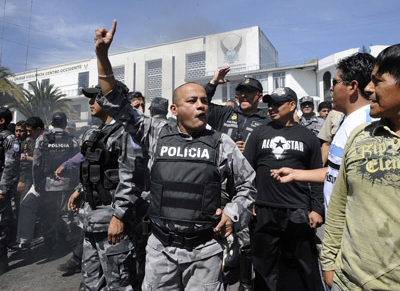


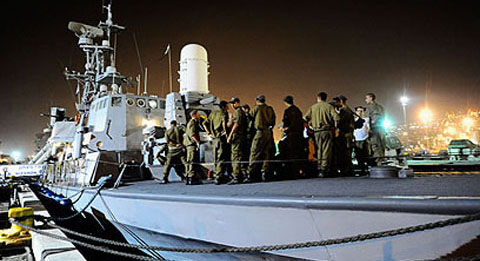
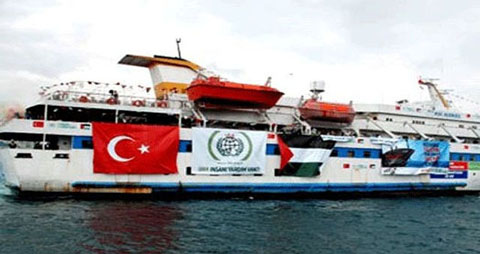
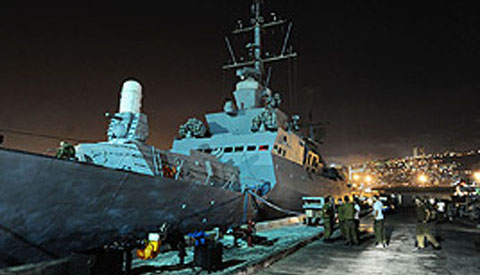



 Posts
Posts


![[Most Recent Quotes from www.kitco.com]](http://www.kitconet.com/charts/metals/gold/t24_au_en_eukg_2.gif)