Singh seeks to solidify a relationship transformed under the Bush administration from distant friendship to that of a ‘key ally’ that led to nuclear cooperation deal, increasing trade and investment, educational exchanges and unprecedented security collaboration. He is keen to finalize the civilian nuclear deal and seek Obama’s support for his bid for a permanent seat on the UN Security Council.
Singh may also seek reassurance that Indo-US relationship will not be over shadowed by the increasing Sino-US collaboration.
After the collapse of Soviet Union, India’s former mentor and ally, India sought an alliance with the United States who also had interest in wooing it. In the US containment of China policy under Bush, India could prove extremely useful to advance American interests, particularly because of strained Sino-Indian relations over regional ambitions and border dispute which led it into war with China in 1962, though with a humiliating outcome.
But this created a paradox for the US. Its old ally Pakistan, at one time an important link in containment of communism strategy during the cold war era and member of American sponsored now defunct military pacts – SEATO & CENTO, was highly suspicious of American ‘tilt’ towards India. Pakistan had an acrimonious relationship with India mainly over the Kashmir and water and India’s blatant role in the dismemberment of Pakistan in 1971.
Consistent Indian threat to Pakistan’s security led Pakistan to develop a nuclear response to Indian acquisition of nuclear weapons in 1974 to maintain the balance of power and ward off Indian hegemonic designs. Despite Pakistan’s efforts and calls by the international community, India refused negotiated settlement of disputes. This has kept the pot simmering, keeping an uneasy peace in the region. In the absence of progress in resolving the root causes of tensions, recent assurances by Obama and Singh that India poses no threat to Pakistan were outright rejected in Pakistan.
The US has used Pakistan for its own geopolitical objectives in the past during the cold war, to drive the Soviets out of Afghanistan in the 1980s and then for its war on terror in Afghanistan after 9/11. While it aided and equipped Pakistan for the role it wanted Pakistan to play, Pakistan’s relationship with the US has swung from being the ‘most allied ally’ to being the “most neglected ally” and then to being the ‘most sanctioned ally’, depending upon how much the US needed Pakistan’s services at a given time. In Pakistan, the US has come to be perceived as most unreliable and is viewed with deep suspicion.
Presently, deepening US relations with India result from a changing American perspective of the region. India could not only prove to be a huge market for American high tech goods, maybe weapon systems in the future, but its growing nuclear and military strength coupled with regional ambitions could be usefully utilized by the US as its proxy for policing the region.
Realizing that he cannot maintain military presence in Afghanistan for long, Obama needs to install a proxy power there too when he decides to pull out, most likely by 2011. India fits the bill. The US expects India to keep the government in Kabul under check, keep peace among warring factions and protect American interests.
India has its own interests too. The nuclear deterrence will not allow India to launch military aggression against Pakistan, but it can work for Pakistan’s dismemberment by promoting an East-Pakistan- style insurgency in Balochistan and continue squeezing Pakistan on the western border using rogue elements from the tribal belt. It has already begun to position its troops there under cover of development work.
The belief that India can hold the fort for the US is a fallacy. If the Afghans fiercely oppose foreign occupiers whom they have thrown out unceremoniously in the past, and if the Americans are also on the verge of withdrawal, what makes anyone think that Indian forces would be welcome to stay? Besides, the Taliban, who are bound to gain political influence in Kabul sooner or later, will reject Indian military presence on their soil, as it will represent American interests.
This Indo-US partnership, which seeks to serve divergent geopolitical objectives and is based on taking advantage of one and other, will neither be smooth nor lasting. Above all, it will seriously jeopardize peace in South Asia by alienating Pakistan and adding to its existing tensions with India. This will also ring alarm bells in Tehran and Beijing.
As of now in the current US matrix, cordial Sino-US relations are very important for a variety of reasons, mainly owing to American reliance on Chinese economic support that is not going to end any time soon. It is clearly not feasible for Obama to promote relations with India at the cost of its relations with China.
But this will not sit well with a sensitive India, given the history of Sino-Indian rivalry. Only recently the Indian officials, says a Washington Post report, in an outburst of Brahmanic self importance expressed concern that New Delhi has suddenly been relegated to the second tier of U.S.-Asian relations because Obama did not mention India in his speech [1] on US relations in Asia recently. The speech was delivered in Tokyo and focused on the Asia-Pacific region and not South Asia. This, the Indians believe, is Obama’s failure to recognize India’s broader regional aspirations, something that the Bush administration had encouraged. The Indians were upset that “Washington was leaning too closely to China”.
“A third-country role cannot be envisaged nor is it necessary” to solve disputes between India and Pakistan, was the retort by Indian Foreign Ministry. The influential Times of India headline read “Obama’s China (credit) card casts shadow on PM’s US visit,” referring to the $800 billion in U.S. Treasury securities held by China.
Ashley Tellis of the Carnegie Endowment said he detected in India “a sense of exclusion that’s been gnawing at them since the Tokyo speech.” He added: “The joint statement prompted new fears that somehow the United States and China would collude to manage events in South Asia.”
Tellis said this has caused particular neuralgia in India because tensions between Beijing and New Delhi have risen recently over competing border claims. India is also upset over Chinese plans to divert waters of Brahmaputra River that originates in Tibet and flows into Northeastern India, without whose water its plains would lay waste. In addition, Indians are concerned that the Obama administration, unlike the Bush administration, views India as part of the South Asian problem, which includes the instability in Pakistan.
China’s interest in South Asia, a natural outcome of its regional security concerns in its sensitive underbelly and its very close relations with Pakistan, is unpalatable for India which considers South Asia as its exclusive domain.
These Indian sensitivities will keep the US on the edge. To assure them that India was in its own league in South Asia and of America’s growing closeness, Secretary Clinton spent four days in India in July but refrained from a stop over in neighboring Pakistan.
In a geopolitically sensitive region, where the US has to cater to important bilateral interests with China, even-handedly deal with a Pakistan whose cooperation in Afghanistan is key to its success, and which is increasingly angry over repeated American betrayals, and keep the Taliban and Pashtun sensitivities in mind while negotiating a exit deal with them, the tendency to throw tantrums on the part of Indian leadership could make the new partnership difficult to sustain.
Therefore, before rushing into a collaborative arrangement with India and offering highly sensitive nuclear technologies, the US will be well advised to first test out the prickly world of relations with New Delhi
Despite tall claims about being the biggest democracy, India remains high on the list of human rights violations and has a long way to go in ensuring equal social status to Dalits (also called the untouchables) who form 20 percent of the population. It has been repeatedly accused of ethnic and religious cleansing of minorities.
If the US could make a political issue out of Tiananmen Square and Obama could refer to human rights issues during his China visit, why India should not be held to the same standard during Singh’s visit.
As for the Indian request for a permanent seat on the Security Council, it is important to bear in mind that India itself is involved in Kashmir dispute pending before the Security Council and whose Resolutions it has refused to implement. At the bottom of the dispute is the issue of exercise of the people’s will in determining Kashmir’s final dispensation. The dispute has led India to fight three wars with Pakistan and one with China. India has stationed several army divisions in Kashmir to subjugate the people and independent sources have confirmed killings of thousands of unarmed Kashmiris and sexual abuse perpetrated on thousands of women by these security forces.
In response to a similar bid earlier, India was advised to first settle the Kashmir dispute. Then the US -India relationship had just begun to take shape with limited US influence over India. But now that the US enjoys a greater clout, it could more effectively pressure India for a negotiated settlement, which is in every one’s interest, as well as in the interest of peace.
-------------------------------------------------------------------------------------------------
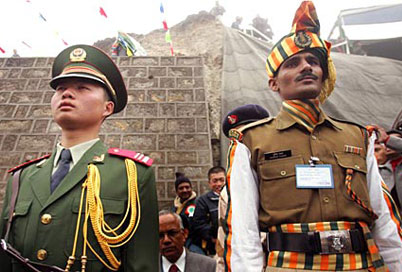
This round of the “Great Game” is being played under a far broader spectrum than the one played between Britain and Czarist Russia. In question is the Indian power relationship with two geo-political entities: the first is the “Periphery” and the second is “Eurasia.”
The Periphery and Eurasia: Vying for India on a Geo-Strategic Chessboard
Physical geography alone does not form or carve or determine geographic entities. The activity of people also is of critical importance to this process. Geographic units, from blocs and countries to regions, must be understood as a product of people interacting in socio-economic and political terms. The geographic entities that are subject herein are social constructions. In this conceptual context, Eurasia itself can be defined as a geo-political player and entity.
In a physical sense, Eurasia as a geographic landmass and spatial entity is neutral, just as are other geographic regions or units, and carries no meaning or value(s). Eurasia in socio-political terms as an active player, however, is altogether different. Herein, it is this active and politically organized Eurasia that is a product of the anti-hegemonic cooperation of Russia, China, and Iran against the status quo global order of the Periphery that is the Eurasia being addressed.
The Periphery is a collective term for those nations who are either geographically located on the margins of the Eurasian landmass or altogether geographically outside of the Eurasian landmass. This grouping or categorization of geo-political players when described are namely the U.S., the E.U., and Japan. In almost organic terms these players at the broader level strive to penetrate and consume Eurasia. This objective is so because of the socio-economic organization and political mechanisms (all of which serve elitist interests) of the Periphery. Aside from the U.S., the E.U., and Japan, the Periphery includes Australia, Canada, South Korea, Singapore, and Israel.
It is in this tugging match that India is centred. It is also in this geo-strategic bout that India has adopted a pragmatic policy of open opportunism. Yet, New Delhi has also been steadily moving towards a stance favouring the Periphery against Eurasia.
India’s historically warm relationship with Iran has been tainted because of negotiations with the U.S. and E.U. and New Delhi’s relationship with China appears cordial on the surface, but it is fragile and double-edged. Although Russia and India maintain cooperation in regards to the purchase of Russian military hardware by India, this relationship too is in question regardless of continued Russian weapons supplies.
State policy, in turn influenced or controlled by local elites, is also pivotal to the formation of the larger geographic entities being addressed. The ruling circles and elites of India are pragmatic opportunists and their is no question in this. This characteristic, however, is a trademark of almost all elitist circles and is not unique to Indian elites alone. The position of the Indian elites, however, is noteworthy because they can flex their muscles and they can play both sides.
New Delhi Caught between Alliances?
As stated, New Delhi has been walking a pragmatic path between the emerging Eurasian pole and the more established Peripheral pole. The Eurasian pole was originally formed out of a reluctant necessity for survival against the thrust of the Periphery by Moscow. As the Russian-initiated Eurasian-based alliance gains global momentum it is also working to cultivate an end to Eurasian rivalries. [1]
Since 2003, the lines of cooperation with the U.S., Britain, Germany, and France have been shifting and continuously restudied by Moscow, Beijing, Tehran, and their other allies, such as Kazakhstan, Belarus, and Tajikistan. The U.S., Britain, Germany, France and their shared proxies, NATO and the European Union, have been trying to obstruct the solidification of a united Eurasian entity. This is where India is key.
A factor that has obstructed Eurasian cooperation, with the inclusion of India, is the mutual suspicions of the Eurasians and, in general terms, their underlying resource rivalries. Due to these factors, the Eurasians appeared to be working together and alternatively to be keeping the lines of cooperation open with both the Periphery. A case in standing of this schizophrenic policy is what was once called the “Paris-Berlin-Moscow Axis” that clasped Russia on one side and France and Germany on the other. This Paris-Berlin-Moscow Axis flexed its muscles in international relations and at the U.N. during the Anglo-American march to war against Iraq in 2003.
India and the Encirclement of China
New Delhi is not a constituent of the Periphery. Nor does India fully trust the nations of the Periphery. India does, however, appear to favour the Periphery. This can be attributed to the demographic nature of global resource competitions and long-standing Sino-Indian cleavages and tensions. The tensions and cleavages between China and India have also been capitalized on by the Periphery just as the Sino-Soviet split was by Henry Kissinger during the Cold War to keep China and the Soviet Union divided.
Due to tensions with China, the Indian ruling establishment still holds onto a vision about a showdown with the Chinese. Both states are demographic dinosaurs and are competing between themselves and with the status quo Peripheral powers for resources. Despite the fact that it is the nations of the Periphery that are disproportionately exploiting a far larger share of global resources, in the eyes of many in New Delhi the perception is that it is far easier to reduce the effect of global resource competitions by working to eliminate China rather than competing with the Periphery. It is these two reasons that are the basis for the formation of Indian animosity to Beijing.
An encircling military ring that involves India has been created around China. New Delhi has been involved in the framework of military cooperation with the Periphery aimed at China. Under this framework, India has joined Japan, the U.S., and Australia in forming a de facto “Quadrilateral Coalition” to neutralize China through the establishment of a ring of containment that could see a naval blockade form in the event of a war around the borders of China. [2]
In a war between China and an outside power, cutting off Chinese energy supplies would be central to defeating Beijing. Without any fuel the military hardware of the People’s Liberation Army would be rendered useless. It is from this standpoint that India is building its naval strength and cooperating militarily in the Indian Ocean and the Pacific with the Periphery. It is also with Chinese energy supplies, Indian naval expansion, and the encirclement of China in mind that the Indian military has prepared to introduce, by 2014, what it calls “Indigenous Aircraft Carriers” (IACs), each with two takeoff runways and one landing strip for up to 30 military aircraft. [3]
China, as well as Iran, also has a direct border with NATO-garrisoned Afghanistan, which can be used as a military hub against the more vulnerable western flank of China. In this regard, the massive American-led NATO military build-up in Afghanistan is monitored with the utmost suspicion by Beijing and Tehran. In many senses, the Periphery is moving or pushing inwards towards the heart of Eurasia. The encirclement of China also parallels the rings of military alliances and bases created around Russia and around Iran. China also faces the threat of a missile shield project in East Asia just as the European core of Russia faces one in Eastern Europe and Iran faces one via such countries as the Arab states of the Persian Gulf, Israel, and Turkey in the Middle East.
Playing all sides to get New Delhi its Place in the Sun?
The 2006 meetings between George W. Bush Jr. and Prime Minister Manmohan Singh, including the Indo-U.S. nuclear cooperation agreement, are examples of the “divide and conquer” game the White House and its allies are playing. India is not passive in this game and is an active player too. The trilateral summits held between Russia, China, and India represent the opposite push to bring India fully into the Eurasian coalition of Moscow and Beijing. The U.S. has also been trying to obstruct the creation of a trans-Asian energy grid in Asia or a trans-Eurasian energy grid that would involve both sections of Europe and Asia within a single framework. One of these projects is the Iran-Pakistan-India gas pipeline and another is the building of pipelines from the former Soviet Union to China.
Moreover, India has nurtured military ties with Russia, China, and Iran on one hand and the U.S., NATO, Australia, Israel, and Japan on the other hand. This is evident from the joint naval exercises held in April, 2007 between India and China off Qingdao and the joint Indian, U.S., and Japanese trilateral military exercise in the Pacific Ocean. [4] Yet, India has not been neutral. India has also upgraded its missile arsenal so that it can target deeper into Chinese territory.
All in all, New Delhi has tilted in favour of the Periphery. At first glance, this is reflected by the fact that India is the only Shanghai Cooperation Organization (SCO) observer member that has not applied for full membership within the Eurasian bloc and through New Delhi’s growing ties with NATO. India’s course also became clearer after an important trilateral conference between Russia, China, and India in 2007 that saw India diplomatically refuse Chinese and Russian demands to rebut America and reject full cooperation. In this regard, Indian officials have said that they do not want to compromise their strategic flexibility. Prime Minister Manmohan Singh of India has also degenerated the situation further and expanded the rift between India on one side and Russia, Iran, and China on the other.
An Expanded Missile Arsenal for India
New Delhi has also been working to upgrade its military capabilities to match those of the U.S., Russia, and China. The process involves the possession of inter-continental ballistic missile (ICBM), submarine-launched ballistic missile (SLBM), and ballistic missile defence (BMD) capabilities. The Times of India reported on May 13, 2008 that Indian military scientists predicted that India would posses all three capabilities by 2010 or 2011: By 2010-2011, India hopes to gatecrash into a very exclusive club of countries, which have both ICBMs (intercontinental ballistic missiles) and SLBMs (submarine-launched ballistic missiles) as well as BMD (ballistic missile defence) capabilities.
Only the US and Russia strictly qualify for this club as of now, if all the three capabilities — ICBM, SLBM and BMD — are taken together, with countries like China not too far behind.
Top defence scientists, on the sidelines of the annual DRDO awards on Monday, told TOI [Times of India] they were quite confident India would have ICBMs and SLBMs, even though their strike ranges would be much lesser than American, Russian or Chinese missiles, as also a functional BMD system soon after the turn of this decade. [5]
The nature of such a military build-up must be questioned. Who is it aimed at and what are its primary objectives? Are these capabilities meant to act as a deterrence or are they part of something more? These are important questions.
The United States Directly Threatens China
The answer to the Indian military build-up is embodied in two parts. One element to this answer is the military dogma of the U.S. towards China. The U.S. attitude is clarified in a May 2008 interview given to the Voice of America by Admiral Timothy J. Keating after a new Chinese submarine base was discovered, which was called a threat to U.S. interests in Asia. Admiral Keating is the American flag officer commanding U.S. forces in East Asia and the Pacific under United States Pacific Command (USPACOM), one of the highest military posts in the U.S. military.
Agence France-Presse (AFP) reported on May 12, 2008:
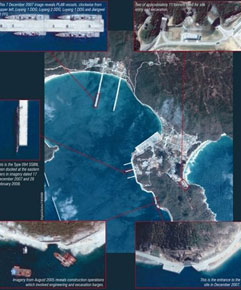
- Satellite images of alleged nuclear submarine base on Hainan Island.
China’s new underground nuclear submarine base close to vital sea lanes in Southeast Asia has raised US concerns, with experts calling for a shoring up of alliances in the region to check Beijing’s growing military clout.
The base’s existence on the southern tip of Hainan Island was confirmed for the first time by high resolution satellite images, according to Jane’s Intelligence Review, a respected defence periodical, this month.
It could hold up to 20 submarines, including a new type of nuclear ballistic missile submarine, and future Chinese aircraft carrier battle groups, posing a challenge to longstanding US military dominance in Asia.
China should not pursue such “high-end military options,” warned Admiral Timothy Keating, the top commander of US forces in Asia, in an interview with the Voice of America last week.
He underlined America’s “firm intention” not to abandon its dominating military role in the Pacific and told Beijing it would face “sure defeat” if it took on the United States militarily.
(...)
He said Washington should “tighten” its alliances in Asia to check China’s growing military might and develop “interoperability” capabilities among allies such as Japan, South Korea, Taiwan, the Philippines and Singapore, as well as Indonesia and Malaysia.
James Lyons, an ex-commander of the US Pacific Fleet, said the United States needed to reestablish high-level military ties with the Philippines as part of efforts to enhance US deterrence in the wake of China’s naval expansion.
He said “operational tactics” used against the former Soviet Union during the Cold War should be applied against China.
He suggested US leasing a squadron of F-16 fighter jets and navy vessels to the Philippines, where Washington once had naval and air bases, as part of the deterrence strategy.
“We don’t need a permanent base but we need access,” Lyons said, suggesting also that Japan play a more “meaningful” role in protecting critical sea lanes in the region.
“Again the Soviets, we raised that deterrence equation and we won the war without firing a shot basically ... there is no cheap way out and we have to improve our posture in the Western Pacific along with our allies,” he said.
Richard Fisher, an expert of China military affairs at the International Assessment and Strategy Center, a US think tank, expected US confrontation with China as Beijing modernized its nuclear ballistic missile submarines, referred to in military jargon as SSBNs. [6]
What James Lyons suggests as an ex-military officier about the U.S. using Japan as a counter-balance against China is clearly being applied with other nations in Asia. In addition, without India using Japan or a whole coalition of other Asian states carries far less weight against China, especially one supported by Russia. India is clearly key in the U.S. geo-strategy for dealing with China and in general for Eurasia.
The Hindustani Wild Card: India as a Eurasian Wedge against China?
To obstruct the unification of Russia, Iran, and China the Bush Jr. Administration in 2004 intensified the venture of using India as a Eurasian wedge or counter-weight to China. The U.S. aim is to eventually undermine the coalition between Russia, China, and Iran by using India or alternatively to use India as a spearhead against the Chinese. This latter tactic would be similar to the strategy used by the U.S. government in relation to Iraq and Iran, which resulted in the Iraq-Iran War in 1980.
In this Iraq-Iran War model both Baghdad and Tehran were seen as enemies by U.S. strategists and the aim was to get both Middle Eastern republics to neutralize one another. Henry Kissinger summed this U.S. policy by saying the point was for both the Iraqi and Iranian sides to destroy one another. The same scenario could happen and be applied to India and China. The realization of this confrontational project has already been announced by the Indian military. What has long been thought has become public and that is that the Indian military has been preparing for war against Beijing. This is the second element to the question about the Indian military build-up.
The Hindustan Times reported on March 26, 2009:
The Indian military fears a [sic.] ‘Chinese aggression’ in less than a decade. A secret exercise, called ‘Divine Matrix’, by the army’s military operations directorate has visualised a war scenario with the nuclear-armed neighbour before 2017.
“A misadventure by China is very much within the realm of possibility with Beijing trying to position itself as the only power in the region. There will be no nuclear warfare but a short, swift war that could have menacing consequences for India,” said an army officer, who was part of the three-day war games that ended on Wednesday.
In the military’s assessment, based on a six-month study of various scenarios before the war games, China would rely on information warfare (IW) to bring India down on its knees before launching an offensive.
The war games saw generals raising concerns about the IW battalions of the People’s Liberation Army carrying out hacker attacks for military espionage, intelligence collection, paralysing communication systems, compromising airport security, inflicting damage on the banking system and disabling power grids. “We need to spend more on developing information warfare capability,” he said.
The war games dispelled the notion that China would take at least one season (one year) for a substantial military build-up across India’s northeastern frontiers. “The Tibetan infrastructure has been improved considerably. The PLA can now launch an assault very quickly, without any warning, the officer said.
The military believes that China would have swamped Tibet with sweeping demographic changes in the medium term. For the purposes of Divine Matrix, China would call Dalai Lama for rapprochement and neutralise him. The top brass also brainstormed over India’s options in case Pakistan joined the war to [sic.; too]. Another apprehension was that Myanmar and Bangladesh would align with China in the future geostrategic environment. [7]
Although the materialization of a war against China is not a guaranteed event, war preparations are being made against the Chinese. The disturbances within the borders of China in Xinjiang and Tibet and in Myanmar (Burma), which is important to Chinese energy security, that are so widely advertised in the name of democracy and self-determination in the U.S. and E.U. are part of an effort to destabilize and weaken China. It is also in this context that India is involved with operations, such as supporting the Tibetan government-in-exile of the Dahali Lama, that have been destabilizing China.
The Australian military has also announced it is expanding its military in preparation for a forecast major war in the Asia-Pacific region. [8] Japan has also been expanding its military, while Tokyo has been preparing itself to join a NATO-like sister-alliance in the Asia-Pacific that would include Australia, the U.S., and South Korea and be directed against China, Russia, and North Korea. [9] Myanmar and Laos can be targeted too by this military build-up and NATO-like alliance, as can the other Southeast Asian states of Indo-China, specifically Vietnam and Cambodia, if they change their policies.
The Strategic Ties of New Delhi and Tel Aviv: Indo-Israeli Military and Space Cooperation
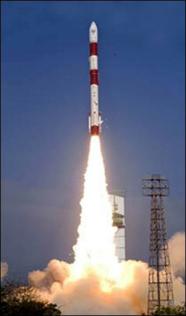
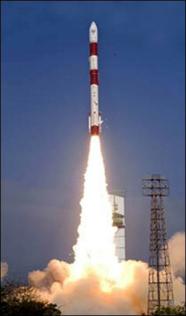
- India launches Israeli satellite.
On January 21, 2008 a new chapter in Indo-Israeli strategic cooperation was unveiled; India launched a Israeli spy satellite, known as TecSAR (TechSAR) or Polaris, into space via an Indian space rocket at the Satish Dhawan Space Centre in Sriharikota, Andhra Padesh. [10] The Israeli satellite was bragged to be mainly aimed against Iran by Israeli sources. [11] Israel’s spy satellite launched by India has greatly enhanced Israel’s intelligence-gathering capabilities against Iran, Syria, and Lebanon.
The satellite launch by New Delhi has revealed that the Indian government has little reservations in assisting in any Israeli or Anglo-American military ventures in the Middle East against Iran and its allies. Tehran immediately voiced its strong and official disapproval to India for aiding Israeli military objectives against Iran’s national security. The Israeli satellite launch was delayed several times. The Jerusalem Post and one of its noted reporters, Yaakov Katz, published an article that claimed that the delayed space launch of the Israeli satellite was a result of strong Iranian pressure on the Indian government. [12]
Politicians in India opposed to Indo-Israeli military and space cooperation denounced the Indian government’s attempts to present the launch as merely “business as usual” by hiding the military implications and objectives behind an act with underlying hostile intentions against Iran. The Indian government officially argued to the Indian people that the satellite launch was just a commercial transaction between Tel Aviv and New Delhi, but the military implications of the deal reveal that India is no longer neutral in regards to Tehran. The fact that the Israel spy satellite has been described by Tel Aviv as a means to confront Tehran and Damascus (officially described as “enemy states”) is an omission in itself that New Delhi is knowingly an accomplice to hostile acts against Iran and Syria.
The satellite launch was shrouded in complete secrecy by the Indian government. The Indian Space Research Organization (ISRO) which had always announced all its space launches as a symbol of national pride kept silent for the Israeli satellite launch. Large numbers of different Indian groups and people across India condemned the secrecy behind the mission and cited it as a sign of guilty by the Indian government. People’s Democracy, the official mouth piece of the Communist Party of India-Marxist (CP-M), complained that the citizens of India had to learn about the details of the launch from Israeli news sources. [13]
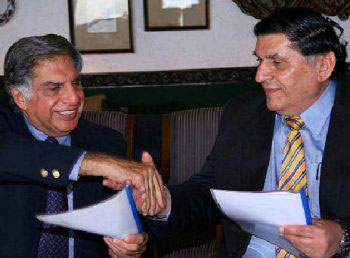
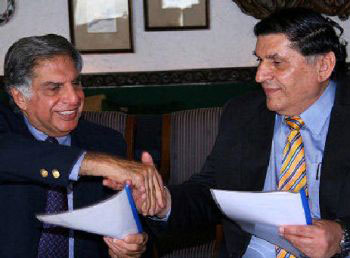
- Chairman of Tata Group Ratan Tata with President and CEO of Israel Aerospace Industries Itshak Nissan after signing an MoU in New Delhi in February 2008.
The Israeli spy satellite was built by Israel Aerospace Industries, which has major business interests in regards to India. On February 18, 2008 Israel Aerospace Industries, and the Tata Group signed a corporate agreement with Israel Aerospace to cooperate and jointly develop military hardware and products through a memorandum of understanding. [14] Like a tell-tale sign this agreement was announced less than a month after the launch of the Israeli spy satellite built by Israel Aerospace Industries. The Tata Group and its companies also have corporate agreements with Boeing, Sikorsky Aircraft, and the European Aeronautic Defence and Space Company (EADS), which are all competing against Russian arms manufacturers.
Indian cooperation with Israel extends all the way into the realm of nuclear politics and policy. On September 17, 2008 at the headquarters of the International Atomic Energy Agency (IAEA) in Vienna a vote was almost unanimously cast for a IAEA resolution urging all Middle Eastern states to abandon making nuclear bombs. In a case of irony, the only state that voted against the IAEA resolution was Israel, which accuses Iran and Syria of pursuing nuclear weapons. Tel Aviv voted against the IAEA resolution, while Tehran and Damascus voted for the it and the U.S., Canada, Georgia, and India all in support of Israel abstained.
New Delhi Deepens ties with the U.S., NATO, and Israel
In military terms, there is a real strategic “American-Indian-Israeli Axis.” New Delhi’s strategic ties with the U.S., NATO, and Israel have been deepening. The strategic axis formed by the U.S., India, and Israel has also been denounced by various political parties and figures across the political landscape of India.
Firstly, the geo-strategic rationale for an alliance between the U.S. and India is the encirclement or containment of the People’s Republic of China. The other rationale or intentions of such cooperation are the neutralization of Russia as a player in Central Asia and the securing of energy resources for both the U.S. and India. In this project, the U.S. sees India as a natural counter-weight to China. The U.S. also has used India in its objective of trying to isolate Iran.
In regards to Tel Aviv, Israel sees India as part of a broader periphery. This broader or so-called “new periphery” was imagined and utilized as a basis of geo-strategy by Tel Aviv after 1979 when the “old periphery” that included Iran, which was one of Israel’s closest allies, buckled and collapsed with the 1979 Iranian Revolution. [15] In this context, Israel’s “new periphery” has been conceptualized against both the Arab World and Iran (or compounded as the Arabo-Iranian World). This is why the Israeli relationships with India, Georgia, the Republic of Azerbaijan, and Turkey are important, and in some cases full fledged alliances. [16]
Likewise NATO and India also have shared interests in Afghanistan and Central Asia, which India sees as part of its own periphery or “near abroad.” These shared interests and the mutual animosity to Chinese energy interests in Central Asia has brought India and NATO, led by the U.S., into the same camp. NATO also sees India as a military partner in its strategy to become a global military alliance. In addition, dealing with Pakistan is also another shared commonality between NATO and India.
The Project for “Greater South Asia” and Indian Ambitions in its “Near Abroad”
As Hindu means everything beyond the Indus and Hindustan the “land beyond the Indus” in ancient Iranian, the word “Industan” can be used to talk about the land and basin around the Indus River. Hereon, this term will be used to refer to the geographic area adjacent the Indus to India’s western flank. [17] This area includes Pakistan and can be extended to include Afghanistan and the former Soviet republics of Central Asia. Although Industan may not be exactly an accurate definition for the area beyond Pakistan, Industan still fits well, especially in light of Indian geo-political thinking. That is why the term will be used.
Industan, is part of India’s “near abroad” or periphery, and in a sense even a part of an expanded periphery that emerged with the dissolution of the Soviet Union. It is with this in mind that India established its first military base, at Ayni, on foreign soil in Tajikistan. [18] The converging interests of the U.S. and India are clear in the U.S. State Department’s re-definition of Central Asia as a part of “Greater South Asia.” Greater South Asia is the conceptualization of Central Asia as a region within South Asia, which is synonymous with the Indian sub-continent. The concept of Greater South Asia is part of the project to bring the former Soviet republics of Central Asia into the orbits of the U.S. through cooperation with India, as a regional gendarme.
Turning to Pakistan, India has a shared interests with the U.S. and NATO in the subjection of Pakistan. Pakistan would cease to be a client state of the U.S. or a manageable state, because of a likely revolution that would occur in the scenario of a broader war in the Middle East against Iran or a far larger Eurasian war involving China and Russia. Nuclear weapons in the hands of such a revolutionary government in Islamabad would be a threat to Indian national security, NATO operations in Afghanistan, and Israel. It is in the shared interests of the U.S., NATO, Israel, and India to neutralize such a strategic and tactical threat from emerging in Pakistan. This is why NATO has underpinned the objective of balkanizing Pakistan and why the U.S. has talked about taking over Pakistani nuclear facilities via the U.S. military. The subjection of Pakistan is also territorially and militarily to the advantage of New Delhi, because it would eliminate a rival and allow India to gain territory that in the view of many Indians was lost with the partition of India in 1947.
The Naval build-up in the Indian Ocean and the Geo-Politics of the Sri Lankan Civil War
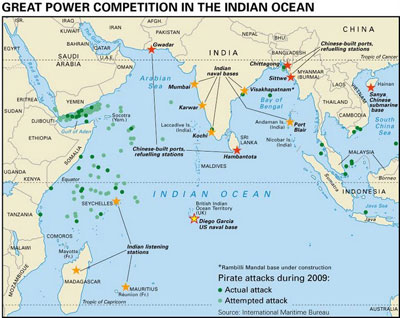
To the southern borders of Eurasia is the Indian Ocean. The Indian Ocean is the scene of major international rivalries and competition(s). Sri Lanka is also a front in these rivalries. It is in this context that India is part of a major naval build-up running from the coastline of East Africa and the Arabian Sea to the waves of Oceania. Aside from the fleets of the U.S. and its NATO allies that have large presences in the Indian Ocean, the naval fleets of Iran, India, China, Japan, and Australia are also all being expanded in league with this trend of militarization. Also, India and China are working to release large nuclear submarine fleets into the Indian Ocean and the Pacific Ocean. The naval encirclement of Eurasia and the naval expansion of China are also reasons why U.S. Navy ships have been repeatedly caught violating Chinese waters and illegally surveying Chinese territory. [19]
The water around the Arabian Peninsula all the way around from the Persian Gulf, the Gulf of Oman, and the Gulf of Aden to the Red Sea (Arabian Gulf) carries large fleets of ships either belonging to the U.S., NATO, or their allies. At any point the U.S. and its allies can stop international shipping in these waters. The problem of piracy in these waters is very closely linked to their militarization and is a justification for militarization. This is one of the reasons that the Gulf of Aden and the waters off the Horn of Africa, where Somalia is located, have seen the deployment of the naval forces of Russia, China, and Iran as a strategically symmetric move. [20]
It should be noted that relations between Sri Lanka and India started to unravel in 2009. The Sri Lankan government has accused the Indian government of supporting the Tamil Tigers drive to create a Tamil state by dividing Sri Lanka. Much of this has to do with the geo-strategic struggle between the Periphery and Eurasia in the Indian Ocean.
In this regard, India is not only working against Chinese interests in the Indian Ocean, but it is also actively cooperating with the U.S. and its allies. In the scenario of a conflict between Eurasia and the Periphery or between China and India the maritime route that passes by Sri Lanka would be vital to the Chinese military and Chinese energy security. For this reason Sri Lanka has joined the SCO as a “dialogue partner” under the protective umbrella of Russia, China, and their allies. Not only has Sri Lanka joined the SCO, but it also hosts a Chinese port in a pivotal point in the Indian Ocean and near the borders of India that has put Colombo at odds with New Delhi.
Arms Manufacturer and Nuclear Rivalry in India
Since the end of the Cold War there has been a drive to push out Russian arms manufacturers out of the Indian market by Anglo-American, Franco-German, and Israeli military contractors. France and Israel have also been traditionally the second and third largest weapon sources for India after Russia. Russian manufacturers have been competing fiercely against military manufactures based in France, Germany, Israel, Britain, and the U.S. to remain as New Delhi’s top arms suppliers.
In addition, the elites in New Delhi have been putting their weight behind Russia’s rivals in India. India has become one of the most significant markets for Israeli military hardware and has replaced the void left to Israeli weapons exporters by the loss of the South African arms market that was caused by the collapse of Apartheid in 1993. Additionally, Israel has moved on to replace France as the second largest provider of military hardware to India. [21] This is while France in 2006 and 2008 has made headway in nuclear cooperation agreements with India, following the 2005 Indo-U.S. nuclear deal. [22]
India-Brazil-South Africa (IBSA): “Superalignment” or “Counter-Alignment?”
In addition, the U.S. is trying to use the India-Brazil-South Africa (IBSA) Dialogue Forum, a loose trilateral alliance of go-between states, against China, Venezuela (and its Latin American bloc that can be called the Bolivarian Bloc), Russia, and Iran. In reality and simplistic terms the IBSA powers are rising, second tier global players. They originally appeared to be engaging in a policy of “superalignment,” the cultivation of strategic relations with all major powers and blocs, as opposed to “counter-alignment.” A global web of alliances, counter-alliances, cross-cutting, and intersecting alliances are beginning to come into view, just like the environment in Europe and the Middle East on the eve of the First World War.
Despite the fact that Italy was a member of the Triple Alliance, along with Germany and the Austro-Hungarians, it decided to side with the Triple Entente after secret negotiations and promises that were never honoured by Britain and France. There are circles in Moscow, Beijing, and Tehran that believe that India could act treacherously just as Italy did by not honouring its obligations to its allies, Vienna and Berlin. These suspicions also see this as a possibility even if India entered the SCO as a full member and joined the Chinese-Russian-Iranian coalition in Eurasia.
In the frankest words, India, Brazil, and the Republic of South Africa are benefiting from the compounded friction between the U.S., France, Britain, Germany, China, Iran, Venezuela, and Russia. To clarify, the reason that this friction is best described as compounded is because the Anglo-American alliance and the Franco-German entente work as two separate sub-units and sometimes align with the interests of opposing powers. This is also true about cooperation between Iran, Venezuela, Russia, and China. In Eurasia, Russia and Iran sometimes work as a pair, while Russia and China or China and Iran do so at other times. This trend in regards to the Eurasians, however, is changing as the cohesion between Russia, China, and Iran increases.
This behaviour is observable in the positions of both India and Brazil on Kosovar Independence. Both the foreign ministers of India and Brazil, Celso Amorim and Pranab Mukherjee, made a joint statement in Brasilia about the declaration of independence by Kosovo by announcing that India and Brazil were studying its legal ramifications under a wait-and-see policy of the “evolving situation” as Pranab Mukherjee called it. [23]
The Case of Elitism: Where the Indian Elites Stand
On April 2, 2009 the Group of Twenty (G-20) met in London in regards to the global economy and declared that New Delhi would have a bigger role in the global economy. The question about “India’s place in the sun” that is often mentioned in international studies about its emerging status as a global power is not really about India as a nation-state or even the interests of its general population, but is really a question about the position of its ruling and economic classes or its elites (a small minority that make decisions on behalf of the majority) and their place within the global power structure and the international elitist compact that is forming through neo-liberal globalization.
Part and parcel of this enterprise is what appears to be India’s demands for a greater role, or share, for its elites in the global economy through some form or another of expanded interlocking directorships. Interlocking directorships is a term used to describe when the members of the board of directors or managing body of one corporation also serve as members of the board of directors or managing body of other corporations. This is very frequent amongst elitist circles and a way for them to maintain a monopoly on their power. It is these interlocking directorships that are uniting global elites and the impetus for global amalgamation.
India has always had indigenous elites, who in numerous cases worked hand in glove with the British during the period of the British Raj. Starting from the colonial period, borrowing from a term used by the Canadian political economist Wallace Clement, most the Indian indigenous elites became “comprador elites.” Comprador elites are any elite groups that represent or manage the interests of “parasite elites” or foreign elites, which in the case of the British Raj would have been the British elites. A modern example of a comprador elite would be the Indian chief executive officers (CEOs) of Indian subsidiaries of foreign-controlled corporations, such as PepsiCo India and Monsanto India.
Moving on, the British could not rule most of India without these elites and therefore cooperated with them. London made sure that the Indian elites would be fully integrated into the British Empire by involving them in the administration of India, sending them to British schools, and making them Anglophiles or lovers of all things British. Britain would also grant the Indian elites their own economic fiefdoms in return for their cooperation. The relationship was very much symbiotic and in reality the Indian elites were the biggest supporters of the British Empire and opposed Indian independence. It is only when the Indian elites were offended by London, because of the denial of their requests to have a status within the British Empire like the Dominions, such as Canada and Australia, that the Indian Independence Movement gained momentum.
With Indian independence many of the comprador elites became indigenous elites, in the sense that they were serving their own interests and no longer serving British interests in India. Yet, some comprador elites remained who served British economic interests. For a period of time after Indian independence there were tensions between the Indian indigenous elites and both the comprador elites and their parasite elite backers in London as the indigenous elites moved into the former niches of the British. This does not mean that there were not those within the indigenous elites that made agreements or compromises with the British for the post-independence period.
As time passed and the Cold War supposedly ended, the Soviet Union fell apart, neighbouring China accepted capitalism, and a push for unipolarity accelerated, the different types of elites in India started cooperating even more. More specifically, the indigenous elites of India and foreign elites in the U.S. and E.U. started collaborating, with the comprador elites helping interlock the indigenous and foreign sides even more. The state of elitist modus vivandi, living together in uneasy post-independence armistice, was gradually evolving into broader cooperation. For example, in the financial sector the comprador elites, indigenous elites, and parasite elites have worked together to erode state control of the banking system that has resulted in the mushrooming and growth of private and foreign banks in India starting in the 1990s.
Enter Dr. Manmohan Singh: The Economic Origins for New Delhi’s Strategic Shift?
The Indian shift away from non-alignment and its strategic partnerships is deeply connected to the unseen regime change in New Delhi that was initiated with the restructuring of Indian economic policy. 1991 was a year of change for India. It was also the year that President George Bush Sr. declared that the “New World Order” was beginning to emerge and also the same year as the Gulf War and the collapse of the Soviet Union.
A common denominator between 1991 and India in the late-2000s is Dr. Manmohan Singh, the current head of the Indian government. Dr. Singh received his doctorate (PhD.) as an economist from Oxford University and also attended Cambridge University. He is a former ranking officer of the International Monetary Fund (IMF) in India. His positions included Deputy for India on the IMF Committee of Twenty on International Monetary Reform (1972-1974), IMF Associate (1976-1980, 1982-1985), Alternative Governor for India on the IMF Board of Governors (1982-1985), and Governor for India on the Board of Governors of the IMF (1991-1995). Several of these positions coincided with appointments within the government and national cabinet of India. This also includes the position of Dr. Singh as the Governor of the Reserve Bank of India (1982-1985).
Dr. Singh was one of the faces behind the restructuring of the Indian economy in 1991, in league with the IMF. He was appointed as the Indian Finance Minister in 1991 by Prime Minister P.V. Narasimha Rao, a man accused with corruption, during a financial crisis that was brought about by IMF policies. India was nearly bankrupted during this period of reforms and state assets surrendered to domestic and foreign private investors. The economic policies of establishing a truly self-sufficiently Indian economy were abandoned and privatization became wide spread. Economic liberalization pushed aside the long-term goals of eliminating poverty in India and providing high standards of living. The Indian agricultural sector was also infected by foreign multi-national corporations through the so-called “Green Revolution.”
Before being appointed to the post of Indian Finance Minister, Dr. Singh was decisive in creating the financial crisis in India through coordination with the IMF. The policies of Dr. Singh by design also left India without enough reserves to meet its financial commitments. India was also deprived of the means to improve its economy by IMF policies The origins of these policies became obvious when Indian civil servants started complaining of sloppy, American-style, and non-British spelling, writing, and grammar in Indian government finance documents and papers. As a result Indian national assets and wealth were siphoned off and foreign control, including that of the Bank of England, of Indian finances began. 1996 spelled the death of the Rao Administration in India because of the backlash of economic liberalization and the unpopularity of the government.
With the economic shifts of 1991 began the road down the path to political shift. On May 22, 2004 the IMF’s man in New Delhi, Dr. Singh, returned to office to became the Prime Minister of India. This time political reforms including turning India’s back on the Non-Alignment Movement (N.A.M.), Iran at the IAEA, and Russia’s aim to realize the Primakov Doctrine were on the table.
“Clash of Civilizations” in Eurasia
In many Indian circles the colonial bonds with London are still strong and there are views that New Delhi, or at least the Indian elites, are natural members of the Anglo-American establishment. There is also a taint of racial theory attached to these views with links to the caste system and the Indian elite’s Aryan self-concepts. Huntington’s “Clash of Civilizations” notion and Mackinder’s geo-strategic population model are factors behind these views too. Resource competition, demographics, and economic competition are seen as fuel that will inevitably draw India and China into a clash for supremacy in Asia.
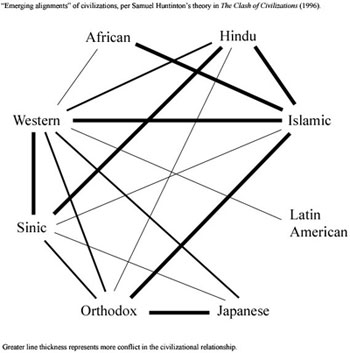
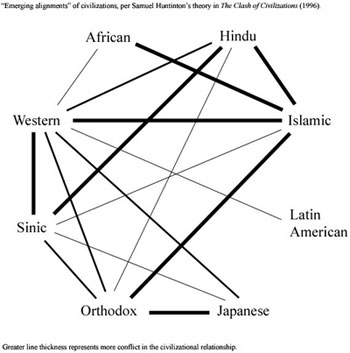
- "Emerging alignments" of civilizations, per Samuel Huntington’s theory in Clash of Civilizations, 1996.
Is it primarily because of geography, amongst other factors, that Indian Civilization (labeled as Hindu Civilization in regards to Huntington’s model) is said to have a conflicting relationship or affiliation with Chinese Civilization (labeled as Sinic Civilization by Huntington’s model) and Islamic Civilization? This theory is short-sighted; if true where are the centuries of fighting between Chinese and Indian civilization? For the most part both lived in peace. The same applied to Islamic Civilization.
A clash is not the natural ends of interaction between different civilizations or societies. Interaction is always based initially on trade and it is the form of economic trade and the aims of either party that can result in a clash. Foreign powers that utilize a “Clash of Civilizations” scheme do so because of the economy of control. A mere reading of Anglo-American strategic doctrine and observations of Anglo-American practices brings this to light.
A historical look will prove the “Clash of Civilizations” as a theory to be wrong and actually illustrates that Indian Civilization really overlaps with both Islamic Civilization and Chinese Civilization. Moreover, it is wrong to categorize the conflict between Pakistan and India as a conflict between all Muslims and the nation-state of India or even any of the internal fighting amongst Muslims and non-Muslims in India. Vedicists (one of the proper names for Hindus) and Muslims, as well as several other religions lived together in relative peace until the the start of British involvement in India. [24] The animosity between Pakistan and India is a synthetic construct where local elites and foreign powers worked together, not only to divide territory, but to control local groups that have lived together for hundreds of years by alienating them from one another.
Why a “Clash of Civilizations” in Eurasia?
By extension of the utilization of the “Clash of Civilizations” notion, which predates Samuel P. Huntington, India and Vedicism are depicted as enemies by the Pakistani elites as a means of domestic distraction and to direct internal tensions about social inequality and injustice towards an outside source. The outside enemy, the “other,” has always been used domestically to distract subject populations by local leaders. In the case of the Indian sub-continent certain native circles have jointly invested in continuing the British policy of localized conflict as a means of monopoly.
In an over simplistic understanding, even if one were to use Huntingon’s model to explain who benefits from civilizational conflict because of global civilizational rivalry, it would have to be the civilization with the most relationships due to the fact that it has the most rivals to put down. In relation to trade a civilization with the most relationships would also be in a position to initiate the most clashes because it can afford to burn some of its bridges (or cut ties) and is in a position to initiate clashes between other civilizations.
Under a system of cooperation and fair-trade conflict of a grand scale would not happen, but under a competitive international system pushing for monopoly this is a direction being taken by the status quo. This is where critics of global capitalism lament about the unnatural nature of capitalism. This system, however, is not a system of capitalism. It is fitting to apply a new term at this point: ubercapitalism. Ubercapitalism is a system where the framework of regulation, taxation, and law are controlled and directed by elites for their own benefits. In Marxist-Leninist terms the state is an agent of elite interests. Even the capitalist concept of laissez-fair commerce is violated and disregarded because the state and the business environment are controlled by these elites.
If there was fair-trade between these so-called civilizational entities there would be no need for clashes, but this by itself does not mean that there would altogether be no conflict. Ideology, faith, and hubris are also factors, but in most cases ideology and faith have been manipulated or constructed to support the economic structure and to justify conflict and hierarchy. A lack of fair-trade or control over finite resources necessitates manufactured conflict; this is the only way the players controlling wealth can retain their positions.
Despite the talk about a “Clash of Civilizations” the most natural path of social evolution is one of relative peace and cooperation. The conceptualization of Latin America, India, Israel, the so-called West, China, the Muslim countries, the Orthodox Christian countries, and the Buddhist nations as different or distinct civilizations is also a fallacy in itself and very abstract. Distinctions do exist, but they are far less than the similarities and not enough to support Huntington’s civilizational model.
New Delhi’s Trajectory: A Reversion to the British Raj?
Is India reverting to the status quo of the British Raj? India has moved beyond a policy of superalignment. India’s elites believe that to achieve their place in the sun they must buy into the socio-economic and political agenda of the so-called, “Core countries” — the global financial power holders of the Periphery. India’s commitment to the Non-Alignment Movement (N.A.M.) is also dead all but in name. The foreign policy course that Pandit Jawaharlal Nehru had charted for India has been abandoned.
Internally, for the last two decades India has been colonizing itself. Communities and ethnic groups have been played agains one another. These are both cases where local and foreign elites are working hand-in-hand. The ruling elites, with the aid of the Indian government, are appropriating all forms of resourses, rights, and property from countless people to fuel the so-called economic liberalization process with no regard for their fellow citizens. Water and national assets are being privatized and virtual slave labour is, once again, being institutionalized — everything that Mahatma Gandhi and his follower worked hard to eliminate. The free trade deals being struck by the U.S. and E.U. with India are a part of this process and have been integrating India into the global economic order.
Hand-in-hand with India being part of a global economic order goes the domination of Eurasia. India is on a serious path of militarization that will lead New Delhi towards conflict with China. In such a war both Asian giants would be losers and the U.S. and its allies the real winners.
Due to their flexibility the Indian elite may still change course, but there is a clear motion to exploit and mobilize India in Eurasia against its neighbours and the major powers of Eurasia. This is the true meaning, intent, nature, and agenda behind the so-called “Clash of Civilizations” in Eurasia. The threat of a nuclear war between China and India is real in the words of the Indian military, but what is important to realize is that such a confrontation is part of a much larger series of wars or a wider struggle between the powers of Eurasia and the nations of the Periphery, led by the United States.
see maps p.29-31 in:
http://books.google.be/books?id=RkudVe9Z96QC&printsec=frontcover&dq=chaliand+%22atlas+strategique%22&hl=fr#v=onepage&q=chaliand%20%22atlas%20strategique%22&f=false




 Posts
Posts


![[Most Recent Quotes from www.kitco.com]](http://www.kitconet.com/charts/metals/gold/t24_au_en_eukg_2.gif)