FIGAROVOX/GRAND ENTRETIEN - La France est-elle une cocotte-minute sur le point d'exploser. C'est ce que pense l'essayiste Serge Federbusch. Dans Français, prêts pour votre prochaine révolution ?, il décrit les trois scénarios de notre avenir proche. Deux sont catastrophiques. Le pire, c'est que c'est crédible! 20/06/2014 Propos recueillis par Guillaume Perrault Ancien élève de l'Ecole nationale d'administration, Serge Federbusch est magistrat administratif. Il a travaillé pour le ministère des finances, le quai d'Orsay et la ville de Paris. Président du Parti des Libertés, ancien élu du Xe arrondissement de Paris, Serge Federbusch anime Delanopolis, site d'information satirique consacrée à la vie politique dans la capitale. Français, prêts pour votre prochaine révolution? , est publié chez Ixelles éditions (271 p., 17,90€).
LE FIGARO: en quoi la France de 2014 vous paraît présenter
des analogies avec les cas d'effondrement par désagrégation interne que
la France a connus?
Les analogies sont nombreuses. Le déficit et la dette
publics représentent à peu près les mêmes masses financières, par
rapport à la richesse du pays, qu'en 1788. La crise budgétaire est
ouverte et rien ne semble pouvoir l'enrayer. Le gouvernement a perdu sa souveraineté,
son autonomie, en matière de politique monétaire et financière. En
1788, on subissait encore la conséquence de la banqueroute de Law, près
de 70 ans plus tôt. Calonne, qui s'était essayé à manipuler le titrage
en or des louis et ducats, avait été accusé de fraude, presque de crime
contre le bien public. De nos jours, l'Etat est dépendant des décisions
de Bruxelles et de la Banque centrale européenne. Hier comme
aujourd'hui, la perte de crédit et de prestige du souverain et de son
gouvernement sont considérables. L'affaire du collier de la reine avait
beaucoup miné l'autorité royale. Quantité de libellistes écrivaient sous
le manteau des textes d'une hostilité farouche au roi et à la reine. De
même, aujourd'hui, nombre de blogueurs critiquent le pouvoir. Les journalistes ne sont plus ni écoutés ni respectés, mais au contraire pris à partie. La frustration générale de l'opinion, la montée du chômage,
la stagnation du pouvoir d'achat par habitant depuis bientôt dix ans se
constatent aux deux époques. Comme en 1788, le pouvoir n'est plus obéi
ni respecté. La paralysie de l'Etat s'aggrave de mois en mois. Il n'est
même plus capable de régler une question aussi secondaire que celle des
portiques écotaxe. Le système centralisé, clientéliste et corporatiste a
vécu, en 2014 comme en 1788. Reste à savoir d'où viendra l'étincelle.
Je pense que ce sera la crise de l'euro ou une dissolution ratée, ou
encore les deux à la fois, qui rendront le pays ingouvernable.
La
France, écrivez-vous, a «cherché à tirer parti des avantages de la 3e
révolution industrielle (…) sans en payer le prix»: en quoi?
Depuis plus de trente ans, les Français sont atteints de schizophrénie. Comme consommateurs, ils bénéficient de la baisse du prix de nombreux biens et services grâce à ce qu'on nomme «mondialisation». Comme producteurs,
nombre d'entre eux ont vu leurs emplois disparaître ou leurs salaires
stagner du fait de la concurrence internationale. Jusqu'à présent, la
France a plus ou moins réussi à avoir le beurre et l'argent du beurre.
Le développement de l'emploi public et de la dette a permis à une large
majorité de la population de bénéficier de cette situation davantage
qu'elle n'en souffrait. Mais aujourd'hui, il faudrait commencer à
rembourser. Et le système ne tient que parce que les prêteurs pensent
que, derrière la France, il y a la discipline germanique qui nous
protège. Mais c'est un baril de poudre près d'un brasier.
Vous n'êtes pas tendre pour la haute fonction publique, vous qui avez fait l'Ena…
La
France souffre d'une boursouflure du système politico-administratif
français dans ses rapports avec les corporations. Le noyau du système
dirigeant est une sorte de duopole qui comprend élus à vie et hauts fonctionnaires.
Ils s'appuient sur une administration dilatée et gouvernent par des
accords avec les corporations et les cadres des grandes entreprises.
Mais les dirigeants de ces deux dernières sont plus solidement installés
que les politiciens, ce qui finit par fragiliser l'Etat. On retrouve
ici un trait commun à tous les régimes français depuis plus de deux
siècles: il est difficile de concilier gouvernement centralisé, régime
économique libéral et parlementarisme de circonscriptions. S'y substitue
donc un dialogue direct entre pouvoir exécutif et corporations qui
finit par être paralysant car il n'existe pas d'arbitre légitime à leurs
inévitables désaccords. C'est ce qui explique, au fond, les déboires
actuels de Hollande qui affronte le stade terminal de cette évolution
délétère.
Bruxelles: bouc émissaire de nos difficultés ou vrai coupable?
Les
deux, forcément! L'Etat s'est servi du prétexte européen pour tenter de
résister à certaines pressions corporatistes et a trouvé des
subventions allemandes repeintes aux couleurs de l'Europe pour faciliter
les délicates mutations du monde rural français. Par la suite, le
marché financier européen a permis d'obtenir des financements plus
abondants et de s'endetter à moindre coût. Mais le prix à payer était la
monnaie unique.
Sinon les marchés auraient continué à attaquer le franc, la peseta et
le lire en faisant monter le mark. Aujourd'hui, l'euro agit comme un
noeud coulant autour de l'économie française. Toute réforme de structure
«vertueuse» est rendue vaine par la montée du taux de change de l'euro
qu'elle entraîne. En effet, les marchés en espèrent un redressement
budgétaire dans la zone euro, qui contraste avec la situation
américaine, anglaise ou japonaise. Nous sommes entrés dans l'euro
avec un taux de change du franc surévalué. Les Allemands, qui
d'ailleurs jouent des délocalisations en Europe de l'Est pour améliorer
leur compétitivité, ont pu dès le départ accroître la productivité de
leur industrie. Depuis plus de dix ans, ils progressent surtout aux
dépens des économies sud européennes, notamment celle de la France.
Cette situation est perverse et sans issue.
Vous imaginez trois scénarios pour l'avenir proche. Le premier: Hollande est un nouveau Louis XVI. Que pourrait-il se passer?
C'est
un scénario tout à fait plausible. Face à l'échec quasi assuré des
mesures de redressement budgétaire, entre autre en raison de la
persistance d'un euro surévalué qui déprime l'activité, Hollande, tôt ou
tard, sera sommé de mettre en oeuvre de vraies mesures d'austérité.
Il ne le voudra ni ne le pourra car un nombre croissant de députés
socialistes préfèreront «tomber à gauche», comme on disait sous la
Quatrième République. Du reste, Hollande se dira que sa seule chance
d'être réélu est une cohabitation. Comme le niveau atteint par le Front national conduira
à de nombreuses triangulaires, la victoire de l'UMP sera étriquée. Si
la droite est maligne d'ailleurs, elle refusera de constituer un
gouvernement tant qu'Hollande n'aura pas démissionné. Bref, on sera en
pleine crise de régime avec un budget en capilotade. Rien ne s'opposera
plus à une remontée des taux d'intérêt et une spirale de troubles
politiques, économiques et sociaux. Les prétextes à une explosion ne
manqueront pas: regardez déjà du côté de la SNCF, des banlieues ou des
intermittents.
Rêvons un peu: un de Gaulle se présente. Quelle feuille de route lui donnez-vous?
Terminer
ce qui a été commencé en 1958 et 1962 avec les moyens nouveaux dont
dispose la démocratie. S'appuyer sur un recours régulier au référendum,
diminuer drastiquement le nombre d'élus et surtout empêcher que
quelqu'un vive toute sa vie de politique. Réformer la chose publique
pour réduire le poids de l'Etat, libéraliser au maximum le
fonctionnement de l'économie et, dans l'immédiat, taper du poing sur la
table pour que l'euro se déprécie d'au moins 40 % faute de quoi tout
ceci ne sera pas possible. Si nos partenaires refusent, il faudra
quitter l'euro, quelle qu'en soit la difficulté. C'est une question de
survie. Ou alors, préparez-vous à la guerre civile: je ne pense pas que Marine Le Pen soit
en mesure de faire face à cette situation avec un programme inspiré de
celui du parti communiste des années 1970 et alors qu'une part très
importante de la population est prête à l'affronter durement.
Le
scénario catastrophe: un régime autoritaire, fût-il éclairé, à savoir
un nouveau Napoléon III. En quoi cette hypothèse n'est pas à exclure?
La
nature politique a horreur du vide. Il faut bien que la société
fonctionne et les esprits me semblent d'ailleurs, aujourd'hui,
étrangement en attente d'une reprise en main ferme par le pouvoir. Ce
n'est pas étranger au succès qu'avait connu Sarkozy
en 2007. La France est restée frustrée de ce candidat dont le mandat
semble avoir bifurqué, un quart d'heure et cinquante mètres de marche
après son élection, d'une procession gaullienne sur les Champs Elysées à
un pot entre amis au Fouquet's.
Yemen: USA are fighting against democracy, not against Al-Qaeda
INTERVIEW OF MOHAMED HASSAN*
BY GREGOIRE LALIEU & MICHEL COLLON
A pair of trousers catches fire in an aeroplane close to Detroit and missiles rain down on Yemen. Is this is what is called the butterfly effect? For Mohammed Hassan, the terrorist threat is only an excuse. In this latest chapter in our series "Understanding the Muslim world", our specialist explains what is really at stake in Yemen: i.e. undermining democracy in the Gulf in order to keep control over its oil.
Since the failed attack on the Amsterdam-Detroit flight, Yemen has hit the headlines. It's there that the young Nigerian terrorist is supposed to have trained. How could this country, an ally of the US, become of refuge for al-Qaeda?
First of all we must note this phenomenon which is repeating itself: every time that a regime backed by Washington is threatened, then terrorists appear on the scene. In the case of Muslim countries, it's al-Qaeda that gets the blame. This phantom terrorist group always pops up where nationalist or anti-imperialist movements give trouble to puppets supported by the US. That's what's happening now in Yemen. This country is ruled by a corrupt regime that is allied to Washington. But it is threatened by resistance movements.
And lo and behold there appears a young Nigerian who boards a plane destined for Detroit bearing explosives. This presumed terrorist had been placed on surveillance lists from the time his father had warned the US authorities. In addition, the US has at its disposal all the latest military technology. With its satellites it can tell whether you are eating a tuna or chicken sandwich! This terrorism tale is a hodge podge that shows that the situation in Yemen is getting out of hand as far as the US is concerned and that its interests are in danger.
Why has Yemen become so important for Washington?
Yemen's president, Ali Abdullah Saleh, has been in power for 20 years. His regime is corrupt, but aligned politically with the United States. A resistance group in the north of the country and separatists in the south are threatening the stability of the government. If a revolutionary movement overthrows Saleh, that could have an impact over the whole region and give encouragement to the resistance fighting in other pro-imperialist states in the region. In particular, to those fighting the feudal regime of Saudi Arabia.
Moreover, when the fight with the northern resistance broke out in Yemen, the Arab League, under Egyptian leadership, immediately condemned the rebels and gave its support to the Yemeni government. We are still waiting for that League to condemn Israeli aggression against Lebanon and the Gaza Strip. The Gulf Cooperation Council, an organization devoted to western interests, made up of certain oil-producing countries, has also condemned the Yemeni resistance. For the US, which is at the height of recession, their Saudi colony must not be threatened by resistance movements. Saudi Arabia in fact provides a significant proportion of Washington's oil and constitutes a precious ally in the Gulf. If the region becomes unstable, that will have serious economic consequences for the US.
Who are the northern resistance fighters? What are their demands?
In the north of the country, the government has been facing for several years the armed resistance of the Houthis who get their name from the founder of their movement, Hussein Al-Houti. He himself died in battle four years ago and his brother has taken his place. Like the majority of Yemenis in the north, the Houthis are Zaydis. Islam is divided into several trends such as Sunni or Shia. These trends are divided in turn into different branches, Zaydiism being a branch of Shi'ism.
President Saleh is himself a Zaydi, but the Houthis don't recognise his authority. The fact is that Yemen is a very poor country. Its economy depends essentially on an agriculture which is in decline, some oil income, a bit of fishing, as well as international aid and money sent home by expatriates. On top of that, it is only a handful of people in the president's entourage who gets any benefit from the country's riches, while the general population is becoming poorer and poorer. The majority of Yemenis are aged under 30 but they have no hope for the future. Unemployment stood at 40% in 2009. The Houthis have questioned the government to as to the reason for the underdevelopment of the region, the lack of water and for problems of infrastructure. But President Saleh did not respond to their appeals. That is the basis on which the Houthis took up their armed struggle. Their headquarters is the town of Saada. This is most symbolic: it was in that town that more than 10 centuries ago the founder of Yemeni Zaydi'ism was based.
The fighting close to Saada is raging. It has caused several thousand people to become refugees, and the government is accusing Iran of supporting the rebels...
This accusation is false. Iran has a Shia majority, but Yemeni Zaydis, because of the way they pray and for other reasons, are in fact closer to the Sunnis. If the Houthi resistance has enough arms to carry on fighting for the next ten years, it is because it gets help from a part of the Yemeni army. In fact, many soldiers and officers are themselves also Zaydi. The struggles in the region have caused more than 150,000 people to become refugees and Zaydi soldiers can see how their brothers are suffering. Some of them are even joining the resistance.
President Saleh must therefore mobilise opportunist Sunnis in the army in order to combat the northern resistance. This cannot be done with impunity. This Zaydi president, who has already used his religious convictions to mobilize the population and the army, is today calling on Sunnis to defeat other Zaydis. Saleh is set to lose whatever support he had left in the north of the country.
And the south is demanding to secede! The Yemeni president really seems to be in a bad position.
It is essential to understand Yemeni history in order to understand what is happening today. In its present form the country came about as a result of the fusion in 1990 of the People's Democratic Republic of Yemen, in the south, with the Yemeni Arab Republic in the north. These two states had different histories.
The birth of the north dates back over 10 centuries to the time when Zaydis first arrived in Saada. But in 1962 a revolution broke out aimed at overthrowing the feudal regime and installing a republic. Nasser, the Egyptian president and defender of Arab independence, supported the revolutionary movement. For their part, the US, the UK, Saudi Arabia and the Shah of Iran sent mercenaries to rescue the reactionary elements of the old feudal regime and to weaken Nasser. The conflict resulted in a terrible war in which more than 10,000 Egyptian soldiers lost their lives. Finally, the Republican government was not overthrown, but it was weakened by the conflict. It did not have the means to unleash a cultural revolution or completely to democratize the country, nor to industrialise it. Even though the Imam-king who led the country escaped to Saudi Arabia, a large part of North Yemen remains at the feudal stage.
What about the south?
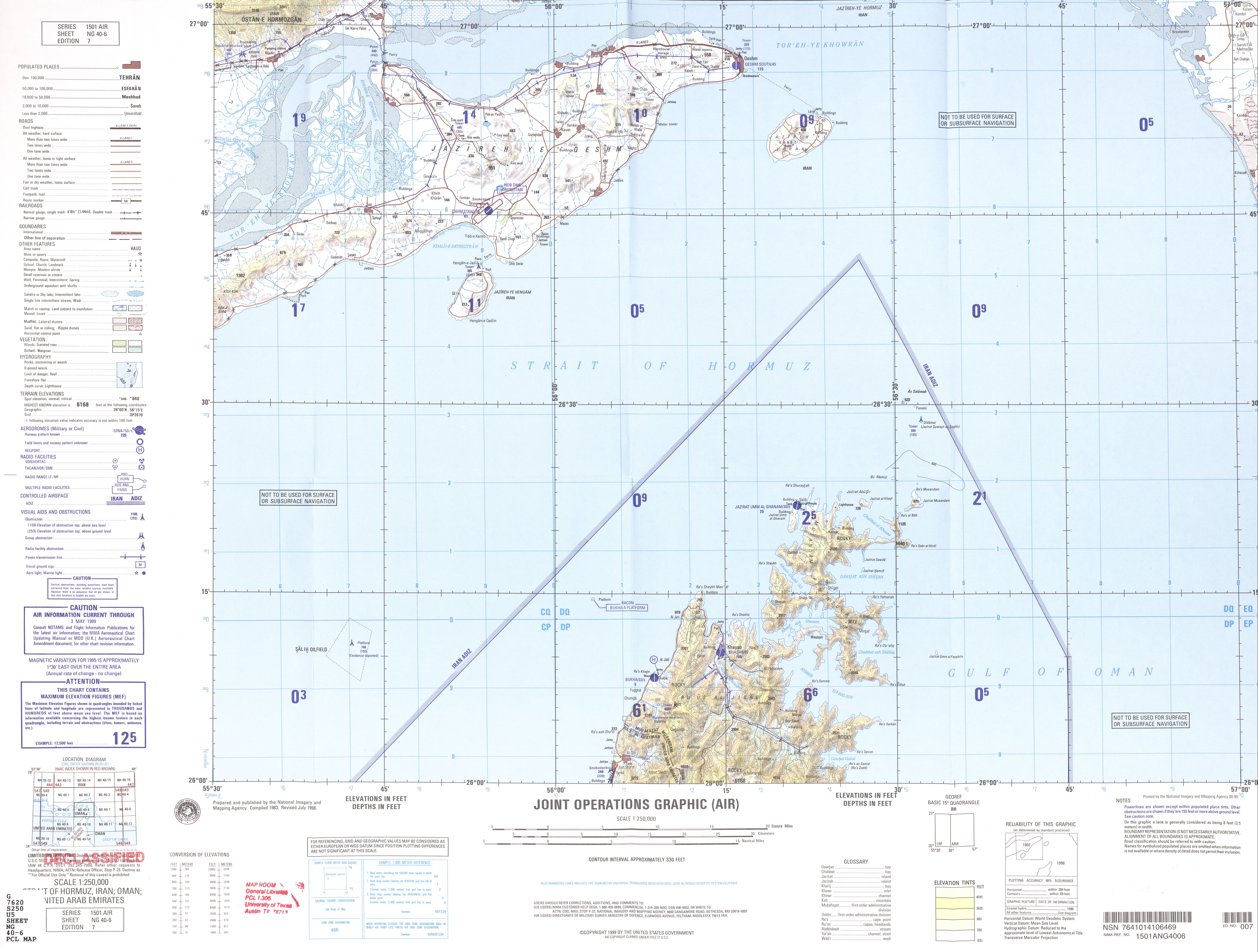
South Yemen's history is quite different. It was colonized by the British in order to block expansion on the part of the French who had taken over Djibouti and on the part of the Russians who had spread up to central Asia. But it was also a question of the British maintaining their domination of the Persian Gulf and the strategic Straits of Hormuz. It is Great Britain that built the port of Aden in South Yemen. This town became very important for the British empire. One could say it was the Hong Kong or the Macao of the epoch. Many foreigners were sent to the region.
This is what the social pyramid looked like in this colonial society: at the top, the British colonials lorded it, followed by the Somali and Indian communities who acted as a sort of buffer against the lowest category, the Yemenis. It was a classic strategy from the British colonists: using one group of person against another one in order to protect themselves. By the way, all the people that Great-Britain used to see as dangerous for its Indian colony – such as nationalists or communists – were sent in exile in Aden.
As we have seen in Somalia, did these political prisoners influence developments in the region?
Certainly. Independence movements forced out the British colonists in 1967 and the People's Democratic Republic of Yemen was born the following year. It was governed by the Yemeni Socialist Party, which was a coalition of different progressive elements, inheritors in part of Aden's prisoners. You could find there communists, nationalists, liberals, and Ba'athists from Syria or Iraq. All these elements were united under the banner of the Socialist Party.
South Yemen thus became the most progressive Arab state in the region and knew its most flourishing years, with agrarian reform, equality of the sexes, etc. Nevertheless, the socialist party remained a mixture of several elements with diverse origins. The communists were the backbone of the party and gave it a certain amount of cohesion, but every time there was a need to face any major difficulty, the contradictions burst out into the open. Because of a lack of any industrial basis and the petty bourgeois character of the coalition, these contradictions ended up giving rise to assassinations. Members literally killed each other! As a result of this the party underwent three bloody internal revolts. The last one proved fatal. Most of the ideological leaders of the party were assassinated and the liberal wing took charge of the movement. It was therefore a very weak socialist party which was governing Yemen up to the time that the two Yemen were reunified in 1990. Even though both sides had had relatively different histories, the parties of both north and sourth had always supported unfiication of the country in their respective schedule.
Why was it necessary to wait until 1990 before the north and south united?
In the north the state had been very weak after the war. It was led by liberals who lacked any really revolutionary activities and were controlled by the Gulf states, Saudi Arabia in particular. The Saudi neighbour provided arms and money to the feudal class with a view to weakening the central government. For Saudi Arabia a tribal North Yemen was easier to control. The south became, on the contrary, a bastion of progressive ideas. At the height of the Cold War it was considered as an enemy of the region which had to be put in quarantine.
But in the early nineties things had changed. First of all, the Soviet Union had collapsed and the Cold War had ended. On top of that, the Yemeni Socialist Party was no longer much of a threat. Its ideological leaders had been wiped on in the third internal party revolt. For the countries of the region as well as for the strategic interests of the west, the unification of Yemen no longer represented a danger. Ali Abdullah Saleh, who had been president of the Yemeni Arab Republic since 1978, took the leadership of the country. He is still in power today.
In 1990, Yemen was the only country, apart from Cuba, to oppose the Iraq war. 20 years later, while Castro is still holding out against the 'Yankees', Saleh has for his part lined up alongside the US in their war on terror. How can you explain this change?
The opposition to the war in Iraq was not the result of Saleh's policies, but of those of members of the former Yemeni socialist party who occupied various key positions in the new government. Nevertheless, even though the socialist party had always wanted unification of Yemen on a progressive basis, it had been too weakened by its internal revolt to be able to get its policies accepted in their entirety. On top of that, Saudi Arabia, a faithful ally of the US, made Yemen pay dearly for its position against the Iraq war. The Saudi regime expelled a million Yemeni workers who had enjoyed a special status entitling them to work on the other side of the frontier. This caused a severe economic crisis in Yemen, while at the same time sending a strong message to President Saleh. The latter revised his policy, becoming gradually the puppet of US imperialism that we know today.
And the southern progressives let him do?
Reunification was a big letdown for the southern leaders. They launched themselves into the process without a proper strategy. And, as we have seen, the Socialist Party was very weak. The centre of power gravitated in the north around President Saleh. The regime was corrupt, the expulsion of the Yemenis working in Saudi Arabia had created a major crisis and the economic situation was deteriorating.
All these factors led to the south demanding to secede in 1994. The separatists were supported by Saudi Arabia, which preferred its neighbour to be weak and divided, for various reasons. Firstly, because of the contradictions it had with its neighbour as to the course of the Saudi-Yemeni border: Yemen was in fact claiming certain areas situated in Saudi Arabia. Secondly, because a united Yemen with good leadership could cause problems for the feudal classes in Gulf states such as Saudi Arabia.
These tensions between north and south finally led to war. The Zaydi president mobilized the people of the north and the greater party of the army on the basis of their religious beliefs to fight against the Sunni-majority south. The separatists were beaten, which weakened still further the former members of the Socialist Party within the Yemeni government. This war finally offered the north, and Saleh, an opportunity to remove their dominant influence over military and political questions.
Fifteen years later, the south is again demanding separation. Do you think that president Saleh will be able to get away with it again?
Obviously, no. Saleh is facing problems at every turn. The south is demanding again a fair share of power after the corrupt government to all intents and purposes has restored the feudal order. For the southern Yemenis, who have a progressive history, this situation is unacceptable. And it isn't acceptable either for the Houthis in the north. In this case, President Saleh is unable to mobilise most of the population and army on the basis of their religioius beliefs. The Houthis are Zaydis too! The Houthi resistance has exposed the real policies of this government in a way no other strategy could have achieved in so short a time. The population is discovering what is really happening and discontent is growing stronger and stronger.
What are the reasons for the anger of the Yemeni people?
First and foremost, the social and economic situation. The regime has wealth while the people get poorer and poorer. There is also the fact that Yemen has become a bastion of US imperialism and Saleh had lined up alongside Washington in the war on terror. The Yemenis can see what is happening in Afghanistan, Pakistan and Iraq. For them it is a war against Muslims. Barack Hussein Obama may have a Muslim name and make all the speeches he likes, there are no other words to define this war.
On top of that, the Yemeni government is not even able to protect its citizens. After the September 11 attacks, some of them have been kidnapped and removed for no reason. This happened to an eminent Yemeni religious leader. When he was in the US visiting his son, he was arrested and sent to Guantánamo for no valid reason. After 6 years in detention, he was finally released. But he died three weeks later, because he became sick as a result of his imprisonment. This war on terror is really not accepted by the Yemeni people.
Finally, Saleh recognised the disputed frontier claimed by Saudi Arabia. He also authorised Saudi bombers to raid the region where the Houthi rebels are established. For the Yemenis this situation is unacceptable. Saleh is on an ejection seat. That is why he needs the support of the US which is raising the spectre of al Qaeda to be able to do what it likes in the country.
After Afghanistan and Iraq, is Yemen going to be the US's third front?
I think it already is. The US army has already sent missiles and special troops. It equally supplies a great deal of materiel to Yemen, but a good proportion of this goes over to the hands of the resistance because of the links the Zaydis have with the Yemeni army. It is six months since Saleh launched a major offensive against the Houthis. He has called for reinforcements from the Saudi Arabian and US armies. It wouldn't surprise me if Israel were soon to join the party. But in spite of everything, they are unable to overcome the Houthi resistance. The latter operates from a mountainous region, as do the Taliban. We know how difficult it is to combat rebels in such a terrain. Moreover, the Houthis have the arms to carry on fighting for a long time to come.
Is the US facing another defeat?
History does seem to repeat itself as far as the US is concerned. For all that this country is today led by a former Muslim, its policies have not changed. Obama's speeches are a lot like George Bush's: he promises to hunt down terrorists wherever they might be. Washington raises the spectre of al-Qaeda to fight rebels ensconced in Yemen's mountains? Bush did the same thing more than 8 years ago with regard to Afghanistan, and that war is still not over.
The thing is to know how long this is going to carry on. The historian Paul Kennedy has shown that the gap between the economic basis and military expansion was one of the principal factors in the decline of great empires. If the economy of a big power is running out of steam but its military expenses are increasing, this great power is condemned to fade and become very weak. That is the situation with the US today.
Mohamed Hassan is a specialist in geopolitics and the Arab world. Born in Addis Ababa (Ethiopia), he participated in the student movements of the 1974 socialist revolution in his country. He studied political science in Egypt before specializing in public administration in Brussels. A diplomat for his country of birth during the 1990s, he has worked in Washington, Beijing and Brussels. Co-author of 'Iraq under the occupation' (EPO, 2003), he has also participated in producing works on Arab nationalism and the Islamic movements, and on Flemish nationalism. He is one of the greatest contemporary experts on the Arab and Muslim world.
Political elites have more to fear than protectionism – the economic crisis threatens to bring regime change in its wake
Richard Gott guardian.co.uk
Wednesday 4 February 2009 19.00 GMT
A spectre haunts the gatherings of the political elites of much of the world as they contemplate the imminent collapse of the economic and political model they have fondly supported for the last 30 years. Politicians and economists wedded to the current neo-liberal model of capitalism rail against one possible outcome of the current crisis that they regard as totally beyond the pale, something that is absolutely unthinkable and undiscussable and only mentioned to conjure up an alarming image that will frighten the children.
Yet the spectre is in fact a perfectly respectable economic philosophy invoked from time to time and in different places over several centuries. It has a name – protectionism – often associated with the writings of Friedrich List, a 19th-century professor of political economy who opposed free trade, supported government intervention in the economy and advocated the erection of protectionist tariff barriers to protect a country's industry and agriculture. His book, The National System of Political Economy, published in 1841, was highly influential both in the United States and in Bismarck's Germany. List was an early opponent of globalisation. He accused Adam Smith of "cosmopolitanism", of constructing the notion of a beneficent global community that clearly flew in the face of the facts.
For most people know otherwise. They know, with List, that the global community is an invented phantom. Nearer home, they have no reason to expect that the EU will protect their interests. Indeed, they vote against its proposed constitution whenever they get the opportunity. Europe is moribund, and the only community they know and recognise is the nation state to which they belong, and whose elected government they require and expect to defend their work, their culture and their way of life. Yet governments in the neo-liberal era have other concerns and have manifestly not been doing anything of the kind. As a consequence, as the banks go bust and the economic situation deteriorates, British workers have appeared on unofficial picket lines to defend their jobs, just as the citizens of Bolivia were led to demonstrate spontaneously a few years ago against the privatisation of their water supply. People learn quickly. As Lenin recognised: they can learn in 20 days what they forgot in 20 years.
Such a huge chasm between the faulty ideology of the governing elite and the growing political understanding of the great mass of the people leads eventually to regime change, as has happened in country after country in Latin America during the last decade. This is the spectre, even more dramatic than protectionism, that now looms over Britain and the continental partners with whom it has joined forces in the neo-liberal madness of recent decades. Suddenly, the probability emerges that few of today's governments will be here in a couple of years time; they will be replaced, and replaced again if they fail to come up with credible solutions. And the solutions will be national rather than global, supportive of the local society envisaged by List rather than the failed cosmopolitan vision of the neo-liberals.
Today's crisis is far more wide-ranging than most politicians and commentators are prepared to admit. It will last for at least 10 or 20 years, not just for one. It will go on and on, producing utopian programmes, reverses and changes along the way. This is not 1929, nor yet 1917. It is more comparable to the preliminary rumbles of 1789, to the collapse of the ancien regime and the start of a long revolutionary period of huge untried experiments and uncertainty.
There is an apparent flaw in this argument, of course, for today there is no left or right, and there appears to be no group of impatient intellectuals waiting for their ideas to be seized and picked up by the next group of leaders. The upheavals of 1789 were preceded by decades of Enlightenment debate, with political ideas that could be expanded and promoted by successive generations of revolutionaries. Today, so complete is the grip of neo-liberal ideology on the political and media structures of the west that no alternative ever gets an adequate airing. There seems to be an ideological vacuum.
Yet this is not really so. There are plenty of ideas about and many of them are being tested in Latin America by a new generation of political leaders put in power by rebellions from below. They just remain below the radar of the media and the political class, who pay no attention. Protectionism (in different forms and guises) is one new/old idea; the recovery of history is another. So too is the revival of the economic activity of the state, a state characterised by justice and efficiency, and as different from the Soviet Union as from the delirious construction of the ideologues of neo-liberalism.
In this unfolding scenario, forgotten questions will be asked again: why do we allow the media to be dominated by foreign owners and foreign programmes? Why is our economic activity in the hands of foreign corporations? Why are we forced by advertising to purchase products that we have no desire or need to consume, simply in order to sustain the country's economy? Why do we leave thousands of acres in the hands of private landowners? Why does our country make no effort to be self-sufficient in food? Why do we still pretend that Britain is an imperial country, 50 years after the end of empire? Why do we remain allied to the most dangerous and reactionary country in the world?
Such liberating ideas can only come to the top of the agenda if the present political structure is demolished and swept away. Fortunately, the current systemic crisis is making this ever more probable. Our leaders, of course, ignore the likelihood of their imminent demise and scare us with innumerable arguments: protectionism is perceived at worst as an open door to fascism, at best as a forerunner of a yet more disastrous economic disaster. We should ignore the smoke screen of mystification that they try to erect and welcome the coming seismic upheaval. Then we will have to ride the political struggles of the consequent tsunami wave, and look forward with optimism to a more constructive and hopeful future.


 Mohamed Hassan is a specialist in geopolitics and the Arab world. Born in Addis Ababa (Ethiopia), he participated in the student movements of the 1974 socialist revolution in his country. He studied political science in Egypt before specializing in public administration in Brussels. A diplomat for his country of birth during the 1990s, he has worked in Washington, Beijing and Brussels. Co-author of 'Iraq under the occupation' (EPO, 2003), he has also participated in producing works on Arab nationalism and the Islamic movements, and on Flemish nationalism. He is one of the greatest contemporary experts on the Arab and Muslim world.

 Posts
Posts


![[Most Recent Quotes from www.kitco.com]](http://www.kitconet.com/charts/metals/gold/t24_au_en_eukg_2.gif)