.
rense.com
http://www.brasschecktv.com/page/79.htmlFEMA's Blocking Relief Efforts - An Amazing List9-8-5
FEMA won't accept Amtrak's help in evacuations http://news.ft.com/cms/s/84aa35cc-1da8-11da-b40b-00000e..
FEMA turns away experienced firefighters http://www.dailykos.com/storyonly/2005/9/5/105538/7048
FEMA turns back Wal-Mart supply trucks http://www.nytimes.com/2005/09/05/national/nationalspec..
FEMA prevents Coast Guard from delivering diesel fuel http://www.nytimes.com/2005/09/05/national/nationalspec..
FEMA won't let Red Cross deliver food http://www.post-gazette.com/pg/05246/565143.stm
FEMA bars morticians from entering New Orleans http://www.zwire.com/site/news.cfm?newsid=15147862&BRD=...
FEMA blocks 500-boat citizen flotilla from delivering aid http://www.dailykos.com/storyonly/2005/9/3/171718/0826
FEMA fails to utilize Navy ship with 600-bed hospital on board http://www.chicagotribune.com/news/nationworld/chi-0509..
FEMA to Chicago: Send just one truck http://www.chicagotribune.com/news/local/chi-050902dale..
FEMA turns away generators http://www.wwltv.com/local/stories/WWLBLOG.ac3fcea.html
FEMA: "First Responders Urged Not To Respond" http://www.fema.gov/news/newsrelease.fema?id=18470
That last one is real -- not satire but straight from FEMA's website.
------------------------------------------------------------------------------------------------
EMS & Hurricane Katrina
Hurricane Katrina - Our Experiencesnote: Bradshaw and Slonsky are paramedics frorm California that were attending the EMS conference in New Orleans. Larry Bradsahw is the chief shop steward, Paramedic Chapter, SEIU Local 790; and Lorrie Beth Slonsky is steward, Paramedic Chapter, SEIU Local 790.[California]
Two days after Hurricane Katrina struck New Orleans, the Walgreen's store at the corner of Royal and Iberville streets remained locked. The dairy display case was clearly visible through the widows. It was now 48 hours without electricity, running water, plumbing. The milk, yogurt, and cheeses were beginning to spoil in the 90-degree heat. The owners and managers had locked up the food, water, pampers, and prescriptions and fled the City. Outside Walgreen's windows, residents and tourists grew increasingly thirsty and hungry.
The much-promised federal, state and local aid never materialized and the windows at Walgreen's gave way to the looters. There was an alternative. The cops could have broken one small window and distributed the nuts, fruit juices, and bottle water in an organized and systematic manner. But they did not. Instead they spent hours playing cat and mouse, temporarily chasing away the looters.
We were finally airlifted out of New Orleans two days ago and arrived home yesterday (Saturday). We have yet to see any of the TV coverage or look at a newspaper. We are willing to guess that there were no video images or front-page pictures of European or affluent white tourists looting the Walgreen's in the French Quarter.
We also suspect the media will have been inundated with "hero" images of the National Guard, the troops and the police struggling to help the "victims" of the Hurricane. What you will not see, but what we witnessed,were the real heroes and sheroes of the hurricane relief effort: the working class of New Orleans. The maintenance workers who used a fork lift to carry the sick and disabled. The engineers, who rigged, nurtured and kept the generators running. The electricians who improvised thick extension cords stretching over blocks to share the little electricity we had in order to free cars stuck on rooftop parking lots. Nurses who took over for mechanical ventilators and spent many hours on end manually forcing air into the lungs of unconscious patients to keep them alive. Doormen who rescued folks stuck in elevators. Refinery workers who broke into boat yards, "stealing" boats to rescue their neighbors clinging to their roofs in flood waters. Mechanics who helped hot-wire any car that could be found to ferry people out of the City. And the food service workers who scoured the commercial kitchens improvising communal meals for hundreds of those stranded.
Most of these workers had lost their homes, and had not heard from members of their families, yet they stayed and provided the only infrastructure for the 20% of New Orleans that was not under water.
On Day 2, there were approximately 500 of us left in the hotels in the French Quarter. We were a mix of foreign tourists, conference attendees like ourselves, and locals who had checked into hotels for safety and shelter from Katrina. Some of us had cell phone contact with family and friends outside of
New Orleans. We were repeatedly told that all sorts of resources including the National Guard and scores of buses were pouring in to the City. The buses and the other resources must have been invisible because none of us had seen them.
We decided we had to save ourselves. So we pooled our money and came up with $25,000 to have ten buses come and take us out of the City. Those who did not have the requisite $45.00 for a ticket were subsidized by those who did have extra money. We waited for 48 hours for the buses, spending the last 12 hours standing outside, sharing the limited water, food, and clothes we had. We created a priority boarding area for the sick, elderly and new born babies. We waited late into the night for the "imminent" arrival of the buses. The buses never arrived. We later learned that the minute the arrived to the City limits, they were commandeered by the military.
By day 4 our hotels had run out of fuel and water. Sanitation was dangerously abysmal. As the desperation and despair increased, street crime as well as water levels began to rise. The hotels turned us out and locked their doors, telling us that the "officials" told us to report to the convention center to wait for more buses. As we entered the center of the City, we finally encountered the National Guard. The Guards told us we would not be allowed into the Superdome as the City's primary shelter had descended into a humanitarian and health hellhole. The guards further told us that the City's only other shelter, the Convention Center, was also descending into chaos and squalor and that the police were not allowing anyone else in. Quite naturally, we asked, "If we can't go to the only 2 shelters in the City, what was our alternative?" The guards told us that that was our problem, and no they did not have extra water to give to us. This would be the start of our numerous encounters with callous and hostile "law enforcement".
We walked to the police command center at Harrah's on Canal Street and were told the same thing, that we were on our own, and no they did not have water to give us. We now numbered several hundred. We held a mass meeting to decide a course of action. We agreed to camp outside the police command post. We would be plainly visible to the media and would constitute a highly visible embarrassment to the City officials. The police told us that we could not stay. Regardless, we began to settle in and set up camp. In short order, the police commander came across the street to address our group. He told us he had a solution: we should walk to the Pontchartrain Expressway and cross the greater New Orleans Bridge where the police had buses lined up to take us out of the City. The crowed cheered and began to move. We called everyone back and explained to the commander that there had been lots of misinformation and wrong information and was he sure that there were buses waiting for us. The commander turned to the crowd and stated emphatically, "I swear to you that the buses are there."
We organized ourselves and the 200 of us set off for the bridge with great excitement and hope. As we marched pasted the convention center, many locals saw our determined and optimistic group and asked where we were headed. We told them about the great news. Families immediately grabbed their few belongings and quickly our numbers doubled and then doubled again. Babies in strollers now joined us, people using crutches, elderly clasping walkers and others people in wheelchairs. We marched the 2-3 miles to the freeway and up the steep incline to the Bridge. It now began to pour down rain, but it did not dampen our enthusiasm.
As we approached the bridge, armed Gretna sheriffs formed a line across the foot of the bridge. Before we were close enough to speak, they began firing their weapons over our heads. This sent the crowd fleeing in various directions. As the crowd scattered and dissipated, a few of us inched forward and managed to engage some of the sheriffs in conversation. We told them of our conversation with the police commander and of the commander's assurances. The sheriffs informed us there were no buses waiting. The commander had lied to us to get us to move.
We questioned why we couldn't cross the bridge anyway, especially as there was little traffic on the 6-lane highway. They responded that the West Bank was not going to become New Orleans and there would be no Superdomes in their City. These were code words for if you are poor and black, you are not crossing the Mississippi River and you were not getting out of New Orleans.
Our small group retreated back down Highway 90 to seek shelter from the rain under an overpass. We debated our options and in the end decided to build an encampment in the middle of the Ponchartrain Expressway on the center divide, between the O'Keefe and Tchoupitoulas exits. We reasoned we would be visible to everyone, we would have some security being on an elevated freeway and we could wait and watch for the arrival of the yet to be seen buses.
All day long, we saw other families, individuals and groups make the same trip up the incline in an attempt to cross the bridge, only to be turned away. Some chased away with gunfire, others simply told no, others to be verbally berated and humiliated. Thousands of New Orleaners were prevented and prohibited from self-evacuating the City on foot. Meanwhile, the only two City shelters sank further into squalor and disrepair. The only way across the bridge was by vehicle. We saw workers stealing trucks, buses, moving vans, semi-trucks and any car that could be hotwired. All were packed with people trying to escape the misery New Orleans had become.
Our little encampment began to blossom. Someone stole a water delivery truck and brought it up to us. Let's hear it for looting! A mile or so down the freeway, an army truck lost a couple of pallets of C-rations on a tight turn. We ferried the food back to our camp in shopping carts. Now secure with the two necessities, food and water; cooperation, community, and creativity flowered. We organized a clean up and hung garbage bags from the rebar poles. We made beds from wood pallets and cardboard. We designated a storm drain as the bathroom and the kids built an elaborate enclosure for privacy out of plastic, broken umbrellas, and other scraps. We even organized a food recycling system where individuals could swap out parts of C-rations (applesauce for babies and candies for kids!).
This was a process we saw repeatedly in the aftermath of Katrina. When individuals had to fight to find food or water, it meant looking out for yourself only. You had to do whatever it took to find water for your kids or food for your parents. When these basic needs were met, people began to look out for each other, working together and constructing a community.
If the relief organizations had saturated the City with food and water in the first 2 or 3 days, the desperation, the frustration and the ugliness would not have set in.
Flush with the necessities, we offered food and water to passing families and individuals. Many decided to stay and join us. Our encampment grew to 80 or 90 people.
From a woman with a battery powered radio we learned that the media was talking about us. Up in full view on the freeway, every relief and news organizations saw us on their way into the City. Officials were being asked what they were going to do about all those families living up on the freeway? The officials responded they were going to take care of us. Some of us got a sinking feeling. "Taking care of us" had an ominous tone to it.
Unfortunately, our sinking feeling (along with the sinking City) was correct. Just as dusk set in, a Gretna Sheriff showed up, jumped out of his patrol vehicle, aimed his gun at our faces, screaming, "Get off the fucking freeway". A helicopter arrived and used the wind from its blades to blow away our flimsy structures. As we retreated, the sheriff loaded up his truck with our food and water.
Once again, at gunpoint, we were forced off the freeway. All the law enforcement agencies appeared threatened when we congregated or congealed into groups of 20 or more. In every congregation of "victims" they saw "mob" or "riot". We felt safety in numbers. Our "we must stay together" was impossible because the agencies would force us into small atomized groups.
In the pandemonium of having our camp raided and destroyed, we scattered once again. Reduced to a small group of 8 people, in the dark, we sought refuge in an abandoned school bus, under the freeway on Cilo Street. We were hiding from possible criminal elements but equally and definitely, we were hiding from the police and sheriffs with their martial law, curfew and shoot-to-kill policies.
The next days, our group of 8 walked most of the day, made contact with New Orleans Fire Department and were eventually airlifted out by an urban search and rescue team. We were dropped off near the airport and managed to catch a ride with the National Guard. The two young guardsmen apologized for the limited response of the Louisiana guards. They explained that a large section of their unit was in Iraq and that meant they were shorthanded and were unable to complete all the tasks they were assigned.
We arrived at the airport on the day a massive airlift had begun. The airport had become another Superdome. We 8 were caught in a press of humanity as flights were delayed for several hours while George Bush landed briefly at the airport for a photo op. After being evacuated on a coast guard cargo plane, we arrived in San Antonio, Texas.
There the humiliation and dehumanization of the official relief effort continued. We were placed on buses and driven to a large field where we were forced to sit for hours and hours. Some of the buses did not have air-conditioners. In the dark, hundreds if us were forced to share two filthy overflowing porta-potties. Those who managed to make it out with any possessions (often a few belongings in tattered plastic bags) we were subjected to two different dog-sniffing searches.
Most of us had not eaten all day because our C-rations had been confiscated at the airport because the rations set off the metal detectors. Yet, no food had been provided to the men, women, children, elderly, disabled as they sat for hours waiting to be "medically screened" to make sure we were not carrying any communicable diseases.
This official treatment was in sharp contrast to the warm, heart-felt reception given to us by the ordinary Texans. We saw one airline worker give her shoes to someone who was barefoot. Strangers on the street offered us money and toiletries with words of welcome. Throughout, the official relief effort was callous, inept, and racist.
There was more suffering than need be.
Lives were lost that did not need to be lost.
Sep 6, 2005, 11:59
By Parmedics Larry Bradsahw and Lorrie Beth Slonsky
http://www.emsnetwork.org/artman/publish/article_18337.shtml
---------------------------------------------------------------------------------------------------------------------------------------
Blackwater Mercenaries Deploy in New Orleans
By Jeremy Scahill and Daniela Crespo
t r u t h o u t | Report
Saturday 10 September 2005
New Orleans - Heavily armed paramilitary mercenaries from the Blackwater private security firm, infamous for their work in Iraq, are openly patrolling the streets of New Orleans. Some of the mercenaries say they have been "deputized" by the Louisiana governor; indeed some are wearing gold Louisiana state law enforcement badges on their chests and Blackwater photo identification cards on their arms. They say they are on contract with the Department of Homeland Security and have been given the authority to use lethal force. Several mercenaries we spoke with said they had served in Iraq on the personal security details of the former head of the US occupation, L. Paul Bremer and the former US ambassador to Iraq, John Negroponte.
"This is a totally new thing to have guys like us working CONUS (Continental United States)," a heavily armed Blackwater mercenary told us as we stood on Bourbon Street in the French Quarter. "We're much better equipped to deal with the situation in Iraq."
Blackwater mercenaries are some of the most feared professional killers in the world and they are accustomed to operating without worry of legal consequences. Their presence on the streets of New Orleans should be a cause for serious concern for the remaining residents of the city and raises alarming questions about why the government would allow men trained to kill with impunity in places like Iraq and Afghanistan to operate here. Some of the men now patrolling the streets of New Orleans returned from Iraq as recently as 2 weeks ago.
What is most disturbing is the claim of several Blackwater mercenaries we spoke with that they are here under contract from the federal and Louisiana state governments.
Blackwater is one of the leading private "security" firms servicing the occupations of Iraq and Afghanistan. It has several US government contracts and has provided security for many senior US diplomats, foreign dignitaries and corporations. The company rose to international prominence after 4 of its men were killed in Fallujah and two of their charred bodies were hung from a bridge in March 2004. Those killings sparked the massive US retaliation against the civilian population of Fallujah that resulted in scores of deaths and tens of thousands of refugees.
As the threat of forced evictions now looms in New Orleans and the city confiscates even legally registered weapons from civilians, the private mercenaries of Blackwater patrol the streets openly wielding M-16s and other assault weapons. This despite Police Commissioner Eddie Compass' claim that "Only law enforcement are allowed to have weapons."
Officially, Blackwater says it forces are in New Orleans to "join the Hurricane Relief Effort." A statement on the company's website, dated September 1, advertises airlift services, security services and crowd control. The company, according to news reports, has since begun taking private contracts to guard hotels, businesses and other properties. But what has not been publicly acknowledged is the claim, made to us by 2 Blackwater mercenaries, that they are actually engaged in general law enforcement activities including "securing neighborhoods" and "confronting criminals."
That raises a key question: under what authority are Blackwater's men operating? A spokesperson for the Homeland Security Department, Russ Knocke, told the Washington Post he knows of no federal plans to hire Blackwater or other private security. "We believe we've got the right mix of personnel in law enforcement for the federal government to meet the demands of public safety." he said.
But in an hour-long conversation with several Blackwater mercenaries, we heard a different story. The men we spoke with said they are indeed on contract with the Department of Homeland Security and the Louisiana governor's office and that some of them are sleeping in camps organized by Homeland Security in New Orleans and Baton Rouge. One of them wore a gold Louisiana state law enforcement badge and said he had been "deputized" by the governor. They told us they not only had authority to make arrests but also to use lethal force. We encountered the Blackwater forces as we walked through the streets of the largely deserted French Quarter. We were talking with 2 New York Police officers when an unmarked car without license plates sped up next to us and stopped. Inside were 3 men, dressed in khaki uniforms, flak jackets and wielding automatic weapons. "Y'all know where the Blackwater guys are?" they asked. One of the police officers responded, "There are a bunch of them around here," and pointed down the road.
"Blackwater?" we asked. "The guys who are in Iraq?"
"Yeah," said the officer. "They're all over the place."
A short while later, as we continued down Bourbon Street, we ran into the men from the car. They wore Blackwater ID badges on their arms.
"When they told me New Orleans, I said, 'What country is that in?,'" said one of the Blackwater men. He was wearing his company ID around his neck in a carrying case with the phrase "Operation Iraqi Freedom" printed on it. After bragging about how he drives around Iraq in a "State Department issued level 5, explosion proof BMW," he said he was "just trying to get back to Kirkuk (in the north of Iraq) where the real action is." Later we overheard him on his cell phone complaining that Blackwater was only paying $350 a day plus per diem. That is much less than the men make serving in more dangerous conditions in Iraq. Two men we spoke with said they plan on returning to Iraq in October. But, as one mercenary said, they've been told they could be in New Orleans for up to 6 months. "This is a trend," he told us. "You're going to see a lot more guys like us in these situations."
If Blackwater's reputation and record in Iraq are any indication of the kind of "services" the company offers, the people of New Orleans have much to fear.
Jeremy Scahill, a correspondent for the national radio and TV program Democracy Now!, and Daniela Crespo are in New Orleans. Visit www.democracynow.org for in-depth, independent, investigative reporting on Hurricane Katrina. Email: jeremy@democracynow.org.
------------------------------------------------------------------------------------------------------------------------------
addendum 15 march 2010
source: http://www.rense.com/general90/sky.htm
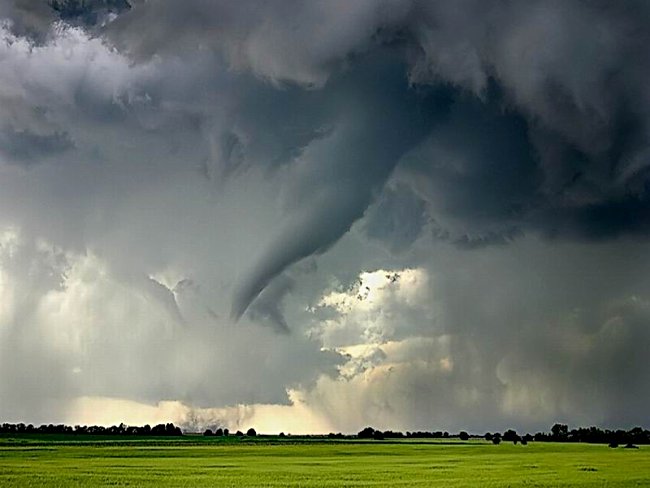
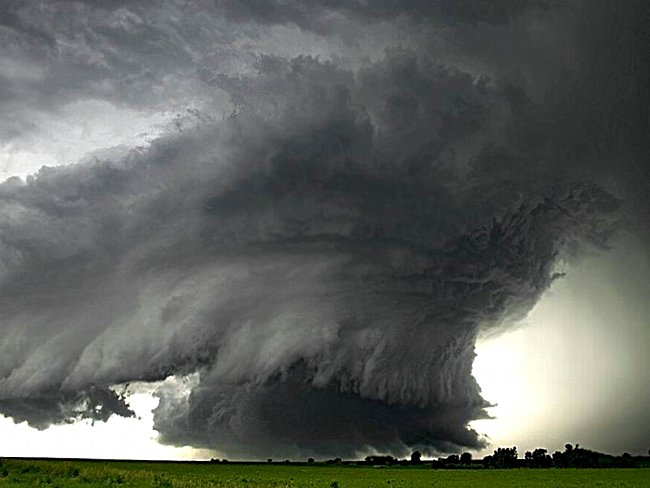
The Sky Before Katrina Struck
3-15-10 -

-
- Whoever took these pictures did an awesome job.
-
- And whoever said Katrina was 'awesome and terrifying' is telling the truth. Wow, take a look at this ....
-
- These pictures were made by a man in Magee, MS where the eye of the storm passed thru- what an experience. Magee is 150 miles North of Waveland, Mississippi where the Hurricane made landfall. The dance with Katrina, part of her beauty as she left destruction on her exit. They are remarkably dramatic...
-
-
-
 -
-
 -
-
 -
-
 -
-
 -
-
-
 -
-
-
 -
-
-
- The following picture was taken from the third story balcony of Saint Stanislaus College located next door to Our Lady of the Gulf church in Bay Saint Louis, Mississippi on the morning of August 29th, 2005.
-
- This is believed to be the initial tidal wave from Hurricane Katrina. The tidal wave was approximately 35 to 40 feet high. When it slammed into the beach front communities of Bay Saint Louis and Waveland, Mississippi to completely destroy 99% of every structure along the beach for 9 miles and over a mile inland. The destruction only started there. The flooding that continued inland destroyed the contents of all but 35 homes in these two communities of approximately 14,000 people.
|
-


 Posts
Posts


![[Most Recent Quotes from www.kitco.com]](http://www.kitconet.com/charts/metals/gold/t24_au_en_eukg_2.gif)