Sunday, 21 March 2010

nato: afghan opium, business as usual

March 20, 2010

U.S. Turns a Blind Eye to Opium in Afghan Town

ROD NORDLAND

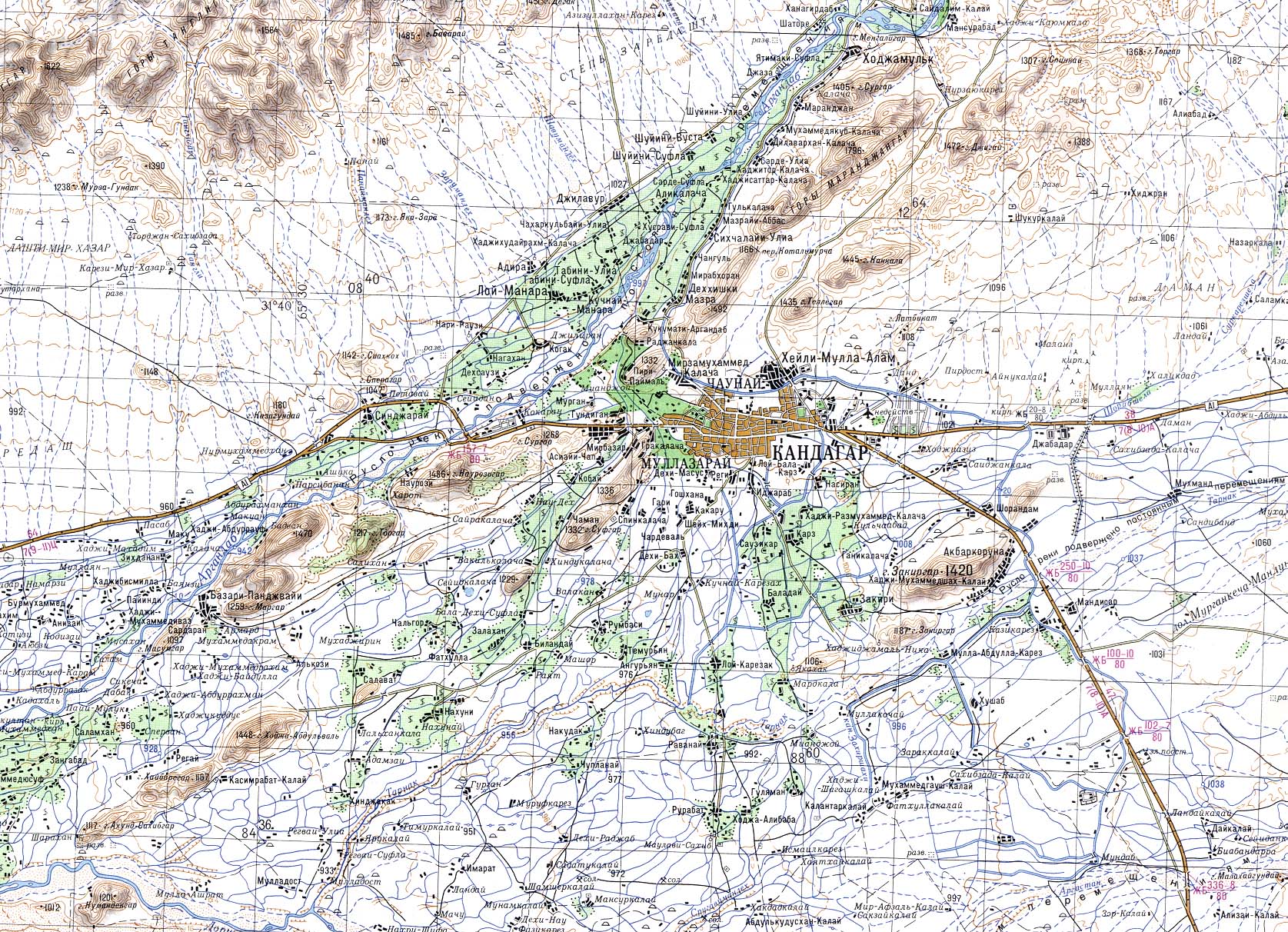
KABUL, Afghanistan — The effort to win over Afghans on former Taliban turf in Marja has put American and NATO commanders in the unusual position of arguing against opium eradication, pitting them against some Afghan officials who are pushing to destroy the harvest.

From Gen. Stanley A. McChrystal on down, the military’s position is clear: “U.S. forces no longer eradicate,” as one NATO official put it. Opium is the main livelihood of 60 to 70 percent of the farmers in Marja, which was seized from Taliban rebels in a major offensive last month. American Marines occupying the area are under orders to leave the farmers’ fields alone.

“Marja is a special case right now,” said Cmdr. Jeffrey Eggers, a member of the general’s Strategic Advisory Group, his top advisory body. “We don’t trample the livelihood of those we’re trying to win over.”

Tyler Hicks/The New York Times.
American Marines in an opium poppy field in Marja, Afghanistan, last month. The military decided not to destroy the fields.

United Nations drug officials agree with the Americans, though they acknowledge the conundrum. Pictures of NATO and other allied soldiers “walking next to the opium fields won’t go well with domestic audiences, but the approach of postponing eradicating in this particular case is a sensible one,” said Jean-Luc Lemahieu, who is in charge of the United Nations Office on Drugs and Crime here.

Afghan officials, however, are divided. Though some support the American position, others, citing a constitutional ban on opium cultivation, want to plow the fields under before the harvest, which has already begun in parts of Helmand Province.

“How can we allow the world to see lawful forces in charge of Marja next to fields full of opium, which one way or another will be harvested and turned into a poison that kills people all over the world?” said Zulmai Afzali, the spokesman for the Afghan Ministry of Counternarcotics.

“The Taliban are the ones who profit from opium, so you are letting your enemy get financed by this so he can turn around and kill you back,” he added, referring to how the Taliban squeeze farmers for money to run their operations.

The argument may strike some as a jarring reversal; in the years right after the 2001 invasion, tensions rose as some Afghan officials vehemently resisted all-out American pressure to stop opium production.

Though the United States government’s official position is still to support opium crop eradication in general, some American civilian officials say that the internal debate over Marja is far from over within parts of the State Department and the Drug Enforcement Administration.

A spokesman for the United States Embassy in Kabul, Brendan J. O’Brien, said officials would decline to comment while the matter was under review.

At the heart of the debate with Afghan officials is an important question of cause-and-effect: is poor security in Marja the reason there is so much opium, or is so much opium the reason there has been poor security?

“Every province in Afghanistan where you find opium cultivation, you have insecurity as a result,” Mr. Afzali said.

American military officials and United Nations drug officials see it the other way around. Opium cultivation has been largely wiped out in 20 provinces where security has been improved, and in the seven most insecure provinces, poppy is still farmed.

“Nothing can compete with opium in an insecure environment,” Mr. Lemahieu said. “A secure environment is the precondition for governance and a long-term solution.”

Although the International Security Assistance Force, the NATO force that General McChrystal commands, no longer carries out eradication programs itself, its official position is that it supports the Afghan government’s efforts to eradicate, and lends backup and protection to the provincial officials, who are responsible for carrying out the eradication program.

The ardently anti-opium governor of Helmand Province, Gulab Mangal, has a record of success, cutting back cultivation by 33 percent last year. But he, too, is willing to make an exception for the current harvest in Marja — for the moment.

“In general I’ve been told by my higher-ups that this year you will not eradicate there, because people have suffered a lot of hardships because of the fighting,” Mr. Mangal said. “We may do it next year.”

Mr. Afzali, however, said the Counternarcotics Ministry still hoped to prevail in time to eradicate the current crop in Marja.

Mr. Mangal said, “If they order me, I will start the destruction of Marja’s opium the same day.”

The problem of Marja’s opium harvest is being discussed intensely by General McChrystal’s advisers, but none of the proposed solutions have proved satisfactory. One idea was to buy up and destroy the opium harvest, but opponents of that proposal feared that it would only encourage more opium cultivation — and might be illegal under United States law, turning American troops into de facto drug financiers.

Another idea was to give incentives to farmers to change to legal crops next year, while this year concentrating on interdiction of smugglers and the laboratories they use to make opium or heroin from the poppy paste. That would institute a sort of “don’t ask, don’t tell” policy toward the cultivators and would present a thorny question: where would troops interdict the opium — just outside the farm gate, on the lane leading from the farm, on the road to town?

“How do you support the rule of law while providing a proper penalty and disincentive so they switch crops next year?” Commander Eggers said. “We are in a real dilemma.”

There is little time left to find an answer: two-thirds of Marja’s fields are now blooming with tall red poppies, and the forthcoming harvest would provide work for thousands of Afghans from outside the area because it is so labor intensive.

Helmand produces more than half of Afghanistan’s opium harvest, with 22 percent of its arable land devoted to poppies, even after Governor Mangal’s forces eradicated a third of the crop last year. His province was awarded a $10 million Good Performer’s Initiative grant by the American Embassy for that effort.

Afghanistan now produces 90 percent of the world’s opium. And one way or another the opium trade supports an estimated 1.4 million households in the country, which has a population of 25 million to 30 million. It also provides enormous amounts of money to the Taliban, with a recent United Nations study estimating the insurgents had earned as much as $600 million in taxes from farmers and traffickers just from 2005 to 2008.

The farmers themselves do not get rich on the harvest.

Hajji Said Gul, a 51-year-old farmer with nine acres of poppies in Marja, said that after he paid back loans to buy seeds, and gave the Taliban their 10 percent of the profits, he earned $500 an acre with each harvest. He is not worried about eradication. “The Taliban have already promised us that they will keep fighting the government and foreign forces until we collect our harvest from the fields,” he said. “All my hopes are related to the poppy harvest.”

Muhammad Nabi, 52, a tribal elder, said: “It’s better if they don’t destroy the crops this year. Next year, if they provide better security, reconstruction and work programs, then we guarantee they will not grow poppy.”

Opium prices now are at historic lows, after years of over-production in Afghanistan. A few years ago, farmers could earn 37 times as much from opium as from wheat, the favored substitution crop recently; now it is more like two or three times as much, United Nations officials say.

Mr. Lemahieu said he thought that provided an opportunity to persuade the farmers that if they changed to legal crops, the government would provide them with services like schools and clinics, and then they might be willing to accept lower profits.

“Between yesterday’s opium income and tomorrow’s legal income, today requires an increase in quality of life for the farmer and his family,” he said. Destroy his crop this year, Western officials say, and he won’t see anything but red.

Taimoor Shah contributed reporting from Marja, Afghanistan, and an Afghan employee of The New York Times from Lashkar Gah, Afghanistan.

A version of this article appeared in print on March 21, 2010, on page A1 of the New York edition.

us: request to regulate aipac as a foreign agent

.
http://www.prnewswire.com/news-releases/us-department-of-justice-asked-to-regulate-aipac-as-a-foreign-agent-of-the-israeli-government-88190712.html

US Department of Justice Asked to Regulate AIPAC as a Foreign Agent of the Israeli Government

WASHINGTON, March 17 /PRNewswire-USNewswire/ -- The US Department of Justice has been formally asked to begin regulating the American Israel Public Affairs Committee (AIPAC) as the foreign agent of the Israeli Ministry of Foreign Affairs. A 392 page legal filing presented by a four person IRmep delegation in a two hour meeting with top officials of the Internal Security Section substantiated the following case for AIPAC's immediate registration:

  1. AIPAC is a spinoff of an organization already ordered by the DOJ to register as an Israeli foreign agent. In November of 1962 the American Zionist Council was ordered by the Attorney General to begin filing disclosures as an Israeli foreign agent under the 1938 Foreign Agents Registration Act. http://www.IRmep.org/1962Order.pdf Six weeks later, former AZC employees incorporated the American Israel Public Affairs Committee in Washington, DC, taking over the AZC's lobbying activities. http://www.IRmep.org/AIPAC.pdf AIPAC did not register as a foreign agent.
  2. AIPAC's founder Isaiah L. Kenen was the chief information officer for the Israeli Ministry of Foreign Affairs in New York and for a time duly registered in that role. http://www.IRmep.org/Kenen.pdf The Justice Department ordered Kenen to personally re-register after he formally left the Israeli Ministry of Foreign Affairs to head up private lobbying and publicity for the Israeli government at the nonprofit American Zionist Council. Kenen never complied with the order. http://www.IRmep.org/order.pdf
  3. Espionage related FBI investigations in 1984 and 2005 reveal AIPAC's ongoing stealth foreign agency activities. Declassified FBI files released on the Internet last week reveal that in 1984 AIPAC and the Israeli Ministry of Economics were investigated for jointly obtaining and circulating classified US economic data to obtain favorable trade benefits for Israel. http://www.irmep.org/ila/economy In 2005 Pentagon Colonel Lawrence Franklin pled guilty and two AIPAC employees were indicted for obtaining and circulating classified US national defense information to Israeli government officials allegedly in the interest of fomenting US action against Iran.
  4. AIPAC's executive committee consists of the original member organizations of the AZC in addition to newer members. The Conference of Presidents of Major Jewish Organizations, the umbrella group of AIPAC's executive committee, is housed in the same New York office as the World Zionist Organization – American Section, a registered foreign agent that is heavily involved in illegal settlement expansion according to Israeli prosecutor Thalia Sasson.

According to Grant F. Smith, director of IRmep, the case for reregulating AIPAC as a foreign agent immediately is compelling. "AIPAC was designed to supplant the American Zionist Council as the arm of the Israeli Ministry of Foreign Affairs in the United States after the DOJ ordered the AZC to register as a foreign agent. As such, Americans should have full public access to biannual FARA registrations detailing AIPAC's publicity campaigns, lobbying expenditures, funding flows, activities of its offices in Israel and internal consultations with its foreign principals - particularly over such controversial issues as illegal settlements and US foreign aid."

Concerned organizations and individuals who wish to supplement the Department of Justice filing or participate in future negotiations with law enforcement officials should contact the Institute for Research: Middle Eastern Policy, Inc. at info@IRmep.org or 202-342-7325. IRmep is a private nonprofit that studies how warranted law enforcement and civil action can improve U.S. Middle East policy.

SOURCE Institute for Research: Middle Eastern Policy

Thursday, 18 March 2010

pentagon adds wikileaks to list of enemies

.
http://www.nytimes.com/2010/03/18/us/18wiki.html?ref=us

Pentagon Sees a Threat From Online Muckrakers

STEPHANIE STROM
March 17, 2010

To the list of the enemies threatening the security of the United States, the Pentagon has added WikiLeaks.org, a tiny online source of information and documents that governments and corporations around the world would prefer to keep secret.

The Pentagon assessed the danger WikiLeaks.org posed to the Army in a report marked “unauthorized disclosure subject to criminal sanctions.” It concluded that “WikiLeaks.org represents a potential force protection, counterintelligence, OPSEC and INFOSEC threat to the U.S. Army” — or, in plain English, a threat to Army operations and information.

WikiLeaks, true to its mission to publish materials that expose secrets of all kinds, published the 2008 Pentagon report about itself on Monday.

Lt. Col. Lee Packnett, an Army spokesman, confirmed that the report was real. Julian Assange, the editor of WikiLeaks, said the concerns the report raised were hypothetical.

“It did not point to anything that has actually happened as a result of the release,” Mr. Assange said. “It contains the analyst’s best guesses as to how the information could be used to harm the Army but no concrete examples of any real harm being done.”

WikiLeaks, a nonprofit organization, has rankled governments and companies around the world with its publication of materials intended to be kept secret. For instance, the Army’s report says that in 2008, access to the Web site in the United States was cut off by court order after Bank Julius Baer, a Swiss financial institution, sued it for publishing documents implicating Baer in money laundering, grand larceny and tax evasion. Access was restored after two weeks, when the bank dropped its case.

Governments, including those of North Korea and Thailand, also have tried to prevent access to the site and complained about its release of materials critical of their governments and policies.

The Army’s interest in WikiLeaks appears to have been spurred by, among other things, its publication and analysis of classified and unclassified Army documents containing information about military equipment, units, operations and “nearly the entire order of battle” for American forces in Iraq and Afghanistan in April 2007.

WikiLeaks also published an outdated, unclassified copy of the “standard operating procedures” at the military prison in Guantánamo Bay, Cuba. WikiLeaks said the document revealed methods by which the military prevented prisoners from meeting with the International Red Cross and the use of “extreme psychological stress” as a means of torture.

The Army’s report on WikiLeaks does not say whether WikiLeaks’ analysis of that document was accurate. It does charge that some of WikiLeaks’s other interpretation of information is flawed but does not say specifically in what way.

The report also airs the Pentagon’s concern over some 2,000 pages of documents WikiLeaks released on equipment used by coalition forces in Iraq and Afghanistan. The Pentagon concluded that such information could be used by foreign intelligence services, terrorist groups and others to identify vulnerabilities, plan attacks and build new devices.

WikiLeaks, which won Amnesty International’s new media award in 2009, almost closed this year because it was broke and still operates at less than its full capacity. It relies on donations from humans rights groups, journalists, technology buffs and individuals, and Mr. Assange said it had raised just two-thirds of the $600,000 needed for its budget this year and thus was not publishing everything it had.

Perhaps the most amusing aspect of the Army’s report, to Mr. Assange, was its speculation that WikiLeaks is supported by the Central Intelligence Agency. “I only wish they would step forward with a check if that’s the case,” he said.

Tuesday, 16 March 2010

whistleblowers accuse fda of systemic corruption

.
http://industry.bnet.com/pharma/10007170/fda-corruption-letter-authenticated-lawyers-start-your-engines/

FDA "Corruption" Letter Authenticated: Lawyers, Start Your Engines!

Jim Edwards
Mar 12, 2010

Lawyers who want to sue drug companies will be drooling over the news that the FDA has “certified” a 2009 letter sent anonymously by FDA staff to President Obama describing “systemic corruption and wrongdoing that permeates all levels of FDA.”

The FDA’s official recognition of the letter means that lawyers who want to use it to demonstrate that the FDA isn’t perfect won’t have to go through weeks of tedious discovery demands to find someone at the FDA who can officially say, “Yup, we sent that.” That’s going to be a headache for drug companies who often defend their drugs in court by saying, “Hey, the FDA said this product was fine and we did everything they asked — so it’s not fair to hold us responsible.”

Plaintiffs’ lawyers can now hold up the letter in court and argue that drug companies have been on notice that the FDA is riddled with politics, conflicts of interest and outright corruption, and is, as the letter says, “fundamentally broken.”

The letter made headlines when it was sent last year to John Podesta of Obama’s transition team. Written by a group of scientists on FDA letter head — but with their names blacked out for fear of retaliation — the letter describes a nightmare of bungling and self-dealing among higher-ups at the drug safety agency. It begs Obama to step in and reform the shop:

… many other FDA managers who have failed to protect the American public, who have violated laws, rules, and regulations, who have suppressed or altered scientific or technological findings and conclusions, who have abused their power and authority, and who have engaged in illegal retaliation against those who speak out, have not been held accountable and remain in place.

The letter cites three dark chapters in FDA history:

  • Former chief Andrew von Eschenbach’s interference with the approval of a knee device.
  • The approval of a breast cancer detection device by director of the Office of Device Evaluation Donna-Bea Tillman even though all FDA experts voted against it, following a phone call from Connecticut congressman Christopher Shays.
  • And the approval by Daniel Schultz of a medical device that prevents tissue scarring against the unanimous opinion of his scientific staff.

According to Doug Kreis, who sues drug companies, “Consumers have been given a slight fighting chance now against [the] ‘FDA Defense,’ based on this certification.”

Still unanswered: Who wrote the thing.

---------------------------------------------------------------------------------------------------------------

http://online.wsj.com/article/SB123142562104564381.html

JANUARY 8, 2009

FDA Scientists Ask Obama to Restructure Drug Agency

ALICIA MUNDY and JARED A. FAVOLE

WASHINGTON -- A group of scientists at the U.S. Food and Drug Administration on Wednesday sent a letter to President-elect Barack Obama's transition team pleading with him to restructure the agency, saying managers have ordered, intimidated and coerced scientists to manipulate data in violation of the law.

The nine scientists, whose names have been provided to the transition team and to some members of Congress, say the FDA is a "fundamentally broken" agency and describe it as place where honest employees committed to integrity can't act without fear of reprisal.

"There is an atmosphere at FDA in which the honest employee fears the dishonest employee," according to the letter, addressed to John Podesta, head of Mr. Obama's transition team.

The letter will likely increase pressure on Tom Daschle, Mr. Obama's choice to head the Department of Health and Human Services, to make sweeping changes at the agency.

The scientists' main concerns are with the agency's scientific review process for medical devices, which they characterize as having been "corrupted and distorted by current FDA managers, thereby placing the American people at risk."

They sent a similar letter in October to the powerful House Energy and Commerce Committee, but the latest one provides more detailed allegations about problems at the agency, such as the threat of disciplinary action against scientists who dissent from management.

The FDA has been working "very closely" with Mr. Obama's transition team and will address any issues or concerns the team presents, said agency spokeswoman Judy Leon. She said the agency is "actively engaged in a process to explore the staff members' concerns and take appropriate action."

The group says they have taken their concerns to the head of the FDA, Commissioner Andrew von Eschenbach, and his assistant commissioner for accountability and integrity, attorney Bill McConagha. The scientists say no one has been held accountable, and say some of the problematic managers have been promoted and rewarded.

The Energy and Commerce Committee's Democratic and Republican leaders sent a letter to von Eschenbach in November, saying it had "received compelling evidence of serious wrongdoing" at the agency. The members wrote that they were told McConagha had found the FDA doctors' evidence compelling, and that their findings supported removal of certain managers in the device division.

The agency has been under fire from both parties in both Houses of Congress as being too close to industry. Several leading politicians, including Sen. Chuck Grassley have complained that FDA leaders often ignore or suppress their own scientists' opinions on safety issues involving drugs and devices.

Those concerns were also aired in a report by the National Academy of Sciences' Institute of Medicine in 2006. FDA leaders, including drug division chief Janet Woodcock, have said they are working to improve the culture at the FDA, and are listening to dissent from their experts and doctors.

In addition to Mr. Daschle, the letter was sent to the doctor leading the transition team's assessment of problems at the FDA, Joshua Sharfstein, and to nine members of Congress including Sen. Edward Kennedy who chairs the Health Committee.

Members of the transition team weren't available to discuss the letter or whether they intend to address it publicly.

The scientists appear to hope that their concerns will pressure Mr. Daschle to quickly change leadership at the FDA. Von Eschenbach has said he is planning to step down on Jan. 20, the date of Mr. Obama's inauguration.

Indeed, the group said Mr. Daschle has recognized in his book, Critical: What We Can Do About the Health-Care Crisis, that the 1998 approval of some mammography computer-aided detection devices is an example of the breakdown of the independent scientific review process at the FDA.

The group says the FDA approved such devices without clinical evidence showing they were effective in detecting breast cancer. Since 2006, FDA physicians and scientists have recommended five times that these devices not be approved without valid scientific and clinical evidence.

The group said there needs to be a complete restructuring of the evaluation and approval process, and that Mr. Obama needs to sign new legislation giving protection to government employees who speak out against corruption.

Write to Alicia Mundy at alicia.mundy@wsj.com and Jared A. Favole at jared.favole@dowjones.com

israel: toubles in china, europe and with us army

Anti-Semitism makes it to China?

Book alleging Jews run the world and control global wealth becomes bestseller in country

Boaz Arad
02.22.09

BEIJING – Who's to blame for the current global financial crisis? According to a bestselling book in China, which is leading the sales charts in the country, the answer is clear: The Jews.
In the eyes of most Chinese, Jewish people are considered "smart," "rich" and "good at making money." Bookstores in China offer a variety of self-help books titled, "How to make money like Jews," and "The secret of Jews' global success." Until recently, the notion that Jews and money were inseparable carried no anti-Semitic undertone in the country, but a relatively new book called "Currency Wars" threatens to change all that. The book's author, Song Hongbing, claims that behind world-changing events like the battle of Waterloo, Adolf Hitler's rise to power, President Kennedy's assassination, and the deep recession in Asia during the 1990s stood an intricate conspiracy aimed at increasing Jews' wealth and influence.

Song, a Chinese computer engineer and history buff who resides in the United States, writes that almost every defining historical moment has been instigated by Jewish bankers, and mainly the Rothschild family, which Song says dominates the global banking system, including the US Federal Reserve System.

'important publication' or 'nonsense'?

Song's book was published in China about a year and-a-half ago, and initially sold an insignificant number of copies. But in recent months the global crisis has turned the book into a hit.

Estimates put sales of "Currency War" well over a million, not including hundreds of thousands of illegal copies that can also be downloaded off the net. Responses among readers vary; online discussions about the book reveal that many are convinced this is the most important publication ever written, as it "exposes the truth behind global economy." However, others claim that this is "nonsense" and say that Song, who has never studied economics, simply pieced together a theory made up of several delusional conspiracy theories published on the internet.

Song's publishers, a subsidiary of a state-owned publishing house, boast the fact that the book has been read by all leading financial executives in the country, as well as state leaders. Song himself has become a local celebrity in China, and is often invited to lecture at financial conventions and is interviewed on TV as a famous financial analyst.

---------------------------------------------------------------------------------------------------------------

http://www.ynetnews.com/articles/0,7340,L-3669706,00.html

Survey: 31% of Europeans blame economic crisis on Jews

Anti-Defamation League poll conducted in seven European countries shows almost half of Europeans believe Jews more loyal to Israel than countries they live in, 40% say Jews have too much power

Ynet Published
02.10.09

Anti-Semitic attitudes still prevail in Europe: An Anti-Defamation League report published on Tuesday showed that nearly half of the Europeans surveyed believe Jews are not loyal to their country and more than one-third believe they have "too much power" in business and finance. The study further showed that 31% of the respondents across Europe blame Jews in the financial industry for the current global economic crisis.

The poll was conducted between the dates December 1 and January 13 among 3,500 adults in seven European countries: Austria, France, Hungary, Poland, Germany, Spain and the United Kingdom. Overall, 40% of Europeans in those countries believe that Jews have too much power in the business world, with more than half of Hungarian, Spanish and Polish respondents agreeing with that statement. The findings were similar to those of a 2007 ADL survey that found significant percentages of Europeans continue to believe in some of the most pernicious anti-Semitic stereotypes. "This poll confirms that anti-Semitism remains alive and well in the minds of many Europeans," said ADL Director Abraham Foxman. "It is distressing that there seems to be no movement away from the constancy of anti-Semitic held views, with accusations about Jews of disloyalty, control and responsibility for the death of Jesus," he added. "In the wake of the global financial crisis, the strong belief of excessive Jewish influence on business and finance is especially worrisome," Mr. Foxman added. "Clearly, age old anti-Semitic stereotypes die hard, particularly on a continent which is witnessing a surge in violent attacks on Jews and Jewish institutions following the war in Gaza."

'Jews talk about Holocaust too much'

A comparison with the 2007 survey indicates that levels of anti-Semitism have remained steady in six of the seven countries tested. The United Kingdom was the only country in which there was a marked decline. Meanwhile, the percentage of those believing that Jews "have too much power in the business world" increased by 7% in Hungary, 6% in Poland and 5% in France.

Overall, nearly half of those surveyed in the seven countries believe that Jews are more loyal to Israel than to their own country. A majority of respondents in Germany, Poland and Spain believe that this statement is "probably true;" in Spain, it is 64%. Large portions of the European public continue to believe that Jews "talk about the Holocaust too much." Overall, 44% of those surveyed believe this statement is "probably true". A majority of respondents in Austria, Hungary and Poland believe it to be true.

ADL sees 'pandemic of anti-Semitism'

---------------------------------------------------------------------------------------------------------------

http://mideast.foreignpolicy.com/posts/2010/03/14/the_petraeus_briefing_biden_s_embarrassment_is_not_the_whole_story

The Petraeus briefing: Biden’s embarrassment is not the whole story

Mark Perry
March 13, 2010

AFP/Getty

On Jan. 16, two days after a killer earthquake hit Haiti, a team of senior military officers from the U.S. Central Command (responsible for overseeing American security interests in the Middle East), arrived at the Pentagon to brief Joint Chiefs of Staff Chairman Adm. Michael Mullen on the Israeli-Palestinian conflict. The team had been dispatched by CENTCOM commander Gen. David Petraeus to underline his growing worries at the lack of progress in resolving the issue. The 33-slide, 45-minute PowerPoint briefing stunned Mullen. The briefers reported that there was a growing perception among Arab leaders that the U.S. was incapable of standing up to Israel, that CENTCOM's mostly Arab constituency was losing faith in American promises, that Israeli intransigence on the Israeli-Palestinian conflict was jeopardizing U.S. standing in the region, and that Mitchell himself was (as a senior Pentagon officer later bluntly described it) "too old, too slow ... and too late."

The January Mullen briefing was unprecedented. No previous CENTCOM commander had ever expressed himself on what is essentially a political issue; which is why the briefers were careful to tell Mullen that their conclusions followed from a December 2009 tour of the region where, on Petraeus's instructions, they spoke to senior Arab leaders. "Everywhere they went, the message was pretty humbling," a Pentagon officer familiar with the briefing says. "America was not only viewed as weak, but its military posture in the region was eroding." But Petraeus wasn't finished: two days after the Mullen briefing, Petraeus sent a paper to the White House requesting that the West Bank and Gaza (which, with Israel, is a part of the European Command -- or EUCOM), be made a part of his area of operations. Petraeus's reason was straightforward: with U.S. troops deployed in Iraq and Afghanistan, the U.S. military had to be perceived by Arab leaders as engaged in the region's most troublesome conflict.

[UPDATE: A senior military officer denied Sunday that Petraeus sent a paper to the White House.

"CENTCOM did have a team brief the CJCS on concerns revolving around the Palestinian issue, and CENTCOM did propose a UCP change, but to CJCS, not to the WH," the officer said via email. "GEN Petraeus was not certain what might have been conveyed to the WH (if anything) from that brief to CJCS."

(UCP means "unified combatant command," like CENTCOM; CJCS refers to Mullen; and WH is the White House.)]

The Mullen briefing and Petraeus's request hit the White House like a bombshell. While Petraeus's request that CENTCOM be expanded to include the Palestinians was denied ("it was dead on arrival," a Pentagon officer confirms), the Obama administration decided it would redouble its efforts -- pressing Israel once again on the settlements issue, sending Mitchell on a visit to a number of Arab capitals and dispatching Mullen for a carefully arranged meeting with the chief of the Israeli General Staff, Lt. General Gabi Ashkenazi. While the American press speculated that Mullen's trip focused on Iran, the JCS Chairman actually carried a blunt, and tough, message on the Israeli-Palestinian conflict: that Israel had to see its conflict with the Palestinians "in a larger, regional, context" -- as having a direct impact on America's status in the region. Certainly, it was thought, Israel would get the message.

Israel didn't. When Vice President Joe Biden was embarrassed by an Israeli announcement that the Netanyahu government was building 1,600 new homes in East Jerusalem, the administration reacted. But no one was more outraged than Biden who, according to the Israeli daily Yedioth Ahronoth, engaged in a private, and angry, exchange with the Israeli Prime Minister. Not surprisingly, what Biden told Netanyahu reflected the importance the administration attached to Petraeus's Mullen briefing: "This is starting to get dangerous for us," Biden reportedly told Netanyahu. "What you're doing here undermines the security of our troops who are fighting in Iraq, Afghanistan and Pakistan. That endangers us and it endangers regional peace." Yedioth Ahronoth went on to report: "The vice president told his Israeli hosts that since many people in the Muslim world perceived a connection between Israel's actions and US policy, any decision about construction that undermines Palestinian rights in East Jerusalem could have an impact on the personal safety of American troops fighting against Islamic terrorism." The message couldn't be plainer: Israel's intransigence could cost American lives.

There are important and powerful lobbies in America: the NRA, the American Medical Association, the lawyers -- and the Israeli lobby. But no lobby is as important, or as powerful, as the U.S. military. While commentators and pundits might reflect that Joe Biden's trip to Israel has forever shifted America's relationship with its erstwhile ally in the region, the real break came in January, when David Petraeus sent a briefing team to the Pentagon with a stark warning: America's relationship with Israel is important, but not as important as the lives of America's soldiers. Maybe Israel gets the message now.

Mark Perry's newest book is Talking To Terrorists

[UPDATE 2--from Mark Perry: A senior military officer told Foreign Policy by email that one minor detail in my report, "The Petraeus Briefing" was incorrect: a request from General Petraeus for the Palestinian occupied territories (but, as I made clear, not Israel itself), be brought within CENTCOM's region of operation was sent to JCS Chairman Mullen - and not directly to the White House. My information was based on conversations with CENTCOM officials, who believed they were giving me correct information. It is significant that the correction was made, not because it is an important detail, but because it is was inconsequential to the overall narrative. In effect, the U.S. military has clearly said there was nothing in this report that could be denied.]

Monday, 15 March 2010

big brother technology updates

.
http://www.rense.com/general89/trust.htm

Dealing With The Truth And USING It

By Ted Twietmeyer
1-21-10

It's been said that there's a price to be paid for knowing the truth. (...)

Modern wars are won in a matter of days using advanced technology - when it's desirable to do so. (...)

An army colonel once told me, "The more advanced the technology the easier it is to defeat it." When you ponder a few things you quickly discover how true this is. A simple paintball gun can disable any video camera, no matter how expensive it is. A camera on a tall pole can be taken down with a oxy-acetylene torch or a hacksaw. In the UK they started filling the poles with concrete to prevent this, so people doused the camera box with a burnable fluid and lit it, destroying it right on the pole. There is no real way to prevent camera damage. A high power laser is also effective and could be used from inside a vehicle. A simple paper clip can disable the most powerful computer when dropped into a ventilation slot or CDROM drive. A paper clip can also jam or damage a printer when dropped into the mechanism. Microwave psychotronics making your life miserable? A simple corner reflector can be built using two metallic surfaces joined at a right angle, erected with the inside corner facing the microwave source. Two foil-covered four foot by eight foot foam insulation sheets from a home improvement center are ready-made into a reflector. Erected vertically, this reflector will send microwaves back at the operator of the psychotronic device, regardless of whatever horizontal angle it's aimed at you from. It's about time they suffer from their own weapons. Such a reflector can also work against area denial weapons which are truck mounted. This system irradiate a crowd of people with 42Ghz radiation boiling moisture on the skin instantly creating a burning feeling. Apparently the manufacturer thinks no man wants to be a father someday, and this will help insure that. The list is almost endless of how ordinary low tech objects can damage or disable high tech devices. We know enough about the wizard behind the curtain, how life really works and into what world the back-stage planners *think* they create. What they cannot possibly grasp is the amount of resistance they will meet. Not everyone will be going peacefully. Even soldiers have a conscious - consider the high suicide rate now prevalent in the military. Afghanistan is a great example of a wasted 9 years of war and thousands of lives, and it still isn't over. In Vietnam failure was blamed on the jungle and tunnels. So what's the excuse for the war dragging on in rocky, barren, cold Afghanistan? It's the same story as Vietnam ­ government doesn't want the war to end. (...)

The average person of the past usually did everything themselves. That was the normal way of life for many at that time. People today think they have too many problems and no free time to fight tyranny, or even time to just say NO. Today everyone has FAR MORE FREE TIME to deal with all the problems those in power want to dump upon us. If all that's important to someone is football, basketball, hockey, baseball etc.. then they deserve everything they have coming to them. And rest assured they will get it, too. I won't be shedding any tears for those who have been warned.

--------------------------------------------------------------------------------------------------------------

http://commendatori.wordpress.com/2009/10/27/ex-ibm-employee-reveals-tv-abandoned-analog-band-to-make-room-for-rfid-chips/

Ex-IBM Employee reveals TV Abandoned Analog Band to Make Room for RFID Chips

Commendatori
October 27, 2009

This is old news… but interesting nonethless…

According to a former 31-year IBM employee, the highly-publicized, mandatory switch from analog to digital television is mainly being done to free up analog frequencies and make room for scanners used to read implantable RFID microchips and track people and products throughout the world.

So while the American people, especially those in Texas and other busy border states, have been inundated lately with news reports advising them to hurry and get their expensive passports, “enhanced driver’s licenses,” passport cards and other “chipped” or otherwise trackable identification devices that they are being forced to own, this digital television/RFID connection has been hidden, according to Patrick Redmond.

Redmond, a Canadian, held a variety of jobs at IBM before retiring, including working in the company’s Toronto lab from 1992 to 2007, then in sales support. He has given talks, written a book and produced a DVD on the aggressive, growing use of passive, semi-passive and active RFID chips (Radio Frequency Identification Devices) implanted in new clothing, in items such as Gillette Fusion blades, and in countless other products that become one’s personal belongings. These RFID chips, many of which are as small, or smaller, than the tip of a sharp pencil, also are embedded in all new U.S. passports, some medical cards, a growing number of credit and debit cards and so on. More than two billion of them were sold in 2007.

Whether active, semi-passive or passive, these “transponder chips,” as they’re sometimes called, can be accessed or activated with “readers” that can pick up the unique signal given off by each chip and glean information from it on the identity and whereabouts of the product or person, depending on design and circumstances, as Redmond explained in a little-publicized lecture in Canada last year. AFP just obtained a DVD of his talk.

Noted “Spychips” expert, author and radio host Katherine Albrecht told AMERICAN FREE PRESS that while she’s not totally sure whether there is a rock-solid RFID-DTV link, “The purpose of the switch [to digital] was to free up bandwidth. It’s a pretty wide band, so freeing that up creates a huge swath of frequencies.”

As is generally known, the active chips have an internal power source and antenna; these particular chips emit a constant signal. “This allows the tag to send signals back to the reader, so if I have a RFID chip on me and it has a battery, I can just send a signal to a reader wherever it is,” Redmond stated in the recent lecture,

(...)

“The reason they are doing this is that the [UHF-VHF] analog frequencies are being used for the chips. They do not want to overload the chips with television signals, so the chips’ signals are going to be taking those [analog] frequencies. They plan to sell the frequencies to private companies and other groups who will use them to monitor the chips.”

Albrecht responded to that quote only by saying that it sounds plausible, since she knows some chips will indeed operate in the UHF-VHF ranges.

“Well over a million pets have been chipped,” Redmond said, adding that all 31,000 police officers in London have in some manner been chipped as well, much to the consternation of some who want that morning donut without being tracked. London also can link a RFID chip in a public transportation pass with the customer’s name. “Where is John Smith? Oh, he is on subway car 32,” Redmond said.

He added that chips for following automobile drivers – while the concept is being fought by several states in the U.S. which do not want nationalized, trackable driver’s licenses (Real ID ) – is apparently a slam dunk in Canada, where license plates have quietly been chipped. Such identification tags can contain work history, education, religion, ethnicity, reproductive history and much more.

Farm animals are increasingly being chipped; furthermore, “Some 800 hospitals in the U.S. are now chipping their patients; you can turn it down, but it’s available,” he said, adding: “Four hospitals in Puerto Rico have put them in the arms of Alzheimer’s patients, and it only costs about $200 per person.”

VeriChip, a major chip maker (the devices sometimes also are called Spychips) describes its product on its website: “About twice the length of a grain of rice, the device is typically implanted above the triceps area of an individual’s right arm. Once scanned at the proper frequency, the VeriChip responds with a unique 16 digit number which could be then linked with information about the user held on a database for identity verification, medical records access and other uses. The insertion procedure is performed under local anesthetic in a physician’s office and once inserted, is invisible to the naked eye. As an implanted device used for identification by a third party, it has generated controversy and debate.”

The circles will keep widening, Redmond predicts. Chipping children “to be able to protect them,” Redmond said, “is being promoted in the media.” After that, he believes it will come to: chip the military, chip welfare cheats, chip criminals, chip workers who are goofing off, chip pensioners – and then chip everyone else under whatever rationale is cited by government and highly-protected corporations that stand to make billions of dollars from this technology.

(...)

“Nigel Gilbert of the Royal Academy of Engineering said that by 2011 you should be able to go on Google and find out where someone is at anytime from chips on clothing, in cars, in cellphones and inside many people themselves,” Redmond also said.

--------------------------------------------------------------------------------------------------------------

http://www.michaeljournal.org/newtechno.htm

An introduction to New Technologies

Patrick Redmond


Patrick Redmond graduated with a Doctorate in History from the University of London, England in 1972. He taught at the University of the West Indies in Trinidad, then at Adhadu Bello University in Kano, Nigeria before joining IBM. He worked in IBM for 31 years before retiring. During his career at IBM he held a variety of jobs. These included; from 1992 until 2007 working at the IBM Toronto lab in technical, then in sales support. He has written two books and numerous articles.

Here is a presentation he gave in Toronto on April 13, 2008.


I want to thank Yvon for inviting me here to talk about new technologies. What I’m going to do is give you an introduction to three technologies that are becoming more and more important. The first is RFID chips, the second genetic engineering, and the third synthetic biology. This will give you an understanding of what is happening and where science is going. We will start with RFID chips: So what are they? They are Radio Frequency Identification Devices. An RFID is a microchip with an attached antenna. The microchip contains stored information which can be transmitted to a reader and then to a computer. RFID’s can be passive, semi-passive or active.

Active RFID’s have an internal power source such as a battery. This allows the tag to send signals back to the reader, so if I have a RFID on me and it has a battery, I can just send a signal to a reader wherever it is. They can receive and store data, and be read at a further distance than the passive RFID’s. The batteries can only last a short while. But the current batteries in the RFID’s can last for over a hundred years, because of their self-generating power. Ultrawideband (UWB) allows the small battery operated RFID tag to be sensed over fairly wide areas. For instance, GE Aircraft Engines in Ohio has installed five readers in the factory and it covers over 30,000 square feet so they can track everything within that area with only the five readers. That gives you an idea of the distance that can be covered by an RFID tag that might be on you or on equipment.

An RFID held by a pair of tweezers

The readers can transmit over telephone or by internet to computers and they use satellites as well. For example, Digital Angel has signed contracts with satellite providers to transmit their data for military personnel location beacons (PLBs). These beacons use the COSPAS-SARSAT satellite system. This system has some 400,000 digital beacons around the world and it’s rising to some 900,000. By the year 2009 they plan to have a GL stationary satellite system that will enable them to find the location and details of any beacon. You may sometimes see these at night; the GO stationary systemscan track any beacon. Skiers sometimes use them so that they can be identified, and sailors as well, if they become lost at sea they will be able to be tracked. Anything that has an RFID tag can be tracked by a reader or a computer. An example of such transmission is a chip sold by Zarlink. This chip is implanted in a person; it tracks problems and if one is detected, it alerts the doctor who uses a two way RF link to interrogate and adjust the implanted device.

Semi-passive RFIDs have an internal power source that let them monitor environmental conditions, such as temperature and shock, but they still require RF energy from the reader to respond.

Passive RFID’s do not have a power source but use a signal sent by the scanner to power the microchip circuit to transmit back their stored information. Passive RFID’s are getting very small. Hitachi a few years ago produced a chip (called the mu chip) that was the size of a pencil point; if you take a pencil and put it on a piece of paper you get a little dot. That’s how small they’re getting. In 2007 Hitachi came out with a chip that was even smaller, they call it RFID powder. They are just like the talcum powder you would put on a baby. Somark Innovations in Jan 10, 2007 announced an invisible RFID ink. This can be applied to cattle, prime cuts of meat, military personnel and it can be read through hair. I brought along a couple of the larger size chips, and this particular chip I got from Gillette fusion blades. I bought one of the blades and you can see that on one side what looks like a bar code and if you open it up you can see parts of a RFID chip on the back. This one here is from the Gap. One of my daughters went to the Gap; they put the tag directly on the clothing and the instructions just say to remove before washing and wearing. If you put it up to the light you will see the RFID chip inside it. These chips are quite small and can be put on the back of labels. They would not be noticeable in badges or ID cards; they could even be put in the eye of a person, they are that small. In order for chips to be useful, they have to have a unique product number and because of this, MIT (Massachusetts Institute of Technology) started developing some standards. It’s called the AutoID Center. They then passed it on to the AutoID Group within the Uniform Clothes Council. It will assign codes and publish specifications, so if you have a company, government agency, or church you can contact these people and they will give you a set of numbers. So let’s say there are three or five people in this room wearing the same white hat and each one of them has a chip on it with a different number. We could differentiate everything even if you’re all wearing the same clothes, it doesn’t really matter because everything has a unique number. MIT has the architecture of participation called EPC Global so if you go on Google and type in EPC Global and you will come up with the website they will give you instructions on how to apply and get chips. So if you want to chip yourself, your family, relatives, company or anything like that; you can do it. It works with people who want to use this technology. One of many companies who sell the chip is called, Technic Imitations. If you have a company and you go to one of their presentations, they will give you books like this that tell you what the chips look like, how they work, the types that are sold, and what the readers look like. They will help you install chips in your company. It’s a very big business and it’s spreading very quickly.

When you use active or passive chips, active chips have advantages when you want to track items or people over longer distances. Soldiers can have active chips so they can be tracked via satellite wherever they might be in the battlefield. You can get one for your car, so you can be tracked if you are on the 407 or something.

Passive ones suffice if you are only interested in tracking over shorter distances. For example, in a sea container coming in from China, every box and every item within the box can have a chip on it. A reader can track all the items as a box passes through it. In a warehouse it is used to ensure the right shipments go to the right places. A man carrying a skid on a forklift can have the goods inside the box verified without even opening it. They are using the chips to track inventory in order to be able to monitor what items are going where, if the right items are in the truck, etc.

The passive chips are being put on devices to ensure they are valid. There’s a lot of counterfeit drugs being produced and sold over the internet. Viagra is one of the most commonly counterfeited ones although there are many others. To ensure that people get the correct drugs they sometimes put chips on the containers so when you’re buying them you know that you are buying the correct drug. Chipping farm animals is now required by the government RFID’s are a great economic help to a company because they reduce theft and loss. They also streamline inventory, reduce turnaround time and handling. They’ve allowed companies to adjust production in response to inventory levels and to respond on demand. That’s why companies are interested, because of these big economic benefits and efficiency. When you go to Wal-Mart, Best Buy, the U.S. Military and many other agencies around the world, you will see that they are all implementing RFID chips on items and increasingly on people. The recent growth of the RFID industry has been staggering:

From 1955 to 2005, cumulative sales of radio tags totaled 2.4 billion; in 2007 alone, 2.24 billion tags were sold worldwide and analysts project that by 2017 cumulative sales will top 1 trillion–generating more than $25 billion in annual revenues for the industry. We’re starting to see chips being implemented in credit cards, debit cards and passports, driver’s licenses, health cards, and many other things. Increasingly they are being used to monitor people as well as items. RFID tags embedded into clothes and personal belongings allow people to be tracked and monitored in shopping malls, libraries, museums, sports arenas, elevators, and restrooms. American Express has them on their blue cards. They are announcing plans to place people-tracking readers in stores to track customers movements and observe their behavior. If you bought something with your credit or debit card, they will know what items you bought and if the items were chipped, they will know what you were buying. In this way they will be able to track you. In 2006, IBM received a patent approval for an invention called, "Identification and tracking of persons using RFID-tagged items." One stated purpose was to collect information about people that could be "used to monitor the movement of the person through the store or other areas." When somebody enters a store a reader "scans all identifiable RFID tags carried on the person," and correlates the tag information with sales records to determine the individual’s "exact identity." A device known as a "person tracking unit" which then assigns a tracking number to the shopper "to monitor the movement of the person through the store." If I had three readers in this room, I could scan everybody in one second and I would know right away who’s here; so it would scan that quickly. The computers are getting quite sophisticated and capable of doing large numbers of scans at any given time. One company recently announced a computer that reads data transactions at 200 million/second, an incredible number. Here’s an example of how they are being used in companies; a few oil companies have given their employees smart cards so that they know where they are at any time of the day. This ensures that people do not go where they are not authorized to go. They will see how many times an individual might go to the washroom or outside to have a cigarette; things like that. It allows continuous tracking of people, and so more and more companies are thinking it’s a novel idea.

In early 2007, the American government complained to the Canadian government that they were tracking American contractors who were visiting Canada by placing loonies ($2.00 Canadian coins) with tiny RFID transmitters in their pockets. And a CIS officer when confronted with this said: "Ah, give us a break! You might want to know where the individual was going, what meetings he’s attending, who he’s talking with and everything like that." So if they wanted they could track people with chipped loonies. The University of Washington students, faculty and staff are being tracked as they move around the site so the details of where they’ve been, what they’re doing and with whom, will be stored in their database. One of the professors at the University was asked, "Will you check on this student?" so he checked on him and said, "Oh, he’s on the fourth floor just standing outside room 452 and now he’s moving into the classroom." In London you can buy a monthly pass to the transit cars that have an RFID on it and if you link the bus pass to a person’s name you can track where this person is on the bus and subway system throughout London, England. Last year the police were getting four requests a month and now they are getting close to 100. Just last week the London police announced that they were putting RFID chips on all of the 31,000 police in London. Now this may be on their ID card, they did not say if they were going to put them directly on their body, but they were getting chipped; it was published in the Daily Mail. Some of the police were complaining that they "are going to know where we are at any time, we won’t be able to go into a coffee shop and get a donut." All 31,000 police in London now have RFID’s so if they ever need to stop or control people they can direct 1,000 troops immediately to the scene.

In Southern China they’re implementing RFID readers in the city of Shenzhen to track the movement of citizens; all citizens have an ID card with a chip so they can identify who is in what part of the city at any point in time. RFID readers in a library The chips and National ID cards that they are trying to bring in now contain not only a number, but also a person’s work history, education, religion, ethnicity, police record and reproductive history. The United States has been trying to implement the National ID card for a few years now and there are strikes going on in different states as they try to resist this National ID that will identify everyone in the country. Canada is adding a Real ID to the license plates and we don’t hear anything about it, its being done a lot more secretly than it is in the States where there is a lot of public debate.

The increase of the use of RFID chips is going to require a increased rate of the UBF spectrum, as a result in the United States they’re going to stop using the UBF spectrum of the VHF frequency in 2009 and everything is going to go digital. You may have seen that on television in the United States. Canada is going to do the same thing, they’ll say it still works, and instead of the antenna on your roof you’ll use a black box. The reason they’re doing this is that the UBF and VHF analog frequency are being used for the chips, so they don’t want to overload the chips with television signals, because the chips signals will now be receiving those frequencies. A friend of mine from Quebec says his cows have a chip embedded under the skin. All farm animals have to be chipped and he says he’s no longer allowed to kill as many cows as he wants. He was given a limit of two cows that he could kill and use only for the farm. All the others had to be sold to particular companies who could control those cows and get food from them. So he could only kill two and the others he had to sell to a supermarket chain. People are being chipped now. There’s a trend that they’re promoting in the media in terms of chipping people; they’re saying why not chip children for safety, so we can protect them, especially if they’re in the hospital then nobody could steal the newborn babies. Why don’t we chip the sick, then if someone has a heart attack and falls on the floor, we can read the signal in the chip and send someone to help them. We should chip the military so we would be able to know where the soldiers are and if they’re alive. After we could chip people on welfare so we could make sure they’re not cheating the government. Then we can chip all the criminals so that we could control them, and we’ll chip workers because a lot of them goof off at work. Then we’ll chip all the pensioners because they’re just taking money from us; and after that we’ll chip everyone else. Some 800 hospitals in the United States are now chipping their patients. You can turn it down, but it’s available. Four hospitals in Puerto Rico have put them in the arms of the Alzheimer’s patients, and it only costs about $200 per person. The Baja Beach Club in Barcelona gets patrons chipped. A BBC reporter went the club and got himself chipped. He said it was like getting a needle in your arm; they just rubbed it with some antiseptic and put a chip in. Because it was fairly small, he said it didn’t hurt too much and he had it inside him so whenever he ordered he would just move his arm and pay for it. The reader on the bar would read the signal and since he had his bank account information on the chip on his arm it would deduct the money from his bank account. Nigel Gilbert of the Royal Academy of Engineering said that by 2011 you should be able to go on Google and find out where someone is at any time from chips on clothing, in cars, cell phones, and inside many people themselves.

Chips are becoming more and more sophisticated. Nature Magazine reported recently that a drug containing microchips has been developed that will release drugs at the right time and amount. They can put a chip in you and release drugs so you don’t have to take a pill every day. This particular one that they’re selling lasts for over 140 days, you just have to get chipped three times a year with this drug and it releases it every day automatically. We will probably start hearing more about things like this in the near future. In 2006, LifeScience.com said that European researchers have developed neuro-chips, they’ve coupled together living brain cells in silicone circuits and done a lot of experimentation on rats and snails. An electrical signal from a neuron is recorded in the chips transistors, while the chip’s capitulators stimulate the neurons. They can create neuro-stimulators and use them to alleviate pain and lessen the debilitating effects of Parkinson’s disease.

The mu chip is only .05 ml in length

There are gastric stimulators that can treat obesity, they would make you feel hungry so you wouldn’t want to eat anymore, it would just be necessary to put a chip in your brain that would connect and send signals. In another study, neuro-chip implants were developed and are being used on violent prisoners. They were implanted with the microchip (but they didn’t know they were implanted), and when the implant was set at 160 megahertz’s all the subjects became lethargic and slept about 22 hours a day. The implants ended all aggression in violent prisoners.

Another interesting application is a silicone chip implant that mimics the hippocampus, the area of the brain known for creating memories. If successful, the artificial brain prosthesis could replace its biological counterpart, enabling people who suffer from memory disorders to regain the ability to store new memories. It’s being developed by Professor Berger at the Center for Neural Engineering at the University of Southern California. They’re working on rats and monkeys, so if applied to humans what this could do is restore your short-term memory which people lose as they get older, or it could replace your existing short-term memory with artificial short-term memory. Applied Digital Solutions has a Verichip that is compatible with human tissue and can be used on implantable pacemakers or put defibrillators in artificial joints. It can be injected using a syringe and used as a sort of bar code in security applications. That’s seen as one of the easy ways to implement chips in people through injections. They could very easily inject it via a flu shot or a vaccine. Verichip is working on a glucose microchip that would determine glucose levels. You wouldn’t have to draw blood to monitor glucose level. All you need is to have the doctor read your chip and your information and tell what your blood levels have been for the past month or two. IBM has demonstrated a tiny device that measures heart rate and is able to sense when a person wearing it is in distress, after which it will call a cell phone for immediate help. The distress signal is sent wirelessly via Bluetooth. Zarlink has developed the first swallowable camera capsule which uses Zarlink’s RF transmitter to relay real-time images from the gastrointestinal tract. Our MICS (Medical Implant Communication Services) platform is designed with in-body communication systems that will improve patient care, lower healthcare costs, and support new monitoring, diagnostic and therapeutic applications. Currently the chip uses 100 hair-thin electrodes that sense the electro-magnetic signature of neurons firing in specific areas of the brain in, for example, the area that controls arm movement. The activity is translated into electrically charged signals and are then sent and decoded using a program, which can move either a robotic arm or a computer cursor.

According to the Cyberkinetics’ website, three patients have been implanted with the BrainGate system. The company has confirmed that one patient (Matt Nagle) has a spinal cord injury, while another has advanced ALS. This shows that human thoughts can be converted into radio waves and used by paralyzed people to create movement. Matt Nagle sends the thoughts to a computer to decipher. He can turn his TV on or off, change channels, and alter the volume. (BBC 2005) He can also move his arms and pick up things. In addition to real-time analysis of neuron patterns to relay movement, the Braingate array is also capable of recording electrical data for later analysis. A potential use of this feature would be for a neurologist to study seizure patterns in a patient with epilepsy. Braingate is currently recruiting patients with a range of neuromuscular and neurodegenerative diseases, so if you want a computer chip in your brain you can just go on the website and volunteer.

What are the problems about these new technologies? Let me just give you a brief explanation. Chips are going to end privacy. There’s a website called Spychips.com operated by Katherine Albrecht; they research the use of RFID’s by different companies. They have been warning people about them because chips that have economic or health data could get that data stolen. The New York Times in October of 2006 said that any card that doesn’t require swiping (in other words that doesn’t have a chip in it), is vulnerable to un-authorized charges and put people at risk for identity theft. You can buy scanners in electronics stores for $60 or more that can read the information on the chip. They are finding that once implanted in people, chips can be damaging to our health. For example, the body of a rodent who was tested started rejecting some chips and started a development of cancer.

Also there is a danger of viruses; you are all familiar with software viruses on your computers, imagine if you got a virus in your chip that deletes your information in your chip. If chips can disseminate medicine then they can disseminate other things too; anything put inside a microchip can be activated by a signal. And finally, with this technology, subliminal mind control becomes possible. I went on to Google and did a search on mind control; you might find it interesting to check that yourself. I read one on patents; there are patents that exist for mind control. This is what one states: non-aural carriers, in the very low or very high audio frequency range or in the adjacent ultrasonic frequency spectrum, are amplitude or frequency modulated with the desired intelligence and propagated acoustically or vibrationally, for inducement into the brain. This is patent number 5,159,703 1992. Another explains a device that can be placed in the auditory cortex of the brain. This device allows the following process: someone speaks into a microphone, the microphone then has the sounds coded into microwaves which are sent to the receiver in the brain and the receiver device will transform the microwaves back so that the person’s mind hears the original sounds. In other words, a person with this device in their head will hear whatever the programmers send via microwave signals. (Phillip L. Stoklin took out patent number 4,858,612 on this.)

(...)
---------------------------------------------------------------------------------------------------------------

see also:

Timeline: Electromagnetic Weapons by Judy Wall, Editor, Resonance Newsletter

related texts:

rfid chip blocking wallet

rfid very vulnerable