Sunday, 23 August 2009

israel murders palestinians for their organs


Bilal Achmed Ghanan, 19, sköts och fördes bort av israeliska Bilal Achmed Ghanan, 19, was shot and abducted by Israeli soldiers. THe body was returned with stitches running from the abdomen to the chin. Photo: Donald Boström

http://www.imemc.org/article/61454

Sweden’s Foreign Ministry summons Israel’s ambassador

Saturday August 22, 2009 05:20

Saed Bannoura - IMEMC & Agencies

As the Israeli-Swedish relations stand at odds over an article regarding Israeli soldiers killing Palestinians for their organs, and Israel’s demand for official apology, the Swedish government summoned the Israeli Ambassador for talks on the issue.

Israeli officials reported that comments made by Foreign Minister Avigdor Lieberman also caused anger in Sweden as he said that Sweden did nothing while the Nazis were killing the Jews.

Israeli online daily, Haaretz, reported that the meeting was scheduled even before the article was published, but would now focus on it as its causing tension between the two countries.

Lieberman said that this article is part of what he described as “defamation of the Jews”, and connected to the Swedish stance during World War II “When it failed to intervene”.

Israel demanded the Swedish Foreign Minister, Carl Bildt, to condemn the article, but he refused to issue an official statement in this regard.

Bildt said that the article was published because Freedom of Expression is part of the Swedish Constitution.

He said that he can understand why the article is causing this anger and emotions in Israel, but it is part of the freedom of speech.

Israel says that the article is racist, but Sweden said that the only issue that united the Swedish parliament at all times is the condemnation of anti-Semitism.

Haaretz said that the Israeli Foreign Ministry knows that it is unlikely that Sweden would publish a condemnation, and therefore it is studying a number of measures including canceling the visit of Bildt who is expected in Tel Aviv after 10 days.

Another idea is to allow Bildt into the country but have him publicly slam the article and to have Israeli officials refusing to speak to him on any issue except the article.

Israel insists on a public official apology from Sweden while several Israeli officials said that there is no other way to resolve the issue.

Lieberman had already instructed Foreign Ministry employees not to grant press cards to Aftonbladet reporters, and to refuse to assist in covering news from Israel.

Israel is also weighing the possibility of filing a lawsuit against the author of the article, Donald BOSTRÖM.
………………………………………………………………………………………………………………………….

http://www.imemc.org/article/61453

Farwana: "All facts on the ground prove Swedish report correct"

Saturday August 22, 2009 00:05

Saed Bannoura - IMEMC & Agencies

Former Palestinian detainee, researcher Abdul-Nasser Farwana, stated that all facts on the ground, since decades, prove that the Israeli occupation executed Palestinian detainees after they surrendered and refused to hand their bodies to their families. Hundreds of bodies were transferred to the families days, months or even years after the fact, and when the bodies were sent back, they were missing vital internal organs.

Farwana added that the Swedish report, written by Donald Boström and published by Aftonbladet Swedish paper, regarding illegal trafficking of body parts of Palestinians is directly connected to the execution of Palestinians after they surrendered to the army, and is connected with the arrest of 40 well-known figures, including Rabbis in New Jersey for money laundering and corruption, in a scheme that involved sales of Israeli kidneys in the US and other corruption rackets.

Farwana added that one of the illegal acts carried out by Israel is having secret detention facilities in which dozens of detainees were imprisoned and never heard of anymore. This is in addition to the “Numbers Graveyard” in which “unknown” Palestinian and Arab fighters are buried.

He said that Israel still denies it is holding hundreds of Palestinian and Arab fighter, and refuses to cooperate with the Red Cross on the issue.

The researcher added that Israel is the only state that had a policy of detaining the bodies of slain Arab and Palestinian fighters, and that some 300 fighters are buried in the numbers graveyard.

Hundreds of bodies were returned during prisoner-swap deals, including the latest swap-deal between Hezbollah and Israel in which some 200 bodies were moved to Lebanon.

Farwana further said that dozens of detainees died in Israeli prisons, some due to torture, and their bodies were not immediately sent to their families, but instead were moved to forensic center, and some of their body parts were removed before bodies were sent back to the Palestinians.

He said the Swedish paper said in its report that Palestinians youth were abducted by the Israeli army from their homes, were killed later on, and when their bodies were return, they were cut open and vital organs were missing.

Rabbi Levi Yitzhak Rosenberg, who was recently arrested in New York, is believed to be involved in illegal trade of organs, and that he sold Kidney to patients in the United States for 160.000 USD.

The Aftonbladet report placed the Israeli-Swedish relations at odds, and some Israel officials demanded Sweden to officially apologize, while other officials said that this report in part of the efforts to demonize Israel and the Jews.

This is the link for the full Aftonbladet report, in English, with pictures attached http://www.tlaxcala.es/pp.asp?reference=8390&lg=en
…………………………………………………………………………………………………………………………….

URL of this article on Tlaxcala: http://www.tlaxcala.es/pp.asp?reference=8390&lg=en

Source: ”Våra söner plundras på sina organ” (Aftonbladet Kultur)
http://www.aftonbladet.se/kultur/article5652583.ab

“Our sons plundered for their organs”

AUTHOR: Donald BOSTRÖM

You could call me a “matchmaker,” said Levy Izhak Rosenbaum, from Brooklyn, USA, in a secret recording with an FBI-agent whom he believed to be a client. Ten days later, at the end of July this year, Rosenbaum was arrested and a vast, Sopranos-like, imbroglio of money-laundering and illegal organ-trade was revealed. Rosenbaum’s matchmaking had nothing to do with romance. It was all about buying and selling kidneys from Israel on the black market. Rosenbaum says that he buys the kidneys for $10,000, from poor people. He then proceeds to sell the organs to desperate patients in the States for $160,000. The accusations have shaken the American transplantation business. If they are true it means that organ trafficking is documented for the first time in the US, experts tell the New Jersey Real-Time News.

On the question of how many organs he has sold Rosenbaum replies: “Quite a lot. And I have never failed,” he boasts. The business has been running for quite some time. Francis Delmonici, professor of transplant surgery at Harvard and member of the National Kidney Foundation’s Board of Directors, tells the same newspaper that organ-trafficking, similar to the one reported from Israel, is carried out in other places of the world as well. 5–6,000 operations a year, about ten per cent of the world’s kidney transplants are carried out illegally, according to Delmonici.

Countries suspected of these activities are Pakistan, the Philippines and China, where the organs are allegedly taken from executed prisoners. But Palestinians also harbor strong suspicions against Israel for seizing young men and having them serve as the country’s organ reserve – a very serious accusation, with enough question marks to motivate the International Court of Justice (ICJ) to start an investigation about possible war crimes.

Israel has repeatedly been under fire for its unethical ways of dealing with organs and transplants. France was among the countries that ceased organ collaboration with Israel in the nineties. Jerusalem Post wrote that “the rest of the European countries are expected to follow France’s example shortly.”

Half of the kidneys transplanted to Israelis since the beginning of the 2000s have been bought illegally from Turkey, Eastern Europe or Latin America. Israeli health authorities have full knowledge of this business but do nothing to stop it. At a conference in 2003 it was shown that Israel is the only western country with a medical profession that doesn’t condemn the illegal organ trade. The country takes no legal measures against doctors participating in the illegal business – on the contrary, chief medical officers of Israel’s big hospitals are involved in most of the illegal transplants, according to Dagens Nyheter (December 5, 2003).

In the summer of 1992, Ehud Olmert, then minister of health, tried to address the issue of organ shortage by launching a big campaign aimed at having the Israeli public register for post mortem organ donation. Half a million pamphlets were spread in local newspapers. Ehud Olmert himself was the first person to sign up. A couple of weeks later the Jerusalem Post reported that the campaign was a success. No fewer than 35,000 people had signed up. Prior to the campaign it would have been 500 in a normal month. In the same article, however, Judy Siegel, the reporter, wrote that the gap between supply and demand was still large. 500 people were in line for a kidney transplant, but only 124 transplants could be performed. Of 45 people in need of a new liver, only three could be operated on in Israel.

While the campaign was running, young Palestinian men started to disappear from villages in the West Bank and Gaza. After five days Israeli soldiers would bring them back dead, with their bodies ripped open.

Talk of the bodies terrified the population of the occupied territories. There were rumors of a dramatic increase of young men disappearing, with ensuing nightly funerals of autopsied bodies.

I was in the area at the time, working on a book. On several occasions I was approached by UN staff concerned about the developments. The persons contacting me said that organ theft definitely occurred but that they were prevented from doing anything about it. On an assignment from a broadcasting network I then travelled around interviewing a great number of Palestinian families in the West Bank and Gaza – meeting parents who told of how their sons had been deprived of organs before being killed. One example that I encountered on this eerie trip was the young stone-thrower Bilal Achmed Ghanan.

It was close to midnight when the motor roar from an Israeli military column sounded from the outskirts of Imatin, a small village in the northern parts of the West Bank. The two thousand inhabitants were awake. They were still, waiting, like silent shadows in the dark, some lying upon roofs, others hiding behind curtains, walls, or trees that provided protection during the curfew but still offered a full view toward what would become the grave for the first martyr of the village. The military had interrupted the electricity and the area was now a closed-off military zone – not even a cat could move outdoors without risking its life. The overpowering silence of the dark night was only interrupted by quiet sobbing. I don’t remember if our shivering was due to the cold or to the tension. Five days earlier, on May 13, 1992, an Israeli special force had used the village’s carpentry workshop for an ambush. The person they were assigned to put out of action was Bilal Achmed Ghanan, one of the stone-throwing Palestinian youngsters who made life difficult for the Israeli soldiers.

As one of the leading stone-throwers Bilal Ghanan had been wanted by the military for a couple of years. Together with other stone-throwing boys he hid in the Nablus mountains, with no roof over his head. Getting caught meant torture and death for these boys – they had to stay in the mountains at all costs.

On May 13 Bilal made an exception, when for some reason, he walked unprotected past the carpentry workshop. Not even Talal, his older brother, knows why he took this risk. Maybe the boys were out of food and needed to restock.

Everything went according to plan for the Israeli special force. The soldiers stubbed their cigarettes, put away their cans of Coca-Cola, and calmly aimed through the broken window. When Bilal was close enough they needed only to pull the triggers. The first shot hit him in the chest. According to villagers who witnessed the incident he was subsequently shot with one bullet in each leg. Two soldiers then ran down from the carpentry workshop and shot Bilal once in the stomach. Finally, they grabbed him by his feet and dragged him up the twenty stone steps of the workshop stair. Villagers say that people from both the UN and the Red Crescent were close by, heard the discharge and came to look for wounded people in need of care. Some arguing took place as to who should take care of the victim. Discussions ended with Israeli soldiers loading the badly wounded Bilal in a jeep and driving him to the outskirts of the village, where a military helicopter waited. The boy was flown to a destination unknown to his family. Five days later he came back, dead and wrapped in green hospital fabric.

A villager recognized Captain Yahya, the leader of the military column who had transported Bilal from the postmortem center Abu Kabir, outside of Tel Aviv, to the place for his final rest. “Captain Yahya is the worst of them all,” the villager whispered in my ear. After Yahya had unloaded the body and changed the green fabric for a light cotton one, some male relatives of the victim were chosen by the soldiers to do the job of digging and mixing cement.

Together with the sharp noises from the shovels we could hear laughter from the soldiers who, as they waited to go home, exchanged some jokes. As Bilal was put in the grave his chest was uncovered. Suddenly it became clear to the few people present just what kind of abuse the boy had been exposed to. Bilal was not by far the first young Palestinian to be buried with a slit from his abdomen up to his chin.

The families in the West Bank and in Gaza felt that they knew exactly what had happened: “Our sons are used as involuntary organ donors,” relatives of Khaled from Nablus told me, as did the mother of Raed from Jenin and the uncles of Machmod and Nafes from Gaza, who had all disappeared for a number of days only to return at night, dead and autopsied.

“Why are they keeping the bodies for up to five days before they let us bury them? What happened to the bodies during that time? Why are they performing autopsy, against our will, when the cause of death is obvious? Why are the bodies returned at night? Why is it done with a military escort? Why is the area closed off during the funeral? Why is the electricity interrupted?” Nafe’s uncle was upset and he had a lot of questions.

The relatives of the dead Palestinians no longer harbored any doubts as to the reasons for the killings, but the spokesperson for the Israeli army claimed that the allegations of organ theft were lies. All the Palestinian victims go through autopsy on a routine basis, he said. Bilal Achmed Ghanem was one of 133 Palestinians killed in various ways that year. According to the Palestinian statistics the causes of death were: shot in the street, explosion, tear gas, deliberately run over, hanged in prison, shot in school, killed at home etcetera. The 133 people killed were between four months to 88 years old. Only half of them, 69 victims, went through postmortem examination. The routine autopsy of killed Palestinians – of which the army spokesperson was talking – has no bearing on the reality in the occupied territories. The questions remain.

We know that Israel has a great need for organs, that there is a vast and illegal trade of organs which has been running for many years now, that the authorities are aware of it and that doctors in managing positions at the big hospitals participate, as well as civil servants at various levels. We also know that young Palestinian men disappeared, that they were brought back after five days, at night, under tremendous secrecy, stitched back together after having been cut from abdomen to chin.

It’s time to bring clarity to this macabre business, to shed light on what is going on and what has taken place in the territories occupied by Israel since the Intifada began.

Original article published on August 17, 2009.

see also: http://www.bloodpassover.com/

Saturday, 22 August 2009

india helps afghan intel destabilizing pakistan

.
http://www.foreignpolicyjournal.com/2009/08/12/ex-isi-chief-says-purpose-of-new-afghan-intelligence-agency-rama-is-%E2%80%98to-destabilize-pakistan%E2%80%99/

Ex-ISI Chief Says Purpose of New Afghan Intelligence Agency RAMA Is ‘to destabilize Pakistan’

Jeremy R. Hammond

Shahid R. Siddiqi contributed to this report

August 12,

In an exclusive interview with Foreign Policy Journal, retired Lt. Gen. Hamid Gul responds to charges that he supports terrorism, discusses 9/11 and ulterior motives for the war on Afghanistan, claims that the U.S., Israel, and India are behind efforts to destabilize Pakistan, and charges the U.S. and its allies with responsibility for the lucrative Afghan drug trade.

Retired Lieutenant General Hamid Gul was the Director General of Pakistan’s Inter-Services Intelligence (ISI) from 1987 to 1989, during which time he worked closely with the CIA to provide support for the mujahedeen fighting the Soviet occupation of Afghanistan. Though once deemed a close ally of the United States, in more recent years his name has been the subject of considerable controversy. He has been outspoken with the claim that the terrorist attacks of September 11, 2001 were an “inside job”. He has been called “the most dangerous man in Pakistan”, and the U.S. government has accused him of supporting the Taliban, even recommending him to the United Nations Security Council for inclusion on the list of international terrorists.

In an exclusive interview with Foreign Policy Journal, I asked the former ISI chief what his response was to these allegations. He replied, “Well, it’s laughable I would say, because I’ve worked with the CIA and I know they were never so bad as they are now.” He said this was “a pity for the American people” since the CIA is supposed to act “as the eyes and ears” of the country. As for the charge of him supporting the Taliban, “it is utterly baseless. I have no contact with the Taliban, nor with Osama bin Laden and his colleagues.” He added, “I have no means, I have no way that I could support them, that I could help them.”

After the Clinton administration’s failed attempt to assassinate Osama bin Laden in 1998, some U.S. officials alleged that bin Laden had been tipped off by someone in Pakistan to the fact that the U.S. was able to track his movements through his satellite phone. Counter-terrorism advisor to the National Security Council Richard Clarke said, “I have reason to believe that a retired head of the ISI was able to pass information along to Al Qaeda that the attack was coming.” And some have speculated that this “retired head of the ISI” was none other than Lt. Gen. Hamid Gul.

When I put this charge to him, General Gul pointed out to me that he had retired from the ISI on June 1, 1989, and from the army in January, 1992. “Did you share this information with the ISI?” he asked. “And why haven’t you taken the ISI to task for parting this information to its ex-head?” The U.S. had not informed the Pakistan army chief, Jehangir Karamat, of its intentions, he said. So how could he have learned of the plan to be able to warn bin Laden? “Do I have a mole in the CIA? If that is the case, then they should look into the CIA to carry out a probe, find out the mole, rather than trying to charge me. I think these are all baseless charges, and there’s no truth in it…. And if they feel that their failures are to be rubbed off on somebody else, then I think they’re the ones who are guilty, not me.”

General Gul turned our conversation to the subject of 9/11 and the war on Afghanistan. “You know, my position is very clear,” he said. “It’s a moral position that I have taken. And I say that America has launched this aggression without sufficient reasons. They haven’t even proved the case that 9/11 was done by Osama bin Laden and al Qaeda.” He argued that “There are many unanswered questions about 9/11,” citing examples such as the failure to intercept any of the four planes after it had become clear that they had been hijacked. He questioned how Mohammed Atta, “who had had training on a light aircraft in Miami for six months” could have maneuvered a jumbo jet “so accurately” to hit his target (Atta was reportedly the hijacker in control of American Airlines Flight 11, which was the first plane to hit its target, striking the North Tower of the World Trade Center at 8:46 am). And he made reference to the flight that hit the Pentagon and the maneuver its pilot had performed, dropping thousands of feet while doing a near 360 degree turn before plowing into its target. “And then, above all,” he added, “why have no heads been rolled? The FBI, the CIA, the air traffic control — why have they not been put to question, put to task?” Describing the 9/11 Commission as a “cover up”, the general added, “I think the American people have been made fools of. I have my sympathies with them. I like Americans. I like America. I appreciate them. I’ve gone there several times.”

At this point in our discussion, General Gul explained how both the U.S. and United Kingdom stopped granting him an entry visa. He said after he was banned from the U.K., “I wrote a letter to the British government, through the High Commissioner here in Islamabad, asking ‘Why do you think that — if I’m a security risk, then it is paradoxical that you should exclude me from your jurisdiction. You should rather nab me, interrogate me, haul me up, take me to the court, whatever you like. I mean, why are you excluding me from the U.K., it’s not understandable.’ I did not receive a reply to that.” He says he sent a second letter inviting the U.K. to send someone to question him in Pakistan, if they had questions about him they wanted to know. If the U.S. wants to include him on the list of international terrorists, Gul reasons, “I am still prepared to let them grant me the visa. And I will go…. If they think that there is something very seriously wrong with me, why don’t you give me the visa and catch me then?”

‘They lack character’

I turned to the war in Afghanistan, observing that the ostensible purpose for the war was to bring the accused mastermind of the 9/11 attacks, Osama bin Laden, to justice. And yet there were plans to overthrow the Taliban regime that predated 9/11. The FBI does not include the 9/11 attacks among the crimes for which bin Laden is wanted. After the war began, General Tommy Franks responded to a question about capturing him by saying, “We have not said that Osama bin Laden is a target of this effort.” The Chairman of the Joint Chiefs of Staff, Richard Myers, similarly said afterward, “Our goal has never been to get bin Laden.” And President George W. Bush himself said, “I truly am not that concerned about him.” These are self-serving statements, obviously, considering the failure to capture bin Laden. But what, I asked General Gul, in his view, were the true reasons for the invasion of Afghanistan, and why the U.S. is still there?

“A very good question,” he responded. “I think you have reached the point precisely.” It is a “principle of war,” he said, “that you never mix objectives. Because when you mix objectives then you end up with egg on your face. You face defeat. And here was a case where the objectives were mixed up. Ostensibly, it was to disperse al Qaeda, to get Osama bin Laden. But latently, the reasons for the offensive, for the attack on Afghanistan, were quite different.”

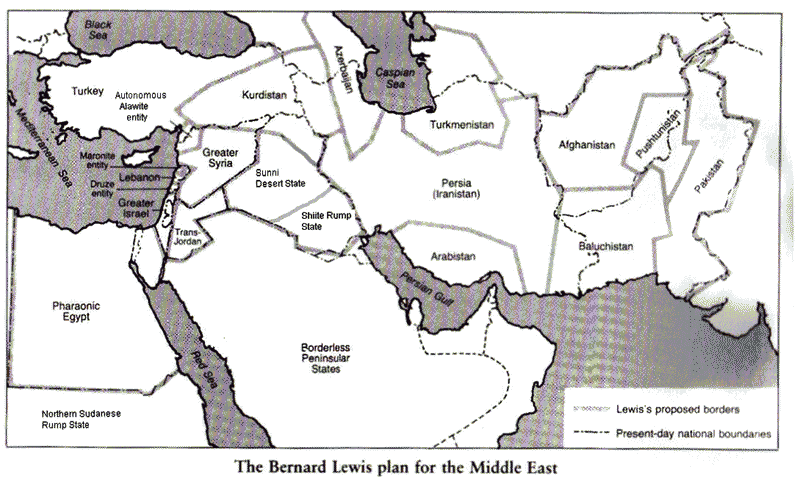
First, he says, the U.S. wanted to “reach out to the Central Asian oilfields” and “open the door there”, which “was a requirement of corporate America, because the Taliban had not complied with their desire to allow an oil and gas pipeline to pass through Afghanistan. UNOCAL is a case in point. They wanted to keep the Chinese out. They wanted to give a wider security shield to the state of Israel, and they wanted to include this region into that shield. And that’s why they were talking at that time very hotly about ‘greater Middle East’. They were redrawing the map.”

Second, the war “was to undo the Taliban regime because they had enforced Shariah”, or Islamic law, which, “in the spirit of that system, if it is implemented anywhere, would mean an alternative socio-monetary system. And that they would never approve.”

Third, it was “to go for Pakistan’s nuclear capability”, something that used to be talked about “under their lip”, “but now they are openly talking about”. This was the reason the U.S. “signed this strategic deal with India, and this was brokered by Israel. So there is a nexus now between Washington, Tel Aviv, and New Delhi.”

While achieving some of these aims, “there are many things which are still left undone,” he continued, “because they are not winning on the battlefield. And no matter what maps you draw in your mind, no matter what plans you make, if you cannot win on the battlefield, then it comes to naught. And that is what is happening to America.”

“Besides, the American generals, I have a professional cudgel with them,” Gul added. “They lack character. They know that a job cannot be done, because they know —I cannot believe that they didn’t realize that the objectives are being mixed up here — they could not stand up to men like Rumsfeld and to Dick Cheney. They could not tell them. I think they cheated the American nation, the American people. This is where I have a problem with the American generals, because a general must show character. He must say that his job cannot be done. He must stand up to the politicians. But these generals did not stand up to them.”

As a further example of the lack of character in the U.S. military leadership, the General Gul cited the “victory” in Iraq. “George Bush said that it was a victory. That means the generals must have told him ‘We have won!’ They had never won. This was all bunkum, this was all bullshit.”

Segueing back to Afghanistan, he continued: “And if they are now saying that with 17,000 more troops they can win in Afghanistan — or even double that figure if you like — they cannot. Now this is a professional opinion I am giving. And I will give this sound opinion for the good of the American people, because I am a friend of the American people and that is why I always say that your policies are flawed. This is not the way to go.” Furthermore, the war is “widely perceived as a war against Islam. And George Bush even used the word ‘Crusade.’” This is an incorrect view, he insisted. “You talk about clash of civilizations. We say the civilizations should meet.”

Alluding once more to the U.S. charges against him, he added, “And if they think that my criticism is tantamount to opposition to America, this is totally wrong, because there are lots of Americans themselves who are not in line with the American policies.” He had warned early on, he informed me, including in an interview with Rod Nordland in Newsweek immediately following the 9/11 attacks, that the U.S. would be making a mistake to go to war. “So, if you tell somebody, ‘Don’t jump into the well!’ and that somebody thinks you are his enemy, then what is it that you can say about him?”

‘This state of anger is being fueled’

I turned the conversation towards the consequences of the war in Afghanistan on Pakistan, and the increased extremist militant activities within his own country’s borders, where the Pakistani government has been at war with the Tehrik-e-Taliban Pakistan (TTP, or Pakistan Taliban). I observed that the TTP seemed well funded and supplied and asked Gul how the group obtains financing and arms.

He responded without hesitation. “Yeah, of course they are getting it from across the Durand line, from Afghanistan. And the Mossad is sitting there, RAW is sitting there — the Indian intelligence agency — they have the umbrella of the U.S. And now they have created another organization which is called RAMA. It may be news to you that very soon this intelligence agency — of course, they have decided to keep it covert — but it is Research and Analysis Milli Afghanistan. That’s the name. The Indians have helped create this organization, and its job is mainly to destabilize Pakistan.”

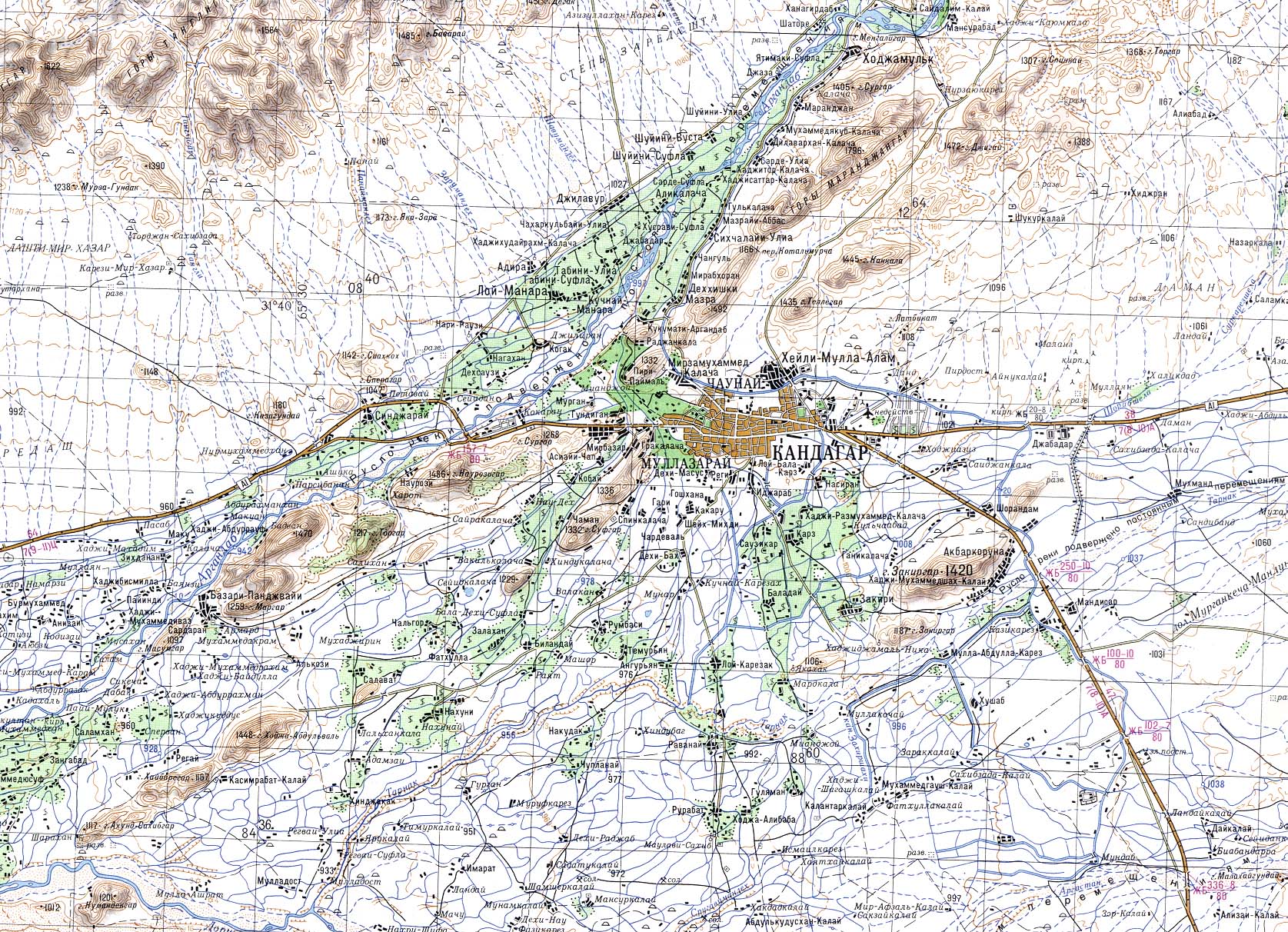
General Bismillah Khan Mohammadi, former Deputy Minister of Defense of the Northern Alliance under Ahmad Shah Massoud and the Chief of Staff of the Afghan National Army since 2002 — “whom I know very well”, General Gul told me — “had gone to India a few days back, and he has offered bases to India, five of them: three on the border, the eastern border with Pakistan, from Asadabad, Jalalabad, and Kandhar; one in Shindand, which is near Heart; and the fifth one is near Mazar-e Sharif. So these bases are being offered for a new game unfolding there.” This is why, he asserted, the Indians, despite a shrinking economy, have continued to raise their defense budget, by 20 percent last year and an additional 34 percent this year.

He also cited as evidence of these designs to destabilize Pakistan the U.S. Predator drone attacks in Waziristan, which have “angered the Pathan people of that tribal belt. And this state of anger is being fueled. It is that fire that has been lit, is being fueled, by the Indian intelligence from across the border. Of course, Mossad is right behind them. They have no reason to be sitting there, and there’s a lot of evidence. I hope the Pakistan government will soon be providing some of the evidence against the Indians.”

Several days after I had first spoken with General Gul, the news hit the headlines that the leader of the TTP, Baitullah Mehsud, had been killed by a CIA drone strike. So I followed up with him and asked him to comment about this development. “When Baitullah Mehsud and his suicide bombers were attacking Pakistan armed forces and various institutions,” he said, “at that time, Pakistan intelligence were telling the Americans that Baitullah Mehsud was here, there. Three times, it has been written by the Western press, by the American press — three times the Pakistan intelligence tipped off America, but they did not attack him. Why have they now announced — they had money on him — and now attacked and killed him, supposedly? Because there were some secret talks going on between Baitullah Mehsud and the Pakistani military establishment. They wanted to reach a peace agreement, and if you recall there is a long history of our tribal areas, whenever a tribal militant has reached a peace agreement with the government of Pakistan, Americans have without any hesitation struck that target.” Among other examples, the former ISI chief said “an agreement in Bajaur was about to take place” when, on October 30, 2006, a drone struck a madrassa in the area, an attack “in which 82 children were killed”.

“So in my opinion,” General Gul continued, “there was some kind of a deal which was about to be arrived at — they may have already cut a deal. I don’t know. I don’t have enough information on that. But this is my hunch, that Baitullah was killed because now he was trying to reach an agreement with the Pakistan army. And that’s why there were no suicide attacks inside Pakistan for the past six or seven months.”

‘Very, very disturbing indeed’

Turning the focus of our discussion to the Afghan drug problem, I noted that the U.S. mainstream corporate media routinely suggest that the Taliban is in control of the opium trade. However, according to the U.N. Office on Drugs and Crime (UNODC), Anti-Government Elements (or AGEs), which include but are not limited to the Taliban, account for a relatively small percentage of the profits from the drug trade. Two of the U.S.’s own intelligence agencies, the CIA and the DIA, estimate that the Taliban receives about $70 million a year from the drugs trade. That may seem at first glance like a significant amount of money, but it’s only about two percent of the total estimated profits from the drug trade, a figure placed at $3.4 billion by the UNODC last year.

Meanwhile, the U.S. has just announced its new strategy for combating the drug problem: placing drug traffickers with ties to insurgents —and only drug lords with ties to insurgents — on a list to be eliminated. The vast majority of drug lords, in other words, are explicitly excluded as targets under the new strategy. Or, to put it yet another way, the U.S. will be assisting to eliminate the competition for drug lords allied with occupying forces or the Afghan government and helping them to further corner the market.

I pointed out to the former ISI chief that Afghan opium finds its way into Europe via Pakistan, via Iran and Turkey, and via the former Soviet republics. According to the former British ambassador to Uzbekistan, Craig Murray, convoys under General Rashid Dostum — who was reappointed last month to his government position as Chief of Staff to the Commander in Chief of the Afghan National Army by President Hamid Karzai — would truck the drugs over the border. And President Karzai’s own brother, Ahmed Wali Karzai, has been accused of being a major drug lord. So I asked General Gul who was really responsible for the Afghan drug trade.

“Now, let me give you the history of the drug trade in Afghanistan,” his answer began. “Before the Taliban stepped into it, in 1994 — in fact, before they captured Kabul in September 1996 — the drugs, the opium production volume was 4,500 tons a year. Then gradually the Taliban came down hard upon the poppy growing. It was reduced to around 50 tons in the last year of the Taliban. That was the year 2001. Nearly 50 tons of opium produced. 50. Five-zero tons. Now last year the volume was at 6,200 tons. That means it has really gone one and a half times more than it used to be before the Taliban era.” He pointed out, correctly, that the U.S. had actually awarded the Taliban for its effective reduction of the drug trade. On top of $125 million the U.S. gave to the Taliban ostensibly as humanitarian aid, the State Department awarded the Taliban $43 million for its anti-drug efforts. “Of course, they made their mistakes,” General Gul continued. “But on the whole, they were doing fairly good. If they had been engaged in meaningful, fruitful, constructive talks, I think it would have been very good for Afghanistan.”

Referring to the immediate aftermath of the 9/11 attacks, General Gul told me in a later conversation that Taliban leader “Mullah Omar was all the time telling that, look, I am prepared to hand over Osama bin Laden to a third country for a trial under Shariah. Now that is where — he said [it] twice — and they rejected this. Because the Taliban ambassador here in Islamabad, he came to me, and I asked him, ‘Why don’t you study this issue, because America is threatening to attack you. So you should do something.’ He said, ‘We have done everything possible.’ He said, ‘I was summoned by the American ambassador in Islamabad’ — I think Milam was the ambassador at that time — and he told me that ‘I said, “Look, produce the evidence.” But he did not show me anything other than cuttings from the newspapers.’ He said, ‘Look, we can’t accept this as evidence, because it has to stand in a court of law. You are prepared to put him on trial. You can try him in the United Nations compound in Kabul, but it has to be a Shariah court because he’s a citizen under Shariah law. Therefore, we will not accept that he should be immediately handed over to America, because George Bush has already said that he wants him “dead or alive”, so he’s passed the punishment, literally, against him.” Referring to the U.S. rejection of the Taliban offer to try bin Laden in Afghanistan or hand him over to a third country, General Gul added, “I think this is a great opportunity that they missed.”

Returning to the drug trade, General Gul named the brother of President Karzai, Abdul Wali Karzai. “Abdul Wali Karzai is the biggest drug baron of Afghanistan,” he stated bluntly. He added that the drug lords are also involved in arms trafficking, which is “a flourishing trade” in Afghanistan. “But what is most disturbing from my point of view is that the military aircraft, American military aircraft are also being used. You said very rightly that the drug routes are northward through the Central Asia republics and through some of the Russian territory, and then into Europe and beyond. But some of it is going directly. That is by the military aircraft. I have so many times in my interviews said, ‘Please listen to this information, because I am an aware person.’ We have Afghans still in Pakistan, and they sometimes contact and pass on the stories to me. And some of them are very authentic. I can judge that. So they are saying that the American military aircraft are being used for this purpose. So, if that is true, it is very, very disturbing indeed.”

Jeremy R. Hammond

Jeremy R. Hammond is the Editor of Foreign Policy Journal, an online source for news, critical analysis, and opinion commentary on U.S. foreign policy. His articles have been featured and cited in numerous other print and online publications around the world. He has appeared in interviews on the GCN radio network, Talk Nation Radio, and Press TV’s Middle East Today program.

Friday, 21 August 2009

mexico decriminalizes drugs possession

.
http://www.nytimes.com/2009/08/21/world/americas/21mexico.html?_r=2

August 21, 2009

Mexico Legalizes Drug Possession

By THE ASSOCIATED PRESS

MEXICO CITY (AP) — Mexico enacted a controversial law on Thursday decriminalizing possession of small amounts of marijuana, cocaine, heroin and other drugs while encouraging government-financed treatment for drug dependency free of charge.

The law sets out maximum “personal use” amounts for drugs, also including LSD and methamphetamine. People detained with those quantities will no longer face criminal prosecution; the law goes into effect on Friday.

Anyone caught with drug amounts under the personal-use limit will be encouraged to seek treatment, and for those caught a third time treatment is mandatory — although no penalties for noncompliance are specified.

Mexican authorities said the change only recognized the longstanding practice here of not prosecuting people caught with small amounts of drugs.

The maximum amount of marijuana considered to be for “personal use” under the new law is 5 grams — the equivalent of about four marijuana cigarettes. Other limits are half a gram of cocaine, 50 milligrams of heroin, 40 milligrams for methamphetamine and 0.015 milligrams of LSD.

President Felipe Calderón waited months before approving the law.
........................................................................................................................................................................

http://www.eluniversal.com.mx/nacion/170767.html

Ley contra narcomenudeo y de dosis mínimas entra en vigor

José Gerardo Mejía

El Universal

Viernes 21 de agosto de 2009

Divulgan en el “Diario Oficial” límites para el fuero común y federal en casos de portación de enervantes

jose.mejia@eluniversal.com.mx

A partir de ayer entraron en vigor las reformas legales que modifican el combate al narcomenudeo en México, y que también especifican las cantidades máximas de droga para “el estricto consumo personal e inmediato”.
De acuerdo con las nuevas disposiciones publicadas en el Diario Oficial de la Federación, con las reformas aprobadas se establece la facultad de las autoridades estatales para perseguir todos los delitos relacionados con el tráfico de drogas, siempre y cuando las cantidades involucradas no rebasen ciertos límites. En este caso, la persecución se mantendrá bajo la responsabilidad de la Procuraduría General de la República (PGR).
Se especifica que no se podrá ejercer acción penal cuando la persona tenga en su poder un cantidad igual o menor a 500 miligramos de cocaína; cinco gramos de Cannabis o mariguana; 40 miligramos de metanfetamina; dos gramos de opio o 50 miligramos de heroína, entre otras drogas.
Será considerado narcomenudeo cuando la cantidad sea menor al resultado de multiplicar las dosis personales por mil.
Por ejemplo, la dosis personal de mariguana es de cinco gramos, por lo que cantidades menores a cinco kilos serán consideradas narcomenudeo y la persecución será de competencia del fuero común.
La posesión de cualquier cantidad superior será competencia del Ministerio Público federal y considerada narcotráfico.
Los fiscales federales podrán atraer cualquier caso de narcomenudeo si creen que no debe ser investigado por los estados.
Además, se podrá autorizar a policías encubiertos para que compren las drogas a narcomenudistas, previa autorización del Ministerio Público federal adscrito a la Procuraduría General de la República.
Quedó establecido que para el tratamiento de los farmacodependientes, las dependencias y entidades de administración pública en materia de salubridad general, tanto federales como locales, deberán crear centros especializados en tratamiento, atención y rehabilitación con base en sistemas modernos.
También se despenaliza la posesión de drogas por farmacodependientes y da prioridad al tratamiento de las adicciones, ordenando a la Secretaría de Salud crear un programa nacional para combatir este problema.
Las modificaciones contempladas en la Ley General de Salud y a los códigos Penal Federal y de Procedimientos Penales indican que el Ministerio Público federal no procederá contra quienes tengan medicamentos que incluyan narcóticos, cuya venta al público se encuentre supeditada a requisitos especiales de adquisición para tratamiento médico.
Tampoco se penalizará la posesión “cuando por su naturaleza, circunstancia y cantidad del caso pueda presumirse que serán utilizados en las ceremonias, usos y costumbres de los pueblos y comunidades indígenas, así reconocidos por sus autoridades propias como peyote u hongos alucinógenos”.

Thursday, 20 August 2009

buffet: treasury needs another $900 billion

Op-Ed Contributor

Omaha

IN nature, every action has consequences, a phenomenon called the butterfly effect. These consequences, moreover, are not necessarily proportional. For example, doubling the carbon dioxide we belch into the atmosphere may far more than double the subsequent problems for society. Realizing this, the world properly worries about greenhouse emissions.

The butterfly effect reaches into the financial world as well. Here, the United States is spewing a potentially damaging substance into our economy — greenback emissions.

To be sure, we’ve been doing this for a reason I resoundingly applaud. Last fall, our financial system stood on the brink of a collapse that threatened a depression. The crisis required our government to display wisdom, courage and decisiveness. Fortunately, the Federal Reserve and key economic officials in both the Bush and Obama administrations responded more than ably to the need.

They made mistakes, of course. How could it have been otherwise when supposedly indestructible pillars of our economic structure were tumbling all around them? A meltdown, though, was avoided, with a gusher of federal money playing an essential role in the rescue.

The United States economy is now out of the emergency room and appears to be on a slow path to recovery. But enormous dosages of monetary medicine continue to be administered and, before long, we will need to deal with their side effects. For now, most of those effects are invisible and could indeed remain latent for a long time. Still, their threat may be as ominous as that posed by the financial crisis itself.

To understand this threat, we need to look at where we stand historically. If we leave aside the war-impacted years of 1942 to 1946, the largest annual deficit the United States has incurred since 1920 was 6 percent of gross domestic product. This fiscal year, though, the deficit will rise to about 13 percent of G.D.P., more than twice the non-wartime record. In dollars, that equates to a staggering $1.8 trillion. Fiscally, we are in uncharted territory.

Because of this gigantic deficit, our country’s “net debt” (that is, the amount held publicly) is mushrooming. During this fiscal year, it will increase more than one percentage point per month, climbing to about 56 percent of G.D.P. from 41 percent. Admittedly, other countries, like Japan and Italy, have far higher ratios and no one can know the precise level of net debt to G.D.P. at which the United States will lose its reputation for financial integrity. But a few more years like this one and we will find out.

An increase in federal debt can be financed in three ways: borrowing from foreigners, borrowing from our own citizens or, through a roundabout process, printing money. Let’s look at the prospects for each individually — and in combination.

The current account deficit — dollars that we force-feed to the rest of the world and that must then be invested — will be $400 billion or so this year. Assume, in a relatively benign scenario, that all of this is directed by the recipients — China leads the list — to purchases of United States debt. Never mind that this all-Treasuries allocation is no sure thing: some countries may decide that purchasing American stocks, real estate or entire companies makes more sense than soaking up dollar-denominated bonds. Rumblings to that effect have recently increased.

Then take the second element of the scenario — borrowing from our own citizens. Assume that Americans save $500 billion, far above what they’ve saved recently but perhaps consistent with the changing national mood. Finally, assume that these citizens opt to put all their savings into United States Treasuries (partly through intermediaries like banks).

Even with these heroic assumptions, the Treasury will be obliged to find another $900 billion to finance the remainder of the $1.8 trillion of debt it is issuing. Washington’s printing presses will need to work overtime.

Slowing them down will require extraordinary political will. With government expenditures now running 185 percent of receipts, truly major changes in both taxes and outlays will be required. A revived economy can’t come close to bridging that sort of gap.

Legislators will correctly perceive that either raising taxes or cutting expenditures will threaten their re-election. To avoid this fate, they can opt for high rates of inflation, which never require a recorded vote and cannot be attributed to a specific action that any elected official takes. In fact, John Maynard Keynes long ago laid out a road map for political survival amid an economic disaster of just this sort: “By a continuing process of inflation, governments can confiscate, secretly and unobserved, an important part of the wealth of their citizens.... The process engages all the hidden forces of economic law on the side of destruction, and does it in a manner which not one man in a million is able to diagnose.”

I want to emphasize that there is nothing evil or destructive in an increase in debt that is proportional to an increase in income or assets. As the resources of individuals, corporations and countries grow, each can handle more debt. The United States remains by far the most prosperous country on earth, and its debt-carrying capacity will grow in the future just as it has in the past.

But it was a wise man who said, “All I want to know is where I’m going to die so I’ll never go there.” We don’t want our country to evolve into the banana-republic economy described by Keynes.

Our immediate problem is to get our country back on its feet and flourishing — “whatever it takes” still makes sense. Once recovery is gained, however, Congress must end the rise in the debt-to-G.D.P. ratio and keep our growth in obligations in line with our growth in resources.

Unchecked carbon emissions will likely cause icebergs to melt. Unchecked greenback emissions will certainly cause the purchasing power of currency to melt. The dollar’s destiny lies with Congress.

Warren E. Buffett is the chief executive of Berkshire Hathaway, a diversified holding company.

Wednesday, 19 August 2009

mexican cartels run their own intelligences

.
http://www.stratfor.com/weekly/20090819_confidential_informants_double_edged_sword

Confidential Informants: A Double-Edged Sword

August 19, 2009
1822 GMT

Global Security and Intelligence Report

By Scott Stewart and Fred Burton

Police in El Paso, Texas, announced Aug. 11 that they had arrested three suspects in the May 15 shooting death of Jose Daniel Gonzalez Galeana, a Juarez cartel lieutenant who had been acting as a confidential informant (CI) for the U.S. Immigration and Customs Enforcement (ICE) agency. It was an activity that prompted the Juarez cartel to put out a hit on him, and Gonzalez was shot multiple times outside his home in an upscale El Paso neighborhood. A fourth suspect was arrested shortly after the Aug. 11 announcement. Among the suspects is an 18-year-old U.S. Army soldier stationed at nearby Fort Bliss who the other suspects said had been hired by one of the leaders of the Juarez cartel to pull the trigger on Gonzalez. The suspects also include two other teenagers, a 17-year-old and a 16-year-old.

The man who recruited the teenagers, Ruben Rodriguez Dorado — also a lieutenant in the Juarez cartel — has also been arrested, and the emerging details of the case paint him as a most interesting figure. After receiving orders from his superiors in the Juarez cartel to kill Gonzalez, Rodriguez was able to freely enter the United States and conduct an extensive effort to locate Gonzalez — he reportedly even paid Gonzalez’s cell phone bill in an effort to obtain his address. Armed with the address, he then conducted extensive surveillance of Gonzalez and carefully planned the assassination, which was then carried out by the young gunman he had recruited.

The sophistication of Rodriguez’s investigative and surveillance efforts is impressive, and the Gonzalez hit was not the first time he undertook such tasks. According to an affidavit filed in state court, Rodriguez told investigators that he also located and surveilled targets for assassination in Mexico. Perhaps the most intriguing aspect of this case is that the entire time Rodriguez was plotting the Gonzalez assassination he, too, was working as a CI for ICE.

While it is unclear at this point if ICE agents played any part in helping Rodriguez find Gonzalez, at the very least, Rodriguez’s status as an ICE informant would certainly have been useful in camouflaging his nefarious activities and could have given him some level of official cover. Although Rodriguez was a legal permanent resident of the United States, having friends in ICE would allow him to cross the border repeatedly without much scrutiny and help deflect suspicion if he were caught while conducting surveillance.

Without having access to the information Rodriguez was providing to ICE, it is very difficult for us to assess if Rodriguez’s work with ICE was sanctioned by the Juarez cartel, or if he was merely playing both ends against the middle. However, when one examines the reach, scope and sophistication of the Mexican cartels’ intelligence efforts, it is clear that several of the cartels have demonstrated the ability to operate more like a foreign intelligence service than a traditional criminal organization. This means that it is highly possible that Rodriguez was what we refer to in intelligence parlance as a double agent — someone who pretends to spy on an organization but is, in fact, loyal to that organization.

Whether Rodriguez was a double agent or just an out-of-control CI, this case provides a clear example of the problems encountered when law enforcement agencies handle CIs — problems that become even more pronounced when the informant is associated with a sophisticated and well-financed organization.

Choirboys Need Not Apply

While CIs can be incredibly valuable sources of information, running a CI is a delicate operation even under the best of circumstances, and poses a wide array of problems and pitfalls. The first and most obvious issue is that most people who have access to the inner workings of a criminal organization, and therefore the most valuable intelligence, are themselves criminals. Upstanding, honest citizens simply do not normally have access to the plans of criminal gangs or understand their organizational hierarchy. This means that authorities need to recruit or flip lower-level criminals in order to work their way up the food chain and go after bigger targets. In the violent world of the Mexican drug cartels, sending an undercover agent to infiltrate a cartel is extremely dangerous. Therefore, using CIs is even more important in such investigations than it is while working against other types of criminals.

The fact that many CIs are criminals means that not only do they frequently come with a heavy load of psychopathic and sociopathic baggage, but in order to stay in good standing within their organization, they often need to continue to commit illegal acts while working for the government, though the type of criminal activity permitted is often carefully delineated by the government. Not infrequently, these illegal acts can come back to haunt the agency operating the CI, so maintaining control of the CI is very important.

CIs can also come with a host of motivations. While some informants are motivated by money, or promises to have charges dropped or reduced, other informants will provide information to the authorities out of revenge or in order to further their own criminal schemes either by using law enforcement as a way to take out rival gangs or even a rival within their own organization. Because of these varying motivations, it can be very difficult to tell when CIs are fabricating information or when they are trying to manipulate the authorities. In fact, it is not at all uncommon for inexperienced or vulnerable handlers to lose control of a CI. In extreme cases, it is even possible for a smooth and sophisticated CI to end up controlling their handler. And this is not just confined to ICE or small-town police departments; there have been instances of FBI and U.S. Drug Enforcement Administration (DEA) agents being manipulated and controlled by their CIs.

Out-of-control CIs can do things like refuse to follow orders, shut off recorders or edit recordings, tape meetings and calls with handlers, or even commit murders and other serious crimes while working with authorities. There have also been cases of handlers getting involved in sexual relationships with CIs, providing drugs to CIs, and even committing crimes with CIs who were manipulating them.

At the high end of the threat scale, there is also the possibility that informants will be consciously sent to the authorities in order to serve as double agents, or that the criminal organization they work for will double them back once it is learned that they have decided to begin cooperating with the authorities. Many federal agencies polygraph sources, but polygraph operators can be fooled and polygraphs are of limited utility on people who have no moral compunction about lying. Therefore, while agencies take efforts to vet their CIs, such efforts are often ineffective.

Double agents are particularly useful for the criminal organization because they can intentionally feed very specific information to the authorities in order to manipulate enforcement activities. For example, in the case of the Juarez cartel, they could tip off authorities to a small shipment of narcotics in one part of the sector in order to draw attention away from a larger shipment moving through another part of the sector. Of course, the fact that the CI provided accurate information pertaining to the smaller shipment also serves to increase his value to the authorities. In the case of a double agent, almost everything he provides will usually be accurate — although this accurate information is pretty much calculated to be harmless to the criminal organization (though organizations have used double agents to pass on information to the authorities that will allow them to take action against rival criminal gangs). The outstanding accuracy of the intelligence reported will cause the double agent to be trusted more than most regular CIs, and this makes double agents particularly difficult to uncover.

Not Typical Criminals

When considering the Mexican drug cartels, it is very important to remember that they are not typical criminal gangs. The cartels are billion-dollar organizations that employ large groups of heavily armed enforcers, and many of the cartels have invested the time and resources necessary to develop highly sophisticated intelligence apparatuses.

Such intelligence apparatuses are perhaps best seen in the realm of public corruption. Some of the Mexican cartels have a long history of successfully corrupting public officials on both sides of the border. Groups like the Beltran Leyva Organization (BLO) have recruited scores of intelligence assets and agents of influence at the local, state and even federal levels of the Mexican government. They even have enjoyed significant success in recruiting agents in elite units such as the anti-organized crime unit of the Mexican attorney general’s office. The BLO even allegedly recruited Mexico’s former drug czar, Noe Ramirez Mandujano, who reportedly was receiving $450,000 per month from the organization. This recruitment also extends to all levels of government in the United States, where Cartels have recruited local, state and federal officials. Many of the assassination operations the cartels have launched against one another and against senior Mexican officials have also demonstrated the advanced intelligence capabilities of the Mexican cartels.

With the money to buy foreign expertise and equipment, the Mexican cartels have been able to set up counterintelligence branches that can administer polygraph examinations, signals intelligence branches that can intercept the authorities’ communications and even elaborate (and well-funded) units designed to identify and bribe vulnerable public officials. The Mexican cartels also assign people to infiltrate law-enforcement agencies by applying for jobs. According to a report released last week, in a 10-month period, four applicants for U.S. border law enforcement positions were found through background checks and polygraph examinations to be infiltrators from drug-trafficking organizations. It is important to remember that these four were only those who were caught, and not all agencies submit applicants to the same scrutiny, so the scope of the problem is likely much larger. In light of this history of cartel intelligence activity, it is not unreasonable to assume that the cartels possess the sophistication and skills to employ double agents.

Alphabet Soup

Running a CI against a Mexican cartel is also greatly complicated by the number of agencies involved in the struggle against them. Among local, state and federal entities there are scores of agencies in El Paso alone with some sort of jurisdiction working against the cartels. The agencies range from obvious ones such as the DEA, FBI, Texas Rangers, El Paso Police and Bureau of Alcohol, Tobacco, Firearms and Explosives to the less obvious such as the Internal Revenue Service, the Union Pacific Railroad Police and the U.S. Army’s Criminal Investigation Command at Fort Bliss.

This jumble of jurisdictions creates a very difficult environment for working with CIs. Not only are agencies legitimately concerned about protecting the identities of their CIs due to the possibility of corruption in other agencies, but there is also the issue of competition. Agencies are afraid of other, better-funded agencies stealing their informants. If a local police detective has developed a very good dope source, the last thing in the world he wants is for ICE or the DEA to take control of his source, which would in all likelihood mean that he will lose all the information the CI was providing. Likewise, if an ICE agent has developed a good Mexican cartel source, the last thing he wants is for the DEA or FBI to take control of the source.

In the human intelligence world, there is a lot of jealousy and suspicion. This not only means that information is not fully shared across agencies but also that agencies are very reluctant to run checks on their CIs through other agencies for fear of divulging their identities. This insulation results in some CIs double- or even triple-dipping, that is, working with other agencies and providing the same information in exchange for additional payments. This fragmentation also results in the agency running the CI not being able to learn of critical information pertaining to the past (or even current) activities of their CI. It means, too, that the agency that recruits the CI in some cases is simply not in the best position to take full advantage of the information provided by the CI, or that agency competition and institutional rivalries prevent the CI from being turned over to a more capable agency. Certainly, on its face, ICE would not be the best, most logical agency to handle a source like Rodriguez, who was a lieutenant in the Juarez cartel tasked with conducting assassination operations.

The fear associated with the potential compromise of CI identities inside an agency or task force due to corruption can also affect the operational effectiveness of law enforcement operations. It is hard to get much of anything done when people are worried about who may be a mole on the cartel payroll.

Nowhere to Hide

One last thing to consider in the Gonzalez assassination is that it highlights the fact that even though targets will seek shelter inside the United States, Mexican drug cartels will follow them across the border in order to kill them, something we have discussed for several years now. Moreover, incidents like the Gonzalez hit will likely cause high-value cartel targets to move even deeper into the United States to avoid attack — and their enemies’ brazen and sophisticated assassins will likely follow.

Rodriguez’s use of teenage assassins to kill Gonzalez is also in keeping with a trend we have seen in Laredo and elsewhere, that of the cartels recruiting young street-gang members and training them to be assassins. Young gunmen working for Los Zetas in Laredo, Houston, San Antonio and elsewhere have been given the nickname “Zetitas,” or little Zetas. In is not surprising to see the Juarez cartel also employing young gunmen. Not only are the young gunmen easily influenced, fearless, and hungry for money and respect, but the cartels believe that the younger offenders are expendable if caught or killed, and will also do less time than an adult if they are arrested and convicted. These young killers are also not given much information about their employers in the event they are captured and interrogated by police.

In the final analysis, CIs are a necessary evil and can be a very effective weapon in the law enforcement arsenal. Like any weapon, however, CIs must be carefully managed, maintained and employed to make sure they are not used against the law enforcement agencies themselves.


This report may be forwarded or republished on your website with attribution to www.stratfor.com

occidente: universalismo con dadi truccati

.
http://www.opifice.it/index.php?option=com_content&task=view&id=616&Itemid=502.02.2009

La decrescita: un’idea su cui puntare

da Giuseppe Giaccio

01 febbraio 2009

Chi si pone, come nel nostro caso, in una posizione di critica radicale (nel senso letterale dell’andare alle radici) al mondo in cui vive, si imbatte, prima o poi, nella classica domanda: che fare? Ha un senso impegnarsi, spendere tempo ed energie intellettuali e materiali in una realtà imbevuta fino al midollo di valori opposti, o comunque profondamente avversi, a quelli in cui ci riconosciamo? Tanto più in un contesto dove i mezzi di informazione di massa da un lato, e la società dello spettacolo e del divertimento (anche qui, nel senso letterale del distrarre, dell’allontanare dal centro, dalla sostanza delle cose) dall’altro, hanno assunto un carattere così pervasivo e invasivo da rendere quasi chimerici i propositi di quanti si prefiggono dei mutamenti sostanziali e non di facciata. L’appiattimento è talmente pronunciato da aver indotto Alain de Benoist ad amare considerazioni sulla “straordinaria aspirazione moderna all’omogeneità”, che non risparmia neppure i giovani che pure dovrebbero essere portati per natura alla rivolta generazionale: “Si resta sbalorditi nel vedere fino a che punto la maggior parte dei giovani, anche e sopratutto tra i più ‘ribelli’ – emarginati e spaccatutto – abbia interiorizzato i valori dominanti e come unica opzione sappia proporre soltanto un’accelerazione (‘tutto e subito’)”[1].
“Non capisco, ma mi adeguo” è la risposta data da molti che, dopo essere passati nel variegato campo anticonformista, ne sono più o meno rapidamente usciti, preferendo l’uovo oggi (sicuro) alla gallina domani (del tutto ipotetica). Sia chiaro che, dicendo questo, non intendiamo affatto impancarci a censori o moralisti o darci arie di superiorità. Non ne abbiamo la vocazione e possediamo, in compenso, uno spiccato senso del ridicolo. Semplicemente, descriviamo ciò che abbiamo visto, letto e sentito in tanti anni di militanza politica prima e di impegno intellettuale poi. Ma quali prospettive hanno di fronte a loro quanti non solo non capiscono, ma continuano ostinatamente a non volersi adeguare? Sono dei folli, degli illusi, dei don Chisciotte che combattono contro i mulini a vento? È possibile provare ad immaginare dei percorsi praticabili di fuoriuscita da quello che un tempo si chiamava “sistema” senza finire nel patetico o nel kitsch?
Marino Badiale ha lodevolmente tentato, nel numero 286 di “Diorama”, di fornire qualche primo elemento di risposta, ovviamente bisognoso di approfondimento. Pur condividendo parecchie delle sue affermazioni e dei suoi giudizi, facciamo tuttavia fatica a capire il punto di fuga del suo scritto. In altri termini, dove vuole andare a parare. Dall’ultimo paragrafo del suo testo, sembrerebbe che egli auspichi, in prospettiva, la nascita di “una nuova forza politica”. Subito dopo, Badiale ci fornisce però una descrizione dell’ambiente cui questa forza dovrebbe, quantomeno in prima battuta, fare riferimento (coloro che si oppongono al capitalismo e all’imperialismo) a dir poco sconfortante; ma il guaio è che tale descrizione, oltre ad essere sconfortante, è anche realistica e condivisibile.
È verissimo, infatti, che la fauna umana che si incontra nel milieu anticapitalista e antimperialista “è costituita da persone che presentano distorsioni della personalità tali da renderle non affidabili per un lavoro collettivo”. Ne abbiamo conosciute e ne conosciamo anche noi un discreto numero, ma, contrariamente a Badiale, non siamo granché propensi ad attribuire alle distorsioni di cui costoro patiscono delle nobili motivazioni, pur non escludendole del tutto (il “travaglio profondo” e le “sofferenze individuali” provocate dal doversi confrontare quotidianamente con una realtà ostile). Detto in termini brutali, per noi si tratta, puramente e semplicemente, di gente che non ha tutte le rotelle al posto giusto.
A mano a mano che leggevamo le considerazioni di Badiale, le abbiamo mentalmente associate al nome di un narratore, James Graham Ballard, autore di un trittico di opere (Millennium people, Regno a venire e Il paradiso del diavolo) nelle quali viene sviscerato, con gli strumenti di cui dispone un romanziere – ossia l’affabulazione che riesce però a conservare uno stretto rapporto col reale – lo stesso mondo di marginalità politica e sociale analizzato da Badiale con mezzi che rimandano piuttosto alla filosofia e alla politica. Le analogie tra i due discorsi sono sorprendenti. I personaggi di questi romanzi – che rinviano, rispettivamente, al contesto dell’estremismo di sinistra, del radicalismo destra e del fondamentalismo ecologista – sono, infatti, un vero campionario di turbe psichiatriche e/o psicanalitiche. A differenza di Badiale, tuttavia, Ballard non nutre alcuna illusione sulle potenzialità rivoluzionarie di queste persone, o di una molto ipotetica minoranza all’interno di tale minoranza che, per misteriose ragioni, sarebbe esente da problemi causati da squilibri nei rapporti fra Io, Es e Superio. Ed infatti nei suoi romanzi le loro ribellioni hanno esiti catastrofici. Noi la pensiamo allo stesso modo. Coltivare rapporti privilegiati con costoro non ha alcun senso. Non è possibile cavare sangue dalle rape. Chi, dunque, dovrebbe essere il destinatario di un forte e serio discorso di opposizione?
Potenzialmente, questo pubblico si trova in tutte le fasce sociali e non solo nella nicchia individuata da Badiale. Se, infatti, il punto di partenza che ci accomuna è il presupposto che viviamo in un mondo affetto da profonde carenze, sia a livello individuale che collettivo, è evidente che tali deficienze non risparmiano nessuno. Per rendere la stessa idea, Bauman ha utilizzato – in verità anche abusandone – la metafora della liquidità. Indubbiamente, è meglio affrontare la realtà liquida, e quindi sfuggente e infida, della globalizzazione stando a bordo di un transatlantico anziché su una zattera, ma anche chi vive su un transatlantico non può dire di essere al sicuro, come insegna l’esperienza del Titanic. Dobbiamo allora puntare sulla capacità, insita in ogni essere umano, di ribellarsi, di dire no – capacità che, per quanto assopita a causa dell’omogeneizzazione di cui si parlava all’inizio, non è del tutto spenta.
Anche se ciò può suonare come un atto di fede, crediamo che ci sia (ancora) del vero in ciò che ha scritto Serge Latouche nel suo La scommessa della decrescita: “Penso che sia impossibile colonizzare totalmente le menti; un po’ di senso critico resiste sempre”[2]. Quando, però, dal potenziale passiamo all’attuale, ai processi che sono realmente in atto, lo scenario diventa meno esaltante e promettente. L’opposizione sembra avere la catena misurata. Raggiunta una certa soglia di tensione e mobilitazione, rifluisce, senza produrre risultati significativi. I verdi e i rifondatori comunisti sono una esemplare illustrazione di questa parabola. I diversi movimenti sorti negli ultimi tempi in Italia (contro la linea ferroviaria veloce in Val di Susa, contro la presenza di una base militare americana nel vicentino, contro il Mose a Venezia e il Ponte sullo Stretto), sembrano destinati a conoscere la stessa sorte dei molti che li hanno preceduti: un fuoco di paglia, generoso ma effimero. Questa consapevolezza è stata, in alcuni, talmente acuta da aver prodotto effetti drammatici. Pensiamo ai suicidi di Petra Kelly in Germania e di Alexander Langer nel nostro Paese.
Proprio Langer, commentando la tragica fine della militante verde tedesca, ebbe a dire, quasi prefigurando il suo stesso destino, che “troppo grande è la distanza tra ciò che si proclama e ciò che si riesce a compiere”. In una certa misura, ciò è inevitabile. Il mondo reale non corrisponderà mai pienamente ai nostri disegni e desideri ed un vero uomo politico, uno cioè animato dalla vocazione per la politica, deve esserne consapevole, deve saper superare, come ha insegnato Weber, queste difficoltà ed andare avanti. Probabilmente, né Kelly né Langer erano politici a trecentosessanta gradi, ma piuttosto il risultato di un miscuglio tra idealismo e politica, dove il primo elemento del composto ha avuto decisamente e fatalmente la meglio, capovolgendosi in disperazione a causa degli scacchi subiti. Tuttavia, è pur vero che la distanza che è stata letale per Langer è in parte spiegabile col fatto che il seme dell’azione politica, per germogliare, ha bisogno di un terreno adatto, in mancanza del quale rimane sterile o produce solo aborti.
La proposta metapolitica, che ci vede impegnati da molto tempo, nasce appunto da questa convinzione. Ci si può obiettare (e ci è stato in effetti da più parti obiettato) che finora essa è rimasta ampiamente sulla carta – in parte per deficienze nostre, in parte per l’estrema povertà dei mezzi di cui disponiamo, in parte per la durezza di cervice e l’ottusità di alcuni interlocutori via via incontrati, in parte per la potenza di seduzione, in termini di prebende e di carriere, di cui si avvale l’apparato di potere – ma ciò nulla toglie al fatto che se prima non si ara e non si dissoda, se non si preparano le menti e gli spiriti, non si va molto lontano e si finisce con l’essere fagocitati da strategie altrui. Questa attività, sebbene abbia punti di contatto con la sfera politica, se ne distingue tuttavia essenzialmente, perché la politica – pur rimandando, nelle sue migliori espressioni, ad orizzonti più vasti – è qualcosa di eminentemente pratico, mentre la metapolitica ha un carattere teorico.
Chi fa politica deve ottenere risultati concreti in tempi possibilmente non biblici, dovendo rendere conto sia al suo entourage, sia ai cittadini che lo hanno eletto (quando, ovviamente, opera in un regime democratico). Egli ha a che fare con una serie di rigidità sistemiche dalle quali può difficilmente prescindere e che contribuiscono ad appiattire e omogeneizzare i discorsi dei vari attori politici, fino a renderli pressoché indistinguibili e intercambiabili, o a confinare l’azione politica nell’ambito della presenza testimoniale, nobile ma priva di incisività. Naturalmente, pure chi si consacra a un’attività di tipo culturale deve ottenere risultati, che però concernono la sfera della conoscenza, della verità; egli deve perciò rendere conto solo a se stesso, alla sua coscienza e onestà. Il suo impegno ha valore in sé e prescinde da possibili ricadute politiche, anche quando queste ultime sono auspicate. L’intellettuale può allora prefiggersi metapoliticamente di creare le condizioni adatte alla produzione di queste ricadute, ma non può mettersi al servizio di esse, perché questo significherebbe cambiare mestiere, correndo peraltro il serio rischio di tradirli entrambi, dato che, come recita un detto evangelico, non si possono servire due padroni. Ora, a noi pare che nel testo di Badiale questi due piani vengano confusi e che l’urgenza, per certi aspetti comprensibile, di dare uno sbocco operativo a determinate idee finisca col nuocere alla lucidità dell’analisi e quindi non favorisca nemmeno un loro eventuale e corretto viatico politico.
Scendendo più nel dettaglio, non si può avere come obiettivo strategico la decrescita, scrivendo che “solo la prospettiva della decrescita rappresenta una via d’uscita dal vicolo cieco in cui l’umanità si è cacciata”, ed al tempo stesso restare legati all’immaginario della civiltà occidentale, facendone proprio l’universalismo in salsa liberale e socialdemocratica che quel vicolo cieco ha potentemente contribuito a creare, perché in questa maniera, come ha osservato Wolfgang Sachs, si scaccia il diavolo con Belzebù: “Si invoca l’universalismo per salvarsi dalla attuale situazione critica, mentre l’universalismo è proprio il peccato originale che quella situazione critica ha generato”[3]. La necessità tutta politica di proporre alle “masse”, come si sarebbe detto un tempo, un percorso ritenuto più appetibile e concreto rispetto a quello agitato dagli estremisti di sinistra e di destra impedisce a Badiale di vedere questa contraddizione, che invece andrebbe risolta ed eliminata con la precisione chirurgica di un’analisi che non faccia sconti a nessuno. Assumere la decrescita come cardine del proprio impegno intellettuale e politico è poco più di un flatus vocis se a tale impegno non si accompagna una chiara consapevolezza dell’irrimediabile fallimento, e quindi della improponibilità, dell’universalismo e del progetto illuministico che lo sorregge, basato sul tentativo di edificare, per dirla ancora con Sachs, “un mondo”, cioè un universo fatto di un genere umano, un mercato, un pianeta.
Ad essere finito in un cul de sac è quello che Giacomo Marramao chiama “universalismo dell’identità” che si è filosoficamente manifestato sia nella forma, da Marramao ritenuta più “nobile”, dell’ “idea kantiana dell’individuo umano come soggetto etico-trascendentale indifferenziato (indipendente dal carattere situato della propria esistenza)”, sia nella forma, implicitamente considerata meno nobile, dell’antropologia utilitaristica[4]. Politicamente, questa concezione dell’uomo ha dato vita allo Stato Leviatano, al modello assimilazionista repubblicano, anello intermedio tra il locale e il globale, che oggi, nell’attuale fase di “passaggio a Occidente”, ovvero di globalizzazione, è entrato in crisi non tanto in termini quantitativi (il numero degli Stati, ricorda infatti Marramao, è semmai cresciuto rispetto al passato), quanto qualitativi, nel senso che lo Stato è diventato uno strumento inefficace, non è più in grado di fare bene il suo mestiere, essendo bypassato da istanze transnazionali.
L’universalismo dell’identità, cioè l’ideologia universalistico-illuministica – che, secondo Sachs, ha trovato nella Carta delle Nazioni Unite una delle sue ultime espressioni – ha dichiarato guerra alla diversità in tutte le sue accezioni, configurandosi come una macchina per annichilire le differenze, nella convinzione che queste ultime fossero sinonimo di conflittualità. Per portare la pace e la prosperità sulla Terra, basterebbe, secondo questa visione delle cose, eliminare ogni elemento di differenziazione, costruire un mondo di spazi, per definizione omogenei e intercambiabili, e non di luoghi, che rimandano inevitabilmente alle diversificate culture che li hanno partoriti. L’universalismo è “spaziocentrico”, non “luogocentrico”. Qualcosa di simile dice anche Latouche quando osserva che la cosmopoli universalista è divoratrice di spazi e che a questa “topofagia” bisogna opporre una “rinascita dei luoghi” e una “riterritorrializzazione”[203]. Gli effetti di questo furore antidifferenzialista, continua Sachs, sono sotto i nostri occhi: “Ovunque si volga lo sguardo, l’omogeneizzazione del mondo è in piena attività. Una monocultura globale si spande a macchia d’olio sull’intero pianeta. Cinquant’anni di sviluppo, foggiati sul modello ‘un mondo’, sono passati. L’esito di tutto ciò, se le apparenze non ingannano, è una visione orrifica: l’uomo moderno, tutto solo nel mondo, per sempre”.
Questa distinzione tra spazi e luoghi è rintracciabile anche in Marramao, dove assume la forma di un’opposizione tra l’Europa, terra di luoghi, e segnatamente di quel luogo tutto europeo, matrice di civiltà, costituito dalla città, dalla cultura cittadina (o meglio, dalle culture cittadine, al plurale) e gli Stati Uniti, terra degli spazi: “L’America del Nord ha strade, spazio dove si passa, ma non luoghi dove ci si incontra”[5]. Mentre in Habermas il dualismo Europa/Stati Uniti ha un carattere congiunturale derivante dalla scelta – che avrebbe “diviso” l’Occidente – delle amministrazioni repubblicane influenzate dagli ideologi neoconservatori di privilegiare un unilateralismo venato di richiami cristiano-fondamentalisti, a scapito della tradizione kantiana, laica e universalistico-illuministica che si manterrebbe integra in Europa e alla quale una futura amministrazione statunitense dovrebbe, a suo parere, ritornare[6], in Marramao esso ha un carattere piuttosto strutturale, il quale fa sì che l’Europa rappresenti “l’esatto rovescio del Centauro americano”. Quest’ultimo, avendo “una testa monoculturale e monolonguistica” e “un corpo multietnico e multiconfessionale”, appare fisiologicamente inadatto a raccogliere le sfide del XXI secolo, a governarne le tensioni, sbrogliando la matassa “dei conflitti endemici che l’attraversano”. L’Europa, al contrario, terra di un presente vissuto come kairós, “tempo debito e opportuno” che si oppone alla fretta e di cui le città e le piazze sono una delle manifestazioni, appare “già vaccinata rispetto alle differenze”, conoscendo, in virtù di una storia millenaria, “quella pluralità insopprimibile delle ragioni e dei punti di vista che sola può sostenere una comunità in grado di reggere la sfide del futuro”[7] e che spinge l’Europa, molto più che gli Stati Uniti, nella direzione, molto apprezzata anche dai teorici della decrescita e dagli ecologisti, della valorizzazione di un’“etica della finitudine”, di un positiva declinazione del senso del limite, “vedendo in esso non un ostacolo o una mancanza, ma al contrario un’opportunità: una condizione per dar senso alla nostra esperienza, alle nostre concrete forme di vita”[8]. L’Europa è, storicamente, un “mosaico di dissonanze” (un “arcipelago”, per dirla con Cacciari) che la rendono idonea a sostenere quell’“universalismo della differenza” che Marramao oppone all’universalismo dell’identità di stampo illuministico.
È significativo che Serge Latouche, che della decrescita è uno dei più noti esponenti, si sia scagliato contro l’occidentalizzazione del mondo ed abbia reso omaggio, riconoscendolo come uno dei suoi maestri, a Michael Singleton, cioè a un acerrimo critico dell’universalismo[9]. Un pensiero anticonformista non può non interrogarsi sull’immane carico di dolore, devastazioni, sofferenze, lutti e morte che si cela dietro gli accattivanti e seducenti discorsi occidentalisti di cui la Dichiarazione universale dei diritti dell’uomo e la Costituzione italiana sono dei riflessi. Se la società basata sulla decrescita è, citiamo ancora Latouche, “necessariamente plurale”, allora essa non può non avere come suo nemico principale “l’universalismo dei valori e dell’economia”[10]. Quest’ultimo va combattuto perché, come ha più volte spiegato Alain de Benoist, è una forma di etnocentrismo mascherato, una maniera per imporre ad altri popoli e culture, spesso ricorrendo a una violenza nutrita di buona coscienza, i propri valori e i propri modelli, a cominciare dallo sviluppo, spacciandoli appunto per universali. Non diversamente si è espresso Immanuel Wallerstein quando ha scritto che “non vi è nulla di più etnocentrico, di più particolaristico delle rivendicazioni universalistiche”[11], mentre Marramao ha criticato la pretesa che “l’homo europaeus rappresenti l’Umanità intera e che la Ragione occidentale costituisca l’autentica matrice e culla della Libertà e l’esclusivo pattern dell’universalismo, a fronte del particolarismo, localismo, irrazionalismo delle altre civiltà”[12].
È sempre stato così, d’altronde. La “retorica del potere” ha fatto costantemente ricorso a motivazioni alte e nobili per coltivare interessi molto concreti e spesso inconfessabili. La disputa che, dopo la cosiddetta scoperta dell’America, vide impegnati Juan Ginés de Sepúlveda e Bartolomé de Las Casas contiene già in nuce tutti gli elementi del dibattito che ha opposto fino ad oggi i sostenitori dell’universalismo – e delle politiche espansionistiche e imperialistiche che all’universalismo sono inestricabilmente legate – e quelli dei diritti dei popoli. Sepúlveda giustifica l’intervento spagnolo nel Nuovo Mondo (il loro “diritto di ingerenza”, diremmo oggi) appellandosi alla supposta barbarie e crudeltà dei nativi, le quali consigliavano che fossero “governati da altri”, alla legge divina, al diritto naturale e all’evangelizzazione che avrebbe tratto beneficio dalla presenza spagnola in America. Aggiornando leggermente questo lessico, non è difficile immaginare scenari che ci sono molto più familiari: diritti umani, esportazione della democrazia, pericolo islamista, superiorità della civiltà occidentale e giudaico-cristiana.
Questo è il patrimonio ideale di cui il capitalismo assoluto, giustamente deprecato da Badiale, si serve per legittimarsi. Non vediamo alcuna sostanziale soluzione di continuità tra questa forma di capitalismo e quelle dei secoli precedenti che si servivano, per giustificare il proprio discorso, di un apparato valoriale – i diritti civili del liberalismo e quelli sociali del Welfare State – che a Badiale sembra più accettabile, al punto da proporlo come leva per tentare di scardinare il capitalismo assoluto (le linee di continuità e la coerenza del dispiegarsi della Forma-Capitale, per usare un’espressione cara a de Benoist, sono state efficacemente evidenziate da Sophie Bessis nel suo L’Occident et les autres).
Al di là delle innegabili, e del resto ovvie, differenze storiche, è sempre rimasta costante la pretesa universalistica occidentale di “dire la norma”, di proporsi e/o imporsi agli altri come idealtipo in cui specchiarsi, nella convinzione che “l’enunciazione dell’universale, qualunque ne sia il contenuto”, sia “appannaggio naturale dell’Occidente”[13]. Chi dubitasse della veridicità di questa affermazione o la ritenesse esagerata, non deve far altro che leggere gli scritti di un intellettuale come Jürgen Habermas, dove è possibile cogliere tale persuasione allo stato puro. Le critiche da lui rivolte agli Stati Uniti nascono dal fatto che, con la scelta unilateralistica in politica estera, essi hanno perso “autorevolezza normativa” e pertanto non hanno più le carte in regola per dire al mondo intero quale deve essere la direzione di marcia (un kantiano “assetto giuridico cosmopolitico” che Habermas vede meglio prefigurato nell’Unione europea e in una Organizzazione delle Nazioni Unite adeguatamente riformata)[14].
Questa pretesa normativa è, peraltro, fortemente conflittuale e polemogena, dal momento che gli altri non fanno fatica a rilevare come l’universalismo occidentale si configuri, con ogni evidenza, come un discorso ad usum delphini: vale per gli altri, ma non per se stessi. La norma universalistica solennemente proclamata ha un’applicazione – nota ancora la Bessis – “a geometria variabile”. L’Occidente è perciò liberale in politica, liberista in economia, difensore dei diritti dell’uomo in ambito filosofico-giuridico quando si rivolge ai paesi terzi per esportarvi i suoi prodotti, siano essi economici o culturali, ma diventa protezionista e statalista quando sono i paesi terzi a prendere sul serio le sue ricette e a bussare alle sue porte.
L’Occidente gioca perciò la partita dell’universalismo con “dadi truccati”. Per farla finita con questa pratica ipocrita, l’Occidente dovrebbe allora, secondo la Bessis, “invalidare il modello al quale ha dato lo statuto di universale”[15]. In questo modo, la smetterebbe di giocare “sporco” e sarebbe più credibile quando chiede sacrifici e cambiamenti. Compito evidentemente molto gravoso che finora ha visto impegnate solo piccole minoranze, tra cui alcuni fautori della decrescita, che, pur muovendosi in direzioni non necessariamente convergenti, hanno però in comune la consapevolezza della necessità di sgombrare il campo da riferimenti all’universalismo occidentale come conditio sine qua non di ogni ulteriore passo in avanti. Ciò porta Latouche e Singleton a passare nel campo opposto del nominalismo e del relativismo.
Questi sono i punti di riferimento filosofici che stanno dietro i numerosi lavori di Latouche e che gli hanno valso, a sinistra, l’ostilità degli ambienti più chiusi e settari. La “società della decrescita” è una società che ha rinunciato all’universalismo, con tutto il suo corredo di maiuscole (il Progetto, il Progresso, lo Sviluppo, i Diritti dell’Uomo) con le quali, come scrive Singleton, si cerca di costringere dei pali quadrati a entrare dentro buchi rotondi, rettangolari o esagonali, ossia, fuor di metafora, di imporre la civiltà occidentale a culture lontane anni luce da essa[16].
Un altro – e, a nostro parere, più interessante e fruttuoso – tentativo di “invalidare” il modello occidentale è costituito invece da tutte quelle posizioni teoriche le quali, pur rifiutando l’universalismo dell’Occidente, non rinunciano ad avere sullo sfondo un quadro di riferimento di carattere generale. In questa ottica, Alain de Benoist preferisce parlare di universale, e di “costanti universali”, anziché di universalismo – universale che si dà naturalmente in termini plurali e “incarnati”, dato che è in forma mediata, particolare, attraverso cioè le diverse culture, che l’uomo partecipa dell’universale. Oppure di oggettività, di cui l’universalismo è considerato una corruzione e una inversione in quanto tenta di imporre all’essere un dover-essere astratto e arbitrario.
Sul terreno politico, questo discorso assume il volto di un rinnovato sistema imperiale-federale, capace di tenere insieme politicamente (e dunque non in termini puramente giuridici) il locale e il globale[17]. Tra l’universale e il particolare non vi è quindi un rapporto di subordinazione gerarchica, in base al quale tutte le volte che ci si discosta da una visione considerata generale, universale, del bene, del bello, del giusto e del buono, si viene più o meno bruscamente richiamati all’ordine (anche a suon di bombe, come abbiamo più volte potuto constatare negli ultimi tempi), ma un intreccio, una relazione orizzontale, che vede nei contesti particolari non delle entità chiuse in se stesse e non comunicanti tra loro, bensì le innumerevoli lingue, le grammatiche e le sintassi, nelle quali si esprime l’universale e che richiedono, pertanto, un costante sforzo di traduzione (la vera lingua europea, ricorda Marramao, è appunto la traduzione). Ciò pone, indubbiamente, a chi si riconosce in questa impostazione che rigetta il relativismo senza rinunciare a una prospettiva universale, il problema – che potremmo definire dei “casi-limite” – di come atteggiarsi quando l’universale si esprime in una lingua che suona ostica o incomprensibile. Problema difficile, ma che richiede, per poter essere avviato a soluzione, proprio l’abbandono dell’approccio giuridico-normativo propugnato da Habermas, foriero di un uso della violenza perpetrata in totale buona coscienza (Habermas arriva ad augurarsi “lo sviluppo delle cosiddette armi di precisione”[18] che, come ben sappiamo, tanto precise poi non sono), in favore di un più umile approccio politico machiavelliano che privilegia la “verità effettuale della cosa” alla “immaginazione di essa”.
Qualcosa di simile sembra evocare anche Wolfgang Sachs. La prospettiva della costruzione di “un mondo” non è di per sé negativa, ma va sganciata, a suo avviso, dall’omologante sfondo illuministico-universalistico, sforzandosi di andare non verso una “super-nazione” (il che ci farebbe restare all’interno del quadro illuministico), bensì verso una “meta-nazione”, che è “l’orizzonte entro il quale i luoghi vivono la loro densità e la loro profondità”. Per dare un’idea di ciò che intende dire con queste parole, Sachs si richiama esplicitamente allo schema imperiale: “I contadini croati, così come i cittadini di Cracovia, erano anche membri dell’Impero asburgico”. Abbiamo già visto che in Marramao c’è una messa in discussione dell’universalismo dell’identità di matrice illuministica (il modello République) – cui fa da pendant una simmetrica presa di distanze dall’“antiuniversalismo delle differenze” e dal modello Londonistan (comunitarismi, identitarismi, etnicismi, fondamentalismi) – accompagnata dal tentativo di delineare un “universalismo della differenza”, una “politica universalista della differenza” basata su una “sintesi disgiuntiva” che realizzi una relazione, sicuramente ardua, “tra singolarità irriducibili e reciprocamente inassimilabili” e accompagnata altresì dalla coscienza che, nell’interregno in cui ci troviamo, dovremo necessariamente, e ancora per molto tempo, “scrivere con una mano la parola universalità, con l’altra la parola differenza, resistendo alla tentazione di scriverle entrambe con una mano sola: poiché sarebbe comunque la mano sbagliata”[19]. Questa difficile, ma necessaria, coniugazione di universalismo e differenza presuppone – scrive Marramao, forse con un pizzico di provocazione – che noi europei impariamo a “provincializzarci”, vale a dire “a considerare i nostri universali meno centrali e egemonici di quanto la nostra ‘narrativa’ ci ha indotti a credere”[20].
Wallerstein teorizza, dal canto suo, la necessità di passare da un “universalismo europeo” – espressione con la quale si riferisce all’universalismo nella sua accezione negativa di pseudo-universalismo – a un “universalismo universale” che sarebbe un universalismo vero, frutto, secondo una bella formula di Léopold-Sédar Senghor, di un rendez-vous du donner et du recevoir, di un autentico scambio in cui tutti danno e ricevono e dove quindi non c’è un maestro che impartisce lezioni e allievi che le apprendono passivamente. “Ciò che ci viene richiesto”, conclude Wallerstein, “è, allo stesso tempo, di universalizzare i nostri particolari e di particolarizzare i nostri universali, nella forma di un costante scambio dialettico che ci permetta di pervenire a nuove sintesi che siano a loro volta, ovviamente, subito messe in discussione. Ma non si tratta di un gioco semplice”[21]. È vero. Eppure, vale la pena giocarlo. Con decisione e lucidità.

NOTE

[1] A. de Benoist, Ultimo anno, Edizioni Settecolori, Lamezia Terme 2006, pagg. 84-85.
[2] S. Latouche, Le pari de la décroissance, Fayard, Paris 2006, pagg. 161-162 [ed. it. Feltrinelli, Milano 2007].
[3] W. Sachs, “Un mondo”, in W. Sachs (a cura di), Dizionario dello sviluppo, EGA, Torino 2004, pagg. 423-443. Da qui sono tratti anche gli altri riferimenti a questo autore.
[4] G. Marramao, La passione del presente, Bollati Boringhieri, Torino 2008, pag. 58. Su questi temi, Marramao si è soffermato anche in Passaggio a Occidente (Bollati Boringhieri, Torino 2003) e Dopo il Leviatano (Bollati Boringhieri, Torino 2000).
[5] G. Marramao, op. cit., pag. 201.
[6] Cfr. J. Habermas, L’Occidente diviso, Laterza, Roma-Bari 2007. La visione di Habermas sembra peccare sia di superficialità, considerando che posizioni unilateralistiche sono state teorizzate e praticate anche dall’amministrazione del democratico Clinton, sia di ingenuità, dal momento che la sua concezione kantiana dei rapporti internazionali contempla “la possibilità che una superpotenza, purché abbia una costituzione democratica e sia lungimirante nelle sue azioni, non sempre strumentalizzi il diritto internazionale ai propri fini, bensì promuova un progetto che finisca col legarle le mani” [147](sic!).
[7] G. Marramao, op. cit., pagg. 204-205.
[8] Ibidem, pagg. 105-106.
[9] Cfr. M. Singleton, Critique de l’ethnocentrisme, (con la prefazione di Serge Latouche “Un parcours iconoclaste”), Parangon, Paris 2004.
[10] S. Latouche, op. cit., pagg. 148-149.
[11] I. Wallerstein, La retorica del potere, Fazi, Roma 2007, pag. 52.
[12] G. Marramao, op. cit., pag. 159.
[13] S. Bessis, op. cit., pag. 37 [ed. it. EGA, Torino 2003].
[14] J. Habermas, op. cit, pag. 8.
[15] S. Bessis, op. cit., pag. 199.
[16] M. Singleton, op. cit., pag. 37.
[17] Dalla vasta produzione saggistica di Alain de Benoist su questi argomenti, segnaliamo almeno: L’impero interiore (Ponte alle Grazie, Firenze 1996), Oltre i diritti dell’uomo (Settimo Sigillo, Roma 2004), Identità e comunità (Guida, Napoli 2005) e i capitoli sui diritti umani e sul federalismo nel secondo volume di Pensiero ribelle (di imminente pubblicazione per le edizioni Controcorrente).
[18] J. Habermas, op. cit., pag. 174.
[19] G. Marramao, op. cit., pag. 43.
[20] Ibidem, pag. 195.
[21] I. Wallerstein, op. cit., pag. 64.

[Tratto da Diorama Letterario numero 290]