Blue Gold, Turkmen Bashes, and Asian Grids
Pipelineistan in Conflict
By Pepe Escobar
posted May 12, 2009 3:37 pm
As Barack Obama heads into his second hundred days in office, let's head for the big picture ourselves, the ultimate global plot line, the tumultuous rush towards a new, polycentric world order. In its first hundred days, the Obama presidency introduced us to a brand new acronym, OCO for Overseas Contingency Operations, formerly known as GWOT (as in Global War on Terror). Use either name, or anything else you want, and what you're really talking about is what's happening on the immense energy battlefield that extends from Iran to the Pacific Ocean. It's there that the Liquid War for the control of Eurasia takes place.
Yep, it all comes down to black gold and "blue gold" (natural gas), hydrocarbon wealth beyond compare, and so it's time to trek back to that ever-flowing wonderland — Pipelineistan. It's time to dust off the acronyms, especially the SCO or Shanghai Cooperative Organization, the Asian response to NATO, and learn a few new ones like IPI and TAPI. Above all, it's time to check out the most recent moves on the giant chessboard of Eurasia, where Washington wants to be a crucial, if not dominant, player.
We've already seen Pipelineistan wars in Kosovo and Georgia, and we've followed Washington's favorite pipeline, the BTC, which was supposed to tilt the flow of energy westward, sending oil coursing past both Iran and Russia. Things didn't quite turn out that way, but we've got to move on, the New Great Game never stops. Now, it's time to grasp just what the Asian Energy Security Grid is all about, visit a surreal natural gas republic, and understand why that Grid is so deeply implicated in the Af-Pak war.
Every time I've visited Iran, energy analysts stress the total "interdependence of Asia and Persian Gulf geo-ecopolitics." What they mean is the ultimate importance to various great and regional powers of Asian integration via a sprawling mass of energy pipelines that will someday, somehow, link the Persian Gulf, Central Asia, South Asia, Russia, and China. The major Iranian card in the Asian integration game is the gigantic South Pars natural gas field (which Iran shares with Qatar). It is estimated to hold at least 9% of the world's proven natural gas reserves.
As much as Washington may live in perpetual denial, Russia and Iran together control roughly 20% of the world's oil reserves and nearly 50% of its gas reserves. Think about that for a moment. It's little wonder that, for the leadership of both countries as well as China's, the idea of Asian integration, of the Grid, is sacrosanct.
If it ever gets built, a major node on that Grid will surely be the prospective $7.6 billion Iran-Pakistan-India (IPI) pipeline, also known as the "peace pipeline." After years of wrangling, a nearly miraculous agreement for its construction was initialed in 2008. At least in this rare case, both Pakistan and India stood shoulder to shoulder in rejecting relentless pressure from the Bush administration to scotch the deal.
It couldn't be otherwise. Pakistan, after all, is an energy-poor, desperate customer of the Grid. One year ago, in a speech at Beijing's Tsinghua University, then-President Pervez Musharraf did everything but drop to his knees and beg China to dump money into pipelines linking the Persian Gulf and Pakistan with China's Far West. If this were to happen, it might help transform Pakistan from a near-failed state into a mighty "energy corridor" to the Middle East. If you think of a pipeline as an umbilical cord, it goes without saying that IPI, far more than any form of U.S. aid (or outright interference), would go the extra mile in stabilizing the Pak half of Obama's Af-Pak theater of operations, and even possibly relieve it of its India obsession.
If Pakistan's fate is in question, Iran's is another matter. Though currently only holding "observer" status in the Shanghai Cooperation Organization (SCO), sooner or later it will inevitably become a full member and so enjoy NATO-style, an-attack-on-one-of-us-is-an-attack-on-all-of-us protection. Imagine, then, the cataclysmic consequences of an Israeli preemptive strike (backed by Washington or not) on Iran's nuclear facilities. The SCO will tackle this knotty issue at its next summit in June, in Yekaterinburg, Russia.
Iran's relations with both Russia and China are swell — and will remain so no matter who is elected the new Iranian president next month. China desperately needs Iranian oil and gas, has already clinched a $100 billion gas "deal of the century" with the Iranians, and has loads of weapons and cheap consumer goods to sell. No less close to Iran, Russia wants to sell them even more weapons, as well as nuclear energy technology.
And then, moving ever eastward on the great Grid, there's Turkmenistan, lodged deep in Central Asia, which, unlike Iran, you may never have heard a thing about. Let's correct that now.
Gurbanguly Is the Man
Alas, the sun-king of Turkmenistan, the wily, wacky Saparmurat "Turkmenbashi" Nyazov, "the father of all Turkmen" (descendants of a formidable race of nomadic horseback warriors who used to attack Silk Road caravans) is now dead. But far from forgotten.
The Chinese were huge fans of the Turkmenbashi. And the joy was mutual. One key reason the Central Asians love to do business with China is that the Middle Kingdom, unlike both Russia and the United States, carries little modern imperial baggage. And of course, China will never carp about human rights or foment a color-coded revolution of any sort.
The Chinese are already moving to successfully lobby the new Turkmen president, the spectacularly named Gurbanguly Berdymukhamedov, to speed up the construction of the Mother of All Pipelines. This Turkmen-Kazakh-China Pipelineistan corridor from eastern Turkmenistan to China's Guangdong province will be the longest and most expensive pipeline in the world, 7,000 kilometers of steel pipe at a staggering cost of $26 billion. When China signed the agreement to build it in 2007, they made sure to add a clever little geopolitical kicker. The agreement explicitly states that "Chinese interests" will not be "threatened from [Turkmenistan's] territory by third parties." In translation: no Pentagon bases allowed in that country.
China's deft energy diplomacy game plan in the former Soviet republics of Central Asia is a pure winner. In the case of Turkmenistan, lucrative deals are offered and partnerships with Russia are encouraged to boost Turkmen gas production. There are to be no Russian-Chinese antagonisms, as befits the main partners in the SCO, because the Asian Energy Security Grid story is really and truly about them.
By the way, elsewhere on the Grid, those two countries recently agreed to extend the East Siberian-Pacific Ocean oil pipeline to China by the end of 2010. After all, energy-ravenous China badly needs not just Turkmen gas, but Russia's liquefied natural gas (LNG).
With energy prices low and the global economy melting down, times are sure to be tough for the Kremlin through at least 2010, but this won't derail its push to forge a Central Asian energy club within the SCO. Think of all this as essentially an energy entente cordiale with China. Russian Deputy Industry and Energy Minister Ivan Materov has been among those insistently swearing that this will not someday lead to a "gas OPEC" within the SCO. It remains to be seen how the Obama national security team decides to counteract the successful Russian strategy of undermining by all possible means a U.S.-promoted East-West Caspian Sea energy corridor, while solidifying a Russian-controlled Pipelineistan stretching from Kazakhstan to Greece that will monopolize the flow of energy to Western Europe.
The Real Afghan War
In the ever-shifting New Great Game in Eurasia, a key question — why Afghanistan matters — is simply not part of the discussion in the United States. (Hint: It has nothing to do with the liberation of Afghan women.) In part, this is because the idea that energy and Afghanistan might have anything in common is verboten.
And yet, rest assured, nothing of significance takes place in Eurasia without an energy angle. In the case of Afghanistan, keep in mind that Central and South Asia have been considered by American strategists crucial places to plant the flag; and once the Soviet Union collapsed, control of the energy-rich former Soviet republics in the region was quickly seen as essential to future U.S. global power. It would be there, as they imagined it, that the U.S. Empire of Bases would intersect crucially with Pipelineistan in a way that would leave both Russia and China on the defensive.
Think of Afghanistan, then, as an overlooked subplot in the ongoing Liquid War. After all, an overarching goal of U.S. foreign policy since President Richard Nixon's era in the early 1970s has been to split Russia and China. The leadership of the SCO has been focused on this since the U.S. Congress passed the Silk Road Strategy Act five days before beginning the bombing of Serbia in March 1999. That act clearly identified American geo-strategic interests from the Black Sea to western China with building a mosaic of American protectorates in Central Asia and militarizing the Eurasian energy corridor.
Afghanistan, as it happens, sits conveniently at the crossroads of any new Silk Road linking the Caucasus to western China, and four nuclear powers (China, Russia, Pakistan, and India) lurk in the vicinity. "Losing" Afghanistan and its key network of U.S. military bases would, from the Pentagon's point of view, be a disaster, and though it may be a secondary matter in the New Great Game of the moment, it's worth remembering that the country itself is a lot more than the towering mountains of the Hindu Kush and immense deserts: it's believed to be rich in unexplored deposits of natural gas, petroleum, coal, copper, chrome, talc, barites, sulfur, lead, zinc, and iron ore, as well as precious and semiprecious stones.
U.S. Marines and poppy fields
And there's something highly toxic to be added to this already lethal mix: don't forget the narco-dollar angle — the fact that the global heroin cartels that feast on Afghanistan only work with U.S. dollars, not euros. For the SCO, the top security threat in Afghanistan isn't the Taliban, but the drug business. Russia's anti-drug czar Viktor Ivanov routinely blasts the disaster that passes for a U.S./NATO anti-drug war there, stressing that Afghan heroin now kills 30,000 Russians annually, twice as many as were killed during the decade-long U.S.-supported anti-Soviet Afghan jihad of the 1980s.
And then, of course, there are those competing pipelines that, if ever built, either would or wouldn't exclude Iran and Russia from the action to their south. In April 2008, Turkmenistan, Afghanistan, Pakistan, and India actually signed an agreement to build a long-dreamt-about $7.6 billion (and counting) pipeline, whose acronym TAPI combines the first letters of their names and would also someday deliver natural gas from Turkmenistan to Pakistan and India without the involvement of either Iran or Russia. It would cut right through the heart of Western Afghanistan, in Herat, and head south across lightly populated Nimruz and Helmand provinces, where the Taliban, various Pashtun guerrillas and assorted highway robbers now merrily run rings around U.S. and NATO forces and where — surprise! — the U.S. is now building in Dasht-e-Margo ("the Desert of Death") a new mega-base to host President Obama's surge troops.
TAPI's rival is the already mentioned IPI, also theoretically underway and widely derided by Heritage Foundation types in the U.S., who regularly launch blasts of angry prose at the nefarious idea of India and Pakistan importing gas from "evil" Iran. Theoretically, TAPI's construction will start in 2010 and the gas would begin flowing by 2015. (Don't hold your breath.) Embattled Afghan President Hamid Karzai, who can hardly secure a few square blocks of central Kabul, even with the help of international forces, nonetheless offered assurances last year that he would not only rid his country of millions of land mines along TAPI's route, but somehow get rid of the Taliban in the bargain.
Should there be investors (nursed by Afghan opium dreams) delirious enough to sink their money into such a pipeline — and that's a monumental if — Afghanistan would collect only $160 million a year in transit fees, a mere bagatelle even if it does represent a big chunk of the embattled Karzai's current annual revenue. Count on one thing though, if it ever happened, the Taliban and assorted warlords/highway robbers would be sure to get a cut of the action.
A Clinton-Bush-Obama Great Game
TAPI's roller-coaster history actually begins in the mid-1990s, the Clinton era, when the Taliban were dined (but not wined) by the California-based energy company Unocal and the Clinton machine. In 1995, Unocal first came up with the pipeline idea, even then a product of Washington's fatal urge to bypass both Iran and Russia. Next, Unocal talked to the Turkmenbashi, then to the Taliban, and so launched a classic New Great Game gambit that has yet to end and without which you can't understand the Afghan war Obama has inherited.
A Taliban delegation, thanks to Unocal, enjoyed Houston's hospitality in early 1997 and then Washington's in December of that year. When it came to energy negotiations, the Taliban's leadership was anything but medieval. They were tough bargainers, also cannily courting the Argentinean private oil company Bridas, which had secured the right to explore and exploit oil reserves in eastern Turkmenistan.
In August 1997, financially unstable Bridas sold 60% of its stock to Amoco, which merged the next year with British Petroleum. A key Amoco consultant happened to be that ubiquitous Eurasian player, former national security advisor Zbig Brzezinski, while another such luminary, Henry Kissinger, just happened to be a consultant for Unocal. BP-Amoco, already developing the Baku-Tblisi-Ceyhan (BTC) pipeline, now became the major player in what had already been dubbed the Trans-Afghan Pipeline or TAP. Inevitably, Unocal and BP-Amoco went to war and let the lawyers settle things in a Texas court, where, in October 1998 as the Clinton years drew to an end, BP-Amoco seemed to emerge with the upper hand.
Under newly elected president George W. Bush, however, Unocal snuck back into the game and, as early as January 2001, was cozying up to the Taliban yet again, this time supported by a star-studded governmental cast of characters, including Undersecretary of State Richard Armitage, himself a former Unocal lobbyist. The Taliban were duly invited back to Washington in March 2001 via Rahmatullah Hashimi, a top aide to "The Shadow," the movement's leader Mullah Omar.
Negotiations eventually broke down because of those pesky transit fees the Taliban demanded. Beware the Empire's fury. At a Group of Eight summit meeting in Genoa in July 2001, Western diplomats indicated that the Bush administration had decided to take the Taliban down before year's end. (Pakistani diplomats in Islamabad would later confirm this to me.) The attacks of September 11, 2001 just slightly accelerated the schedule. Nicknamed "the kebab seller" in Kabul, Hamid Karzai, a former CIA asset and Unocal representative, who had entertained visiting Taliban members at barbecues in Houston, was soon forced down Afghan throats as the country's new leader.
Among the first fruits of Donald Rumsfeld's bombing and invasion of Afghanistan in the fall of 2001 was the signing by Karzai, Pakistani President Musharraf and Turkmenistan's Nyazov of an agreement committing themselves to build TAP, and so was formally launched a Pipelineistan extension from Central to South Asia with brand USA stamped all over it.
Russian President Vladimir Putin did nothing — until September 2006, that is, when he delivered his counterpunch with panache. That's when Russian energy behemoth Gazprom agreed to buy Nyazov's natural gas at the 40% mark-up the dictator demanded. In return, the Russians received priceless gifts (and the Bush administration a pricey kick in the face). Nyazov turned over control of Turkmenistan's entire gas surplus to the Russian company through 2009, indicated a preference for letting Russia explore the country's new gas fields, and stated that Turkmenistan was bowing out of any U.S.-backed Trans-Caspian pipeline project. (And while he was at it, Putin also cornered much of the gas exports of Kazakhstan and Uzbekistan as well.)
Thus, almost five years later, with occupied Afghanistan in increasingly deadly chaos, TAP seemed dead-on-arrival. The (invisible) star of what would later turn into Obama's "good" war was already a corpse.
But here's the beauty of Pipelineistan: like zombies, dead deals always seem to return and so the game goes on forever.
Just when Russia thought it had Turkmenistan locked in…
A Turkmen Bash
They don't call Turkmenistan a "gas republic" for nothing. I've crossed it from the Uzbek border to a Caspian Sea port named — what else — Turkmenbashi where you can purchase one kilo of fresh Beluga for $100 and a camel for $200. That's where the gigantic gas fields are, and it's obvious that most have not been fully explored. When, in October 2008, the British consultancy firm GCA confirmed that the Yolotan-Osman gas fields in southwest Turkmenistan were among the world's four largest, holding up to a staggering 14 trillion cubic meters of natural gas, Turkmenistan promptly grabbed second place in the global gas reserves sweepstakes, way ahead of Iran and only 20% below Russia. With that news, the earth shook seismically across Pipelineistan.
Just before he died in December 2006, the flamboyant Turkmenbashi boasted that his country held enough reserves to export 150 billion cubic meters of gas annually for the next 250 years. Given his notorious megalomania, nobody took him seriously. So in March 2008, our man Gurbanguly ordered a GCA audit to dispel any doubts. After all, in pure Asian Energy Security Grid mode, Turkmenistan had already signed contracts to supply Russia with about 50 billion cubic meters annually, China with 40 billion cubic meters, and Iran with 8 billion cubic meters.
And yet, none of this turns out to be quite as monumental or settled as it may look. In fact, Turkmenistan and Russia may be playing the energy equivalent of Russian roulette. After all, virtually all of Turkmenistani gas exports flow north through an old, crumbling Soviet system of pipelines, largely built in the 1960s. Add to this a Turkmeni knack for raising the stakes non-stop at a time when Gazprom has little choice but to put up with it: without Turkmen gas, it simply can't export all it needs to Europe, the source of 70% of Gazprom's profits.
Worse yet, according to a Gazprom source quoted in the Russian business daily Kommersant, the stark fact is that the company only thought it controlled all of Turkmenistan's gas exports; the newly discovered gas mega-fields turn out not to be part of the deal. As my Asia Times colleague, former ambassador M.K. Bhadrakumar put the matter, Gazprom's mistake "is proving to be a misconception of Himalayan proportions."
In fact, it's as if the New Great Gamesters had just discovered another Everest. This year, Obama's national security strategists lost no time unleashing a no-holds-barred diplomatic campaign to court Turkmenistan. The goal? To accelerate possible ways for all that new Turkmeni gas to flow through the right pipes, and create quite a different energy map and future. Apart from TAPI, another key objective is to make the prospective $5.8 billion Turkey-to-Austria Nabucco pipeline become viable and thus, of course, trump the Russians. In that way, a key long-term U.S. strategic objective would be fulfilled: Austria, Italy, and Greece, as well as the Balkan and various Central European countries, would be at least partially pulled from Gazprom's orbit. (Await my next "postcard" from Pipelineistan for more on this.)
IPI or TAPI?
Gurbanguly is proving an even more riotous player than the Turkmenbashi. A year ago he said he was going to hedge his bets, that he was willing to export the bulk of the eight trillion cubic meters of gas reserves he now claims for his country to virtually anyone. Washington was — and remains — ecstatic. At an international conference last month in Ashgabat ("the city of love"), the Las Vegas of Central Asia, Gurbanguly told a hall packed with Americans, Europeans, and Russians that "diversification of energy flows and inclusion of new countries into the geography of export routes can help the global economy gain stability."
Inevitably, behind closed doors, the TAPI maze came up and TAPI executives once again began discussing pricing and transit fees. Of course, hard as that may be to settle, it's the easy part of the deal. After all, there's that Everest of Afghan security to climb, and someone still has to confirm that Turkmenistan's gas reserves are really as fabulous as claimed.
Imperceptible jiggles in Pipelineistan's tectonic plates can shake half the world. Take, for example, an obscure March report in the Balochistan Times: a little noticed pipeline supplying gas to parts of Sindh province in Pakistan, including Karachi, was blown up. It got next to no media attention, but all across Eurasia and in Washington, those analyzing the comparative advantages of TAPI vs. IPI had to wonder just how risky it might be for India to buy future Iranian gas via increasingly volatile Balochistan.
And then in early April came another mysterious pipeline explosion, this one in Turkmenistan, compromising exports to Russia. The Turkmenis promptly blamed the Russians (and TAPI advocates cheered), but nothing in Afghanistan itself could have left them cheering very loudly. Right now, Dick Cheney's master plan to get those blue rivers of Turkmeni gas flowing southwards via a future TAPI as part of a U.S. grand strategy for a "Greater Central Asia" lies in tatters.
Still, Zbig Brzezinski might disagree, and as he commands Obama's attention, he may try to convince the new president that the world needs a $7.6-plus billion, 1,600-km steel serpent winding through a horribly dangerous war zone. That's certainly the gist of what Brzezinski said immediately after the 2008 Russia-Georgia war, stressing once again that "the construction of a pipeline from Central Asia via Afghanistan to the south... will maximally expand world society's access to the Central Asian energy market."
Washington or Beijing?
Still, give credit where it's due. For the time being, our man Gurbanguly may have snatched the leading role in the New Great Game in this part of Eurasia. He's already signed a groundbreaking gas agreement with RWE from Germany and sent the Russians scrambling.
If, one of these days, the Turkmenistani leader opts for TAPI as well, it will open Washington to an ultimate historical irony. After so much death and destruction, Washington would undoubtedly have to sit down once again with — yes — the Taliban! And we'd be back to July 2001 and those pesky pipeline transit fees.
As it stands at the moment, however, Russia still dominates Pipelineistan, ensuring Central Asian gas flows across Russia's network and not through the Trans-Caspian networks privileged by the U.S. and the European Union. This virtually guarantees Russia's crucial geopolitical status as the top gas supplier to Europe and a crucial supplier to Asia as well.
Meanwhile, in "transit corridor" Pakistan, where Predator drones soaring over Pashtun tribal villages monopolize the headlines, the shady New Great Game slouches in under-the-radar mode toward the immense, under-populated southern Pakistani province of Balochistan. The future of the epic IPI vs. TAPI battle may hinge on a single, magic word: Gwadar.
Gwadar Port
Essentially a fishing village, Gwadar is an Arabian Sea port in that province. The port was built by China. In Washington's dream scenario, Gwadar becomes the new Dubai of South Asia. This implies the success of TAPI. For its part, China badly needs Gwadar as a node for yet another long pipeline to be built to western China. And where would the gas flowing in that line come from? Iran, of course.
Whoever "wins," if Gwadar really becomes part of the Liquid War, Pakistan will finally become a key transit corridor for either Iranian gas from the monster South Pars field heading for China, or a great deal of the Caspian gas from Turkmenistan heading Europe-wards. To make the scenario even more locally mouth-watering, Pakistan would then be a pivotal place for both NATO and the SCO (in which it is already an official "observer").
Now that's as classic as the New Great Game in Eurasia can get. There's NATO vs. the SCO. With either IPI or TAPI, Turkmenistan wins. With either IPI or TAPI, Russia loses. With either IPI or TAPI, Pakistan wins. With TAPI, Iran loses. With IPI, Afghanistan loses. In the end, however, as in any game of high stakes Pipelineistan poker, it all comes down to the top two global players. Ladies and gentlemen, place your bets: will the winner be Washington or Beijing?
Pepe Escobar is the roving correspondent for Asia Times and an analyst for the Real News. Parts of this article draw on his new book, Obama Does Globalistan. He may be reached at pepeasia@yahoo.com
Source: www.tomdispatch.com
-------------------------------------------------------------------------------------------------------------------------------------
.
http://www.atimes.com/atimes/South_Asia/KE09Df03.html
May 8-9, 2009
REBRANDING THE LONG WAR
Obama does his Bush impression
By Pepe Escobar
The "lasting commitment" Washington war-time summit/photo-op between United States President Barack Obama and the AfPak twins, "Af" President Hamid Karzai and "Pak" President Asif Ali Zardari was far from being an urgent meeting to discuss ways to prevent the end of civilization as we know it. It has been all about the meticulous rebranding of the Pentagon's "Long War".
In Obama's own words, the "lasting commitment" is above all to "defeat al-Qaeda". As an afterthought, the president added, "But also to support the democratically elected, sovereign governments of both Pakistan and Afghanistan." To have George W Bush's man in Kabul and former premier Benazir Bhutto's widow defined as "sovereign", one would be excused for believing Bush is still in the White House.
In yet another deployment of his impeccable democratic credentials, Karzai has just picked as one of his vice presidential running mates none other than former Jamiat-e-Islami top commander and former first vice president Mohammad Fahim, a suspected drug warlord and armed militia-friendly veteran whom Human Rights Watch deplores as a systematic human-rights abuser. Faheem is Tajik; Karzai is Pashtun (from a minor tribe). Karzai badly needs the Tajiks to win a second presidential term in August.
Possibly moved by the obligatory "deep regret" expressed by Secretary of State Hillary Clinton, Karzai refrained from throwing a tantrum in Washington concerning the latest "precise" US air strike in ultra-remote Farah province in western Afghanistan which, according to local sources, may have incinerated over 100 Afghans, 70% of them women and children. Context is key: it was the inept, corrupt, dysfunctional Karzai administration - monopolized by warlords and bandits - which made so much easier the return of the Taliban in full force.
Obama's opium war
By now it's clear that the upcoming, Pentagon-enabled, summer surge in the "Af" section of Obama's war in AfPak will be deployed essentially as Obama's new opium war. In a spicy historic reversal, the British Empire (which practically annexed Afghanistan) wanted the Chinese to be hooked on its opium, while now the American empire wants Afghans to stop cultivating it.
The strategy boils down to devastating the Pashtun-cultivated poppy fields in southern Helmand province - the opium capital of the world. In practice, this will be yet another indiscriminate war against Pashtun peasants, who have been cultivating poppies for centuries. Needless to say, thousands will migrate to the anti-occupation rainbow coalition/motley crew branded as "Taliban".
Destroying the only source of income for scores of poor Afghans means, in Pentagon spin, "to cut off the Taliban's main source of money", which also happens to be the "main source of money" for a collection of wily, US-friendly warlords who will not resign themselves to being left blowing in the wind.
The strategy is also oblivious to the fact that the Taliban themselves receive scores of funding from pious Gulf petro-monarchy millionaires as well as from sections in Saudi Arabia - the same Saudi Arabia that Pentagon supremo Robert Gates is now actively courting to ... abandon the Taliban. Since the Obama inauguration in January, Washington's heavy pressure over Islamabad has been relentless: forget about your enemy India, we want you to fight "our" war against the Taliban and "al-Qaeda".
Thus, expect any Pashtun opium farmer or peasant who brandishes his ax, dagger, matchlock or rusty Lee-Enfield rifle at the ultra-high tech incoming US troops to be branded a "terrorist". Welcome to yet one more chapter of the indeed long Pentagon war against the world's poorest.
You're finished because I said so
As for the "Pak" component of AfPak, it is pure counter-insurgency (COIN). As such, His Master's Voice has got to be Central Command commander and surging General David "I'm always positioning myself for 2012" Petraeus.
Enter the Pentagon's relentless PR campaign. Last week, Gates warned the US Senate Appropriations Committee that without the approval of a US$400 million-worth Pakistan Counter-insurgency Capability Fund (itself part of a humongous, extra $83.5 billion Obama wants to continue prosecuting his wars), and under the "unique authority" of Petraeus, the Pakistani government itself could collapse. The State Department was in tune: Clinton said Pakistan might collapse within six months.
Anyone is excused for believing this tactic - just gimme the money and shut up - is still Bush "war on terror" territory; that's because it is (the same extraordinary powers, with the State Department duly bypassed, just as with the Bush administration). The final song, of course, remains the same: the Pentagon running the show, very tight with the Pakistani army.
For US domestic consumption purposes, Pentagon tactics are a mix of obfuscation and paranoia. For instance, Pentagon spokesman Geoff Morrell says, about Pakistan, "This is not a war zone for the US military." But then Admiral Mike Mullen, chairman of the Joint Chiefs of Staff - who's been to Pakistan twice in the past three weeks - says the Taliban in AfPak overall "threaten our national interests in the region and our safety here at home".
He was echoing both Clinton and Gates, who had said that the Taliban are an "existential threat" to Pakistan. Finally, Petraeus closes the scare tactics circle - stressing in a letter to the House Armed Services Committee that if the Pakistani Army does not prevail over the Taliban in two weeks, the Pakistani government may collapse.
That unveils the core of Pentagon's and David "COIN" Petraeus' thinking: they know that for long-term US designs what's best is yet another military dictatorship. Zardari's government is - rightfully - considered a sham (as Washington starts courting another dubious quantity, former premier Nawaz Sharif). Petraeus' "superior" man (his own word) couldn't be anyone but Army Chief of Staff General Ashfaq Kiani.
And that's exactly how Obama put it in his 100-day press conference last week, stressing the "strong military-to-military consultation and cooperation" and reducing Zardari to smithereens ("very fragile" government, lacking "the capacity to deliver basic services" and without "the support and the loyalty of their people"). Judging by his body language, Obama must have repeated the same litany to Zardari yesterday, live in Washington.
The money quote still is Obama's appraisal of Pakistan: "We want to respect their sovereignty, but we also recognize that we have huge strategic interests, huge national security interests in making sure that Pakistan is stable and that you don't end up having a nuclear-armed militant state."
Pakistani "sovereignty" is a joke; Pakistan is now openly being run from Washington. "We want to respect their sovereignty" does not mean "we" actually will. Obama and the Pentagon - which for all practical purposes treat Pakistan as a pitiful colony - would only be (relatively) comfortable with a new Pakistani military dictatorship. The fact that Pakistani public opinion overwhelmingly abhors the Taliban as much as it abhors yet another military dictatorship (see the recent, massive street demonstrations in favor of the Supreme Court justices) is dismissed as irrelevant.
The Swat class struggle
In this complex neo-colonial scenario Pakistan's "Talibanization" - the current craze in Washington - looks and feels more like a diversionary scare tactic. (Please see The Myth of Talibanistan, Asia Times Online, May 1, 2009. ) On the same topic, a report on the Pakistani daily Dawn about the specter of Talibanization of Karachi shows it has more to do with ethnic turbulence between Pashtuns and the Urdu-speaking, Indian-origin majority than about Karachi Pashtuns embracing the Taliban way.
The original Obama administration AfPak strategy, as everyone remembers, was essentially a drone war in Federally Administered Tribal Areas (FATA) coupled with a surge in Afghanistan. But the best and the brightest in Washington did not factor in an opportunist Taliban counter-surge.
The wily Tehrik-e-Nifaz-e-Shariat-e-Mohammadi (TNSM - Movement for the Enforcement of Islamic Law), led by Sufi Muhammad, managed to regiment Swat valley landless peasants to fight for their rights and "economic redistribution" against the usual wealthy, greedy, feudal landlords who happened to double as local politicians and government officials.
It's as if the very parochial Taliban had been paying attention to what goes on across South America ... Essentially, it was the appropriation of good old class struggle that led to the Taliban getting the upper hand. Islamabad was finally forced to agree on establishing Nizam-e-Adl (Islamic jurisprudence) in the Swat valley.
So what happened in Swat is that it moved beyond a - corrupt - state, and neo-colonial control. Washington's enemy suddenly swelled to part of the 1.3 million people in the area whose only means of protection are armed militias - what the West bundles up as "Taliban".
It's always crucial to remember that the "Taliban" have all sorts of agendas, from armed resistance to US occupation in Afghanistan to armed resistance to Pakistani army incursions. What they all want is basically the end of Washington's drone war, the end of Pakistan's support for the "war on terror" in AfPak, or at least for the inept, corrupt Pakistani state to leave them alone.
It's true that over the past few weeks Pakistani public opinion as a whole shot up to around 95% against the Taliban because Sufi Muhammad said democracy is an infidel thing; and because videos of Taliban floggings for the fist time were all over Pakistani media.
But the solution is obviously not a war in Swat. It would be, for instance, a concerted, long-term government policy to defuse the network of at least 45,000 madrassas (seminaries) with nearly 2 million students all over the country. And to defuse anti-democratic, sectarian outfits like Lashkar-e Toiba and Sipah-e Sahaba.
It won't happen. And Washington does not care. What matters for the Pentagon is that the minute any sectarian outfit or bandit gang decides to collude with the Pentagon, it's not "Taliban" anymore; it magically morphs into a "Concerned Local Citizens" outfit. By the same token any form of resistance to foreign interference or Predator hell from above bombing is inevitably branded "Taliban".
Left to its own devices, the Pentagon solution for Swat would probably be some form of ethnic cleansing. Predictably, what Obama and the Pentagon are in fact doing - part of their cozying up with the Pakistani army - is to side with the feudal landlords and force a return to the classic Pakistani status quo of immense social inequality. Thus virtually every local who has not become a refugee (as many as 5000,000 already did, leading to a huge humanitarian crisis) has been duly branded a "terrorist". Locals are caught between a rock (the Taliban) and a hard place (the US-supported Pakistani military).
The Pentagon does not do "collateral damage". The only consideration is the US Army becoming partially exposed in neighboring Afghanistan. After all, the key AfPak equation for the Pentagon is how to re-supply US troops involved in OCO ("overseas contingency operations").
The Swat tragedy is bound to get bloodier. As Steve Clemons from The Washington Note blog has learned in a conference in Doha, Obama and Petraeus are forcing the Pakistani army to crush Swat. Once again the imperial "fire on your own people" logic. Predictably, Zardari and the Pakistani army are still against it. But if they accept - that would be a tangible result from the Washington photo-op on Wednesday - the prize will be a lot of money and loads of precious helicopter gun ships.
Madmen on the loose
The Obama administration not only has rebranded the Bush "global war on terror" (GWOT) as the subtly Orwellian "overseas contingency operations" (OCO). The key component of OCO - the AfPak front - is now being actively rebranded, and sold, not as an American war but a Pakistani war.
Zardari plays his pitiful bit part; alongside Obama, the Pentagon and the State Department, he has been convincing Pakistani public opinion to fight Washington's OCO, defending the Predator bombing of Pashtun civilians in Pakistani land. It ain't easy: at least 20% of Pakistani army soldiers are Pashtun - now forced to fight their own Pashtun cousins.
As for the "Af" element of AfPak, the war against occupation in Afghanistan has "disappeared" from the narrative to the benefit of this Pakistani "holy war" against Talibanization. What has not disappeared, of course, is US bombing of Afghan peasants (with attached Hillary "regrets") plus the Predator war in FATA.
The question is: How far will the Obama, the Pentagon and Zardari collusion go in terms of wiping out any form of resistance to the US occupation of Afghanistan and the drone war against Pashtun peasants in FATA?
The relentless warnings on the collapse of Pakistan may become a self-fulfilling prophecy. Were it to happen, the balkanization of Pakistan would do wonders for the Pentagon's long-term strategy in the "arc of instability".
From a Pentagon dream scenario point of view, the balkanization of Pakistan would mean dismantling a "Terrorist Central" capable of contaminating other parts of the Muslim world, from Indian Kashmir to the Central Asian "stans". It would "free" India from its enemy Pakistan so India can work very closely with Washington as an effective counter power to the relentless rise of China.
And most of all, this still has to do with the greatest prize - Balochistan, as we'll see in part 2 of this report on Friday. Desert Balochistan, in southwest Pakistan, is where Washington and Islamabad clash head on. From a Washington perspective, Balochistan has to be thrown into chaos. That's about the only way to stop the construction of the Iran-Pakistan-India (IPI) gas pipeline, also known as the "peace pipeline", which would traverses Balochistan.
In a dream Washington scenario of balkanization of Pakistan, the US could swiftly take over Balochistan's immense natural wealth, and promote the strategic port of Gwadar in Balochistan not to the benefit of the IPI pipeline, but the perennially troubled Turkmenistan-Afghanistan-Pakistan-India (TAPI) pipeline - Caspian gas wealth flowing under US, and not Russian or Iranian, control.
As for the Taliban, whether in FATA or Swat or anywhere else, they are no threat to the US. Usman Khalid, secretary general of the Rifah party in Pakistan, has nailed it, "The population dread the Taliban-style rule but they dread being split into four countries and to go under Indian suzerainty even more. The Taliban appear to be the lesser evil just as they were in Afghanistan."
History once again does repeat itself as farce: in fact the only sticking point between the Taliban and Washington is still the same as in August 2001 - pipeline transit fees. Washington wouldn't give a damn about sharia law as long as the US could control pipelines crossing Afghanistan and Balochistan.
Yes, Pipelineistan rules. What's a few ragged Pashtun or Balochis in Washington's way when the New Great Game in Eurasia can offer so many opportunities?
Balochistan - the ultimate prize
It's a classic case of calm before the storm. The AfPak chapter of Obama's brand new OCO ("Overseas Contingency Operations"), formerly GWOT ("global war on terror") does not imply only a surge in the Pashtun Federally Administered Tribal Areas (FATA). A surge in Balochistan as well may be virtually inevitable.
Balochistan is totally under the radar of Western corporate media. But not the Pentagon's. An immense desert comprising almost 48% of Pakistan's area, rich in uranium and copper, potentially very rich in oil, and producing more than one-third of Pakistan's natural gas, it accounts for less than 4% of Pakistan's 173 million citizens. Balochs are the majority, followed by Pashtuns. Quetta, the provincial capital, is considered Taliban Central by the Pentagon, which for all its high-tech wizardry mysteriously has not been able to locate Quetta resident "The Shadow", historic Taliban emir Mullah Omar himself.
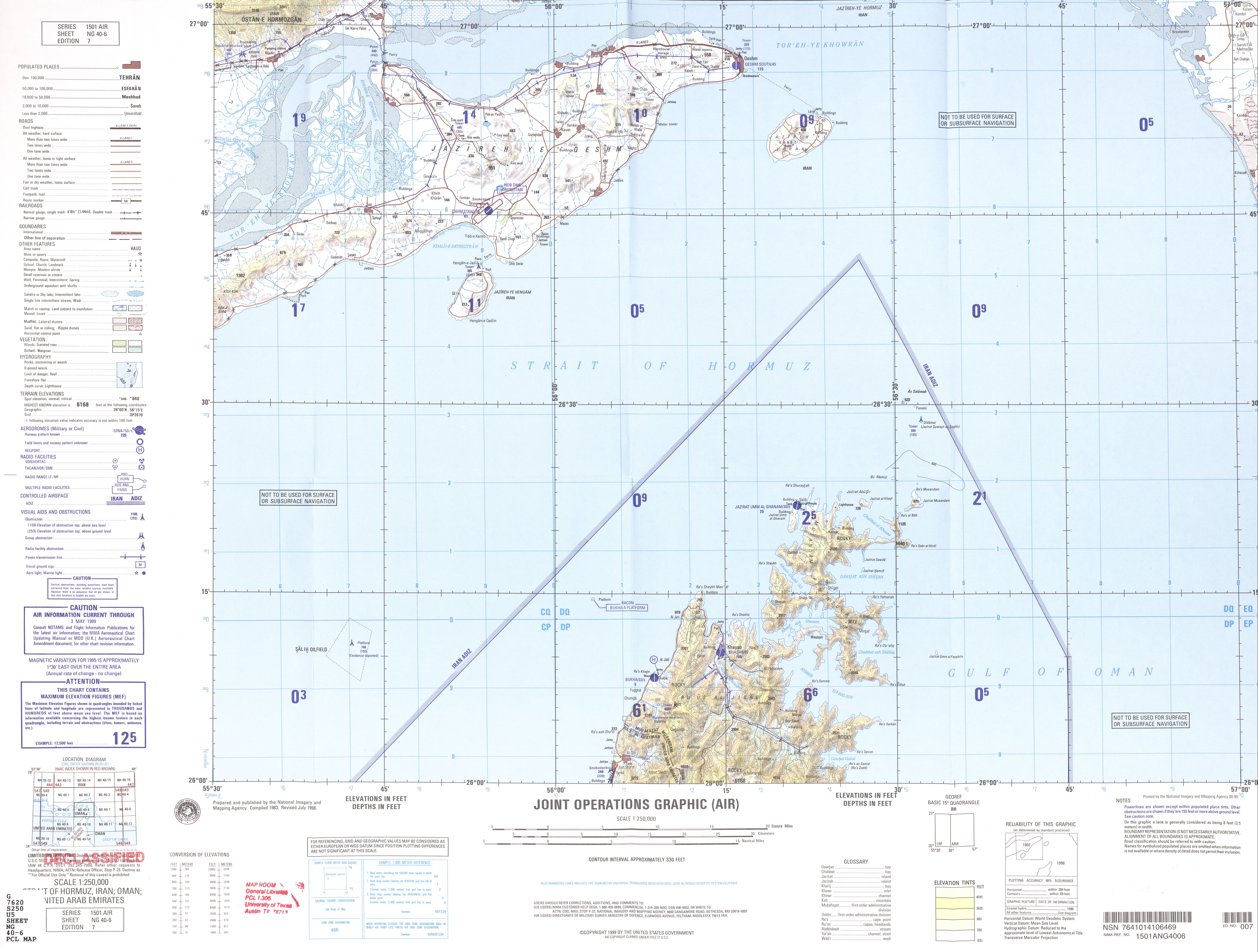
Strategically, Balochistan is mouth-watering: east of Iran, south of Afghanistan, and boasting three Arabian sea ports, including Gwadar, practically at the mouth of the Strait of Hormuz.
Gwadar - a port built by China - is the absolute key. It is the essential node in the crucial, ongoing, and still virtual Pipelineistan war between IPI and TAPI. IPI is the Iran-Pakistan-India pipeline, also known as the "peace pipeline", which is planned to cross from Iranian to Pakistani Balochistan - an anathema to Washington. TAPI is the perennially troubled, US-backed Turkmenistan-Afghanistan-Pakistan-India pipeline, which is planned to cross western Afghanistan via Herat and branch out to Kandahar and Gwadar.
Washington's dream scenario is Gwadar as the new Dubai - while China would need Gwadar as a port and also as a base for pumping gas via a long pipeline to China. One way or another, it will all depend on local grievances being taken very seriously. Islamabad pays a pittance in royalties for the Balochis, and development aid is negligible; Balochistan is treated as a backwater. Gwadar as the new Dubai would not necessarily mean local Balochis benefiting from the boom; in many cases they could even be stripped of their local land.
To top it all, there's the New Great Game in Eurasia fact that Pakistan is a key pivot to both NATO and the Shanghai Cooperation Organization (SCO), of which Pakistan is an observer. So whoever "wins" Balochistan incorporates Pakistan as a key transit corridor to either Iranian gas from the monster South Pars field or a great deal of the Caspian wealth of "gas republic" Turkmenistan.
The cavalry to the rescue
Now imagine thousands of mobile US troops - backed by supreme air power and hardcore artillery - pouring into this desert across the immense, 800-kilometer-long, empty southern Afghanistan-Balochistan border. These are Obama's surge troops who will be in theory destroying opium crops in Helmand province in Afghanistan. They will also try to establish a meaningful presence in the ultra-remote, southwest Afghanistan, Baloch-majority province of Nimruz. It would take nothing for them to hit Pakistani Balochistan in hot pursuit of Taliban bands. And this would certainly be a prelude for a de facto US invasion of Balochistan.
What would the Balochis do? That's a very complex question.
Balochistan is of course tribal - just as the FATA. Local tribal chiefs can be as backward as Islamabad is neglectful (and they are not exactly paragons of human rights either). A parallel could be made with the Swat valley.
Most Baloch tribes bow to Islamabad's authority - except, first and foremost, the Bugti. And then there's the Balochistan Liberation Army (BLA) - which both Washington and London brand as a terrorist group. Its leader is Brahamdagh Bugti, operating out of Kandahar (only two hours away from Quetta). In a recent Pakistani TV interview he could not be more sectarian, stressing the BLA is getting ready to attack non-Balochis. The Balochis are inclined to consider the BLA as a resistance group. But Islamabad denies it, saying their support is not beyond 10% of the provincial population.
It does not help that Islamabad tends to be not only neglectful but heavy-handed; in August 2006, Musharraf's troops killed ultra-respected local leader Nawab Akbar Bugti, a former provincial governor.
There's ample controversy on whether the BLA is being hijacked by foreign intelligence agencies - everyone from the CIA and the British MI6 to the Israeli Mossad. In a 2006 visit to Iran, I was prevented from going to Sistan-Balochistan in southeast Iran because, according to Tehran's version, infiltrated CIA from Pakistani Balochistan were involved in covert, cross-border attacks. And it's no secret to anyone in the region that since 9/11 the US virtually controls the Baloch air bases in Dalbandin and Panjgur.
In October 2001, while I was waiting for an opening to cross to Kandahar from Quetta, and apart from tracking the whereabouts of President Hamid Karzai and his brother, I spent quite some time with a number of BLA associates and sympathizers. They described themselves as "progressive, nationalist, anti-imperialist" (and that makes them difficult to be co-opted by the US). They were heavily critical of "Punjabi chauvinism", and always insisted the region's resources belong to Balochis first; that was the rationale for attacks on gas pipelines.
Stressing an atrocious, provincial literacy rate of only 16% ("It's government policy to keep Balochistan backward"), they resented the fact that most people still lacked drinking water. They claimed support from at least 70% of the Baloch population ("Whenever the BLA fires a rocket, it's the talk of the bazaars"). They also claimed to be united, and in coordination with Iranian Balochis. And they insisted that "Pakistan had turned Balochistan into a US cantonment, which affected a lot the relationship between the Afghan and Baloch peoples".
As a whole, not only BLA sympathizers but the Balochis in general are adamant: although prepared to remain within a Pakistani confederation, they want infinitely more autonomy.
Game on
How crucial Balochistan is to Washington can be assessed by the study "Baloch Nationalism and the Politics of Energy Resources: the Changing Context of Separatism in Pakistan" by Robert Wirsing of the US Army think-tank Strategic Studies Institute. Predictably, it all revolves around Pipelineistan.
China - which built Gwadar and needs gas from Iran - must be sidelined by all means necessary. The added paranoid Pentagon component is that China could turn Gwadar into a naval base and thus "threaten" the Arabian Sea and the Indian Ocean.
The only acceptable scenario for the Pentagon would be for the US to take over Gwadar. Once again, that would be a prime confluence of Pipelineistan and the US empire of bases.
Not only in terms of blocking the IPI pipeline and using Gwadar for TAPI, control of Gwadar would open the mouth-watering opportunity of a long land route across Balochistan into Helmand, Nimruz, Kandahar or, better yet, all of these three provinces in southwest Afghanistan. From a Pentagon/NATO perspective, after the "loss" of the Khyber Pass, that would be the ideal supply route for Western troops in the perennial, now rebranded, GWOT ("global war on terror").
During the Asif Ali Zardari administration in Islamabad the BLA, though still a fringe group with a political wing and a military wing, has been regrouping and rearming, while the current chief minister of Balochistan, Nawab Raisani, is suspected of being a CIA asset (there's no conclusive proof). There's fear in Islamabad that the government has taken its eye off the Balochistan ball - and that the BLA may be effectively used by the US for balkanization purposes. But Islamabad still seems not to have listened to the key Baloch grievance: we want to profit from our natural wealth, and we want autonomy.
So what's gonna be the future of "Dubai" Gwadar? IPI or TAPI? The die is cast. Under the radar of the Obama/Karzai/Zardari photo-op in Washington, all's still to play in this crucial front in the New Great Game in Eurasia.
Pepe Escobar is the author of Globalistan: How the Globalized World is Dissolving into Liquid War (Nimble Books, 2007) and Red Zone Blues: a snapshot of Baghdad during the surge. His new book, just out, is Obama does Globalistan (Nimble Books, 2009).
He may be reached at pepeasia@yahoo.com.


 Posts
Posts


![[Most Recent Quotes from www.kitco.com]](http://www.kitconet.com/charts/metals/gold/t24_au_en_eukg_2.gif)