Sunday, 11 May 2008

erdogan says israel ready to withdraw from golan

Wednesday, 23 April 2008

Israel ready to return Golan, Turkey tells Syria

DAMASCUS (AFP)

Turkish Prime Minister Recep Tayyip Erdogan has assured Syria that Israel is ready to return all of the Golan Heights, reports said on Wednesday amid renewed peace feelers between the bitter foes.
« Mr Erdogan telephoned President Bashar al-Assad on Tuesday morning to tell him of the readiness of Israeli Prime Minister Ehud Olmert to withdraw completely from the occupied Syrian Golan in return for peace, » reported the Al-Watan daily, which, like all the Syrian press, reflects the official line.
Damascus has consistently demanded as its price for peace the return of the whole of the strategic territory right down to the shores of the Sea of Galilee—Israel’s main water source.
Israel baulked at the demand in the last peace talks which broke off in 2000 but Israeli media reported last year that the government was considering accepting it in return for Syrian agreement to end its longstanding alliance with Iran and its support for Lebanese and Palestinian militant groups.
Last June two Israeli ministers confirmed that peace feelers had been made to Syria through third party governments, one of which was widely identified as Turkey.
But the same month Syria’s ruling coalition, the National Progressive Front, rejected the reported Israeli proposals, dismissing them as an « effort to impose conditions which have nothing to do with the principles of peace. »
« Missed opportunities »
In November Turkish President Abdullah Gul told the Israeli daily Maariv that there had been « many missed opportunities recently to begin peace negotiations » between Israel and Syria.
But this month both sides have again spoken of their desire for peace.
On Sunday, the Syrian president told his Baath party which leads the ruling coalition that « friendly parties were making efforts to organize contacts between Syria and Israel. »
« Syria is in favor of a just and lasting peace. Syria rejects any secret negotiations or contacts with Israel. Any action taken by Syria in this area will be revealed to the public, » official media quoted Assad as saying.
Last Thursday Olmert told Israel’s Channel 10 television: « Very clearly we want peace with the Syrians and we are taking all manner of actions to this end.
« President Bashar al-Assad knows precisely what our expectations are and we know his. I won’t say more. »
Israeli government spokesman David Baker reiterated the point on Wednesday. « Israel wants peace with Syria. Prime Minister Ehud Olmert has reaffirmed that in numerous recent interviews and he hasn’t changed his opinion since, » Baker told AFP in Jerusalem.
Despite a 1974 armistice, the two sides remain technically in a state of war. As recently as last October Israel launched an air strike against a site in northeastern Syria.
Damascus reacted furiously to the raid, roundly rejecting Israeli charges that the site was military.
Israel captured the Golan in the 1967 Middle East war and annexed it in 1981 in a move never recognized by the international community.

24 months UK stagflation forecasted by boe

Bank of England warns of two years of stagflation

By Edmund Conway

11:20pm BST 10/05/2008


The Bank of England will this week admit for the first time that it is set to breach its inflation target in the coming months and warn that Britain is destined for two years of soaring costs and weak growth.

Mervyn King, the Bank’s Governor, is poised to unveil new forecasts showing that the Consumer Price Index (CPI) will rise above 3 per cent over the next six months, forcing him to write a letter of explanation to the Chancellor. In a further blow to Alistair Darling’s credibility, the Bank will cut its economic growth forecasts for both this year and next.
A Bank of England street sign: Bank of England warns
of two years of stagflation
The shocks facing the UK remain severe
The changes will spark fears of « stagflation » - weak growth twinned with high inflation - and will be unveiled in the Bank’s quarterly Inflation Report on Wednesday, which will set the tone for the economy for the next three months. They come amid warnings that Britain now faces a US-style housing crash, with plummeting prices and rising repossessions.
The Budget forecast that the economy would grow by 2 per cent this year and 2.25 per cent next, but the Bank is likely to forecast growth of well below 2 per cent in both years.
Despite the higher rate of inflation, the Bank is likely to indicate its readiness to cut borrowing costs again at least once - perhaps twice - in the coming months.
Although the Bank is duty-bound to keep the CPI within
a percentage point of its 2 per cent target, it will
this week forecast that the index will rise above 3
per cent in the coming months, economists predict. It
will be the second time that the Bank has missed its
target. However, Michael Saunders of Citigroup said
that this time the Governor would insist that the
increase had not come as a surprise.

Warning that the Bank would raise the inflation forecast to above 3 per cent not just for this year but also for 2009, he added: « The difficulty for the MPC [Monetary Policy Committee] and the economy is that shocks facing the UK both remain severe - downside growth from the credit crunch, housing implosion and high private debts and upside inflation risks from global cost pressures, the weak pound and surging inflation expectations. If anything, the shocks continue to worsen. »
He added: « Although details in the US and UK differ, we suspect that the UK is starting to experience a US-style housing collapse, in terms of an extended period of extreme weakness in demand, turnover and prices. »
King said in the last Inflation Report that there was a 50/50 chance of the Bank missing its target, but since then oil prices have leapt more sharply than in any previous quarter, while food prices are also on the rise. The slump in sterling is also expected to push prices higher.
Philip Shaw, the chief economist at Investec, said:
« The other worry is the spectre of further gas and electricity price increases. When utility companies move, they do so not in small increments but by big margins.
« The growth numbers will probably be a little bit lower than in February, although it’s difficult to imagine the Bank forecasting a meltdown in the economy. »

Information appearing on telegraph.co.uk is the copyright of Telegraph Media Group Limited and must not be reproduced in any medium without licence.

Friday, 9 May 2008

moscow: western policies may lead to world war

http://www.telegraph.co.uk/news/worldnews/europe/russia/1942177/Russia-puts-on-a-Soviet-show-of-might.html

Russia puts on a Soviet show of might

By Adrian Blomfield in Moscow

2:57 AM BST 10/05/2008

Dmitry Medvedev, Russia’s new president, delivered a coded rebuke to the West yesterday as Russia paraded its nuclear missiles through Red Square in a show of force not seen since Soviet times.
Dmitry Medvedev and Vladimir Putin watch the Victory
Parade in Moscow’s Red Square
Dmitry Medvedev and Vladimir Putin at the Victory Day
parade
Thousands of Russians thronged the centre of Moscow to wallow in nostalgia for their superpower past as tanks rumbled through the streets.
On a day designed to send an unmistakably bellicose message to the West, Mr Medvedev launched a veiled attack on the United States, suggesting that its « irresponsible » foreign policy could lead to world war.
« The history of the world wars shows that armed conflicts do not erupt on their own, » Mr Medvedev told Russian troops in Red Square during his Victory Day address.
« They are fuelled by those whose irresponsible ambitions overpower the interests of countries and whole continents. »
Mr Medvedev also criticised countries that intruded in other states’ affairs, especially by redrawing their borders, comments seen as an attack on the West’s backing for Kosovo’s independence.
Russia, he warned, would respond to such interference extremely seriously.
« We cannot tolerate disrespect for international law, » he said.
The new leader’s comments appeared to bear the imprimatur of Vladimir Putin both in content and in style.
The former president – now prime minister – regularly attacked Western foreign policy in his Victory Day speeches. Last year he likened the US to the Third Reich.
Even if Mr Med­vedev’s speech was Putin-lite by comparison, it suggested that a less acerbic approach to the West was unlikely.
It was the first time he had touched on foreign policy since taking office on Wednesday.
It is unclear whether Mr Putin had a role in writing the speech, but throughout its delivery he stood over his protégé’s shoulder.
The parade itself was more in tune with the tastes of Mr Putin, a former KGB spy, than with those of Mr Medvedev, a 42-year-old former lawyer.
Since 1990, the focus of Victory Day, commemorated in Russia a day later than in Britain, has been one of quiet reflection for the more than 20 million Soviet lives lost in the Second World War.
This year’s parade, however, was designed more to evoke the Soviet Union’s past might and Russia’s military resurgence.
To resounding cheers, Russia’s newest intercontinental ballistic missiles joined ageing T-90 tanks that trundled across Red Square’s specially reinforced cobblestones.
Nuclear bombers and fighter jets roared above the Kremlin as 8,000 troops goose-stepped past St Basil’s Cathedral.
Despite the aggressive symbolism, the US reacted with insouciance.
« If they wish to take out their old equipment and take it for a spin, they’re more than welcome to do so, » a Pentagon spokesman said.

us "humanitarian" invasion of myanmar?

May 10, 2008

The case for invading Myanmar

By Shawn W Crispin

BANGKOK - With United States warships and air force planes at the ready, and over 1 million of Myanmar’s citizens left bedraggled, homeless and susceptible to water-borne diseases by Cyclone Nagris, the natural disaster presents an opportunity in crisis for the US.
A unilateral - and potentially United Nations-approved
- US military intervention in the name of
humanitarianism could easily turn the tide against the
impoverished country’s unpopular military leaders, and
simultaneously rehabilitate the legacy of lame-duck US


President George W Bush’s controversial pre-emptive military policies.
Myanmar’s ruling junta has responded woefully to the cyclone disaster, costing more human lives than would have been the case with the approval of a swift international response. One week after the killer storm first hit, Myanmar’s junta has only now allowed desperately needed international emergency supplies to trickle in. It continues to resist US and UN disaster relief and food aid personnel from entering the country. Officially, 60,000 people have died; the figure is probably closer to 100,000.
The US is prepared to deliver US$3.25 million in initial assistance for survivors, which if allowed by the junta could be rapidly delivered to the worst-hit areas using US Air Force and naval vessels, including the US C-130 military aircraft now in neighboring Thailand, and the USS Kitty Hawk and USS Nimitz naval warships, currently on standby in nearby waters.
With the host government’s approval, the US military led the multinational emergency response to the 2004 tsunami, including in the politically sensitive, majority Muslim areas of Aceh, Indonesia. The response to Myanmar’s tragedy, in comparison, is being undermined by the play of international power politics, including most notably the military government’s antagonistic relations with the US.
Washington has long-held economic sanctions against the regime, which were recently enhanced through financial sanctions against individual junta members, their families and business associates. Despite the economic suffering the sanctions have had on the grassroots population, many Myanmar citizens support the measures against their perceived abusive government, according to one Myanmar researcher. Early last year, the US tried to have Myanmar’s abysmal rights record put onto the UN Security Council’s agenda, but the motion was later vetoed by Myanmar allies China and Russia.
In the wake of the cyclone, the criminality of the junta’s callous policies has taken on new human proportions in full view of the global community. Without a perceived strong UN-led response to the natural disaster, hard new questions will fast arise about the UN’s own relevance and ability to manage global calamities.
This week, French Foreign Minister Bernard Koucher suggested that the UN invoke its so-called « responsibility to protect » civilians as legitimate grounds to force aid delivery, regardless of the military government’s objections. On Friday, a UN spokesman called the junta’s refusal to issue visas to aid workers « unprecedented » in the history of humanitarian work.
Because of the UN’s own limited powers of projection, such a response would require US military management and assets. US officials appear to be building at least a rhetorical case for a humanitarian intervention. While offering relief and aid with one hand, top US officials have with the other publicly slapped at the Myanmar government’s lame response to the disaster.
Shari Villarosa, head of the US Embassy in Yangon, has challenged the veracity of the government’s official death count, telling reporters that storm-related casualties could eventually exceed 100,000 at a time the junta claimed 22,500 had perished. The junta has since revised up its official death toll figure to around 60,000.
US First Lady Laura Bush, who last year publicly goaded Myanmar’s population to rise up against the military junta during the « Saffron » revolution, has in the wake of the cyclone revived her criticisms, referring to the government as « inept » and claiming that despite it receiving forewarning it failed to alert its citizens of the impending cyclone.
« It should be a simple matter, » said US Secretary of State Condoleezza Rice, referring to the junta’s refusal to allow foreign aid workers into the country. « It’s not a matter of politics. It’s a matter of a humanitarian crisis. »
Armed and ready
Should the junta continue to resist foreign assistance while social and public health conditions deteriorate in clear view of global news audiences, the moral case for a UN-approved, US-led humanitarian intervention will grow. Fistfights have already reportedly broken out over food supplies in Yangon, raising the risk that Myanmar troops could soon be called to put down unrest in the midst of a humanitarian crisis. Last September, Myanmar’s army opened fire against and killed an unknown number of street demonstrators.
Apart from putting significant US military assets on standby, there are no indications yet that President George W Bush or the Pentagon is preparing a unilateral rescue operation. Yet policymakers in Washington are now no doubt weighing the potential pros and cons of a pre-emptive humanitarian mission in a geo-strategically pivotal and suddenly weakened country that Bush administration officials have recently and repeatedly referred to as an « outpost of tyranny ».
Within that policy matrix, the deteriorating situation presents a unique opportunity for Bush to burnish his foreign policy legacy. Some note that a US military response to Myanmar’s humanitarian crisis would follow in the footsteps of Bush’s presidential father, George H W Bush, who after declaring victory over the Soviet Union’s communist threat, moved to demonstrate to the post-Cold War world that US military might would be a force for global good.
That included his government’s US military-led humanitarian aid mission in civil war- and famine-struck Somalia in August 1992 that morphed later in the same year into a full-blown US Marine invasion of the capital Mogadishu, including the airport and main port, to protect the integrity of future aid deliveries from marauding militias. That military mission was mostly abandoned by 1993 after fierce fighting between US troops and Somali militias, while television images of a slain US soldier being dragged through Mogadishu’s streets took the idealistic edge off the supposedly humanitarian military exercise.
This time, it is almost sure-fire that Myanmar’s desperate population would warmly welcome a US-led humanitarian intervention, considering that its own government is now withholding emergency supplies. Like his father then, Bush is now clearly focused on his presidential legacy, which to date will be judged harshly due to his government’s controversial pre-emptive military policies, waged until now exclusively in the name of fighting global terror.
In an era when the US routinely launches pre-emptive military strikes, including its 2003 invasion of Iraq, the 2003 Predator drone assassination attack against an alleged al-Qaeda leader in Yemen, a similar drone attack in 2006 in northwestern Pakistan, and last week’s attack against a reputed al-Qaeda ringleader in Somalia, it is not inconceivable that the US might yet intervene in military-run Myanmar, particularly if in the days ahead the social and political situation tilts towards anomie.
Whether or not a US military intervention in the name of humanitarianism would, as in Somalia, eventually morph into an armed attempt at regime change and nation-building would likely depend on the population’s and Myanmar military’s response to the first landing of US troops. Some political analysts speculate that Myanmar’s woefully under-resourced and widely unpopular troops would defect en masse rather than confront US troops.
While Myanmar ally China would likely oppose a US military intervention, Beijing has so far notably goaded the junta to work with rather than against international organizations like the UN, and more to the point, it lacks the power projection capabilities to militarily challenge the US in a foreign theater. Most notably, the US would have at its disposal a globally respected and once democratically elected leader in Aung San Suu Kyi to lead a transitional government to full democracy.
Many have speculated that Myanmar’s notoriously paranoid junta abruptly moved the national capital 400 kilometers north from Yangon to its mountain-rung redoubt at Naypyidaw in November 2005 due to fears of a possible pre-emptive US invasion, similar to the action against Iraq. Now, Cyclone Nagris and the government’s woeful response to the disaster have suddenly made that once paranoid delusion into a strong pre-emptive possibility, one that Bush’s lame-duck presidency desperately needs.

Shawn W Crispin is Asia Times Online’s Southeast Asia
Editor. He may be reached at swcrispin@atimes.com

(Copyright 2008 Asia Times Online Ltd. All rights reserved. Please contact us about sales, syndication and republishing .)

aoun hezbollah links feared by siniora

source: waynemadsenreport.com

US continues establishment of new
airbase in northern Lebanon

May 9-11, 2008 -- US continues establishment of new
airbase in northern Lebanon
WMR was the first to report on the establishment of a major US airbase at Kleiaat (or Qlei’at) in northern Lebanon to facilitate logistics for America’s planned long-term stay in the Middle East, including the occupation of Iraq. We have now learned from our intelligence sources in Lebanon that on May 5, a representative from the US Embassy in Beirut spent three hours at Kleiaat surveying the airport and meeting with local officials. The secretiveness of the embassy official’s visit was highlighted by the prohibition of cameras at the airport.
The United States has made an agreement with the pro-US, Israeli, and Saudi government of Prime Minister Fuad Siniora to gradually transform the Kleiaat airbase from a civilian airport to a military airbase. The base will function under a NATO umbrella but will be controlled by the United States.
The recent move by Siniora against a private Hezbollah telecommunications network that extended from Beirut International Airport, south Lebanon, the Bekaa Valley, Mount Lebanon, and greater Beirut to pro-Michel Aoun Christian enclaves in Jbeil and Keserwan is seen as a way to ensure that the Hezbollah-Aoun March 14 Alliance cannot securely communicate. The fact that the Lebanese opposition to the pro-US government was able to evade total electronic surveillance by the Israelis, the US National Security Agency, and the British Government Communications Headquarters (GCHQ) prompted pressure on the Beirut government to act against the Hezbollah network. That triggered a Hezbollah retaliation and the outbreak of warfare between Hezbollah and its allies and the central government.
The outbreak of warfare between Hezbollah and the central government comes after a planned Israeli Mossad assassination of Hezbollah leader Hassan Nasrallah in Beirut on April 25. That would have triggered an environment for the outbreak of a general war involving Lebanon, Syria, and Iran. That possibility prompted a leak from the office of Israeli Prime Minister Ehud Olmert. Olmert is now under pressure to resign for accepting bribes from Orthodox Jewish Long Island businessman Moshe (aka Morris) Talansky, dubbed the « Laundry Man, » between 1999 and 2003 when Olmert served as Jerusalem’s mayor.
Talansky is CEO of Globes Resources Group, an investment firm. Olmert and Talansky co-founded the New Jerusalem Fund, a charity for public works projects in Jerusalem. Talansky has also donated money to New York’s former Mayor Rudolph Giuliani, Bill Clinton, Senator Dianne Feinstein (D-CA), Senator Charles Schumer (D-NY), Senator Frank Lautenberg (D-NJ), Senator Joe Lieberman (I-CT), and George W. Bush. and Rep. Gary Ackerman (D-NY).

Wednesday, 7 May 2008

wto: freer trade softens food prices

WTO says cannot solve food price crisis

By Jonathan Lynn

12:05 pm EDT

GENEVA, May 7, 2008 (Reuters) — The World Trade Organization cannot conjure up a short-term solution to soaring food prices but a successful end to global trade talks would help in the longer term, the organization’s chief said on Wednesday.
Staple food prices have risen more than 40 percent in the last year causing shortages, hoarding and riots in many developing countries and prompting the United Nations to warn of malnutrition and social unrest.
WTO chief Pascal Lamy said a deal in the Doha round of trade talks would help soften the impact of high prices by lowering barriers to trade in agricultural products, including subsidies in rich countries.
« Although the WTO cannot provide anything immediate to help solve the current crisis, it can, through the Doha Round negotiations, provide medium to long-term solutions, » Lamy said.
To meet its goal of concluding the long-running talks this year, the WTO needs a breakthrough within weeks, Lamy told the WTO’s policy-making general council.
« As you are all aware, the overall outcome would be less distortion in world markets and increased international trade, leading to more rapid and efficient adjustment by supply to changes in demand, » he said.
Many countries have responded to the high prices by imposing taxes and other restrictions on exports— allowed under WTO rules—to try to ensure adequate supplies at home.
Bangladesh said on Wednesday it had banned exports of non-aromatic rice for six months to secure domestic supplies.
Export bans by India and Vietnam, in addition to dwindling world stocks, have helped rice prices in Asia to treble this year, ringing alarm bells for policy makers struggling to rein in inflation.
RESUME SHIPMENTS
India will decide by June whether to sell rice to neighboring states that have asked it to resume shipments but has no plans to relax export curbs significantly soon, T. Nand Kumar, the country’s food secretary, told Reuters.
India is also likely to take advantage of this year’s bumper wheat harvest to build a stockpile of up to 3 million tonnds after two years when it was forced to import extra grain.
Rice prices have retreated from the record levels they reached last month but the U.S. futures market rose more than 2 percent because of concern that the cyclone in Myanmar, which killed at least 22,500 people, could further squeeze supplies.
The effects of the cyclone that tore through the
Irrawaddy delta could turn Myanmar from an exporter of rice to an importer, the U.N.’s food agency said.
The Food and Agriculture Organization (FAO) said the damage to the delta could scupper plans by the southeast Asian country to export 600,000 tonnes of milled rice in 2008 and force it to import instead.
« If post-harvest losses turn out being large, localized food shortages in the short term may result, » the FAO said. « Such losses could also impair the country’s ability and government decision to export rice in 2008. »
Myanmar’s military junta insists it has enough rice stocks to keep people fed but the price of small bags has doubled since the cyclone tore through the fertile delta at the weekend.
Thai rice prices eased around 10 percent earlier this week from a record level above $1,000 a tonne after the Philippines scrapped a tender to import 675,000 tonnes.
But, underlining the continued strength of demand in a region where rice is a staple for billions, Thailand -- the world’s largest exporter of the grain—said suppliers were in talks to sell 95,000 tonnes to Sri Lanka and East Timor.

(Writing by Robert Woodward and Ben Tan; editing by Tim Pearce)

Tuesday, 6 May 2008

goldman sachs forecasts crude at 200$

Times Online

May 6, 2008

Oil hits new high amid warnings of $200 peak


Robin Pagnamenta, Energy and Environment Editor


Oil prices rallied to fresh highs this morning, after an analyst at Goldman Sachs warned that prices could rise to $200 a barrel within two years.

Concerns over supply problems in Nigeria, Africa’s largest oil producer, helped to propel US crude futures for June delivery to a high of $122 per barrel, before settling back to 121.65. London Brent crude futures also hit a record of $120.41 per barrel.
Strikes and a campaign of attacks by militants have cut Shell’s production in Nigeria by about 164,000 barrels per day.
A report from Goldman Sachs’ New York-based energy analyst, Arjun Murti, claimed that oil prices could rise to between $150 and $200 per barrel because of shortages in global supply growth and rising demand from developing countries.
Related Links
 They’ve got us over a $120 barrel
 Sounds like the Seventies
 Could oil mania be coming to an end?

“The possibility of $150 to $200 per barrel seems increasingly likely over the next 6 to 24 months, though predicting the ultimate peak in oil prices as well as the remaining duration of the upcycle remains a major uncertainty,” said the report, dated May 5.
Mr Murti first predicted a super-spike in oil prices to as high as $105 per barrel in 2005.
Members of the Organization of Petroleum Exporting Countries (Opec), which produce 40 per cent of the world’s oil, are unable to lift production significantly while rising domestic consumption in member countries, as well as in China, India and other emerging economies, is compounding the supply shortage elsewhere, the report said.
“The core of our super-spike view has been that a lack of adequate supply growth coupled with price-insulated non-OECD demand growth” is forcing up prices, the report said.
“Non-Opec supply is struggling to grow, with notable declines being seen in Mexico and Russia showing signs of rolling over following an extended period of rapid growth.”
Goldman’s crude oil price forecasts were also revised higher for the period 2008 to 2011. The 2008 estimate for the benchmark West Texas Intermediate contract was lifted to $108 a barrel from $96, the 2009 forecast to $110 from $105, and 2010 to 2011 estimates are at $120 up from $110.

drums of war in the caucasus

.
Russia-Georgia ‘close to war’, Tbilisi to blame - Russian NATO envoy


21:54

06/ 05/ 2008

BRUSSELS, May 6 (RIA Novosti) - Georgia is close to an outbreak of hostilities with Russia, but Tbilisi has only itself to blame for the current state of affairs, the Russian envoy to NATO said on Tuesday.
Dmitry Rogozin was commenting on a statement made at the European Parliament in Brussels earlier on Tuesday by Georgian Reintegration Minister Timur Yakobashvili that Georgia was « very close » to a war with Russia.
Rogozin said: « Georgia is really extremely close to a war, but Georgia is itself to blame for this. »
He also added that Tbilisi was implementing a plan approved by foreign « sponsors » designed at pinning the blame for the current tensions in Georgia’s breakaway republics of Abkhazia and South Ossetia on Russia.
He went on to say that he believed that Georgia was planning to seize Abkhazia with special forces trained by NATO instructors, adding that this could result in « serious bloodshed. »
Russia was trying to prevent this ‘bloodshed,’ he said.
Abkhazia, along with South Ossetia, broke away from Georgia in the early 1990s following the collapse of the Soviet Union. Between 10,000 and 30,000 people were killed in the Georgian-Abkhazian conflict and some 3,000 in Georgian-South Ossetian hostilities. Georgia is looking to regain control over the two de facto independent republics.
On April 16, Russia’s outgoing President Vladimir Putin ordered the government to draw up measures to support both Abkhazia and South Ossetia. The move infuriated Georgia, which accused Russia of trying to annex the breakaway regions. Later, Tbilisi accused Russia of downing a reconnaissance drone - a claim Russia has flatly denied.
Russia, which has administered a peacekeeping contingent in Abkhazia and South Ossetia since the 1990s, dispatched additional troops to Abkhazia recently to deter what it calls a planned Georgian military offensive. Tbilisi accuses Russian troops of siding with separatists.

mayhem posponed around lebanon

waynemadsenreport.com

The Middle East firestorm was to have started on April 25

May 6, 2008 -- The Middle East firestorm was to have started on April 25

WMR has learned from its Middle East intelligence sources that a leak from the office of Israeli Prime Minister Ehud Olmert’s office resulted in the last minute scuttling of an Israeli intelligence operation in Beirut that would have started a series of events that would have likely resulted in the outbreak of warfare between Israel and Lebanon, Syria, and possibly, between Iran and the United States.
Israel’s Mossad planned an April 25 assassination, likely by its favorite method, a massive car bomb, of Lebanese Hezbollah leader Hassan Nasrallah. Because the assassination would have triggered the « perfect storm » for the outbreak of war in Lebanon, with the involvement of Israel, the United States, Syria, and Iran, an official In Olmert’s office leaked the assassination plan. When it became apparent that there was a leak, Mossad scuttled the entire operation.
The plan was immediately known by the CIA and Hezbollah. It is known that retired CIA officer and contractor Roland Carnaby, a Lebanese-American, had close contact with all of Lebanon’s various factions. On April 29, four days after the planned assassination of Nasrallah by Mossad, Carnaby was killed in broad daylight by Houston police. WMR previously reported that Carnaby had successfully penetrated a Mossad ring active in the Houston area.
It is clear that Israel would not have carried out the Nasrallah assassination without the knowledge and approval of the neocon cell operating from Vice President Dick Cheney’s office and extending to elements of the U.S. Air Force, CIA, and other federal agencies.
Nasrallah’s assassination by Israel would have resulted in a massive Hezbollah strike on Israel and, possibly, through Moqtada al Sadr’s forces in Iraq, on U.S. troops in that country. The outbreak of massive violence between U.S. and Sh’ia forces in Iraq may have laid the groundwork for a U.S. strike on alleged training camps in Iran and other targets of opportunity.
WMR has also obtained a copy of the civil suit filed by Carnaby’s widow, Susan Carnaby, against the City of Houston for the wrongful death of her husband.

Monday, 5 May 2008

kosher mob, cia and fbi intertwine dirty

source: waynemadsenreport.com

Two assassinations of individuals who
posed threat to Israelis and mob


May 5, 2008 -- Two assassinations of individuals who
posed threat to Israelis and mob
There is a cancer that is growing within America. The Bush-Cheney administration has allowed to flourish in the United States a ruthless and brutal organized crime syndicate that has its roots in Russia and Israel and festers in its criminal dens in Brighton Beach, New York; Miami; London; Houston; and other cities.
WMR has previously reported the shooting death of retired CIA agent and later CIA contractor Roland Carnaby by Houston police on April 29 was the result of a high-stakes turf war between Israeli intelligence agents livid over the CIA’s and FBI’s renewed take down of an old Israeli intelligence network operating deep within the bowels of the U.S. government and the CIA and FBI, which have joined forces to rout out Israeli intelligence moles.
Two weeks ago, 84-year old Ben-Ami Kadish, an accused longtime spy for the Israelis at the US Army Picatinny Arsenal in New Jersey, was arrested. FBI agents are trying to get Kadish to spill the beans on high-level Israeli spies inside the government. Israel’s Mossad and its allied assets inside the Russian-Israeli Mafia, have retaliated with a vengeance, according to WMR’s U.S. intelligence sources.
On April 15, as FBI agents surveilled Kadish at his New Jersey home and the National Security Agency (NSA) had a full digital intercept on Kadish’s email and phone communications with his intelligence controller in Israel, another group had its eye on an Austin, Texas school teacher named Riad Hamad. Hamad was a significant donor to the Palestine Children’s Welfare Fund. The FBI had Hamad under investigation for « supporting terrorism, » a favorite canard used against Americans who support the Palestinian cause. Hamad had been a target of the neocons for years but they could never pin anything on him.
On April 16, Hamad’s body was found in Lady Bird Lake in Austin. His eyes had duct tape over them and his hands and feet were bound. The police ruled it a suicide. However, Hamad would be the first victim in an Israeli hit on individuals who helped U.S. back channels to the Palestinians and other groups targeted by Israel and the neo-con cell operating deep within the Bush administration, the Israeli-influenced cell that the FBI, in its arrest of Kadish, wanted to flush out.
Hamad once had a significant colleague in Austin, a University of Texas PhD student named Salam Fayyad. Fayyad is now the Prime Minister of Palestine and governs with the support of both Mahmoud Abbas’ Fatah and Hamas. Recently, the US Consul General in Jerusalem handed over $150 million to Fayyad’s Palestinian government. Fayyad and Hamad represent a threat to the Israeli hardliners and their allies in the Bush administration who do not want a real peace agreement with the Palestinians and, above all, do not want to see any dialogue with Hamas.
Enter Roland Vincent Carnaby, known as « Tony » to his Houston and Langley colleagues, a retired CIA counter-terrorism and financial intelligence expert, who was operating a CIA private intelligence contractor in Houston, was involved in homeland security measures for the port of Houston and the Houston airports, was the head of the Houston chapter of the Association for Intelligence Officers (AFIO), but above all, was contracted by the CIA for operating a financial intelligence group consisting of some 40 people in Rome that was tracking Russian-Israeli Mafia money flows, particularly with regard to off-shore Panamanian corporations. WMR has been told by a knowledgeable source that Carnaby had successfully penetrated a major Israeli financial ring that was tied to various Israeli intelligence operations in the United States. Carnaby, a Lebanese-American, also had extensive contacts in the Middle East, including Lebanon and its major political force that is anathema to the Bush neo-cons and their Israeli puppet masters, Hezbollah.
But it was Carnaby’s role in identifying Israeli intelligence financing that apparently made him public enemy number one for the Israelis. WMR has been told by a knowledgeable source that Carnaby possessed detailed information about former House Majority Leader Tom DeLay’s relationship with convicted GOP lobbyist Jack Abramoff, information that connected DeLay and other top Republicans to pay-offs from organizations and individuals linked to the Russian-Israeli Mafia and Israeli intelligence. Specifically, the pay-offs came to the U.S. Family Network, set up by DeLay’s former Chief of Staff Ed Buckham, from Russian oil and gas interests connected to top Russian-Israeli Mafia tycoons living under the protection of the British and Israeli governments.
Buckham headed the Alexander Strategy Group, a GOP lobbying firm that represented Group W Advisors, Inc., a defense contractor owned by Brent Wilkes. Alexander also represented Eli Lilly, once headed by former Assistant Secretary of State Randall Tobias, named as one of the clients of the Pamela Martin & Associates escort firm of the late Deborah Jeane Palfrey.
Wilkes was convicted on November 5, 2007, on 13 counts of conspiracy, bribery, money laundering, and wire fraud in the Randy « Duke » Cunningham scandal. It was Wilkes who helped arranged with former CIA Executive Director Kyle « Dusty » Foggo « poker parties » at the Watergate and Westin Grand Hotels attended by CIA director Porter Goss. WMR has previously reported that Washington area escorts were transported to these parties by Shirlington Limousine. WMR also learned from the late Deborah Jeane Palfrey that Wilkes phoned her from his Poway, San Diego headquarters on a number of occasions to organize escorts for these parties. Palfrey said he only used the name « Brent » when he called.
Abramoff had also been under an investigation by the US Attorney for Maryland is using Palfrey’s escorts. On October 27, 2007, WMR reported: « Shirlington Limousine and Abramoff have been linked to the investigation by fired US Attorney for Maryland Thomas DiBiagio of the use of prostitutes by the office of then-Maryland Republican Governor Bob Ehrlich, Jr. DiBiagio, based in Baltimore, was fired after his investigation leap-frogged well beyond the business of the Pamela Martin & Associates escort service and into the activities of Ehrlich and his staff. »
WMR has learned from knowledgeable sources that Carnaby also had information on Abramoff’s Sun Cruz casino boat operation in Florida, a case that involved a mob hit on Sun Cruz’s former owner Gus Boulis, and the events of 9/11. Abramoff reportedly entertained at least two the 9/11 hijackers, including Mohammed Atta, on a Madeira Beach, Florida casino boat days before the 9/11 attack. This editor recalls Palfrey stating over dinner that she had information from some of her escorts that involved pre-intelligence on the 9/11 attack. The intersection of Abramoff and his Russian-Israeli mob gang to knowledge possessed by Carnaby and Palfrey suggest that their deaths may have been as brazen as hits as the gunning down of Boulis on a Fort Launderdale street by hit men. That assassination was blamed on Abramoff and his associates.
On April 29, Carnaby was shot to death by Houston police in the middle of the morning near the Galleria, Carnaby’s office, and the home of former President George and First Lady Barbara Bush. There is evidence that Israeli intelligence agents inside the Houston Police Department issued the order to shoot Carnaby. Houston homicide Captain Steve Jett tipped his hand in an interview with the Houston Chronicle when he said one of Carnaby’s arresting officers was told to arrest Carnaby on « something » because he could not be arrested for speeding. Carnaby’s lawyer Kenneth Brooten said it was possible that Carnaby thought he was being set up by the police and that is why he took evasive action. Many of Carnaby’s intelligence associates are calling his killing an « assassination. »
There is also a concerted effort to discredit Carnaby. This has ranged from the CIA denying that Carnaby was ever their employee to websites connected to the Israeli propaganda machine suggesting that Carnaby committed suicide by provoking the police into shooting him. The same discrediting campaign was launched against Hamad, the Austin school teacher.

pollution affects bee(haviour)

Air Pollution Impedes Bees’ Ability to Find Flowers When the spread of flowers’ scents are impeded, bees may be less likely to find and pollinate the flowers. A drop in pollination is reducing crops worldwide. When the spread of flowers’ scents are impeded, bees may be less likely to find and pollinate the flowers. A drop in pollination is reducing crops worldwide.

By Juliet Eilperin

Washington Post Staff Writer

Monday, May 5, 2008; Page A03

Air pollution interferes with the ability of bees and other insects to follow the scent of flowers to their source, undermining the essential process of pollination, a study by three University of Virginia researchers suggests.

POLLINATION CRISIS: Air Pollution Impedes Bees’ Ability to Find Flowers


Vulnerable Plants

Their findings may help unlock part of the mystery surrounding the current pollination crisis that is affecting a wide variety of crops. Scientists are seeking to determine why honeybees and bumblebees are dying off in the United States and in other countries, and the new study indicates that emissions from power plants and automobiles may play a part in the insects’ demise.
Scientists already knew that scent-bearing hydrocarbon molecules released by flowers can be destroyed when they come into contact with ozone and other pollutants. Environmental sciences professor Jose D. Fuentes at the University of Virginia—working with graduate students Quinn S. McFrederick and James C. Kathilankal—used a mathematical model to determine how flowers’ scents travel with the wind and how quickly they come into contact with pollutants that can destroy them. They described their results in the March issue of the journal Atmospheric Environment.
In the prevailing conditions before the 1800s, the researchers calculated that a flower’s scent could travel between 3,280 feet and 4,000 feet, Fuentes said in an interview, but today, that scent might travel 650 feet to 1,000 feet in highly polluted areas such as the District of Columbia, Los Angeles or Houston.
« That’s where we basically have all the problems, » Fuentes said, adding that ozone levels are particularly high during summer. « The impacts of pollution on pollinator activity are pronounced during the summer months. »
This phenomenon triggers a cycle, the authors noted, in which the pollinators have trouble finding sufficient food, and as a result their populations decline. That, in turn, translates into decreased pollination and keeps flowering plants, including many fruits and vegetables, from proliferating.
Fuentes said scientists now have a more sophisticated understanding of the signals for which insects are searching, and that air pollution rapidly eliminates as much as 90 percent of flowers’ aroma.
« We now know what the pollinators are looking for when they’re actually looking for the flowers, » he said.
Most bees have poor eyesight, which makes scent particularly important, the researchers wrote.
Since 2006, honeybee colonies in the United States have been suffering from a widespread phenomenon known as colony collapse disorder (CCD), in which adult worker bees abandon an otherwise-healthy hive.
John P. Burand, an associate professor at the
University of Massachusetts at Amherst who is studying bee colony collapses, said the effects of air pollution described in the new study are probably not directly related to that phenomenon. But, he added in an e-mail: « There is no doubt that air pollution and air quality is having an effect on bees and other pollinators. It appears there is more than one factor that is contributing to the CCD phenomenon we are seeing with bees, and certainly air pollution in some fashion may be playing a role. »
Burand, working with two other University of Massachusetts researchers and an insect ecologist at the University of Maine at Orono, just received a $150,000, three-year grant from the Agriculture Department to analyze microbes carried by bees that pollinate apples, squash and pumpkins. They are working with colleagues to compare the bacteria, viruses and fungi in healthy bee colonies with those in dysfunctional hives.
Richard Poirot, an air-quality planner at Vermont’s Department of Environmental Conservation who helps advise the federal government on its national ozone standards, said it makes sense that the chemical reaction of floral hydrocarbons and pollutants such as ozone would reduce the power of a flower’s scent and affect the insects that depend on those aromas.
« It does make sense that it certainly would be another stress factor » on pollinators, Poirot said, though he added that pollinators are declining for an array of reasons not related to pollution. « The question is, how significant is it? »
Timothy H. Tear, a senior scientist at the advocacy group the Nature Conservancy who studies the impact of air pollution on ecosystems, said the recent study confirms the extent of ozone’s effects on habitats up and down the East Coast.
« We know that ozone levels continue to be high and go well beyond EPA standards for public health, » Tear said. « What’s been pretty consistent is the more we look at air pollution’s impacts on natural resources, the more we find those impacts to be. »
Tear and his colleagues have recently completed a survey of how atmospheric pollution is affecting biodiversity in the Eastern United States and concluded that high levels of ozone can decrease forest growth by as much as 30 percent.

#1 buffet fund loses 64%

http://www.bloggingstocks.com/2008/05/02/buffett-struck-by-1-7-billion-worth-of-financial-wmd-losses/

Buffett struck by $1.7 billion worth of financial WMD losses

may 2nd 2008 9:04PM

Peter Cohan

Just days after the fifth anniversary of George W. Bush’s landing on an aircraft carrier in front of a « Mission Accomplished » banner, the Weapons of Mass Destruction (WMDs) have finally been located. But not in Iraq or Iran or Syria.
These WMDs are of the financial variety. The ones against which Berkshire Hathaway Inc.’s (NYSE: BRK.A) CEO Warren Buffett railed in his 2003 annual report. There he called derivatives « financial weapons of mass destruction, carrying dangers that, while now latent, are potentially lethal. » And Reuters reports that these are the very financial WMDs that cost Berkshire $1.7 billion in charges in the first quarter of 2008.
This proves that George W. Bush was right and so was Warren Buffett. But Berkshire shareholders are also smarting due to a 64% drop in its net income and a 24% tumble in its revenues.
Berkshire’s financial WMDs cost it $1.7 billion. Its pretax derivatives losses included a $1.2 billion loss on put options it wrote on the Standard & Poor’s 500 and three foreign stock indexes and a $490 million loss on contracts that require payouts if some high-yield bonds default between now and 2013.
Worst of all, Berkshire’s cash fell almost $9 billion to $35.57 billion—down from $44.33 billion at year end.
Times must be tough indeed if George W. Bush is finally proved right about WMDs—although the wrong kind in the wrong place—and Warren Buffett is hoisted on his own petard.
Peter Cohan is President of Peter S. Cohan & Associates. He also teaches management at Babson College and edits The Cohan Letter. He has no financial interest in Berkshire Hathaway securities.

Sunday, 4 May 2008

le marché du riz encadré par l'asean

.
http://afp.google.com/article/ALeqM5i2fe0kmN8TOV9IfyHnMk1pRSJm0A

Riz: les gouvernements asiatiques tentent d’enrayer
l’envolée des prix

AFP

4mai, 09h57

HONG KONG (AFP) - Rationnement, subventions, mise sur pied de cartels, limitation des exportations: les pays asiatiques producteurs de riz tentent à tout prix de protéger leurs populations de la flambée des cours de cet aliment de base dans la région.
« Les pays producteurs limitent les exportations car ils sont préoccupés par la situation sur le marché domestique », explique Jonathan Pincus, économiste du Programme des Nations unies pour le développement (PNUD) au Vietnam.
Signe de cette inquiétude, les ministres du Commerce de l’Association des nations d’Asie du Sud-Est (Asean) réunis à Jakarta, sont convenus samedi d’agir de concert pour stabiliser le prix du riz et accroître la production.
Souvent brocardé pour son laborieux processus de décision, les membres du « bloc des Dix » ont réagi prestement en décidant de « s’entraider pour stabiliser les prix (alimentaires) à l’échelle globale et s’abstenir de mesures susceptibles de perturber le prix du riz », selon la ministre indonésienne du Commerce Marie Elka Pangestu.
L’Asean regroupe la Thaïlande, l’Indonésie, la Malaisie, les Philippines, Singapour, le Vietnam, Brunei, le Laos, le Cambodge et la Birmanie.
Le riz est l’aliment de base du Sud-Est asiatique et les exportations de cette région ont un impact crucial sur les cours mondiaux du riz car elles représentent 50% des exportations totales.
Premier producteur mondial de riz, la Thaïlande avait déjà plaidé pour une action concertée en annonçant, le 30 avril, son intention de créer, avec d’autres pays riverains du Mekong (Birmanie, Cambodge, Laos, Vietnam), un cartel qui fixerait les prix du riz sur le modèle de Organisation des pays exportateurs de pétrole (OPEP).
Le Vietnam, deuxième exportateur mondial, avait fait savoir fin mars qu’il réduirait ses exportations cette année de 4 millions de tonnes à 3,5 millions de tonnes.
De nombreux supermarchés et magasins du pays communiste ont été récemment pris d’assaut à la suite de rumeurs faisant état d’une possible pénurie.
Au Cambodge, la flambée des prix du riz a contraint, fin avril, le Programme alimentaire mondial (PAM) des Nations unies à suspendre indéfiniment un programme de distribution de petits déjeuners gratuits à 450.000 écoliers déshérités.
Troisième pays exportateur de riz, l’Inde a également proscrit les exportations de certaines catégories de riz et débloqué 154.000 tonnes supplémentaires de blé et 230.000 tonnes de riz.
L’agriculture fait vivre les deux-tiers des 1,1 milliard d’Indiens des campagnes et, à côté de la centaine de millions de nouveaux riches urbains, 300 millions de gens vivent avec moins d’un dollar par jour.
« Traditionnellement, le riz est consommé là où il est produit, c’est pour pour cela que l’offre sur le marché international est extrêmement limitée », relève M. Pincus. « Il y a des acheteurs qui se retrouvent à court, les prix flambent et c’est ce à quoi on assiste actuellement », dit-il.
L’Indonésie n’a pas officiellement restreint ses exportations mais a pris une mesure d’encadrement qui y ressemble. L’archipel, troisième producteur mondial de riz, ne pourra exporter que lorsque ses stocks dépasseront les trois millions de tonnes, suivant la nouvelle loi.
Aux Philippines, la tension est telle que l’armée a récemment assigné des troupes à la distribution de riz dans les quartiers pauvres de Manille.
« Quand les gens ont faim, ils deviennent désespérés et font des choix désespérés », a averti dans un entretien Damien Kingsbury professeur à l’Université australienne de Deakin.

Friday, 2 May 2008

tremonti: biofuels crime against humanity

Italy’s Tremonti Charges Al Gore’s Biofuels ‘Crime Against Humanity’

April 26, 2008 (EIRNS)—Incoming Italian Finance and Treasury Minister Giulio Tremonti yesterday denounced biofuels as « a crime against humanity, » and named Al Gore as the main political figure responsible for that crime.
Tremonti made these truthful remarks during a debate on Italian television on the end of globalization and the New Bretton Woods, with current Trade Minister Emma Bonino and Corriere della Sera editor Paolo Mieli. Both Tremonti and Bonino agreed that biofuels are a crime; however, when Bonino said « it was George W. Bush who pushed for that policy, » Tremonti replied:
« It seems to me that Al Gore is much more responsible for that policy. And by the way, people are important, but more important are ideologies. » Tremonti referenced « the head of an environmentalist cult in the United States, » giving the impression that he meant Al Gore.
Tremonti also continued his recent campaign on the urgency of calling a New Bretton Woods to establish a new international financial system, an idea recognized internationally as the brainchild of U.S. statesman Lyndon LaRouche.
« At the end of the war, political leaders, not technocrats, gathered together in Bretton Woods. They drafted a system of rules for the entire world. This system has functioned for forty years. There were trade rules, quotas, tariffs, etc. Let me remind you that for forty years, it was forbidden by us to import Japanese cars. Nevertheless, the Japanese industry developed. »
What was insane, was to introduce, first in 1995 and then in 2001, radical free-trade rules through the World Trade Organization (WTO), he said. We should have a new Bretton Woods conference. The Mount Washington Hotel is still there; you can see the pictures of the rooms in Google.
Against this, Emma Bonino felt compelled to say that as an EU Commissioner, she had introduced protective tariffs on shoes and electrical engines, in favor of Italian producers, but she went on to push depopulation as a solution to the food crisis, mentioning the « Soft Landing » organization of which she is a part, which calls for reducing the world’s population by more than two thirds, to only two billion!
Remarkably, Corriere della Sera editor Paolo Mieli, a British agent, recited a « mea culpa » on globalization, saying that he had been wrong to believe that something good could come out of « unbridled globalization. » Now, « I feel that we have an economic 9/11 coming, » he said, welcoming the fact that, with Tremonti now becoming Finance and Treasury Minister, this will be the main debate in Italy in the next five years.
Tremonti also used the occasion to relaunch his proposal for « European debt » to finance investments, quoting Alexander Hamilton on how the United States was built through state credit.

Thursday, 1 May 2008

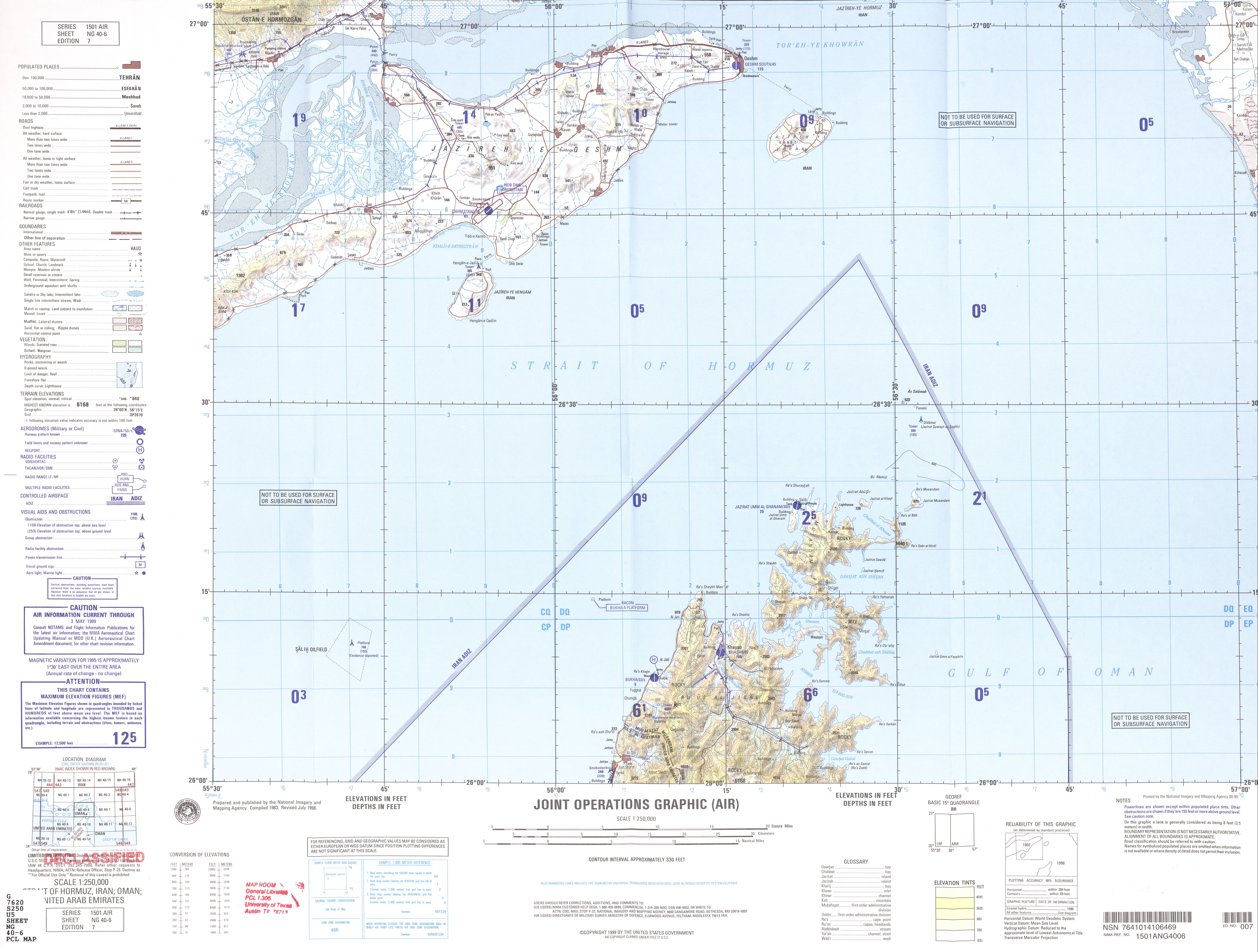
iran shuns petrodollars

.
Iran Ends Oil Transactions In U.S. Dollars


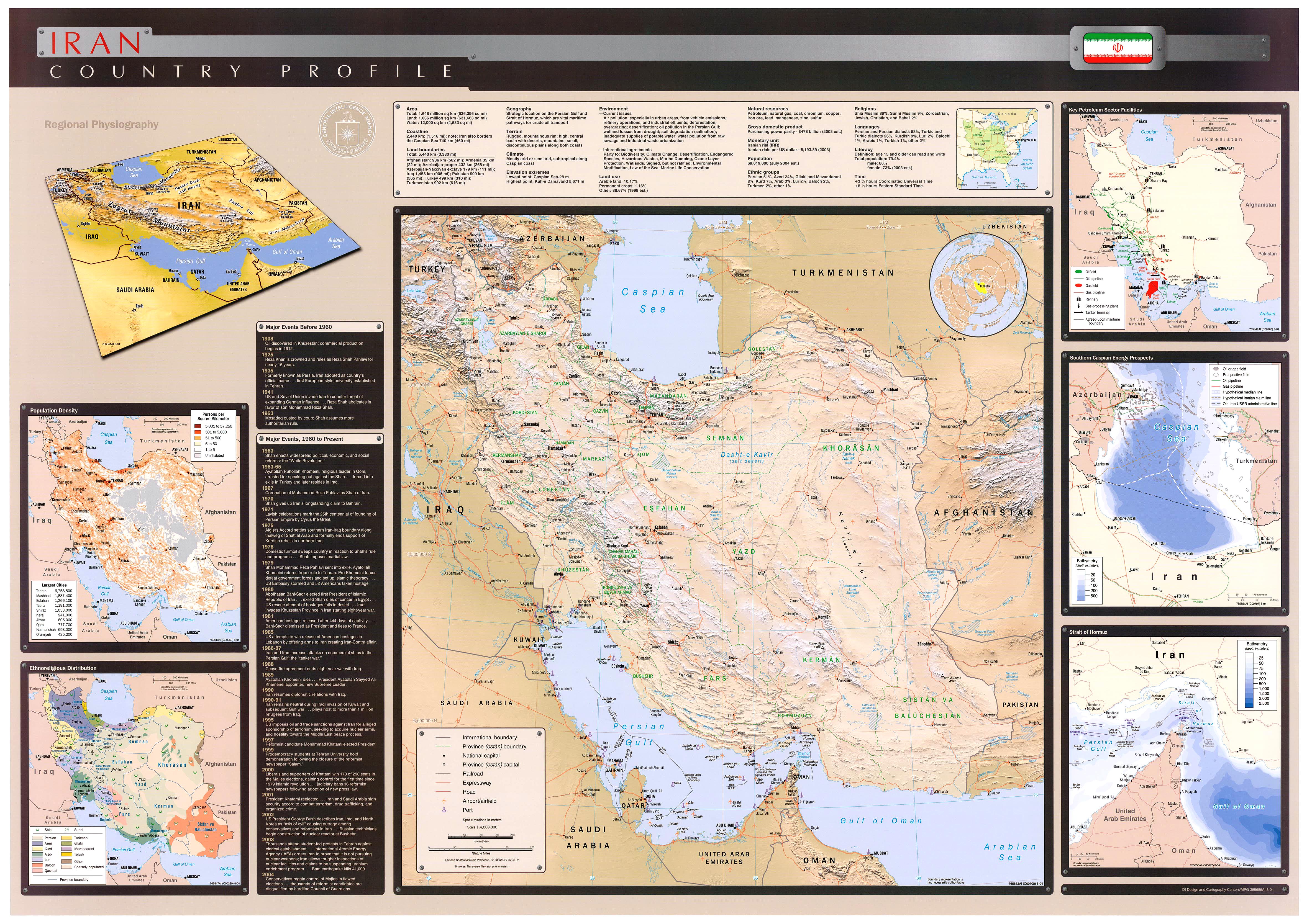
TEHRAN, Iran, April 30, 2008(AP) Iran, OPEC’s second-largest producer, has completely stopped conducting oil transactions in U.S. dollars, a top Oil Ministry official said Wednesday, a concerted attempt to reduce reliance on Washington at a time of tension over Tehran’s nuclear program and suspected involvement in Iraq.
Iran has dramatically reduced dependence on the dollar over the past year in the face of increasing U.S. pressure on its financial system and the fall in the value of the American currency.
Oil is priced in U.S. dollars on the world market, and the currency’s depreciation has concerned producers because it has contributed to rising crude prices and eroded the value of their dollar reserves.
« The dollar has totally been removed from Iran’s oil transactions, » Oil Ministry official Hojjatollah Ghanimifard told state-run television Wednesday. « We have agreed with all of our crude oil customers to do our transactions in non-dollar currencies. »
Iranian President Mahmoud Ahmadinejad called the depreciating dollar a « worthless piece of paper » at a rare summit last year in Saudi Arabia attended by state leaders from the Organization of Petroleum Exporting Countries.
Iran put pressure on other OPEC countries at the meeting to price oil in a basket of currencies, but it has not been able to generate support from fellow members — many of whom, including Saudi Arabia, are staunch U.S. allies.
Iran has a tense relationship with the U.S., which has accused Tehran of using its nuclear program as a cover for weapons development and providing support to Shiite militants in Iraq that are killing American troops. Iran has denied the allegations.
Iranian oil officials have said previously that they were shifting oil sales out of the dollar into other currencies, but Ghanimifard indicated Wednesday that all of Iran’s oil transactions were now conducted in either euros or yen.
« In Europe, Iran’s oil is sold in euros, but both euros and yen are paid for Iranian crude in Asia, » said Ghanimifard.
Iran’s central bank has also been reducing its foreign reserves denominated in U.S. dollars, motivated by the falling value of the greenback and U.S. attempts to make it difficult for Iran to conduct dollar transactions.
U.S. banks are prohibited from conducting business directly with Iran, and many European banks have curbed their dealings with the country over the past year under pressure from Washington.
However, the U.S. has been wary of targeting Iran’s oil industry directly, apparently worried that such a move could drive up crude prices that are already at record levels.
Iranian analysts say Tehran can withstand U.S. pressure as long as it can continue its oil and gas sales, which constitute most of the country’s US$80 billion in exports.