Analysis: Deadly conflict inside Iraqi spy service goes unmentioned
September 23, 2010 JOSEPH FITSANAKIS, intelNews.org
Amidst the chaos of post-Ba’athist Iraqi politics, a deadly sectarian conflict is raging within Iraq’s powerful spy agency. Employees inside Iraq’s National Intelligence Service (INIS) are split along religious sectarian lines, with Sunni and Shiite officers battling for control of the organization. The warring factions are directly affiliated with opposing political parties, and represent various political interests. Shiite officers are seen as aligned with Tehran, whereas Sunnis are close to Washington and –ironically– to the remnants of Saddam Hussein’s Ba’ath party. The conflict has resulted in the assassination of several INIS officers, mostly by their colleagues in the Service, according to two anonymous Iraqi security officials, who spoke to The National, an English-language newspaper published in the United Arab Emirates. One of them, a brigadier-general with recent experience in intelligence work in Baghdad, told the paper that Shiite INIS officers are beeing killed by professionally trained assassins using “plastic explosives, sticky bombs and silenced pistols”. These killings, said the brigadier-general, are conveniently reported as random terrorist attacks against Iraqi government employees. Another intelligence source told The National that the killings are targeted and involve the use of inside information, including pen-register data of cell phones belonging to spies targeted for assassination. He added that the assassins are former members of Saddam Hussein’s Mukhabarat (Iraqi Intelligence Service), who have been rehired and trained by American forces in recent years, in an effort to curtail Shiite influence inside Iraq. Iraqi government representatives refused to discuss the newspaper’s revelations. Meanwhile in Washington, a CIA representative described the allegations about a civil war within the INIS as “absolute rubbish”.
Emirates police says US, Israel, use BlackBerry to spy
September 8, 2010 IAN ALLEN, intelNews.org
The alleged use of encrypted BlackBerry communications by adversary intelligence services operating in the United Arab Emirates (UAE) is prompting local authorities to consider a nationwide ban on the popular phone. This was revealed late last week by Dubai Police chief, Lt. General Dahi Khalfan bin Tamim, who repeated a warning by UAE authorities that BlackBerry services in the country will be curtailed on October 11, unless the government is given access to BlackBerry’s encryption code by the manufacturer. Several other countries in the Middle East and beyond have made similar moves, including Lebanon, Syria, Saudi Arabia, India and Indonesia, all of which have cited security reasons for the ban. But Lt. General Tamim’s comments provide the first known connection between a threat to ban BlackBerry and its alleged use by rival intelligence agencies. Speaking to journalists, the Dubai Police chief implied that encrypted BlackBerry telephones are used by the intelligence agencies of “America, Israel, Britain and other countries” that operate in the UAE. He also shared the view that “[t]he United States is the primary beneficiary of having no controls over the BlackBerry, as it has an interest to spy on the UAE”. According to local media, UAE government officials are currently engaged in confidential negotiations with Research in Motion Ltd., BlackBerry’s Canada-based manufacturer. There are over 500,000 permanent BlackBerry users in the UAE, a number which does not include the millions of foreign BlackBerry subscribers that visit the country each year.
The death of opposition activist and journalist Oleg Bebenin(who was found hanged ) has thrown a murky light on both the circumstances of his demise and those who might be behind it. Those close to the dead man claim foul play, and dark rumours are circulating about President Lukashenko’s cash-strapped government.
In the lead up to Belarusian elections speculation is bubbling about rebel undercurrents in the regime and the motivation of potential perpetrators is far from straightforward - with some pointing the finger at Minsk's modern-day KGB.
“Things indicate that at the very least it was premature to make such a conclusion… the police told me very confidently on the same day that it had happened on the same day….and I saw the body, it was not even stiff,” leader of Charter 97 and presidential candidate Andrei Sannikov told The Moscow News. “I do not believe in Oleg’s suicide. There is a lot here that is very questionable,” he told Moskovsky Komsomolets. Bebenin was a member of the group.
An unlikely suicide
“What I get from this is the impression that nobody thought that he had any signs of depression. But it would be rather difficult to prove that it was suicide,” Jana Kobzova at the European Council on Foreign Relations told The Moscow News.
There were certainly strange circumstances. “There was not a crumb of food around,” one witness said. “And two bottles of Belovzhskogo Balsam, which he wouldn’t have drunk even at gunpoint, seeing as he was one of the country’s leading whisky experts.”
“And there was some [Balsam] at the wheel [of his car]. He had to go to the cinema and people were waiting for him, but he sent a text message saying not to wait for him at the café but go straight on to the cinema.”
Of his body, “His feet were stood on the ground, not hanging. And there was a scratch on his hand.” There was no note.
KGB implicated
If Bebenin, who leaves behind a wife and two young children, did not take his own life there are lively conspiracy theories.
“It is not in the interests of Lukashenko for this guy to be dead because it sheds the obvious suspicion that the government were behind it,” said Kobzova. “There are rival factions in the regime and the most radical is the security forces.” The more Lukashenko pays his overtures to the EU the more Belarus has to open up and, “the less breathing space for security forces.”
The death of a high profile activist and journalist could derail discussions with Europe and thus undermine Lukashenko’s regime whose western advances the KGB, as they are still called in Belarus, look on with disfavour.
And the security forces have some unlikely allies here. Charter 97 also believes that the EU should sever relations with Belarus while Lukashenko is still in power, as his concessions to human rights have been perfunctory. “The pre-election season in Berlarus only highlights that this will be a politically sensitive case - both for Minsk and Brussels,” says Kobzova.
“It doesn’t matter who did it,” Sannikov said by telephone. “I don’t care about details, this is the nature of [Lukashenko’s] regime.”
Li Fengzhi, Chinese spy who defected to U.S., facing deportation
The U.S. government is trying to deport Li Fengzhi, a veteran Chinese intelligence agent who defected here in 2004, back to China, where he could well be executed on charges of treason, he and others said in interviews.
The reasons for the government's six-year-long opposition to Li's application for political asylum, entangled in spy wars and layers of secrecy, are not easily discerned.
Li became an officer in the Chinese Ministry of State Security (MSS) upon graduation from college in 1990, according to his application for political asylum. In 2003, the spy agency sent him to the University of Denver to pursue a PhD in international politics and diplomatic philosophy, during which time he began to voice his criticism of the Chinese Communist Party.
During a trip home, Chinese security agents harshly interrogated him about his views. When he returned to Denver, he decided to apply for political asylum, on the basis that his increasingly outspoken views would subject him to retribution if he were forced to go back.
But he did not reveal his identity as a Chinese intelligence officer at the time, he said. His application was initially denied.
Two years later, petitioning again for asylum, Li volunteered to an immigration official that he had not mentioned that he had been an intelligence officer of China.
Nor had he volunteered that, “because of the difficulties I had and the great danger to my family that I felt in those days, I decided to ask the CIA and FBI for help....”
In fact, Li was extensively debriefed by the FBI and CIA, he and others familiar with his case said.
But neither agency has stepped forward to help keep him from being deported, he and the others said. Although individual FBI agents were supportive of him, one source said, the bureau officially played down his intelligence value.
“Just getting verification that he worked with them has been an enormous task,” said the source.
Neither agency could be reached for comment.
Rumors about Li's exact relationship with the CIA and FBI abound.
One explanation for their allegedly cool treatment of Li now, said a law enforcement source, was that he "oversold" himself -- inflated his rank in the MSS -- when he finally decided to cooperate with the FBI and CIA. Another line of thinking is that he rejected their overtures to work as their mole inside Chinese intelligence, and they feel they owe him no favors.
Whatever the truth, neither agency should get in the way of Li's effort to stay here now, said Michelle Van Cleave, chief of the National Counterintelligence Executive, a policy-setting arm of the Office of the Director of National Intelligence, during the Bush administration.
“I can’t understand why the Obama Administration would oppose Li’s application for asylum,” she said. “Can you imagine the fate that would await him if he were deported? Or what kind of a signal that would send?”
“Whether he came over with the crown jewels of Chinese intelligence or just some crumbs from the table, we should be welcoming him with open arms and encouraging others to follow,” she said.
Li admitted he was ambivalent about asking the CIA and FBI for help. He wants to be known as a dissident, not a turncoat.
“My number one target is the CCP” -- the Chinese Communist Party of China, Li said. “If they can connect me to U.S. intelligence agencies, they will use it against me.”
Other government agencies involved in Li’s case -- the departments of Justice and Homeland Security -- either did not respond to requests for comment or declined comment.
Li was critical of the handling of his case by DHS's Citizenship and Immigration Services, which processes asylum requests, saying in his halting English, “I have a strong feeling they didn’t know this case very well.”
Later, in court proceedings led by a prosecutor with Immigration and Customs Enforcement, he said, “I felt this lady” -- he did not identify the prosecutor -- “couldn’t understand the smallest thing about Chinese security agencies.”
Li made his latest case for political asylum at a hearing before an immigration judge in Denver on Monday. Another hearing is scheduled for Oct. 4, at which time he hopes his long quest to stay here will be over.
“I still hope the immigration system can make the right decision,” Li said in a phone interview.
A Denver law firm, Lichter & Associates, has represented Li for the last four years. The current lead attorney on his case, Mark Robert Barr, said Li “faces severe repercussions” if he is forced to return to China, ranging from a “lengthy prison term to capital punishment, with very little due process.”
“As an intelligence agent," Barr added, "he is at extreme risk.”
Retired FBI official I.C. Smith, one of the bureau’s top China experts, agreed.
In a letter to Denver immigration Judge Donn L. Livingston last March, Smith said “Mr. Li has two fundamental problems: he betrayed the trust of the ubiquitous MSS and far more importantly, he denounced the CCP. These are unforgivable actions on the part of the MSS as well as the CCP.”
“Based on my past experience… I can state, without equivocation,” Smith added, “that if Mr. Li were to be returned to China that his punishment would be severe and devoid of civil liberties.”
The final decision on Li’s fate could rest with the Justice Department’s Executive Office for Immigration Review, said an official who asked not to be identified.
September 2, 2010 JOSEPH FITSANAKIS, intelNews.org
It is a story that was largely ignored when it surfaced last year: since 1994, US Drug Enforcement Agency (DEA) officer Richard A. Horn had been claiming that CIA agents illegally wiretapped his conversations while he was stationed in Burma. It appears that, at the time, the US diplomatic representation in Burma and the CIA station in Rangoon were at loggerheads with the DEA. The latter, represented by special agent Horn, had a policy of publicly commending the Burmese government for its significant efforts to end the vastly lucrative illegal drug trade in the country. But the diplomatic leadership at the US embassy in Rangoon, supported by the CIA, felt that their inroads with the Burmese military junta, which has controlled the country since 1990, were being obstructed by the DEA. Horn claims that, in an effort to sabotage the DEA activities in the country, Franklin Hurdle Jr. (who was then US ambassador to Burma) and CIA officer Arthur Brown (who later headed the CIA’s East Asia division) illegally eavesdropped on his telephone communications with his DEA superiors and others. In July of 2009, a US court ruled that CIA attorneys committed fraud in alleging that US national security would be threatened if details of Richard Horn’s lawsuit were openly discussed, and determined that the CIA had kept the case secret for years simply in order to avoid embarrassment. Soon afterwards, a worried CIA was forced to settle the lawsuit out of court. The CIA, the DEA, and –it seems– the American media, are trying to quickly put behind them the grim details of that bloody turf war in post-Cold-War Burma. But in a brave piece written for the Eurasia Review, Joseph Allchin revisits the DEA-CIA clash, and explains the crucial function of the CIA in the turbulent internal politics of Burma. Most definitely essential reading.
Russian General goes missing in Syria, turns up dead in Turkey
Yuri Ivanov, believed to have masterminded assassination campaign against Chechen leaders abroad, was last seen visiting the building site for a new Russian military base in the Syrian coastal city Tartus.
The former deputy chief of a Russian military intelligence service was found dead on the shore of the Mediterranean by Turkish villagers in the province of Hatay, the Turkish newspaper Vatan reported Wednesday, citing Russian sources.
Experts had identified the body as that of Yuri Ivanov, the former deputy head of the Russian military intelligence service GRU, the report said. The general had last been deployed to review Russian military installations in Syria.
Moscow had confirmed the death of the general last week but only released further details this week, the report said.
Ivanov's body had been swept ashore on August 16 but was not identified immediately.
The Turkish foreign ministry had therefore approached neighbouring countries for further information, and Damascus reported that Ivanov had gone missing in Syria.
The general was last seen visiting the building site for a new Russian military base in the Syrian coastal city Tartus. After his visit he had left for a meeting with Syrian intelligence agents, but went missing.
Ivanov was believed to have masterminded a series of assassination attacks which the Russian secret service carried out against Chechen leaders living abroad, the report said.
Gen. Yuri Ivanov, 52, deputy head of GRU, the Russian military's overseas intelligence arm of Russian military, was found dead in mysterious circumstances
Andrew Osborn, Moscow 31 Aug 2010
... According to the Kremlin, he was on holiday in Syria and died in a tragic swimming accident. However, other reports have suggested he was on official business and the location where he is reported to have disappeared was only about fifty miles from a strategically vital Russian naval facility in the Syrian port of Tartus which is being expanded and upgraded to service and refuel ships from Russia’s Black Sea Fleet.
The facility is Russia’s only foothold in the Mediterranean Sea, and Mossad, Israel’s national intelligence agency, is know to be concerned that Moscow will use the upgraded facility as a base for spy ships and electronic espionage directed at the Middle East. The port is also close to the Turkish port of Ceyhan, a terminal for the Baku-Tbilisi-Ceyhan oil pipeline which is seen as a lifeline for Georgia, against whom Russia fought a short war in 2008.
The news portal Svobodnaya Pressa also pointed out that Ivanov was the second top GRU agent to die in unexplained circumstances. Another senior agent, Yuri Gusev, was killed in 1992 in a "car accident". His fellow officers later established that he had been murdered, the paper said, adding: "Spies of that rank are well protected. As a rule, they don't die by chance."
After finding the body, Turkey's foreign ministry approached neighbouring countries for further information, with Damascus reporting that Ivanov had gone missing while on assignment in Syria.
The general was last seen visiting the building site for a new Russian military base in the Syrian coastal city of Tartus, which is being expanded as a base for Russia's Black Sea fleet.
After his visit, he left for a meeting with Syrian intelligence agents. He then went missing, the Turkish newspaper Vatan reported today.
GRU is the country's main military intelligence and reconnaissance agency, and reports directly to the general staff of Russia's armed forces. The directorate is much bigger than the KGB – which was broken up after the collapse of communism into two agencies: the foreign intelligence service, the SVR, and its domestic equivalent, the FSB.
Historically, Russia's intelligence agencies have often been fierce rivals.
The Kremlin assigned Ivanov to lead its war against Chechen separatists in 2000, and he allegedly masterminded a series of assassination attacks, which the Russian secret service carried out on Chechens living abroad. In 2004, two GRU agents killed the Chechen separatist leader Zelimkhan Yandarbiyev, blowing up his SUV in Qatar.
The Qatar authorities swiftly arrested and sentenced to life imprisonment two Russian GRU spies who were said in court to have been acting under direct orders from the Russian leadership. The pair were extradited back to Russia in 2005 to serve out their sentences on home soil. Both then promptly disappeared.
Euro MPs have approved a new deal to allow US anti-terror investigators to access Europeans' bank data.
The vote followed tough negotiations with US authorities after a previous agreement was blocked by the European Parliament in February.
EU negotiators say the new deal gives EU officials authority to monitor the US investigators' actions.
The deal gives the US access to bulk data from Swift, a firm that handles millions of bank transactions daily.
Washington says the Swift deal is crucial to fighting terrorism, as part of the US Terrorist Financing Tracking Programme (TFTP) set up after the September 2001 attacks on the US.
Privacy concerns
Top US officials, including Secretary of State Hillary Clinton, lobbied the EU over the data transfer deal.
The agreement was passed with 484 MEPs in favour and 109 against. There were 12 abstentions.
In February Euro MPs rejected an earlier draft agreement, saying the privacy safeguards were inadequate.
The fact that the US was secretly accessing Swift bank data did not come to light until 2006.
Under the new deal, the EU police agency Europol will assess whether specific data requests are necessary for the fight against terrorism before the data is sent to the US, the European Commission says.
The Commission will appoint EU officials to monitor the US investigators' actions.
There is also a requirement that bulk data can never be sent to third countries.
EU citizens who believe their data has been misused will have the right to legal action in the US courts.
'Sends right signals'
The Commission says the data transferred under TFTP can include identifying information about the originator and/or recipient of the transaction, including name, address, national identification number and other personal data related to financial messages.
A German Liberal MEP, Alexander Alvaro, said the deal "will ensure that terrorist financing can be traced back to its sources, but it will not affect day-to-day bank transfers of EU citizens".
And the leader of the UK Conservative MEPs, Timothy Kirkhope, said it "sends the right signals about our resolve in fighting terrorism and our commitment to remaining a strong partner of the United States".
The lobby group European Digital Rights (EDRI) says the new deal is still not restrictive enough. It will allow a great deal of data to be transferred to the US, EDRI says, doubting that aggrieved EU citizens will get any legal redress in the US.
EDRI also says Europol is the wrong vehicle to vet US anti-terror requests, because Europol itself will be able to request data from US searches, and that "drastically reduces any incentive to limit the transferred amount of data".
A judicial body, not the police, should be in charge, it argues.
The creator of George Smiley looks on as Russian and US agents are swapped in the largest such event since the cold war
9 July 2010 John le Carré
Which Russia did these deluded spy-babies fantasise about when they played under the bedclothes with their top-of-the-range spy toys, cleared their magic dead-letter boxes, dispatched their magic microdots, and lied away their lives to their friends, neighbours and lovers?
Whose great cause did they imagine they were serving, these virtual martyrs who are about to be sent home in disgrace to the breast of Mother Russia? Were the ghosts of Russia's past whispering to them, or the ghosts of her future? Was it the old, fervent, unawakened Russia that dreams of Josef Stalin's second coming that they imagined they were serving? The tsars of the Holy Russian Empire brought alive according to the prophecies? Or was it the unholy-Russian-Empire-in-the-Sky that floats above the kleptocratic Kremlin of Vladimir Putin?
Once upon a time spies had motives. There was capitalism and there was communism. You could choose. And all right, there was the money and the sex and the blackmail, and needing to get your own back on your superiors by betraying them when you'd been passed over for promotion, and there was the God-feeling, and playing the world's game, and the whole familiar repertoire of noble and grubby motives, but in the end you either spied for a cause or against it.
But what in heaven's name was their cause? Who did they think they were protecting in their distorted, programmed little minds as they tried and tried again, unsuccessfully, to slither up the slippery pole of western society? What was there to choose between Mother Russia and Mother America, two huge continents out of control drowning together in the oily waters of capitalism? Was it really only the name on the lifebelt that made the difference? Mother Russia right or wrong?
I just hope the beleaguered shrinks of Moscow will be able to take the strain as their new patients come pouring through the door: first the frozen children screaming for help, and after them the wise idiots of Putin's vast, chaotic espiocracy who, immersed in their own archaic fantasies, took it upon themselves to recruit, train, and twist young minds in the image of their own.
Finally, why now, after our own spies have trailed and bugged these incompetent children at play for a decade? And why Vienna?
Is it because, as conspiracy theorists are beginning to whisper, rightists inside America's innumerable intelligence agencies (which from everything Obama has recently told us are just as out of control as their Russian confrères) have decided to raise the spectre of the cold war at the very moment when the president is deemed to be drawing closer to Russia?
Then might this also be the reason for the theatrical backcloth of Vienna? Are the reactionaries on both sides of the iron curtain that they would dearly love to erect laying on a bumper show for us? As we watch live in glorious Technicolor the greatest spy-swap of the 21st century, and hear in our memories the zither twanging out the Harry Lime theme, do the spies expect us to go scurrying back to our cold war shelters? Is that the cunning plan?
If so, the spies of both sides have screwed up yet again. Harry Lime and his unlovely friends were not engaged in espionage. They were lowlife crooks trading in adulterated penicillin, and their business was poisoning children. So come to think of it, Vienna isn't such a bad choice after all.
There is no domestic or international advantage to be reaped by either side from a prolonged stand-off
Editorial The Guardian, 10 July 2010
All it needed was for someone on the tarmac at Vienna airport yesterday morning to take out a zither and play the Harry Lime theme. For 90 minutes, vehicles shuttled between two planes parked side by side, exchanging 10 Russian agents for three US counterparts and one man, a Russian nuclear weapons researcher, who had always protested his innocence. The US plane took off again and landed at Brize Norton in Oxfordshire. It was the largest spy swap since the cold war, but there the comparison ends. For this was not a re-enactment of the tense Le Carré-style ceremonies that once took place on the Glienicke Bridge in Berlin.
For one thing, the swap has happened extremely swiftly by the standards of such affairs, barely weeks after the Russian spy ring was rounded up. This is not because of improved relations between Russia's Foreign Intelligence Service (SVR) and the FBI or MI5. There is no love lost between the rival agencies, as counter-intelligence soaks up resources better directed at real threats such as al-Qaida. But unlike in the cold war, there is no domestic or international advantage to be reaped by either side from a prolonged stand-off.
Quite the contrary. Russia needs US support for its entry into the World Trade Organisation. The US needs Russia to keep the sanctions pressure on Iran and not to sell it sophisticated anti-aircraft missiles. Each needs its legislature to ratify the arms control treaty their presidents have just signed. The "reset button" they have pushed to restore a working relationship after the damage done in the Bush era is not a fictional device. It is a working diplomatic mechanism that has stood the test of time. Many of Barack Obama's diplomatic initiatives have yet to bear fruit. Russia is one that has done so. Yesterday's muted exchange is proof of it.
In addition, none of the 10 Russians had culled any secrets from their hideouts in US suburbia, nor had they been convicted of espionage. The four they were swapped with had been, although Igor Sutyagin claims to have used open sources for the information he passed to a UK-based agency suspected of being run by the CIA. The four were requested by Washington, presumably because it felt responsible for them. Some are old, in poor health and had served long jail terms. The tone of the pardon from President Dmitry Medvedev was that they had done their time. Russian commentators, not normally given to understatement, played the whole spy scandal down. Not worth more than an empty eggshell, said one. The loss of one of the Russian spies, "glamorous flame-haired socialite" Anna Chapman, will be felt by the US media. But the great game never ends. She is unlikely to be the last.
Criminals using the Apple iPhone may be unwittingly providing police with a wealth of information that could be used against them, according to new research.
Tom Leonard in New York 08 Jul 2010
Apple's new iPhonePhoto: APPLE
As the communications device grows in popularity, technology experts and US law enforcement agencies are devoting increasing efforts to understanding their potential for forensics investigators.
While police have tracked criminals by locating their position via conventional mobile phone towers, iPhones offer far more information, say experts.
"There are a lot of security issues in the design of the iPhone that lend themselves to retaining more personal information than any other device," said Jonathan Zdziarski, a former computer hacker who now teaches US law enforcers how to retrieve data from mobile phones.
"These devices organise people's lives and, if you're doing something criminal, something about it is going to go through that phone." Apple has sold more than 50 million iPhones since the product was launched in 2007.
Mr Zdziarski told The Daily Telegraph he suspected that security had been neglected on the iPhone as it had been intended as a consumer product rather than a business one like rivals such as the Blackberry.
An example was the iPhone's keyboard logging cache, which was designed to correct spelling but meant that an expert could retrieve anything typed on the keyboard over the past three to 12 months, he said.
In addition, every time an iPhone's internal mapping system is closed down, the device snaps a screenshot of the phone's last position and stores it.
Investigators could access "several hundred" such images from the iPhone and so establish its user's whereabouts at certain times, he said.
In a further design feature that can also help detectives, iPhone photos include so-called "geotags" so that, if posted online, they indicate precisely where a picture was taken and the serial number of the phone that took it.
"Very, very few people have any idea how to actually remove data from their phone," Sam Brothers, a mobile phone researcher for US Customs and Border Protection told the Detroit Free Press.
"It may look like everything's gone but for anybody who's got a clue, retrieving that information is easy."
Poles to extradite Israeli 'linked to Dubai murder'
7 July 2010
A Polish court has ruled that an alleged Israeli Mossad agent can be extradited to Germany.
Uri Brodsky is suspected of helping to forge a German passport used in connection with the murder of a Hamas operative in Dubai.
Mr Brodsky, an Israeli citizen, was detained in Poland in June on an arrest warrant issued by Germany.
Mahmoud al-Mabhouh, one of the founders of Hamas's military wing, was found dead in a Dubai hotel on 20 January.
Dubai police have said they are 99% sure that members of the Israeli intelligence agency Mossad were involved, although Israel says there is no proof.
"The court has decided to hand over Uri Brodsky to German authorities for judicial procedures there," Judge Tomasz Talkiewicz said, following the closed hearing at Warsaw regional court.
"The court did not decide whether Brodsky committed the crime for which he is under investigation, the court only checked whether the extradition request fulfils the formal requirements and whether the suspect is correctly identified," he added.
'Mistaken identity'
Mr Brodsky, who was arrested by border guards at Warsaw airport last month, has three days to appeal against the decision.
However, his lawyers say no decision has yet been made. They argue it is a case of mistaken identity and he is not the man wanted in Germany.
Mr Brodsky hid his face from reporters as he walked to the courtroom escorted by anti-terrorist police officers.
He showed no reaction when the ruling was announced.
Forged passports from the UK, the Irish Republic, France, Australia, and Germany were used in the Dubai operation, leading to diplomatic rows between those countries and Israel.
The UK and Australia have expelled Israeli diplomats over the forgeries.
Dubai police have identified more than 30 suspects in the case.
Russian 'spy ring' labelled nutty and feckless by former CIA agents
Current and former US intelligence officials have expressed their bemusement at details of an alleged Russian spy ring uncovered by the FBI.
30 Jun 2010 Associated Press
Eleven "secret agents" have been arrested amid claims that the group have been operating undercover in the US for more than ten years.
Russian officials have confirmed that some of the group were Russian citizens, but said that "they have not committed any actions directed against US interests."
As the details of their double lives emerged, US intelligence experts voiced their amazement that the team had been allowed to work for so long and seemingly deliver so little.
Frederick Hitz, former inspector general of the CIA, said that the suspected Russian operation was "nutty".
"It just struck me as a throwback to the Cold War at a time when the Russians and the United States have so many forward-looking kinds of issues," he told the Washington Post.
"It looks as if it got going at the end of the Soviet era and just continued, even though it wasn't clear what the immediate goals of these people were."
Mark Lowenthal, a former senior CIA official, branded the operation "feckless".
"So many of the things they seemed to be after you can find out by listening to the right radio station or reading the right newspaper... It doesn't say a lot about the smarts of the SVR [Russia's foreign intelligence service]."
Even Russian experts were surprised by the methods employed by the team.
"It sounds preposterous to me," Mikhail Lyubimov, a writer and former member of the SVR, told the paper. "We've never used illegals like this," he said, referring to spies posing as ordinary citizens instead of diplomats. "And it's a comedy to have 10 of them connected."
Lebanese security arrested a newly uncovered Mossad agent (Charbel Q.) who had a sensitive post at “Alpha”, the Lebanese telecommunications sector company. The Lebanese authorities described the capture of the new Mossad agent as a big catch saying that we are in the vanguard of uncovering a very precious treasure in terms of the services and information which was provided during the past 14 years to the Israelis and the Mossad, including information that helped the Israeli army to identify their targets during the criminal war of 2006.
Another Hollandese Mossad agent, Anneke Potter, served as executive director of the “Alpha” company. She escaped from Lebanon at the end of 2007 just a few hours before the implementation of the arrest warrant against her.
Mr. Charbel Q. was born in 1954 in Alma- Al-Shouf. In details revealed about the arrest of this Lebanese Mossad agent, the directorate of the intelligence of the Lebanese army, proceeding on preliminary information about him, monitored him and collected evidence about his collaborating with the Mossad, and Israel. In coordination between the intelligence assessment, the Attorney General and the Lebanese army commander, General Jean Kahwagi, decided to capture the spy (Charbel Q.). The spy (Charbel Q.) admitted his collaboration with Mossad and Israel since 1996.
On Friday June 25 2010, the Lebanese Attorney General authorized the directorates of intelligence in the army to raid the building of “Alpha” company in the “Cheveroleh” in “Furn Al-Shabak”. They confiscated the computer of Charbel, some documents which were found in his office and other communication equipment which was found with him.
The preliminary investigations showed that Charbel Q. enabled the Israeli enemy to enter the Cellular Communications Network and in wire-tapping and monitoring the people who they wanted to spy on during the July criminal war of 2006. Alpha Communications services was able to determine the whereabouts of any person carried on its communications lines throughout all of Lebanese territory, as well as giving access to the names, numbers, addresses, and biographies of the people. Charbel Q. allowed the Israelis access to all these services during the past 14 years.
“Charbel Q.” was responsible for a particular section of the company (BTS). A section that all the communication passes through in the first phase in the company. It controlled more than 650 sending stations in the Lebanese regions and maintains their connections to each other.
The preliminary investigations with Charbel, show that he planted technical equipment in all the stations of the company, through which he provided Israel with the working frequencies which are used in the stations. Through this theft, the Mossad and Israel were able to control all the processes from the cellular company’s Alpha. The investigators are trying to find out who “Charbel Q.’s” partners are. They are expecting that his arrest will lead to uncovering new spying network(s).
Arrestation du technicien d’alfa : recherche d’éventuels complices
29/06/2010
Les services secrets de l'armée ont confirmé hier l'arrestation d'un technicien de l'opérateur de téléphonie mobile alfa, accusé de collaboration avec Israël. L'employé, appelé Charbel Q., né en 1954, natif de Almane, Chouf, a été écroué le 24 juin. Toujours selon le communiqué, il a avoué avoir collaboré avec le Mossad israélien depuis 1996. Il est soupçonné d'avoir surveillé, pour le compte de l'ennemi, certaines lignes durant la guerre de 2006, tout comme il était capable de neutraliser ou de faire fonctionner tout poste émetteur. Il pouvait faire de même pour la programmation des lignes, étant donné qu'il était un passage obligé pour toutes les opérations de communication de la compagnie, selon les informations divulguées.
Actuellement, les autorités tentent de découvrir d'éventuels complices au collaborateur. Les experts estiment que le technicien d'alfa aurait pu constituer un réseau à lui tout seul ou faire partie d'un réseau plus étendu. C'est en coopérant avec une ou plusieurs autres personnes que Charbel aurait pu avoir accès aux écoutes et aux enregistrements.
Fadlallah: l'ennemi contrôle les télécommunications au Liban
29/06/2010
Le député du bloc du Hezbollah Hassan Fadlallah a tenu une conférence de presse à la place de l'étoile, siège du parlement afin de commenter les développements récents concernant l'espionnage israélien du réseau du réseau de télécommunications mobiles libanais et l'arrestation de l'espion libanais Charbel Qazzi. "L'agression israélienne du réseau de communications est une dangereuse violation de la sécurité nationale libanaise et porte atteinte à l’Etat et à toutes ses institutions", a souligné le député. "Au cours des dernières années, l'ennemi israélien a pu, grâce à cet espion, contrôler le réseau de télécommunications au niveau technique et porter atteinte à la sécurité nationale", a affirmé Fadlallah lors d'un point de presse au Parlement. "D'après les premiers éléments de l'enquête, l'ennemi contrôle désormais l'infrastructure des télécommunications", a-t-il ajouté, précisant que les appels des Libanais à travers ce réseau parviennent directement aux renseignements israéliens. Fadlallah a par la suite salué l'armée pour avoir arrêté l'espion; mais il a indiqué que les informations que ce dernier a transmis à l'ennemi sont d'un danger particulier et touchent au secteur économique libanais et à la dignité de chaque citoyen. Dans ce cadre, le député a lancé un appel au gouvernement pour prendre des mesures immédiates et déterminer les dégâts du secteur susmentionné pour y remédier.
LEBANON: Alleged Israeli spy had access to 'most significant segment' of cellphone network
June 28, 2010
An alleged Israeli spy arrested by Lebanese Army Intelligence last week had access to the "most significant segment" of one of the only two mobile networks in Lebanon, an industry expert told Babylon & Beyond.
The alleged spy, identified by officials as "Charbel Q," reportedly has confessed to working on behalf of the Israelis since 1996 and may have planted monitoring devices allowing the Israelis to tap directly into the Alfa network, one of the two major cellphone companies operating in Lebanon, according to local media reports (Arabic link).
"There is evidence that the accused, Charbel Q., had ties to Israel," a spokesman for the army confirmed. "The investigation is ongoing, and when it finishes, the matter will be decided according to Lebanese law."
According to one expert, the accused was a transmission officer responsible for maintaining crucial network stations, giving him access to "the most significant segment of the network from an intelligence perspective." Theoretically, the expert said, he could have planted devices that allowed the Israelis to eavesdrop on conversations and track people from their cellphones.
"Mobile technology allows you to mix activities such as location, identification and interception, so it is not a surprise that foreign forces have tried to penetrate these networks," said Riad Bahsoun, an industry expert who works on behalf of the International Telecommunications Union.
The case of Charbel Q has sparked anger and raised tough questions about the vulnerability of the Lebanese phone system and the government's culpability.
When cellphone service first came to Lebanon in 1994, the two networks were divided between foreign companies and powerful Lebanese political families. Even after the networks became state property in 2003, the government continued to lease the rights to foreign companies, eliminating competition and oversight and leaving Lebanese customers with some of the highest-priced cellphone service in the world.
In addition to being a favorite topic of complaint among ordinary Lebanese, the telecommunications sector is also a hot button among politicians. The militant group Hezbollah took up arms in 2008 to defend its terrestrial network, although Hezbollah members use the same mobile networks as the rest of the country.
"If the Mossad really have targeted some users on the [Alfa] network, it means that these people most probably are Hezbollah people," Bahsoun said. "In hindsight, we can say that, yes, Hezbollah people and the resistance were right in building their own secure network, or I don’t know how [the resistance] would still be here."
The arrest of Charbel Q is just the latest in a crackdown by authorities over the last two years that has yielded dozens of suspects and is thought to have dealt a significant blow to Israel's intelligence-gathering capabilities.
The GCHQ building in Cheltenham. The organisation did not officially exist until 1982. Photograph: David Goddard/Getty Images
The terms of a secret agreement that became the core of the special relationship between Britain and the US are released today more than 60 years after the deal was signed by senior military officials.
A six-page "British-US Communication Intelligence Agreement", known as BRUSA, later UKUSA, tied the two countries into a worldwide network of listening posts run by GCHQ, Britain's biggest spying organisation, and its US equivalent, the National Security Agency.
Though its existence has long been known, the agreement, negotiated in London in March 1946, is only now being published, and for the first time officially acknowledged, after freedom of information requests in Britain and the US. Under the agreement, the countries agreed to exchange the knowledge from operations involving intercepting, decoding and translating foreign communications, including the "acquisition of communication documents and equipment". In a passage which ensured that GCHQ's activities remained wrapped in official secrecy, the agreement states: "It will be contrary to this agreement to reveal its existence to any third party whatever."
Documents released – and available from today, and free for a month, at www.nationalarchives.gov.uk/ukusa – include amendments and annexes to the agreement. One, dated 1948, states: "The value of Communication Intelligence in war and peace cannot be over-estimated; conservation of the source is of special importance." It adds: "The time limit for the safeguarding of Communication Intelligence never expires."
The documents emphasise the importance of individuals with access to this information – now know as "sigint", short for signals intelligence – to be indoctrinated about its sensitivity and the need for it to be protected. No one who knew about these intelligence gathering methods "shall be committed to a hazardous undertaking which might subject him to capture by the enemy or third party", one document says.
GCHQ's cover was blown by Time Out in 1976, but it was only officially "avowed" in 1982 when Geoffrey Prime, a former linguist at GCHQ, was jailed for 38 years for passing secrets to the Russians over a 14-year period. He was released in 2001.
Many documents have been weeded out of the GCHQ files to be released today. They include an appendix on the "designation of intercept targets" and another on "collaboration in the field". Also missing is a document titled: "Arrangements for emergency location of Comint (Communication Intelligence) units".
A GCHQ spokesman said last night: "The 1946 UKUSA agreement formed the basis for co-operation between the two countries throughout the cold war and continues to be essential in keeping the UK safe from today's threats."
Ed Hampshire, a senior records specialist at the National Archives, said: "The agreement represented a crucial moment in the development of the 'special relationship' between the two wartime allies and captured the spirit and practice of the signals intelligence co-operation which had evolved on an ad-hoc basis during the second world war."
He added: "As the threat posed by Nazi Germany was replaced by a new one in the east, the agreement formed the basis for intelligence co-operation during the cold war. The two nations – linked by common bonds of history, culture and language – agreed not to collect intelligence against each other or to tell any 'third party' about the existence of the agreement."
The UKUSA agreement was later extended to include Canada in 1948, and Australia and New Zealand in 1956. According to the intelligence historian, Richard Aldrich, the British tried to use the Commonwealth as an "equalizer", summoning the Canadians and the Australians to a London signals intelligence summit before meeting the Americans, Shortly afterwards, Stewart Menzies, the head of MI6, met an American team led by Joseph Wenger at Bryanston Square in London to work on a bilateral deal. "When negotiations became sticky, Menzies whisked everyone off to White's Club for a bibulous lunch and – suitably refreshed – they resolved their differences", says Aldrich.
The agreement was signed on 5 March 1946 by Colonel Patrick Marr-Johnson on behalf of the UK's London Signals Intelligence Board and Lieutenant General Hoyt Vandenberg for the US State-Army-Navy Communication Intelligence Board.
The US was reluctant to include Commonwealth countries as equals and on occasions blocked intelligence sharing with them. The 1946 agreement states the exchange of intelligence would not be "prejudicial to national interests".
But, despite occasional rows, the eavesdropping network, sometimes referred to as Echelon, has expanded. Norway joined in 1952, Denmark in 1954, and Germany in 1955. Italy, Turkey, the Philippines and Ireland are also members. Documents released today contain thousands of intercepts from the Soviet Union but stop at 1949, as does the first official history of MI6, to be published in the autumn. Though GCHQ employs about 5,500 staff, significantly more than MI5 or MI6, its budget also remains a secret.
Then sensitivity surrounding GCHQ operations is further reflected in its strong opposition to the product of intercepts being used as evidence in court trials, a ban which critics say would obviate the need for control orders and secret hearings but one which GCHQ argues is needed to protect the capabilities of its technology.
GCHQ, the government's communications headquarters, is based in Cheltenham and grew out of wartime Bletchley Park where mathematicians, scientists and linguists broke the German Enigma codes.
The Israeli defense establishment - and especially the Mossad's foreign relations department, which maintains ties with Turkey's national intelligence organization (MIT) - is concerned over the recent appointment of Hakan Fidan as head of that organization, and the implications of that appointment vis-a-vis Turkish relations with Israel and Iran.
Hakan Fidan.
Ten days ago, Hakan Fidan, 42, a personal confidant of Turkish Prime Minister Recep Tayyip Erdogan, assumed the post of head of MIT, which combines the equivalent functions of Israel's Mossad and Shin Bet security service.
Israeli security sources believe last week's the Mavi Marmara incident reflects an intentional change in relations between Israel and Turkey - orchestrated by Erdogan, along with Fidan and Foreign Minister Ahmed Davutoglu.
There is no concrete information, however, regarding Fidan's involvement in the incident or his ties with IHH, the group that organized the flotilla. In meetings between intelligence officials and the local political leadership, it was noted that Fidan has close ties with Erdogan's Islamist party, and that during the past year he was deputy director of the prime minister's office and played a central role in tightening Turkish ties with Iran, especially on the nuclear issue.
Fidan's appointment at MIT will help strengthen Erdogan's control over certain civilian elements in the Turkish intelligence community, both in terms of determining foreign and defense policy, and also vis-a-vis members of the senior military echelons, who are considered to be a central threat to the Islamist party's power
To date intelligence ties between Israel and Turkey have been good. In April the last head of MIT, Emre Taner, retired after a five-year stint. Erdogan appointed Fidan as acting head then, but he only formally took over late last month. Fidan served in the Turkish military for 15 years, until 2001, but was not an officer.
MIT has extensive authority, in both internal security and foreign intelligence gathering. Its chief answers directly to the prime minister, although the law obliges him also to report to the president, the chief of staff and the country's National Security Council.
Fidan completed a B.A. at the University of Maryland, and he completed his master's and doctorate in Ankara. His dissertation was a comparative analysis of the structure of U.S., British and Turkish intelligence organizations.After his military service, Fidan served in the Turkish embassy in Australia, and last year he represented Ankara in the International Atomic Energy Agency, where he defended Iran's right to carry on with its nuclear program for "peaceful purposes."
With Davutoglu, Fidan formulated last month's uranium transfer deal between Turkey, Brazil and Iran. Apparently, he supports the idea of splitting MIT's authority into an internal and an external intelligence organization, like in Israel, Britain and the United States. It is reported that he intends to concentrate on "institutional" tasks and to work with an independent security service, one of whose main purposes is to deal with the Kurdish PKK organization - partly to deflect criticism of his appointment.
In Israel there is concern Fidan's appointment will have a two-pronged effect: on one hand, that exchange of intelligence between the two countries will be harmed, and on the other, that Israel will have to limit the transfer of information to Turkey, out of a concern that it may be passed on to enemy organizations or states.
Germany refuses to drop Mossad prosecution, despite Israeli pressure
IAN ALLEN intelNews.org June 24, 2010
"Uri Brodsky"
German-Israeli relations sunk to a new low this week, after the German government rejected Israel’s call to drop a public investigation into the actions of a suspected Israeli spy. The alleged spy, whose travel documents identify him as “Uri Brodsky”, was arrested upon arriving in Poland on June 4. He is wanted by German prosecutors, not for directly participating in the assassination by Israeli intelligence agency Mossad of senior Hamas weapons procurer Mahmoud al-Mabhouh, as had been previously reported, but for procuring a forged German passport for the assassins. “Brodsky” appears to have traveled under the cover name of “Alexander Verin” to Cologne, Germany, where he employed the services of a lawyer to acquire the forged passport. It was later used used by Israeli Mossad agents to travel to Dubai, United Arab Emirates, where al-Mabhouh was assassinated.Since “Brodsky’s” arrest, Israeli authorities have been trying to stop the Polish government from extraditing him to Germany. They have also pressured the Germans to drop a public investigation into “Brodsky”, using a rarely employed law based on “overwhelming public interest”. But Berlin officials told German newsmagazine Der Spiegel that the government is “united in the belief that any investigation into ‘Uri Brodsky’ should be dealt with according to purely judicial considerations”. Meanwhile, on Sunday German cabinet ministers sharply criticized Israel for forbidding Germany’s minister for development, Dirk Niebel, to enter the Gaza Strip to inspect the progress of a German-funded humanitarian assistance program. The Israeli move prompted German minister of foreign affairs, Guido Westerwelle, to condemn it as “a big diplomatic mistake”. But a spokesman for Israel’s foreign affairs ministry said that Israel does “not allow senior politicians into Gaza because Hamas will manipulate such visits to gain legitimacy”.
BERLIN – An alleged Mossad spy from Israel wanted in connection with the hit-squad slaying of a Hamas agent in Dubai has been arrested in Poland, officials said Saturday.
The man, using the nameUri Brodsky, is suspected of working for Mossad in Germany and helping to issue a fake German passport to a member of the Mossad operation that allegedly killed Hamas agent Mahmoud al-Mabhouh in Dubai in January, a spokesman for the German federal prosecutor's office told The Associated Press.
Brodsky was arrested in early June upon his arrival in Poland because of a European arrest warrant issued by Germany which is now seeking his extradition, the spokesman said, declining to be named in line with department policy.
The spokesman had no estimate of how long it could take for Brodsky to be extradited from Poland to Germany, saying "the matter is now in the hands of the Polish authorities." If Brodsky agrees, the extradition could take a few days, but that isn't likely, the spokesman said.
In Warsaw, Monika Lewandowska, a spokeswoman for Polish prosecutors, confirmed that the suspect, identified only as Uri B., was arrested at the city's international airport on June 4. She told the AP that the arrest warrant was made "in connection with the murder of a Hamas member in Dubai."
The suspect appeared before a Polish court on June 6, and was ordered to remain in temporary arrest for up to 40 days, she said. Lewandowska had no information on his possible extradition.
In Israel, the Foreign Ministry said without elaborating that it was aware of the man's fate. "At the moment, we're looking into that like any other Israeli who has been arrested, and he's getting consular treatment," spokesman Andy David said.
Police in the United Arab Emirates said the elaborate hit squad linked to the Jan. 19 slaying in Dubai of al-Mabhouh — one of the founders of Hamas' military wing — involved some 25 suspects, most of them carrying fake passports from European nations.
Dubai's police chief, Lt. Gen. Dahi Khalfan Tamim, has said he is nearly "100 percent" certain that Mossad, Israel's spy agency, masterminded the killing.
The brazen assault in a luxury hotel and its alleged perpetrators were widely captured by security cameras. Some footage, released by Dubai's police, showed alleged members of the hit squad disguised as tourists, wearing baggy shorts, sneakers and baseball caps, and carrying tennis rackets.
At the time, Israel said it didn't know who was responsible for the killing but welcomed it, claiming al-Mabhouh was a key link in smuggling weapons to Gaza and a possible middleman with Israel's archenemy, Iran.
For Israel, the news about Brodsky's arrest comes at an already difficult time as the country is facing international criticism over its May 31 military raid on a humanitarian flotilla bound for Hamas-ruled Gaza that killed nine people.
The German news weekly Der Spiegel reported that the arrest in Poland already has already led to some diplomatic friction. The Israeli Embassy has urged Polish authorities not to extradite Brodsky, the magazine reports in its issue to be published Monday.
Germany's Foreign Ministry had no comment on the case and referred to an ongoing judicial investigation by the federal prosecutor's office. The country's top investigating unit deals with all cases affecting internal or external security, including terrorism or espionage.
After a German passport was used by a person linked to the Dubai slaying, the prosecutor's office in February started investigating a possible connection to a foreign intelligence agency.
Authorities in the western city of Cologne had issued a passport to a man named Michael Bodenheimer. A man using that name was among the assassins who killed the Hamas operative, according to Dubai police.
In February, German Foreign MinisterGuido Westerwelle urged a thorough investigation and said German authorities would do everything possible to support their counterparts in the UAE.
If Brodsky's extradition goes through, however, it could put the government in Berlin — a staunch Israeli ally — in a difficult diplomatic position.
___
Associated Press Writer Vanessa Gera in Warsaw and Amy Teibel in Jerusalem contributed to this report.
Israel has been gripped by a guessing game over the identity of a mysterious prisoner being held in such secrecy that even his guards do not know his name.
Richard Spencer and Adrian Blomfield 21 Jun 2010
The elusive "Mr X" is being held for unspecified crimes and confined in total seclusion within a private wing of the maximum-security Ayalon prison.
No one knew of his existence until the shroud of secrecy was briefly lifted after a story appeared on the Ynet news website, owned by Israel's leading Hebrew-language newspaper Yediot Ahronot.
Quoting unidentified officials within the Israeli penitentiary service, it disclosed that Mr X was being held in Unit 15, a wing of Ayalon prison that contains a single cell.
He is not though to receive any visitors and his wing is cut off from the rest of the prison by double iron doors. So hermetic are the conditions in which he is held that other prisoners can neither see nor hear him.
"He is simply a person without a name and without an identity who has been placed in total and utter isolation from the outside world," a prison official was quoted as saying.
Within hours, the story had vanished from the newspaper's website, allegedly after Israel's domestic intelligence service won a gagging order banning all media coverage of the case.
The attempt to redraw the veil has had only limited success, however, with the disappearance of the story serving only to whet the interests of human rights activists in Israel, who have now launched a campaign to force the state to unmask Mr X and disclose his crimes.
Dan Yakir, chief legal counsel for the Association for Civil Rights in Israel, the country's oldest human rights group, said: "There is no information on whether this person has been charged, whether he has been tried or whether he has been convicted."
In a letter to the Israeli attorney general last week which has yet to receive a response, Mr Yakir protested the secrecy surrounding Mr X's detention.
"It is insupportable that, in a democratic country, authorities can arrest people in complete secrecy and disappear them from public view without the public even knowing such an arrest took place," he wrote.
Amid the intrigue and the silence of the domestic press, Mr X's cause has also been taken up by influential Jewish bloggers, most notably Richard Silverstein, a US-based commentator who has played a leading role in forcing Israel to drop gagging orders in recent months.
While there has been little but speculation as to what Mr X may have done, there can be little doubt about the importance attached to him by the state for he is being held in the cell specially built to house Yigal Amir, the Israeli extremist who assassinated Yitzhak Rabin, the former prime minister, in 1995.
But one Israeli security expert said that the secrecy suggested espionage rather than terrorism is likely to lie at the heart of the mystery.
In 1983, Marcus Klingberg, a leading Israeli scientist, was jailed for 20 years for passing secrets about the country's biological warfare programme to the Soviets. But it was only after he had been in prison for a decade that Israelis heard for the first time about Klingberg's existence, arrest and conviction.
Mr X is being held in the same prison as Mordechai Vanunu, the whistle-blower who revealed Israeli nuclear secrets before he was lured out of Britain by a Mossad honeytrap in 1986 and jailed for 18 years.
Vanunu was sent back to prison last month for talking to foreigners, in violation of his parole.
Israel's prison service has declined to confirm or deny the existence of Mr X on security grounds.
Ancien compagnon de route de Paul Kagame avant le génocide et la prise du pouvoir, le général Faustin Kayumba Nyamwasa fut chef d’état major du Rwanda, puis directeur des services de renseignement, avant de se brouiller avec le président et de prendre le chemin de l’exil.
Il avait rejeté l’accusation de corruption formulée contre lui et avait accusé en retour son ancien ami Paul Kagame d’éliminer tous ceux qui ne se plient pas devant lui.
Il avait trouvé refuge en Afrique du Sud, où un tueur lui a tiré dessus à bout portant, le 19 juin 2010. Le général a été hospitalisé dans un état critique. Le gouvernement de Kigali a démenti toute implication dans l’attentat.
Has Fleet Street been over-run by the intelligence agencies? David Leigh unravels the hidden network of spooks at the heart of the British press.
British journalists - and British journals - are being manipulated by the secret intelligence agencies, and I think we ought to try and put a stop to it.
The manipulation takes three forms. The first is the attempt to recruit journalists to spy on other people, or to go themselves under journalistic "cover". This occurs today and it has gone on for years. It is dangerous, not only for the journalist concerned, but for other journalists who get tarred with the espionage brush. Farzad Bazoft was a colleague of mine on the Observer when he was executed by Saddam Hussein for espionage. In a sense it didn't matter whether he was really a spy or not. Either way, he ended up dead.
The second form of manipulation that worries me is when intelligence officers are allowed to pose as journalists in order to write tendentious articles under false names. Evidence of this only rarely comes to light, but two examples have surfaced recently, mainly because of the whistleblowing activities of a couple of renegade officers - David Shayler from MI5 and Richard Tomlinson from MI6.
The third sort of manipulation is the most insidious - when intelligence agency propaganda stories are planted on willing journalists, who disguise their origin from their readers. There is - or has been until recently - a very active programme by the secret agencies to colour what appears in the British press, called, if publications by various defectors can be believed, information operations, or "I/Ops". I am - unusually - in a position to provide some information about its operations.
Let us take the third allegation first. Black propaganda - false material where the source is disguised - has been a tool of British intelligence agencies since the days of the second world war, when the Special Operations Executive (SOE) got up to all kinds of tricks with clandestine radio stations, to drip pornography and pessimism into the ears of impressionable German soldiers. Post-war, this unwholesome game mutated into the anti-Soviet Information Research Department (IRD). Its task was ostensibly to plant anti-communist stories in the developing-world press, but its lurid tales of Marxist drunkenness and corruption sometimes leaked back to confuse the readers of the British media.
A colourful example of the way these techniques expanded to meet the exigencies of the hour came in the early 70s, when the readers of the News of the World were treated to a front-page splash, "Russian sub in IRA plot sensation", complete with aerial photograph of the conning tower of a Soviet sub awash off the coast of Donegal. That was the work of Hugh Mooney of the IRD, which was eventually closed down in 1977.
Its spirit did not die, however. Nearly 25 years later, readers of the Sunday Telegraph were regaled with with the dramatic story of the son of Libya's Colonel Gadafy and his alleged connection to a currency counterfeiting plan. The story was written by Con Coughlin, the paper's chief foreign correspondent and it was falsely attributed to a "British banking official". In fact, it had been given to him by officers of MI6, who, it transpired, had been supplying Coughlin with material for years.
The origins of that November 1995 newspaper article only came to light when they were recently disclosed by Mark Hollingsworth, the biographer of renegade security service officer David Shayler. Shayler had worked on MI5's Libya desk at the time, in liaison with his counterparts in the foreign espionage service, MI6, and had come away with a detailed knowledge of events, and a bundle of secret documents to back them up.
The allegations were confirmed from an unexpected direction. The Sunday Telegraph was served with a libel writ by Gadafy's son. The paper was unable to back up its suggestion that Gadafy junior might have been linked to a fraud, but pleaded, in effect, that it had been supplied with the material by the government.
In a long and detailed statement, which entered the public domain in the course of a judgment given in an interlocutory appeal on October 28 1998, the paper described how, under Charles Moore's editorship, a lunch had been arranged with the then Conservative foreign secretary, Malcolm Rifkind, at which Con Coughlin had been present. Told by Rifkind that countries such as Iran were trying to get hold of hard currency to beat sanctions, Coughlin was later briefed by an MI6 man - his regular contact.
Some weeks later, he was introduced to a second MI6 man, who spent several hours with him and handed over extensive details of the story about Gadafy's son. Although Coughlin asked for evidence, and was shown purported bank statements, the pleadings make clear that he was dependent on MI6 for the discreditable details about the alleged counterfeiting scam. He was required to keep the source strictly confidential.
Throughout the formal pleadings, the Telegraph preserved the figleaf of its sources by referring to a "Western government security agency". But this veil of coyness was blown away by City solicitor David Hooper in his book on libel published last month, Reputations Under Fire, in which he says: "In reality [they were] members of MI6."
So, unusually, an MI6 exercise in planting a story has been laid bare. Now, there is no suggestion that Con Coughlin is dishonest in his work. He is a perfectly conscientious journalist who I expect did his best to substantiate his facts and undoubtedly believed in their truth. But nevertheless, those facts may not have been true. And I believe he made a serious mistake in falsely attributing his story to a "British banking official". His readers ought to know where his material is coming from. When the Sunday Telegraph got into trouble with the libel case, it seems, after all, to have suddenly found it possible to become a lot more specific about its sources.
This was not an isolated example of recent MI6 I/Ops. In August 1997, the present foreign editor of the Independent, Leonard Doyle, was also in contact with MI6 while he was at his previous post at the Observer. I know, because I became involved in an MI6-inspired story as a result. Doyle's MI6 contact supplied him with intelligence information about an Iranian exile who, while running a pizza business in Glasgow, was also attempting to lay hands on a sophisticated mass spectrometer which could be used for measuring uranium enrichment - a key stage in acquiring components for a nuclear bomb.
We were supplied with a mass of apparently high-quality intelligence from MI6, including surveillance details of a meeting in an Istanbul hotel between our pizza merchant and men involved in Iranian nuclear procurement.
I should make clear that we did not publish merely on the say-so of MI6. We travelled to Glasgow, confronted the pizza merchant, and only when he admitted that he had been dealing with representatives of the nuclear industry in Iran did we publish an article. In that story we made it plain that our target had been watched by Western intelligence.
Nevertheless, I felt uneasy, and vowed never to take part in such an exercise again. Although all parties, from the foreign editor down, behaved scrupulously, we had been obliged to conceal from our readers the full facts and had ended up, in effect, acting as government agents.
Now, after the Tomlinson/Shayler defections and the subsequent revelation of MI6's continuing I/Ops programme of which my Iranian experience was plainly a part, I think the cause of honest journalism is best served by candour. We all ought to come clean about these approaches, and devise some ethics to deal with them. In our vanity, we imagine that we control these sources. But the truth is that they are very deliberately seeking to control us.
The second intelligence tactic of manipulation which gives concern is the habit of allowing spies to write under false names. It was Tomlinson, I suspect, who, having worked in the area, first blew the whistle on this one. And it was a recently published book - MI6 by Stephen Dorril - which once again added the final piece of the jigsaw.
Two articles appeared in the Spectator in early 1994 under the byline Kenneth Roberts. They were datelined Sarajevo, and Roberts was described as having been working with the UN in Bosnia as an adviser. In fact, he was MI6 officer Keith Robert Craig (the pseudonym was a simple one), whose local cover was as a civilian "attached" to the British military unit's Balkan secretariat.
At the time, Bosnia was the site of attacks and atrocities from neighbouring Serbia, and also the focus of some passionate reporting from British journalists. The British military was there in a UN peacekeeping role, but anyone who read Roberts's articles might have begun to wonder whether it was not a better policy for British troops to go home and leave the Serbs a free hand.
The first article on February 5 rehearsed arguments for a UN withdrawal, pointing out that all sides committed atrocities. The second piece complained, baselessly, about "warped" and inaccurate reporting by journalists, including the BBC's Kate Adie.
It is possible, of course, that Craig was merely overcome with private literary urges whilst marooned in the Balkans, and thought it more politic to express his own opinions under a nom de plume . But one of the traditional roles of I/Ops is to plant stories. What is not clear is how the introduction to the Spectator was made, or whether Craig confided his real trade to the then editor of the Spectator, Dominic Lawson. In his recent book about MI6, Stephen Dorril points out that Dominic Lawson's brother-in-law, Anthony Monckton, was himself a serving MI6 officer, who was to take over the Zagreb station in the Balkans in 1996. (Rosa Monckton, his sister and Dominic Lawson's wife, was the late Princess Diana's close friend.)
These relationships - which the disenchanted Tomlinson knew all about because he had himself served undercover in the Balkans in the same time-frame - have only slowly emerged into the public domain. There is no reason to believe the then editor of the Spectator did anything improper at all, and certainly no reason to think that he was acting as an agent of MI6, whether paid or unpaid. But, as an editor, wittingly or not, it must be a bad idea to end up in a position where an MI6 officer is writing for your publication on matters of political controversy, under a false name.
The final malpractice which the Tomlinson/Shayler defections have brought to light is the continuing deliberate blurring by MI6 of the line between journalist and spy. This is an old crime - Kim Philby, former foreign correspondent of the Observer would have had plenty of stories to tell about that. But it should be exposed and stopped. Tomlinson himself, by his own account, spent six months in 1993 travelling around Croatia and Serbia trying to recruit informants, under the guise of a British journalist. Dorril, in his book, publishes the further assertion that the Spectator itself was unknowingly used as cover by no fewer than three MI6 officers working in Bosnia, Belgrade and Moldova.
The most dismaying allegation floated by Tomlinson was that he had heard within MI6 of a "national newspaper editor" who was used as an agent, and had received up to £100,000 in covert payments, accessed at an offshore bank, via a false passport obligingly supplied by MI6 itself. This claim set off a hue and cry, during which the hapless Dominic Lawson, now editor of the Sunday Telegraph, issued his denial, and other editors came under suspicious scrutiny.
In fact, I believe Tomlinson has been wrongly reported. Those who have talked to him in detail say that he has no first-hand knowledge, but merely knew of something a colleague obliquely mentioned. Hearing the words "editor" and "national newspaper", Tomlinson jumped to the wrong conclusion, and then started guessing. Spies are, after all, very like journalists in their methods - but merely less reliable. What those in the newspaper business know is that there is all the difference in the world between "the editor" and "an editor". Newspapers have, for example, education editors, environment editors and defence editors (not, I should say, that I have any evidence against any individual members of these categories).
And a senior journalist at that level - who could travel, see things, report back - would be of more practical use in the business of espionage than, say, the editor of any national newspaper. So the hunt is still on for the miscreant. And, make no mistake, this kind of behaviour by journalists is dangerous and wrong.
Our first task as practitioners is to document what goes on in this very furtive field. Our second task ought to be to hold an open debate on what the proper relations between the intelligence agencies and the media ought to be. And our final task must then be to find ways of actually behaving more sensibly.
This article appears in the current edition of the British Journalism Review. Copies, £4.95 from BR&D Ltd (01702 552912). www.bjr.org.uk
The name of Operation Plumbat is derived from the Latin "plumbum", meaning lead, and is a reference to the labeling of the drums used to transport the yellowcake.[2]
There are many fiction books created around this incident, including the very famous Triple (novel) authored by Ken Follet.
Robert F. Kennedy was assassinated 42 years ago in the midst of his campaign for the U.S. presidency. Largely overshadowed by the death of his brother, President John F. Kennedy, the official account of RFK’s tragic end, allegedly shot down by a lone gunman, like his brother, has received vastly less attention.In both instances, we are looking at staged events that fit into a recurrent pattern in U.S. and world history where innocent individuals (or “patsies”) are baited and framed for cover-up purposes. Professor James H. Fetzer, an expert in the scientific study of assassinations, provides a sketch of how we know what happened to them and why, where RFK’s assassination was in part intended to prevent a reinvestigation into his brother’s death.
Victory in California: RFK greets supporters in the Embassy Ballroom, Ambassador Hotel, in Los Angeles, on June 5, 1968.
(Photo: Bill Eppridge)
Introduction
A persistent myth of American history is that lone assassins were responsible for the deaths of Abraham Lincoln, John F. Kennedy, Martin Luther King and Robert Francis Kennedy. But four of the Lincoln conspirators were hanged from the same gallows at the same time [1]. On June 5, 1968, after RFK won the Democratic primary in California, he was shot down as he passed through the pantry of the Ambassador Hotel. The official account maintains that he was taken out by a lone, demented gunman, Sirhan Sirhan, a Palestinian who had written, “RFK must die!”, over and over in a notebook. Like the lone, demented gunman accused of assassinating his brother, John, both murders were products of conspiracies, where Sirhan Sirhan, like Lee Harvey Oswald, was designated as the patsy.
In spite of their history, most Americans continue to believe that their nation is “an exception” and that, while conspiracies occur elsewhere, including Europe and the Middle East, especially, they do not occur at home. The truth, of course, is that conspiracies are as American as apple pie. All that they require is collaboration between two or more individuals to bring about an illegal end. Most American conspiracies are economic, but many are political, too. Franklin Delano Roosevelt observed long ago that, if something important happened in politics, you could bet it was not by accident. And that is certainly the case regarding the brothers.
The assassinations of RFK and JFK were both conspiracies. Both involved the destruction of evidence. Both involved the fabrication of evidence. Both involved framing their patsies. Both involved complicity by local officials. Both involved planning by the CIA. Both were used to deny the American people of the right to be governed by leaders of their own choosing. My purpose here is to outline how these things are done, because the agencies responsible for these events continue to employ the same techniques, not only of killing their targets but of covering them up. The more we understand how these things are done, the less likely we are to be deceived again.
Some basic facts
RFK:
Robert F. Kennedy shot in Los Angeles on June 5, 1968.
More bullets were fired in the pantry of the Ambassador Hotel than could have come from Sirhan Sirhan’s gun. RFK was shot behind the right ear from about 1.5 inches, but Sirhan was never that close and always in front of him. The coroner’s report did not support the Los Angeles’ Police Department’s assassination scenario. The Los Angeles Police Department engaged in massive destruction of evidence from the pantry of the hotel because "it would not fit into a card file".
JFK:
JFK at Bethesda Hospital. The throat wound had changed from Parkland Hospital, where it was a small, clean puncture wound of entry with a straight-line incision. November 22, 1963.
The weapon Oswald is alleged to have used cannot have fired the bullets that killed JFK. The “magic bullet” theory is provably untrue and was not even anatomically possible. JFK was hit four times - in the throat from in front, in the back from behind and in the head from in front and behind X—rays were altered, a brain was substituted, and photos and films were faked to conceal the true causes of his death.
The assassination of RFK completed the decapitation of the left wing in the United States, which had begun with the termination of JFK’s presidency but continued with the gunning down of Malcolm X, who was the most progressive voice on the far left. With the deaths of Martin Luther King (April 4, 1968) and Robert F. Kennedy, the country shifted strongly to the right, in part from the despair induced by the loss of inspiring leaders.
The conditions required for movements capable of historic changes include intelligent, charismatic, and inspirational leaders, of whom there are very few like these. While the execution of Czar Nicholas II and his family in Russia and of Louis XVI and Marie Antoinette in France meant there was “no turning back”, removing liberal leaders cements the status quo with its distribution of wealth and power.
RFK: The Ambassador Hotel
Sirhan Bishara Sirhan was convicted and sentenced to the gas chamber on May 21, 1969. In 1972, his sentence was commuted to life in prison. Years later, a forensic investigation concluded that Sirhan Sirhan was not the lone shooter.
The weapon removed from Sirhan Sirhan was a .22 caliber, eight-round revolver, with serial number H-53725 [2]. Sirhan emptied his weapon from a location in front of Bobby Kennedy. The autopsy performed by Dr. Thomas Noguchi, however, showed RFK was hit by four bullets, all of which were fired from behind at upward angles. And five others were wounded by separate shots [3].
Bullets were removed from holes in the walls and ceiling of the pantry. Since there were as many as thirteen shots—some of which even hit the ceiling behind his location—Sirhan could not have fired them all. And with more than one shooter, a conspiracy had to have been involved [4]. Autopsy reports are usually “the best evidence” about a crime of this kind. Dr. Noguchi’s medical report, however, did not agree with the Los Angeles Police report. The evidence did not point to Sirhan as the killer [5]. In particular, the fatal shot entered behind his right ear from about an inch and a half away, but Sirhan had not been closer than several feet in front of RFK.
Although Sirhan cannot have fired the bullets that killed Kennedy, his defense attorney, Grant Cooper, did not defend him on the ground that he wasn’t guilty but argued instead for “diminished capacity” [6]. Another witness, DeWayne Wofler, even testified that the bullets fired at RFK had come from an entirely different gun [7].
Thane Eugene Cesar, security guard, a prime suspect in the shooting of Robert F. Kennedy.
As it happened, a security guard named Thane Eugene Cesar had a weapon with the same caliber and was right behind RFK when the shooting began. Remarkably, even though he admitted having drawn his gun and many witnesses reporting hearing shots from more than one weapon, no one ever asked to examine his gun [8].
Acoustics expert Van Praag tested an H&R 922 of the kind Cesar had and determined that an H&R 922 had been fired at the same time as Sirhan’s [9]. Further indications of conspiracy extended to a couple, including a woman in a polka dot dress, who rushed away from the scene shouting, “We shot him! We shot him! We shot Kennedy!” [10].
RFK: Evidence of Conspiracy
William Turner and Jonn Christian [11] have produced a powerful case indicting Cesar for the crime. They concluded that Sirhan may have been firing blanks, which they support on the basis of witness testimony that his shots created long, visible flames, which are commonly produced by blanks, to insure that those in his field of fire — who actually killed Kennedy — would not be hit by a stray bullet.
That would mean that none of the bullet holes were made by shots from Sirhan’s gun and, indeed, at least one witness reported seeing yet a third shooter in the pantry, perhaps as a back-up if Cesar failed. And the LAPD was very accommodating in destroying evidence that might have exposed those who shot him.
In fact, there are multiple indications that the CIA was involved. A hypnotist named William Joseph Bryan, was on the radio suggesting the assassin was probably “mind controlled” before Sirhan had been identified as a suspect. Bryan later boasted to several hookers that he worked for the CIA and had hypnotized Sirhan [12].
Sirhan’s defense attorney, moreover, had just finished representing the CIA’s contact with organized crime, Johnny Roselli, which may have been why he was so accommodating with respect to his client’s guilt [13]. One way to insure a patsy will be convicted is to have your own man represent him.
Cesar himself had worked at Lockheed and Hughes Aircraft, both of which have extensive connections with the agency [14]. And even more strikingly, three prominent CIA officials—George Joannides, David Sanchez Morales, and Gordon Campbell—have been identified as present at the Ambassador.
Bradley Ayers, an Army captain assigned to the CIA at JM/Wave in Miami from May 1962 to December 1964, had met all three and identified them in film footage from the Ambassador [15]. Gordon Campbell had even been Ayer’s case officer while he was working for the agency.
CIA operative David Sánchez Morales, who is suspected of having participated in the murder of both brothers.
Wayne Smith, who served as an ambassador with the Department of of State from 1957-1982 with JFK’s Latin American Task Force, also knew Morales [16]. When he viewed the same footage as Ayers, he immediately recognized Morales. As he later told Shane O’Sullivan, “Bobby Kennedy is assassinated [and] David Morales is there? The two things have to be related” [17].
RFK: The Cover-Up
Ayers and Smith both confirmed the person in the film as Morales [18]. They were both emphatic. Ayers noticed his body language (his way of moving). James Richards, an expert on the CIA, provided me with a photo of Morales, who looks exactly like the Morales-look-alike at the Ambassador. I don’t even think it’s a difficult call [19] [20].
The George Joannides figure seems to be wearing a wig. Richards also sent me a photo of Joannides, which makes it obvious why he would have been wearing one: the man was virtually bald! While it has been claimed that Cambell died on September 19, 1962, he was Ayers’ case officer from 1963-1964. Faking a death certificate would be far easier for the CIA than having an impostor working with Ayers.
The LAPD was not subtle in the destruction of evidence related to the crime. It destroyed the ceiling panels and door frames from the pantry on the ground they were “too large to fit into a card file” and burned some 2,400 photographs, including those taken by 15-year old Scott Enyart, who was standing on a table and took three roles of film [21].
When the department created a Special Unit Senator (SUS) to look into the case, it chose two officers who had ties to the CIA. They badgered witnesses who did not support the official line. One, Manuel Pena, had worked in Special Ops for the CIA. He was responsible for approving SUS interviews [22].
The Shadow of Dallas
David Sanchez Morales also appears to have been involved in the assassination of his brother, John, on November 22, 1963. He said to friends while drinking heavily that he had been in Dallas (“We took care of that son-of-a-bitch!”) and in Los Angeles (where “We got the little bastard!”) [23].
His involvement was confirmed by E. Howard Hunt, who told his son, St. John, that those who were responsible for the assassination of the 35th president included LBJ and CIA officials Cord Meyer, David Atlee Philips, William Harvey, and Morales [24]. Others who knew Lyndon well have also implicated him [25] [26]. And high-level involvement by the government has been confirmed by multiple lines of investigation.
There are more than 15 indications of Secret Service complicity in setting JFK up for the hit [27]. Two agents assigned to the limousine were left behind at Love Field. The flat-bed truck for reporters to that should have preceded the limo was cancelled. The motorcycle escort was cut down to four and was instructed not to ride ahead of the rear wheels. Open windows were not covered, the manhole covers not welded, and the crowd was allowed to spill into the street.
Dubbed as the “Moorman Polaroid”, the picture captures the moment when President Kennedy was shot.
Most strikingly, the vehicles were in the wrong order, with the Lincoln first, when it should have been in the middle. This was such a blatant violation of protocol that any security expert could have detected it, which is undoubtedly why, when the Assassination Records Review Board (ARRB) asked for the Presidential Protection Records for other JFK motor-cades, the agency, instead of providing them, destroyed them [28].
The route was changed just days before the event and included a turn of more than 90°, in violation of Secret Service protocol. After bullets began to be fired, the driver, William Greer, pulled the limo to the left and to a halt [29]. At Parkland Hospital, agents got a bucket of water and a sponge and washed brains and blood from the crime scene [30].
The limousine was taken back to Ford and on Monday, November 25, the day of the formal state funeral, it was stripped to bare metal and rebuilt, including replacing the windshield, which had a through-and-through bullet hole, which spectators had noticed at Parkland and the Ford official responsible for its replacement confirmed, where the Secret Service would later produce yet a third windshield which had only interior cracks [31].
JFK: The “Magic Bullet”
Two wounds were widely reported on radio and television that day, a wound to the throat and a massive wound at the back of the cranium, which was caused by a shot that entered his right temple [32]. Both wounds were observed by many experienced physicians at Parkland Hospital. Charles Crenshaw, M.D., who closed JFK’s eyes before he was placed into the bronze ceremonial casket, sent me drawings of the wound to the throat and of the exit wound to the head [33].
Malcolm Perry, M.D., who had made the incision, described the throat wound as a “wound of entry” three times during the Parkland press conference, which began at 2:16 PM [34]. The Warren Commission would cope with these problems by simply reversing the trajectories, turning the throat wound into a wound of exit, where the damage to the cranium was altered to make it look more like the effect of a bullet fired from above and behind [35].
The greatest problem arose from the discovery that, of the three shots it claimed to have been fired, one had missed and injured a bystander named James Tague. The FBI and Secret Service had concluded that each of the alleged shots had hit: that JFK had been hit in the back, that Texas Governor John Connally had been hit in the back, and that JFK had been hit in the head, which killed him.
Since one shot had missed, the commission now had to create an alternative explanation, claiming the bullet that hit JFK in the back had passed through his neck and exited from his throat, then entered the back of Connally, shattering a rib, existing his chest, damaging his right wrist and finally embedding itself in his left thigh, a most unlikely scenario that is known as the “magic bullet” theory [36].
To make the “magic bullet” theory remotely plausible, Gerald Ford (R-MI), a member of the commission, had the description of the wound to the back changed from “his uppermost back”, which was already an exaggeration, to “the back of his neck”, which would not become known to the public until the first releases from the ARRB [37].
Even The Warren Report (1964) located the hole in the jacket 5 3/8” below the collar and 1 1/8” to the right of its center seam and the hole in the shirt was 5 ¾” below the collar and 1 1/8” right of its center seam [38] — a location that corresponds to an autopsy sketch, an FBI sketch, the death certificate by the president’s personal physician and even reenactment photographs by the commission’s own staff.
JFK: The Cover-Up
A downward bullet at this location means that the throat wound and Connally’s had been caused by other shots and other shooters [39]. Michael Baden, M.D., who chaired the medical panel for the the House Select Committee on Assassinations (HSCA), when it reinvestigated the crime in 1977-78, said, on the 40th observance of the assassination, that if the “magic bullet” theory were false, then there had to have been at least six shots from three directions [40].
It is not only false and provably false but turns out to be anatomically impossible, since cervical vertebrae intervene [41]. David W. Mantik, M.D., Ph.D., has shown JFK was hit four times—in the throat from in front, in the back from behind, and twice in the head both from in front and behind [42]. Connally was hit at least once from the side — as he was turning to the left — and at least one shot had missed. So Baden was right for the wrong reasons.
Mantik, moreover, studied the autopsy X-rays using the method of optical densitometry to determine the relative density of the objects whose exposure to X-rays had created the images [43]. He found an area at the back of the head that had been “patched” using material that was too dense to be human bone and that a 6.5mm metallic slice had been added to other X-rays in an apparent effort to connect the shooting with an obscure Italian weapon Lee Oswald was alleged to have used.
Lee Harvey Oswald framed for the assassination of JFK, where this photo was part of the operation. See Jim Fetzer and Jim Marrs, "The Dartmouth JFK-Photo Fiasco" (google).
Ironically, while the death certificates and the autopsy report state that JFK was killed by high-velocity bullets, the Mannlicher-Carcano only has a muzzle velocity of 2,000 fps [44]. Since high velocities are above 2,600 fps, the Mannlicher-Carcano does not qualify [45]. So the weapon that Oswald is alleged to have used cannot have fired the bullets that killed JFK.
JFK: The Controversy Endures
Even if the weapon had been far better, such as the M-1 on which he had been trained, the shots themselves were highly improbable. The interactive internet game, “JFK: Reloaded”, which used a superior weapon with a properly aligned sight, a smooth trigger action, and no recoil and allowed endless practice sessions before attempting to hit the target, was won by a shooter who scored only a .782 out of 1.000, so he only scored a "C+" in attempting to replicate the shots [46].
That the simple expedient of locating where the bullet hit JFK’s back is enough to establish the existence of a conspiracy has not inhibited those who want to obfuscate the facts. A controversy over neutron activation analysis persisted for years, as if discovering that bullet fragments found in the car had come from the same lot as those used by the alleged “assassination weapon” would show either the location from which they were fired or the identity of who had fired them [47].
One pseudo-documentary after another continues to be broadcast over the major networks based upon a film whose revision makes it impossible to reconstruct what actually happened in a determined effort to persuade the public that JFK was killed by a lone, demented gunman, even though the authentic evidence, once separated from the fabricated, refutes it [48], [49], [50] and [51]. The demise of the “magic bullet” alone establishes conspiracy.
What it means
Creating a false photographic record of the assassination was crucial to the cover-up. Had JFK been killed in a non-public setting, no one would have believed he had not been taken out by a conspiracy. As much thought was given to concealing the truth from the public as was given to executing the assassination itself. By removing some events and adding others, the home movie known as the Zapruder film became the backbone of the cover-up [52]. As long as it was taken to be authentic, it would be impossible to reconstruct the crime.
Among the most important reasons for recreating the film—which was done using original footage and sophisticated techniques of optical printing and of special effects—was removing the limo stop, which was such an obvious indication of Secret Service complicity. There were conflicts with the film from the beginning [53]. Today, evidence of fabrication is simply overwhelming [54], [55] and [56].
These discoveries have considerable impact on alternative theories of the assassination. The Mafia, which no doubt put up some of the shooters, could not have extended its reach into the Bethesda Naval Hospital to alter X-rays under the control of medical officers of the US Navy, Secret Service agents, and the president’s personal physician.
Neither pro- nor anti-Castro Cubans could have substituted the brain of someone else for that of JFK. And even if the KGB had an ability to alter films equal to that of the CIA and Hollywood, it had no way to gain access to the Zapruder film. Nor could these things have been done by Lee Harvey Oswald, who was incarcerated or already dead.
Political implications
As Martin Shotz has observed, the purpose of the disinformation operation in the death of JFK is not really to convince the public of the official account but to create enough uncertainty that everything is believable and nothing is knowable [57]. The reasons are not difficult to discern for those who understand why he was taken out. He had evolved in office from a traditional cold warrior into a statesman for peace, which threatened the status quo.
JFK was threatening to cut the oil depletion allowance, which the Texas men regarded as their divine right. He had not invaded Cuba against the unanimous recommendation of the Joint Chiefs. He had signed an above ground test ban treaty with the Soviets against their unanimous opposition. And he was initiating the removal of American forces from Vietnam, where the chiefs believed that a stand had to be taken against the expansion of communism.
Bobby, JFK’s Attorney General, was aggressively cracking down on organized crime. Jack was going to reform or abolish the Federal Reserve Bank (Fed) and, perhaps most of all, he was going to shatter the CIA into a thousand pieces. Lyndon wanted to be president of all the people and J. Edgar Hoover wanted to stay on as Director of the FBI. No one could have explained all of this as well as has James Douglass [58].
The policies he represented would have brought about significant change in the distribution of wealth and power, which they were unwilling to accept [59]. Once committed to the crime, they were intent that no one should ever pay for it, lest the public learn the truth about the institutions of their own government. When Bobby allowed that he was going to use the powers of the presidency to uncover the truth about his brother [60], it sealed his fate. And the lies continue.
McKnight Professor Emeritus in the philosophy of science at the University of Minnesota Duluth; he taught logic, critical thinking and scientific reasoning for 35 years; founder of Scholars for 9/11 Trut
In addition to other activities, James H. Fetzer is also the editor of assassinationscience.com and the co-editor of assassinationresearch.com. He has a blog at jamesfetzer.blogspot.com and his academic web site is found at http://www.d.umn.edu/ jfetzer/.
[1] Jesse Ventura (with Dick Russell), American Conspiracies, Skyhorse Publishing, 2010.


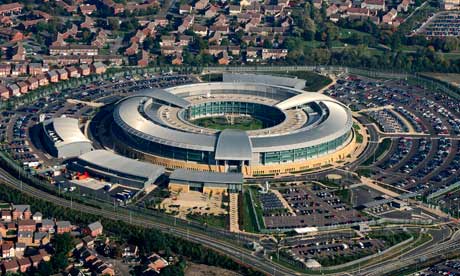



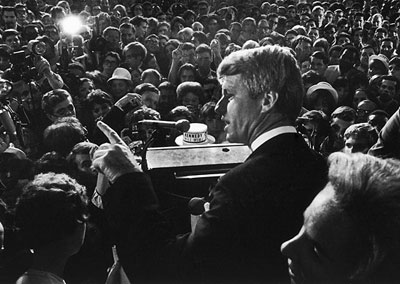
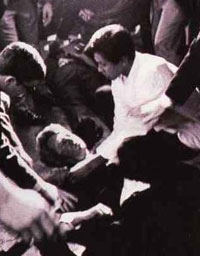

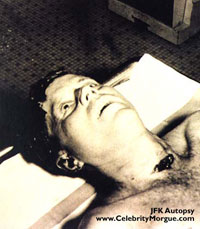
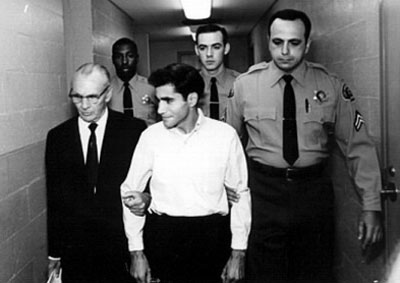


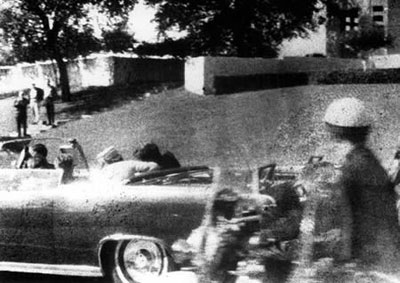
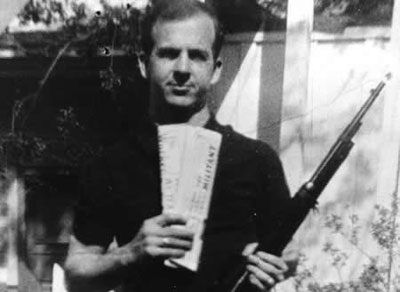

 Posts
Posts


![[Most Recent Quotes from www.kitco.com]](http://www.kitconet.com/charts/metals/gold/t24_au_en_eukg_2.gif)