Obama invokes 'state secrets' claim to dismiss suit against targeting of U.S. citizen al-Aulaqi
Spencer S. Hsu September 25, 2010
The Obama administration urged a federal judge early Saturday to dismiss a lawsuit over its targeting of a U.S. citizen for killing overseas, saying that the case would reveal state secrets.
The U.S.-born citizen, Anwar al-Aulaqi, is a cleric now believed to be in Yemen. Federal authorities allege that he is leading a branch of al-Qaeda there.
Government lawyers called the state-secrets argument a last resort to toss out the case, and it seems likely to revive a debate over the reach of a president's powers in the global war against al-Qaeda.
Civil liberties groups sued the U.S. government on behalf of Aulaqi's father, arguing that the CIA and the Joint Special Operations Command's placement of Aulaqi on a capture-or-kill list of suspected terrorists - outside a war zone and absent an imminent threat - amounted to an extrajudicial execution order against a U.S. citizen. They asked a U.S. district court in Washington to block the targeting.
In response, Justice Department spokesman Matthew Miller said that the groups are asking "a court to take the unprecedented step of intervening in an ongoing military action to direct the President how to manage that action - all on behalf of a leader of a foreign terrorist organization."
Miller added, "If al-Aulaqi wishes to access our legal system, he should surrender to American authorities and return to the United States, where he will be held accountable for his actions."
In a statement, lawyers for Nasser al-Aulaqi condemned the government's request to dismiss the case without debating its merits, saying that judicial review of the pursuit of targets far from the battlefield of Afghanistan is vital.
"The idea that courts should have no role whatsoever in determining the criteria by which the executive branch can kill its own citizens is unacceptable in a democracy," the American Civil Liberties Union and Center for Constitutional Rights said.
"In matters of life and death, no executive should have a blank check," they said.
The government filed its brief to U.S. District Judge Robert Bates just after a midnight Friday deadline, blaming technical problems, and the late-night maneuvering underscored the political and diplomatic stakes for President Obama. His administration announced last year that it would set a higher bar when hiding details of controversial national security policies.
Justice Department officials said they invoked the controversial legal argument reluctantly, mindful that domestic and international critics attacked former president George W. Bush for waging the fight against terrorism with excessive secrecy and unchecked claims of executive power.
A senior Justice official, speaking on condition of anonymity, said the administration is engaging in "a much narrower use of state secrets" than did its predecessor, which cited the argument dozens of times - often, the official said, to "shut down inquiries into wrongdoing."
In its 60-page filing, the Justice Department cites state secrets as the last of four arguments, objecting first that Aulaqi's father lacks standing, that courts cannot lawfully bind future presidents' actions in as-yet undefined conflicts, and that in war the targeting of adversaries is inherently a "political question."
Robert M. Chesney, a national security law specialist at the University of Texas School of Law, said that Obama lawyers would undoubtedly prefer not to stoke the state-secrets debate, or to risk judicial review of its claim to a borderless battlefield.
"The real big issue here is . . . are we only at war in Afghanistan, or can the U.S. government lawfully use war powers in other cases, at least where the host nation consents or there is no host government?" Chesney said.
"You're trying to avoid a judicial ruling on the merits of the whole issue," Chesney said, adding, "But at the end of the day, if it's your best argument in a case you want to win, you're going to make that argument."
Staff researcher Julie Tate contributed to this report.
The US Central Intelligence Agency is running and paying for a secret 3,000-strong army of Afghan paramilitaries whose main aim is assassinating Taliban and al-Qa'ida operatives not just in Afghanistan but across the border in neighbouring Pakistan's tribal areas, according to Bob Woodward's explosive book.
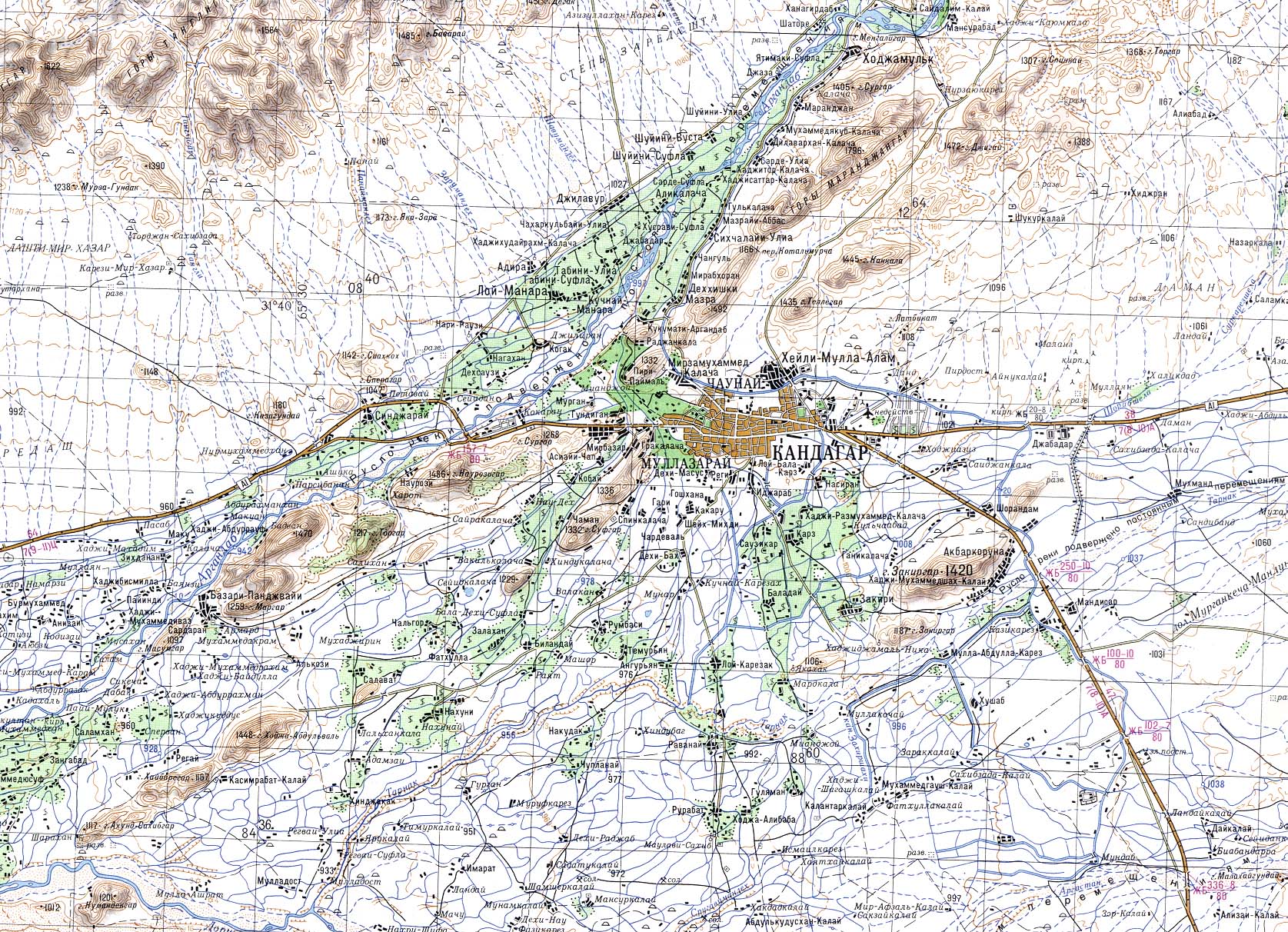
Although the CIA has long been known to run clandestine militias in Afghanistan, including one from a base it rents from the Afghan president Hamid Karzai's half-brother in the southern province of Kandahar, the sheer number of militiamen directly under its control have never been publicly revealed.
Woodward's book, Obama's Wars, describes these forces as elite, well-trained units that conduct highly sensitive covert operations into Pakistan as part of a stepped-up campaign against al-Qa'ida and Afghan Taliban havens there. Two US newspapers published the claims after receiving copies of the manuscript.
The secret army is split into "Counterterrorism Pursuit Teams", and is thought to be responsible for the deaths of many Pakistani Taliban fighters who have crossed the border into Afghanistan to fight Nato and Afghan government forces there.
There are ever-increasing numbers of "kill-or-capture" missions undertaken by US Special Forces against Afghan Taliban and foreign fighters, who hope to drive rank-and-file Taliban towards the Afghan government's peace process by eliminating their leaders. The suspicion is that the secret army is working in close tandem with them.
Although no comment has been forthcoming, it is understood that the top US and Nato commander in Afghanistan, Gen David Petraeus, approves of the mission, which bears similarities to the covert assassination campaign against al-Qa'ida in Iraq, which was partially credited with stemming the tide of violence after the country imploded between 2004 and 2007.
The details of the clandestine army have surprised no one in Kabul, the Afghan capital, although the fact that the information is now public is unprecedented. There have been multiple reports of the CIA running its own militias in southern Afghanistan.
The operation also has powerful echoes of clandestine operations of the 1990s, when the CIA recruited and ran a militia inside the Afghan border with the sole purpose of killing Osama bin Laden. The order then that a specially recruited Afghan militia was "to capture him alive" – the result of protracted legal wrangles about when, how and if Osama bin Laden could be killed – doomed efforts to assassinate him before 9/11.
NY groups seek DC order blocking targeted killings
AP August 30 2010
NEW YORK (AP) — Two New York-based civil liberties groups have sued the federal government, saying its targeted killings of U.S. citizens overseas is unconstitutional.
The American Civil Liberties Union and the Center for Constitutional Rights filed the lawsuit Monday in U.S. District Court for the District of Columbia. Defendants include President Barack Obama and the CIA director.
The lawsuit was filed for the father of a U.S.-born cleric believed to be hiding in Yemen. It seeks a court order declaring the Constitution prohibits the government's targeted killings of U.S. citizens.
The cleric is believed to have helped inspire the attempted bombing of a Detroit-bound airliner Christmas Day. The Obama administration cited his al-Qaida role when it placed him on the CIA's list of assassination targets.
The Department of Justice hasn't returned a message seeking comment.
Analysis: Deadly conflict inside Iraqi spy service goes unmentioned
September 23, 2010 JOSEPH FITSANAKIS, intelNews.org
Amidst the chaos of post-Ba’athist Iraqi politics, a deadly sectarian conflict is raging within Iraq’s powerful spy agency. Employees inside Iraq’s National Intelligence Service (INIS) are split along religious sectarian lines, with Sunni and Shiite officers battling for control of the organization. The warring factions are directly affiliated with opposing political parties, and represent various political interests. Shiite officers are seen as aligned with Tehran, whereas Sunnis are close to Washington and –ironically– to the remnants of Saddam Hussein’s Ba’ath party. The conflict has resulted in the assassination of several INIS officers, mostly by their colleagues in the Service, according to two anonymous Iraqi security officials, who spoke to The National, an English-language newspaper published in the United Arab Emirates. One of them, a brigadier-general with recent experience in intelligence work in Baghdad, told the paper that Shiite INIS officers are beeing killed by professionally trained assassins using “plastic explosives, sticky bombs and silenced pistols”. These killings, said the brigadier-general, are conveniently reported as random terrorist attacks against Iraqi government employees. Another intelligence source told The National that the killings are targeted and involve the use of inside information, including pen-register data of cell phones belonging to spies targeted for assassination. He added that the assassins are former members of Saddam Hussein’s Mukhabarat (Iraqi Intelligence Service), who have been rehired and trained by American forces in recent years, in an effort to curtail Shiite influence inside Iraq. Iraqi government representatives refused to discuss the newspaper’s revelations. Meanwhile in Washington, a CIA representative described the allegations about a civil war within the INIS as “absolute rubbish”.
Emirates police says US, Israel, use BlackBerry to spy
September 8, 2010 IAN ALLEN, intelNews.org
The alleged use of encrypted BlackBerry communications by adversary intelligence services operating in the United Arab Emirates (UAE) is prompting local authorities to consider a nationwide ban on the popular phone. This was revealed late last week by Dubai Police chief, Lt. General Dahi Khalfan bin Tamim, who repeated a warning by UAE authorities that BlackBerry services in the country will be curtailed on October 11, unless the government is given access to BlackBerry’s encryption code by the manufacturer. Several other countries in the Middle East and beyond have made similar moves, including Lebanon, Syria, Saudi Arabia, India and Indonesia, all of which have cited security reasons for the ban. But Lt. General Tamim’s comments provide the first known connection between a threat to ban BlackBerry and its alleged use by rival intelligence agencies. Speaking to journalists, the Dubai Police chief implied that encrypted BlackBerry telephones are used by the intelligence agencies of “America, Israel, Britain and other countries” that operate in the UAE. He also shared the view that “[t]he United States is the primary beneficiary of having no controls over the BlackBerry, as it has an interest to spy on the UAE”. According to local media, UAE government officials are currently engaged in confidential negotiations with Research in Motion Ltd., BlackBerry’s Canada-based manufacturer. There are over 500,000 permanent BlackBerry users in the UAE, a number which does not include the millions of foreign BlackBerry subscribers that visit the country each year.
The death of opposition activist and journalist Oleg Bebenin(who was found hanged ) has thrown a murky light on both the circumstances of his demise and those who might be behind it. Those close to the dead man claim foul play, and dark rumours are circulating about President Lukashenko’s cash-strapped government.
In the lead up to Belarusian elections speculation is bubbling about rebel undercurrents in the regime and the motivation of potential perpetrators is far from straightforward - with some pointing the finger at Minsk's modern-day KGB.
“Things indicate that at the very least it was premature to make such a conclusion… the police told me very confidently on the same day that it had happened on the same day….and I saw the body, it was not even stiff,” leader of Charter 97 and presidential candidate Andrei Sannikov told The Moscow News. “I do not believe in Oleg’s suicide. There is a lot here that is very questionable,” he told Moskovsky Komsomolets. Bebenin was a member of the group.
An unlikely suicide
“What I get from this is the impression that nobody thought that he had any signs of depression. But it would be rather difficult to prove that it was suicide,” Jana Kobzova at the European Council on Foreign Relations told The Moscow News.
There were certainly strange circumstances. “There was not a crumb of food around,” one witness said. “And two bottles of Belovzhskogo Balsam, which he wouldn’t have drunk even at gunpoint, seeing as he was one of the country’s leading whisky experts.”
“And there was some [Balsam] at the wheel [of his car]. He had to go to the cinema and people were waiting for him, but he sent a text message saying not to wait for him at the café but go straight on to the cinema.”
Of his body, “His feet were stood on the ground, not hanging. And there was a scratch on his hand.” There was no note.
KGB implicated
If Bebenin, who leaves behind a wife and two young children, did not take his own life there are lively conspiracy theories.
“It is not in the interests of Lukashenko for this guy to be dead because it sheds the obvious suspicion that the government were behind it,” said Kobzova. “There are rival factions in the regime and the most radical is the security forces.” The more Lukashenko pays his overtures to the EU the more Belarus has to open up and, “the less breathing space for security forces.”
The death of a high profile activist and journalist could derail discussions with Europe and thus undermine Lukashenko’s regime whose western advances the KGB, as they are still called in Belarus, look on with disfavour.
And the security forces have some unlikely allies here. Charter 97 also believes that the EU should sever relations with Belarus while Lukashenko is still in power, as his concessions to human rights have been perfunctory. “The pre-election season in Berlarus only highlights that this will be a politically sensitive case - both for Minsk and Brussels,” says Kobzova.
“It doesn’t matter who did it,” Sannikov said by telephone. “I don’t care about details, this is the nature of [Lukashenko’s] regime.”
Li Fengzhi, Chinese spy who defected to U.S., facing deportation
The U.S. government is trying to deport Li Fengzhi, a veteran Chinese intelligence agent who defected here in 2004, back to China, where he could well be executed on charges of treason, he and others said in interviews.
The reasons for the government's six-year-long opposition to Li's application for political asylum, entangled in spy wars and layers of secrecy, are not easily discerned.
Li became an officer in the Chinese Ministry of State Security (MSS) upon graduation from college in 1990, according to his application for political asylum. In 2003, the spy agency sent him to the University of Denver to pursue a PhD in international politics and diplomatic philosophy, during which time he began to voice his criticism of the Chinese Communist Party.
During a trip home, Chinese security agents harshly interrogated him about his views. When he returned to Denver, he decided to apply for political asylum, on the basis that his increasingly outspoken views would subject him to retribution if he were forced to go back.
But he did not reveal his identity as a Chinese intelligence officer at the time, he said. His application was initially denied.
Two years later, petitioning again for asylum, Li volunteered to an immigration official that he had not mentioned that he had been an intelligence officer of China.
Nor had he volunteered that, “because of the difficulties I had and the great danger to my family that I felt in those days, I decided to ask the CIA and FBI for help....”
In fact, Li was extensively debriefed by the FBI and CIA, he and others familiar with his case said.
But neither agency has stepped forward to help keep him from being deported, he and the others said. Although individual FBI agents were supportive of him, one source said, the bureau officially played down his intelligence value.
“Just getting verification that he worked with them has been an enormous task,” said the source.
Neither agency could be reached for comment.
Rumors about Li's exact relationship with the CIA and FBI abound.
One explanation for their allegedly cool treatment of Li now, said a law enforcement source, was that he "oversold" himself -- inflated his rank in the MSS -- when he finally decided to cooperate with the FBI and CIA. Another line of thinking is that he rejected their overtures to work as their mole inside Chinese intelligence, and they feel they owe him no favors.
Whatever the truth, neither agency should get in the way of Li's effort to stay here now, said Michelle Van Cleave, chief of the National Counterintelligence Executive, a policy-setting arm of the Office of the Director of National Intelligence, during the Bush administration.
“I can’t understand why the Obama Administration would oppose Li’s application for asylum,” she said. “Can you imagine the fate that would await him if he were deported? Or what kind of a signal that would send?”
“Whether he came over with the crown jewels of Chinese intelligence or just some crumbs from the table, we should be welcoming him with open arms and encouraging others to follow,” she said.
Li admitted he was ambivalent about asking the CIA and FBI for help. He wants to be known as a dissident, not a turncoat.
“My number one target is the CCP” -- the Chinese Communist Party of China, Li said. “If they can connect me to U.S. intelligence agencies, they will use it against me.”
Other government agencies involved in Li’s case -- the departments of Justice and Homeland Security -- either did not respond to requests for comment or declined comment.
Li was critical of the handling of his case by DHS's Citizenship and Immigration Services, which processes asylum requests, saying in his halting English, “I have a strong feeling they didn’t know this case very well.”
Later, in court proceedings led by a prosecutor with Immigration and Customs Enforcement, he said, “I felt this lady” -- he did not identify the prosecutor -- “couldn’t understand the smallest thing about Chinese security agencies.”
Li made his latest case for political asylum at a hearing before an immigration judge in Denver on Monday. Another hearing is scheduled for Oct. 4, at which time he hopes his long quest to stay here will be over.
“I still hope the immigration system can make the right decision,” Li said in a phone interview.
A Denver law firm, Lichter & Associates, has represented Li for the last four years. The current lead attorney on his case, Mark Robert Barr, said Li “faces severe repercussions” if he is forced to return to China, ranging from a “lengthy prison term to capital punishment, with very little due process.”
“As an intelligence agent," Barr added, "he is at extreme risk.”
Retired FBI official I.C. Smith, one of the bureau’s top China experts, agreed.
In a letter to Denver immigration Judge Donn L. Livingston last March, Smith said “Mr. Li has two fundamental problems: he betrayed the trust of the ubiquitous MSS and far more importantly, he denounced the CCP. These are unforgivable actions on the part of the MSS as well as the CCP.”
“Based on my past experience… I can state, without equivocation,” Smith added, “that if Mr. Li were to be returned to China that his punishment would be severe and devoid of civil liberties.”
The final decision on Li’s fate could rest with the Justice Department’s Executive Office for Immigration Review, said an official who asked not to be identified.
September 2, 2010 JOSEPH FITSANAKIS, intelNews.org
It is a story that was largely ignored when it surfaced last year: since 1994, US Drug Enforcement Agency (DEA) officer Richard A. Horn had been claiming that CIA agents illegally wiretapped his conversations while he was stationed in Burma. It appears that, at the time, the US diplomatic representation in Burma and the CIA station in Rangoon were at loggerheads with the DEA. The latter, represented by special agent Horn, had a policy of publicly commending the Burmese government for its significant efforts to end the vastly lucrative illegal drug trade in the country. But the diplomatic leadership at the US embassy in Rangoon, supported by the CIA, felt that their inroads with the Burmese military junta, which has controlled the country since 1990, were being obstructed by the DEA. Horn claims that, in an effort to sabotage the DEA activities in the country, Franklin Hurdle Jr. (who was then US ambassador to Burma) and CIA officer Arthur Brown (who later headed the CIA’s East Asia division) illegally eavesdropped on his telephone communications with his DEA superiors and others. In July of 2009, a US court ruled that CIA attorneys committed fraud in alleging that US national security would be threatened if details of Richard Horn’s lawsuit were openly discussed, and determined that the CIA had kept the case secret for years simply in order to avoid embarrassment. Soon afterwards, a worried CIA was forced to settle the lawsuit out of court. The CIA, the DEA, and –it seems– the American media, are trying to quickly put behind them the grim details of that bloody turf war in post-Cold-War Burma. But in a brave piece written for the Eurasia Review, Joseph Allchin revisits the DEA-CIA clash, and explains the crucial function of the CIA in the turbulent internal politics of Burma. Most definitely essential reading.
Russian General goes missing in Syria, turns up dead in Turkey
Yuri Ivanov, believed to have masterminded assassination campaign against Chechen leaders abroad, was last seen visiting the building site for a new Russian military base in the Syrian coastal city Tartus.
The former deputy chief of a Russian military intelligence service was found dead on the shore of the Mediterranean by Turkish villagers in the province of Hatay, the Turkish newspaper Vatan reported Wednesday, citing Russian sources.
Experts had identified the body as that of Yuri Ivanov, the former deputy head of the Russian military intelligence service GRU, the report said. The general had last been deployed to review Russian military installations in Syria.
Moscow had confirmed the death of the general last week but only released further details this week, the report said.
Ivanov's body had been swept ashore on August 16 but was not identified immediately.
The Turkish foreign ministry had therefore approached neighbouring countries for further information, and Damascus reported that Ivanov had gone missing in Syria.
The general was last seen visiting the building site for a new Russian military base in the Syrian coastal city Tartus. After his visit he had left for a meeting with Syrian intelligence agents, but went missing.
Ivanov was believed to have masterminded a series of assassination attacks which the Russian secret service carried out against Chechen leaders living abroad, the report said.
Gen. Yuri Ivanov, 52, deputy head of GRU, the Russian military's overseas intelligence arm of Russian military, was found dead in mysterious circumstances
Andrew Osborn, Moscow 31 Aug 2010
... According to the Kremlin, he was on holiday in Syria and died in a tragic swimming accident. However, other reports have suggested he was on official business and the location where he is reported to have disappeared was only about fifty miles from a strategically vital Russian naval facility in the Syrian port of Tartus which is being expanded and upgraded to service and refuel ships from Russia’s Black Sea Fleet.
The facility is Russia’s only foothold in the Mediterranean Sea, and Mossad, Israel’s national intelligence agency, is know to be concerned that Moscow will use the upgraded facility as a base for spy ships and electronic espionage directed at the Middle East. The port is also close to the Turkish port of Ceyhan, a terminal for the Baku-Tbilisi-Ceyhan oil pipeline which is seen as a lifeline for Georgia, against whom Russia fought a short war in 2008.
The news portal Svobodnaya Pressa also pointed out that Ivanov was the second top GRU agent to die in unexplained circumstances. Another senior agent, Yuri Gusev, was killed in 1992 in a "car accident". His fellow officers later established that he had been murdered, the paper said, adding: "Spies of that rank are well protected. As a rule, they don't die by chance."
After finding the body, Turkey's foreign ministry approached neighbouring countries for further information, with Damascus reporting that Ivanov had gone missing while on assignment in Syria.
The general was last seen visiting the building site for a new Russian military base in the Syrian coastal city of Tartus, which is being expanded as a base for Russia's Black Sea fleet.
After his visit, he left for a meeting with Syrian intelligence agents. He then went missing, the Turkish newspaper Vatan reported today.
GRU is the country's main military intelligence and reconnaissance agency, and reports directly to the general staff of Russia's armed forces. The directorate is much bigger than the KGB – which was broken up after the collapse of communism into two agencies: the foreign intelligence service, the SVR, and its domestic equivalent, the FSB.
Historically, Russia's intelligence agencies have often been fierce rivals.
The Kremlin assigned Ivanov to lead its war against Chechen separatists in 2000, and he allegedly masterminded a series of assassination attacks, which the Russian secret service carried out on Chechens living abroad. In 2004, two GRU agents killed the Chechen separatist leader Zelimkhan Yandarbiyev, blowing up his SUV in Qatar.
The Qatar authorities swiftly arrested and sentenced to life imprisonment two Russian GRU spies who were said in court to have been acting under direct orders from the Russian leadership. The pair were extradited back to Russia in 2005 to serve out their sentences on home soil. Both then promptly disappeared.
Cuts prompt police to call for debate on drugs and redirect resources
Intervention comes amid growing warnings from experts that prohibition does not deter drug use
18 September 2010 Mark Townsend, home affairs editor
One of Britain's most senior police officers has said youngsters caught carrying personal amounts of drugs such as cannabis should "not be criminalised", in order to allow more resources to be dedicated to tackling high-level dealers [see footnote].
Tim Hollis, chief constable of Humberside police, said the criminal justice system could offer only a "limited" solution to the UK's drug problem, a tacit admission that prohibition has failed.
Hollis's dramatic intervention comes as the government is reviewing its 10-year drug strategy amid growing warnings from experts that prohibition does not deter drug use and that decriminalisation would liberate precious police resources and cut crime.
Hollis, chairman of the Association of Chief Police Officers' drugs committee, said he did not want to criminalise young people caught with minor amounts of substances such as cannabis. A criminal record that could ruin their career before it began was disproportionate, he said.
Hollis said budget cuts had forced police to "prioritise" resources towards tackling organised criminal networks rather than individuals carrying drugs for personal use. He also backed calls for the current drug classification system into class A, B and C to be re-examined following concerns that bracketing substances such as heroin and ecstasy in the same class is confusing.
"We would rather invest our time in getting high-level criminals before the courts, taking money off them and removing their illicit gains rather than targeting young people. We don't want to criminalise young people because, put bluntly, if we arrest young kids for possession of cannabis and put them before the courts we know what the outcome's going to be, so actually it's perfectly reasonable to give them words of advice or take it off them."
Hollis said financial constraints meant it was impractical to arrest everybody caught with new designer drugs available online and added that a debate was needed over whether alcohol and nicotine, which together kill more than 120,000 people a year, should be included in attempts to tackle illegal drugs.
"My personal belief in terms of sheer scale of harm is that one of the most dangerous drugs in this country is alcohol. Alcohol is a lawful drug. Likewise, nicotine is a lawful drug, but cigarettes can kill," he said. "There is a wider debate on the impacts to our community about all aspects of drugs, of which illicit drugs are one modest part."
The comments by Hollis come as a row continues between scientists and politicians over cannabis. One of Britain's leading researchers into the drug, Professor Roger Pertwee, argued last week that policymakers should consider allowing the licensed sale of cannabis for recreational use, claiming the current policy of criminalising cannabis was ineffective.
Both David Cameron and Nick Clegg are on record as questioning the effectiveness of Britain's drug laws.
Officially the Home Office insists decriminalisation is not the right approach and there is clear evidence cannabis can damage mental health. Insiders, however, have told the Observer that officials are looking at "non-prosecution" strategies. The government has recently studied Portugal's approach in which the authorities have discreetly decriminalised the use and possession of substances including heroin.
• This footnote was added on 21 September 2010. The original headline read: Police chief issues call to decriminalise cannabis and redirect resources. This has been changed. The first paragraph originally read: One of Britain's most senior police officers has proposed decriminalising the personal use of drugs such as cannabis to allow more resources to be dedicated to tackling high-level dealers. This has been amended to make clear that Chief Constable Tim Hollis has stated that neither he nor ACPO are calling for the legalisation of cannabis. Rather, he is seeking to open a mature debate around the harms caused by illicit drugs and the role of the police service regarding enforcement.
Cannabis should be licensed and sold in shops, expert says
Leading cannabis researcher calls for legalisation with controls similar to alcohol and tobacco
14 September 2010 Ian Sample, Science correspondent
Cannabis for recreational use should be available in shops under similar restrictions to those used to control the sale of alcohol and tobacco, according to Britain's leading expert on the drug.
Under one scenario, people would be able to apply for a licence to buy cannabis products once they reach the age of 21, provided they have the approval of a doctor, he said.
The drug would be regulated by a body that ensures the quality and safety of the products before they go on sale.
A rethink of the laws surrounding cannabis and related products was necessary to take cannabis out of the hands of criminals, said Roger Pertwee, professor of neuropharmacology at Aberdeen University.
In the 1970s, Pertwee co-discovered THC, the active ingredient in cannabis.
Speaking ahead of a talk this week at the British Science Festival in Birmingham, Pertwee said: "In my view, we don't have an ideal solution yet to deal with recreational cannabis. We should consider licensing and marketing cannabis and cannabis products just as we do alcohol and tobacco.
"At the moment, cannabis is in the hands of criminals, and that's crazy. We're allowed to take alcohol, we're allowed to smoke cigarettes. Cannabis, if it's handled properly, is probably not going to be any more dangerous than that."
Possession of class B drugs, which include amphetamines, such as speed and barbiturates, carries a maximum penalty of five years in prison plus a fine. Dealing the drugs can lead to a 14-year prison sentence. The most recent Home Office figures show there are 158,000 convictions for cannabis possession a year.
Pertwee said he wanted to reopen the debate on cannabis, saying he favoured legalisation if the drug was well regulated. He added that healthier alternatives to smoking cannabis were available.
Outlawing the drug forced users to either grow it illicitly or buy it from an illegal dealer. "They have no idea what the composition is, what has been added to it, and they are at risk of being invited to take other drugs," he said.
Attempts to relax the ban on cannabis have been countered by concerns that it can cause schizophrenia in a minority of people who are susceptible to the condition. Pertwee said it might be possible for doctors to assess people's backgrounds and risk of mental health problems before allowing them to buy a cannabis licence.
"You would need a minimum age of 21, but I would go further: that you have to have a licence. You have to have a car licence, you have to have a dog licence; why not a cannabis licence, so you can only take it if it's medically safe for you to do so?" he said.
Nutt, who is a professor of neuropsychopharmacology at Imperial College London, said: "I welcome this attempt by the UK's leading expert on cannabis to bring rationality to the debate on its legal status.
"As cannabis is clearly less harmful than alcohol, criminalisation of people who prefer this drug is illogical and unjust. We need a new regulatory approach to cannabis. The Dutch coffee-shop model is one that has been proven to work but some of Professor Pertwee's new suggestions may well have extra benefits and should be actively debated."
Cannabis farmers take up arms to defend crops in booming trade
Police say drug gangs are arming themselves with machetes, shotguns and dogs as crop seizures double
17 August 2010 Alan Travis, home affairs editor
Illicit cannabis factory farmers are arming themselves with sawn-off shotguns, CS sprays and machetes and even setting booby traps to protect their crops from rival gangs, according to a police study published today.
The report for the Association of Chief Police Officers (Acpo) reveals there has been a boom in cannabis production across Britain in the last two years, with nearly 7,000 illegal farms and factories uncovered in 2009/10 alone.
The vast majority are still based in private homes, but the industry has long outgrown its DIY roots of a few plants under the stairs. Large-scale production methods are now the norm in a trade dominated by Chinese and Vietnamese migrants who have been brought into Britain illegally to act as "gardeners".
The police say the impact of the recession means that disused factories, nightclubs and even banks are being used to grow cannabis plants on an industrial scale.
The report, the UK National Problem Profile: Commercial Cultivation of Cannabis, says the largest single cannabis factory ever found was uncovered in July in an industrial unit in Haddenham, Cambridgeshire, where more than 7,600 plants with an estimated value of £2.5m, were seized.
Commander Allan Gibson, of the Metropolitan police, Acpo's lead on cannabis, said that between 2004 and 2007 about 800 cannabis factories a year were being uncovered in Britain. That rose to more than 3,000 a year in 2007/08 and to more than 6,800 in 2009/10, he said.
In the last year almost 750,000 plants had been seized with an estimated value of £85m, compared with 500,000 with an estimated yield of £65m in 2008/09.
Gibson said the level of publicity generated over the reclassification of cannabis in 2008 had led to more people reporting the telltale signs of a hidden factory in their neighbourhood. Police say these indications include blacked-out windows, hot walls, condensation, strange or pungent aromas and people or traffic activity at all hours. These reports had led in turn to an increased focus by law enforcement, including more covert operations and better intelligence-sharing between forces.
The Acpo report discusses the prospect that the scale of homegrown cannabis production is now so great that Britain could become a net exporter of cannabis for the first time in its history.
"Although cannabis continues to be imported into the UK, the domestic commercial cultivation of cannabis has been escalating for a number of years," it says. "The assumption has been made that due to the high frequency at which the UK is producing cannabis, there is now a market for exportation.
"However, there is no intelligence or evidence to suggest this is happening. Data received from the UK Border Agency suggests large amounts of cannabis are still being imported, indicating that the current demand for the drug is so great that domestic production cannot satisfy it."
The study adds that the perception by some criminals that British skunk is of a lower quality than the more powerful Dutch varieties is fuelling this import trade.
The industry now spans the country, with the Met, Greater Manchester, West Midlands and West Yorkshire forces all reporting more than 1,000 factories found in their areas. Glasgow is regarded as a hotspot for drying leaves.
Acpo says that until now cannabis cultivation has been regarded as a "south-east Asian" crime, but the report highlights a growing involvement of white British people in association with Vietnamese and Chinese crime gangs.
The migrants involved have often been trafficked into Britain and subsequently put to work to pay off the £10,000 bill for their journey. Those arrested when police raid a factory are predominantly the "gardeners" left to tend the plants. They are rarely allowed to leave the premises until the crop is harvested.
Disturbingly, the study reports a growing tide of violence in the trade, with an increasing number of reported incidents of cannabis factories being "taxed" by other criminal gangs. This has led those working in the factories to arm themselves to repulse such attacks. Booby traps have also been found, including attempts to electrify window frames, doorknobs and, in one case, a side gate wired up to the mains.
Child trafficking
Children have been identified by the police as having been trafficked from China and Vietnam into Britain specifically to work on cannabis farms. Nearly all are teenagers aged 15 to 17. They are used by the crime gangs to maintain and water the plants, and even break into rival cannabis farms.
"If they are recovered by authorities they are under extreme pressure to abscond from care, with organisers often making threats," says the Acpo study. "A significant number go missing from local authority provided accommodation prior to and after exploitation."
Emotional and physical abuse is often to used ensure their compliance by the gangs. They are extremely wary of talking to the police, perhaps fearful for other family members who have unpaid debts to the traffickers.
The use of drugs should be decriminalised, one of Britain’s most senior doctors has said.
17 Aug 2010 James Kirkup, Political Correspondent
Professor Sir Ian Gilmore said making drugs such as heroin and cocaine legal would “drastically” cut crime and addicts’ health problems.
State-regulated use of drugs would also save money and avert the need to try to stop drug production in countries such as Afghanistan, he said.
Sir Ian has recently stepped down as president of the Royal College of Physicians, and in a valedictory message to colleagues, he called for laws to be “reconsidered with a view to decriminalising illicit drugs use”. He said: “This could drastically reduce crime and improve health.”
Sir Ian said he agreed with the argument put forward by Nicholas Green QC, the chairman of the Bar Council of England and Wales, who said last month that it was “rational” to consider “decriminalising personal drug use”.
Sir Ian also said he was persuaded by a recent article in the British Medical Journal, which argued that the prohibition of drugs had been “counterproductive”, made many public health problems worse, and stimulated organised crime and terrorism.
Sir Ian said that banning drugs had harmed society. “There’s a lot of evidence that the total prohibition of drugs, making them totally illicit and unavailable, has not been successful at reducing not only the health burden, but also the impact on crime,” he said.
“I’m trying to take a fresh look, as many people have done. There is a strong case for a different approach.”
There should be a “regulatory framework around illicit drugs, rather than a blanket prohibition”.
Evidence suggested that state regulation of drug use “doesn’t increase the number of drug users,” he said.
Regulating drug use would mean “helping people with addiction problems, rather than putting them in prison”.
He also suggested that regulating drug use would save money on policing and on international efforts to reduce the cultivation of narcotics. “It’s more cost effective to try to treat people with drug problems than to close down poppy fields in disparate countries.”
Danny Kushlick of Transform, a drug reform campaign group, said Sir Ian’s statement was “a nail in the coffin” of the current drug laws.
Keith Vaz, chairman of the House of Commons home affairs select committee, said the legalisation of drugs “would simply create the mistaken impression that these substances are not harmful, when in fact this is far from the truth”.
Top doctor Sir Ian Gilmore calls for drugs law review ...
Sir Ian said he had had a longstanding interest in the subject, stemming from his work as a liver specialist.
"Every day in our hospital wards we see drug addicts with infections from dirty needles, we see heroin addicts with complications from contaminated drugs," he said.
He argued that many of the problems health staff encountered were the consequences not of heroin itself, but of prohibition.
In his e-mail, Sir Ian wrote: "I personally back the chairman of the UK Bar Council, Nicholas Green QC, when he calls for drug laws to be reconsidered with a view to decriminalising illicit drugs use. This could drastically reduce crime and improve health," he wrote.
In his recent report to the Bar Council, Mr Green said there was growing evidence that decriminalising personal use could free up police resources, reduce crime and improve public health.
Mr Rolles - whose recent BMJ article Sir Ian cited in his e-mail - told BBC Radio 4's Today programme their arguments were "built on a critique of the failure of the last 40 or 50 years".
He said the "punitive criminal justice-driven war on drugs" had delivered the opposite of its goals.
"It hasn't reduced drug use, it hasn't prevented the availability of drugs, but it has created a whole raft of secondary problems associated with the illegal market, including making drugs more dangerous than they already are and undermining public health and fuelling crime."
"That is provoking a debate on what the alternative approaches are and the one that we are calling for is legally regulated production supply."
He said those who found such a proposal difficult to stomach needed to "accept the pragmatic reality that demand for drugs exists now".
"[That demand] will be met one way or another, and we have a choice - we can either leave that supply in the hands of the worse possible people - the illegal market controlled by violent criminal profiteers - or we can control it by appropriate authorities in ways that will reduce the harm that it causes."
He called on the government to look at the evidence and assess the current policy compared with the alternatives, instead of following the "traditional political grandstanding and moral posturing which has characterised drugs policy over the last few decades".
Danny Kushlick of Transform, a drug-reform campaign group said Sir Ian's statement is “a nail in the coffin” of current drug laws.
He said: “The Hippocratic Oath says 'First do no harm'. Physicians are duty bound to speak out if the outcomes show that prohibition causes more harm than it reduces.
“Sir Ian is justly fulfilling his role by calling for consideration of the evidence for legal control and regulation.”
Instead, we get this statement from a Home Office spokesman: “Drugs such as heroin, cocaine and cannabis are extremely harmful and can cause misery to communities across the country. The government does not believe that decriminalisation is the right approach. Our priorities are clear; we want to reduce drug use, crack down on drug-related crime and disorder and help addicts come off drugs for good.”
So, in the face of expert opinion, they offer no evidence or support for prohibition, instead blandly stating that they “do not believe decriminalisation is the right approach”. In a bleakly funny aside, they lump cannabis together with heroin and cocaine, as though they are remotely comparable. And they set up a straw man, saying that the drugs are harmful, which nobody denies.
So, if the Government won’t engage in serious debate, let’s try to start one here. They helpfully lay out their priorities: reducing drug use and reducing drug crime. (”Helping addicts come off drugs for good” really comes under “reducing drug use”, so I’ll ignore it.)
There is a third worthwhile aim of drug policy, which they have neglected: reducing drug harm. Certain activities – needle exchange, say, or prescribing safe heroin of known strength to addicts – may not reduce use, but will mitigate some of the worst effects of drugs, like HIV, poisoning and overdose. I’m going to consider that as well.
So: what is the evidence? Let’s take it one by one.
Reducing drug use: there is no evidence to suggest tough drug policies reduce drug use. A recent article in the BMJ, by Stephen Rolles, the head of the Transform Drug Policy Foundation, says: “Decriminalisation has shown that less punitive approaches do not necessarily lead to increased use.” A World Health Organisation study finds similarly: “Globally, drug use is not distributed evenly and is not simply related to drug policy, since countries with stringent user-level illegal drug policies did not have lower levels of use than countries with liberal ones.”
Even the Netherlands, famous pot-smoking capital of Europe with its coffeeshops selling cannabis à la carte to red-eyed tourists, does not have significantly different levels of use to its neighbours, says Rolle. Portugal, which legalised all drugs in 2001, has seen use fall in the young. US states which have decriminalised cannabis do not have higher use than those which have not. It seems that, if you’re going to take drugs, you’re going to do it whether it’s legal or not.
Reducing drug crime: as well as possession and dealing, drugs must be smuggled in to Britain (or illegally grown here); it must be illegally produced elsewhere; addicts must pay for their fix, and turn to crime; dealers defend their turf, frequently with violence; most significantly, producers and smugglers run empires in countries like Colombia and Afghanistan that rival nation states in their power and riches. Would this be reduced by decriminalisation?
Much of it, obviously, would, and this has been shown in other countries. Addicts who get prescribed heroin for free or at affordable prices will not have to rob. If dealers can set up business in a shop, rather than on a street corner, there is no longer any need for turf wars. If drugs can be legally imported, there is no need to smuggle them (assuming tax levels are not too high), and if they can be legally grown, there is no need for illicit farms.
The illegal production overseas, and the criminal empires that creates, are a trickier problem. But if drugs could be legally bought, then – like alcohol and tobacco – a legal industry would spring up. It would be an unpleasant industry, no doubt, like the alcohol and tobacco industries, that does harm. But they might start to take the billions and billions of pounds of business away from drug lords. It would push them instead towards corporate fat cats, but distasteful as that is, it would be an improvement.
Reducing drug harm:this is clear, and again has been demonstrated in other countries. Addicts on clean heroin using clean needles can actually lead fairly normal lives. The spread of diseases such as HIV and hepatitis among users is lessened, as are accidental poisonings from adulterated drugs. Street drugs of unknown strength are easier to overdose on; clearly labelled, regulated drugs are safer.
As the BMJ article says, “regulation is no silver bullet”. Drugs will always cause harm. It must be introduced carefully, rather than in a blanket fashion: Transform recommends five different grades of regulation, from unlicensed sales for relatively harmless products like caffeine drinks, via licensed premises for riskier products like cannabis, to prescription-only for the most dangerous, like heroin and methamphetamine. We have to accept that there will still be problems, including some new problems. But, as the article points out, “[drugs] can remain in the hands of [criminals], or they can be controlled and regulated by appropriate government authorities. There is no third option under which drugs do not exist.”
Since his speech, Prof Gilmore has been backed by Dr Fiona Godlee, editor of the BMJ. Others to have called for the legalisation of some or all drugs include Nicholas Green, chairman of the Bar Council; Richard Brunstrom, chief constable of North Wales; Professor David Nutt, then head of the Advisory Council on the Misuse of Drugs; and his successor in that post, Professor Les Iverson. These are not tie-dyed hippies seeking to throw wide the doors of perception. These are people who know about health, drugs and crime, and think that the current system does more harm than good. Maybe it’s time to listen to them.
U.S. Nuclear Weapons Have Been Compromised by Unidentified Aerial Objects
WASHINGTON, Sept. 15
Ex-military men say unknown intruders havemonitored and even tampered with American nuclear missiles
Group to call on U.S. Government to reveal thefacts
PRNewswire-USNewswire/ -- Witness testimony from more than 120 former or retired military personnel points to an ongoing and alarming intervention by unidentified aerial objects at nuclear weapons sites, as recently as 2003. In some cases, several nuclear missiles simultaneously and inexplicably malfunctioned while a disc-shaped object silently hovered nearby. Six former U.S. Air Force officers and one former enlisted man will break their silence about these events at the National Press Club and urge the government to publicly confirm their reality.
One of them, ICBM launch officer Captain Robert Salas, was on duty during one missile disruption incident at Malmstrom Air Force Base and was ordered to never discuss it. Another participant, retired Col. Charles Halt, observed a disc-shaped object directing beams of light down into the RAF Bentwaters airbase in England and heard on the radio that they landed in the nuclear weapons storage area. Both men will provide stunning details about these events, and reveal how the U.S. military responded.
Captain Salas notes, "The U.S. Air Force is lying about the national security implications of unidentified aerial objects at nuclear bases and we can prove it." Col. Halt adds, "I believe that the security services of both the United States and the United Kingdom have attempted—both then and now—to subvert the significance of what occurred at RAF Bentwaters by the use of well-practiced methods of disinformation."
The group of witnesses and a leading researcher, who has brought them together for the first time, will discuss the national security implications of these and other alarmingly similar incidents and will urge the government to reveal all information about them. This is a public-awareness issue.
Declassified U.S. government documents, to be distributed at the event, now substantiate the reality of UFO activity at nuclear weapons sites extending back to 1948. The press conference will also address present-day concerns about the abuse of government secrecy as well as the ongoing threat of nuclear weapons.
WHO:Dwynne Arneson, USAF Lt. Col. Ret., communications center officer-in-charge
Bruce Fenstermacher, former USAF nuclear missile launch officer
Charles Halt, USAF Col. Ret., former deputy base commander
Robert Hastings, researcher and author
Robert Jamison, former USAF nuclear missile targeting officer
Patrick McDonough, former USAF nuclear missile site geodetic surveyor
Jerome Nelson, former USAF nuclear missile launch officer
Robert Salas, former USAF nuclear missile launch officer
WHAT: Noted researcher Robert Hastings, author of UFOs and Nukes: Extraordinary Encounters at Nuclear Weapons Sites, will moderate a distinguished panel of former U.S. Air Force officers involved in UFO incidents at nuclear missile sites near Malmstrom, F.E. Warren, and Walker AFBs, as well as the nuclear weapons depot at RAF Bentwaters.
WHEN:Monday, September 27, 2010
12:30 p.m.
WHERE:National Press Club
Holeman Lounge
Event open to credentialed media and Congressional staff only
SOURCE Former U.S. Air Force Officer Robert Salas, and Researcher Robert Hastings
Ahmadinejad: US orchestrated 9/11 to save Zionist regime
JORDANA HORN 09/24/2010
Iranian president tells UN General Assembly 'era of capitalism is over due in no small part to attitudes, beliefs and 'global management, ruling structures.'
NEW YORK – Iranian President Mahmoud Ahmadinejad spoke to the United Nations General Assembly Thursday, decrying “the altar of Zionism” and saying that the September 11th attacks were orchestrated by elements within the US government in order “to reverse the declining American economy and its grips on the Middle East in order also to save the Zionist regime.”
Ahmadinejad’s anti-Zionist remarks were a significant component of his speech, in which he asserted that the era of capitalism is over due in no small part to attitudes and beliefs and the “global management and ruling structures.” The Iranian President said that with the advent of atheism and egoism, “Man’s disconnection from Heaven detached him from his true self.” Ahmadinejad attributed the historic development of colonialism as a whole to humanity's betrayal of monotheism.
In speaking about the world’s current governance, Ahmadinejad referenced September 11th, 2001’s attacks on the World Trade Center as the starting point for a “propaganda machine” that “implied that the whole world was exposed to a huge danger, namely terrorism, and that the only way to save the world would be to deploy forces into Afghanistan.”
“It was said that some three thousand people were killed on the 11 September, for which we are all very saddened,” Ahmadinejad said. “Yet, up until now, in Afghanistan and Iraq, hundreds of thousands of people have been killed, millions wounded and displaced and the conflict is still going on and expanding.”
Ahmadinejad said there were “three viewpoints” in identifying those responsible for the September 11th attacks. The main viewpoint, he said, “advocated by American statesmen,” is that “a very powerful and complex terrorist group, able to successfully cross all layers of the American intelligence and security, carried out the attack.”
The second viewpoint – which Ahmadinejad called the viewpoint of “the majority of the American people as well as other nations and politicians” – was “that some segments within the US government orchestrated the attack in order to reverse the declining American economy and its grips on the Middle East in order also to save the Zionist regime.”
Finally, he said, some believe September 11th “was carried out by a terrorist group but the American government supported and took advantage of the situation.” He conceded that “this viewpoint has fewer proponents.”
Ahmadinejad announced that, in light of this professed ambiguity as to the culpable parties, Iran will host a conference “to study terrorism and the means to confront it.” He also suggested that the UN set up a fact-finding group for September 11th.
Ahmadinejad continued on to decry “the Zionists.”
“The Zionists have imposed five all-out wars on the neighboring countries and on the Palestinian people,” he said, also accusing “the Zionists” and ‘the Zionist regime” of committing crimes against defenseless civilians in wars in Lebanon and Gaza, as well as attacking “a humanitarian flotilla.”
“This regime which enjoys the absolute support of some Western countries regularly threatens the countries in the region and continues publicly announced assassination of Palestinian figures and others, while Palestinian defenders and those opposing this regime are pressured, labeled as terrorists and anti-Semites.”
“All values, even the freedom of expression in Europe and in the United States, are being sacrificed at the altar of Zionism,” Ahmadinejad said.
Ahmadinejad proposed “the return of the Palestinian refugees to their homeland and the reference to the vote of the people of Palestine to exercise their sovereignty and decide on the type of governance.”
Ahmadinejad then turned his attention to the discussion of nuclear energy, which he called “clean and cheap and a heavenly gift which is amongst the most suitable alternatives to cut the pollutions emanating from fossil fuels.”
He decried nuclear weaponry, saying that Security Council members “have equated nuclear energy with the nuclear bomb, and have distanced this energy from the reach of most of nations by establishing monopolies and pressuring the IAEA, while at the same time, they have continued to maintain, expand and upgrade their own nuclear arsenals.”
“Not only the nuclear disarmament has not been realized [sic] but also nuclear bombs have been proliferated in some regions, including by the occupying and intimidating Zionist regime,” Ahmadinejad added, proposing that the year 2011 be proclaimed a year of nuclear disarmament, with “nuclear energy for all, nuclear weapons for none.”
Ahmadinejad then went on to denounce the structure of the UN, including the Security Council veto.
“The veto advantage grants impunity to aggression and occupation,” Ahmadinejad said. “How could, therefore, one expect competence while both the judge and the prosecutor are a party to the dispute? Had Iran enjoyed veto privilege, would the Security Council and the IAEA Director General have taken the same position in the nuclear issue?”
Ahmadinejad suggested revoking the veto privilege and making the General Assembly the “highest body” of the organization.
Calling “occupation of other countries under the pretext of freedom and democracy” an “unforgivable crime,” Ahmadinejad said “the world needs the logic of compassion and justice and inclusive participation instead of the logic of force, domination, unilateralism, war and intimidation.”
Iran, he said, has “observed the regulations of the IAEA,” yet has “never submitted to illegally imposed pressures, nor will we ever do so.”
“Those who have used intimidation and sanctions in response to the clear logic of the Iranian nation are in real terms destroying the remaining credibility of the Security Council and the trust of nations for this body, proving once and again how unjust is the function of the Council,” Ahmadinejad said.
“We have announced that we stand ready for a serious and free debate with the American Statesmen [sic] to express our transparent views on issues of importance ot the world in this very venue,” Ahmadinejad said, proposing an annual free debate in the General Assembly.
The end of his remarks focused on “making a world full of purity, safety and prosperity,” with Ahmadinejad adding that women are “a reflection of God’s beauty” and “the guardian of purity,” but that the “tendency to toughen the souls and behaviors of women deprives them from their very basic right of being a loving mother and caring wife.”
In a statement issued immediately following the speech, which met with applause in the General Assembly hall, United States Mission to the UN spokesman Mark Kornblau said, “Rather than representing the aspirations and goodwill of the Iranian people, Mr. Ahmadinejad has yet again chosen to spout vile conspiracy theories and anti-Semitic slurs that are as abhorrent and delusional as they are predictable.”


 Posts
Posts


![[Most Recent Quotes from www.kitco.com]](https://lh3.googleusercontent.com/blogger_img_proxy/AEn0k_vIRAUYTs_SdK3FuPT95EG3mzDMg53CrwxunoX8bASb5Kb2kdr39plIoORwLY3eeyyvlAi-KF5D7WL2_j0891EW8X6qksLPvqGn9UuElKbZzbhseeyOd-9u8ZiNqccgmZc-xA=s0-d)